In one of his sillier games, Karl-Heinz Schmiel casts the players as semi-psychotic cooks attempting to hone their culinary skills. Each player receives a miniature pan and a hotplate. Then each turn you can either attempt to turn up the heat, season your dish, or attempt to steal another cook's recipe in the making. Heating your hotplate is a random affair with a die, and could raise the heat on everyone's plate. Spicing the dish is heart of the game and done by up-ending small bottles filled with little colored wood pellets. When the pellets tumble out of the bottle (sometimes, if they do), the number of pellets can't exceed two, because over-spicing the dish ruins it and you have to throw it in the trash!
The 2009 version includes some changed rules, a new victory condition, additional recipes and some new mechanics in comparison to the 1989 version.
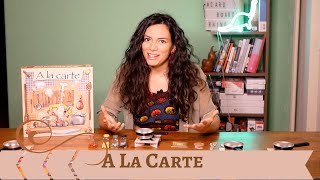
- Vibrant, thematic components with mini utensils
- Accessible two-player experience with engaging dexterity elements
- Clear and fun core loop with decision points on heating and seasoning
- Dexterity can feel fiddly for some players
- Dice results introduce luck and variability
- Some dishes restrict scoring (e.g., cannot earn stars)
- Cooking competition with dexterity elements
- A restaurant kitchen during service, players compete to prepare dishes
- Lighthearted, instructional
Mechanics (from transcript analysis)
- action selection (three actions per turn) — perform three actions per turn, each action costs a spoon to give to the next player
- dexterity pouring — pour condiments by wrist rotation with shaking allowed to measure quantities
- Dice rolling — roll heating die to determine stove heat level and risk of burning
- resource management and set collection — manage condiments and salt crystals; avoid overspicing or oversalty to prevent penalties
- special actions / coffee break — coffee break uses a coffee cup to gain points or extra actions; can be used to influence others
- timing and scoring — achieve a perfect dish for a star; some dishes cannot yield stars
- turn order and exchange — spoons are passed to next players; possible to exchange stoves with another player under certain conditions
Video topics + discussion points
Quotes (from this video)
- a fun dexterity game about cooking
- three cooking spoons and starts the game
- this is particularly useful when one of your opponents has reached the limit of heat their dish needs
- the game ends when a player is unable to place a new dish in japan
- you may gain one victory point you may take three additional actions you may decrease your heating level
- crepe takes you a full turn