A Place for All My Books is a puzzley book gathering, sorting, and organizing game in which players arrange stacks of books in different rooms of their apartment as personal projects. When done, they can admire their accomplishments and gain their rewards – not least of which is renewed energy, which they can then spend to head out into the village...to pick up more books!
This competitive game for 1-4 players feels rather zen as you play. The organizational puzzles are easy to accomplish, with the challenge being how many of them you can accomplish all at once to optimize each "admire" action.
A Place for All My Books includes a solo mode in which you must beat the game's rival: Penelope Eveready, an untiring extrovert who seems to be grabbing all the books you had wanted.
—description from the publisher

Mechanics (from transcript analysis)
Video topics + discussion points
Quotes (from this video)
- I'm vocalizing what's going on in my head.
- Gen Con is not a convention that I ever foresee myself going back to.
- This is going to be a very long stream if I'm going to take this much time going through each of these.
- We are going to do a BG auction cuz I imagine everybody that watches this is on BGG.
- The designer is going to send it to you. He's going to pay the shipping and y'all are going to pay us and we get to keep the money.
References (from this video)

- Excellent solo mode with tactical depth and clear interaction with bot
- Strong pattern-puzzle and tactical placement core
- Highly varied projects and accomplishments provide replayability
- Engaging town/actions flow and light interaction with other players
- Accessible and satisfying engine with clear goals
- Randomness can affect outcomes and may lead to luck-driven results
- Some projects may be near-complete or already completed, reducing challenge at times
- If you dislike pattern games or luck-based draw variability, may be a turn-off
- book collecting, organization, social interaction
- home library / personal book collection, modern day
- procedural/puzzle-driven
- Bullet
Mechanics (from transcript analysis)
- gathering — pick up top books from multiple areas to form combined stacks
- Interaction — possible interaction with other players via actions such as bumping to the park
- pattern_puzzle — arrange books and rooms to complete varied projects and accomplishments
- solo_mode — play against a growing bot Penelopey Ever Ready with card-driven actions; colors link to projects
- sorting — organize and spread stacks of books to maximize project progress
- town_actions — visit external locations to acquire new books and items
Video topics + discussion points
Quotes (from this video)
- This is a great little tactical pattern puzzle.
- Awesome solo mode overall.
- If you want to see the game in action, my preview play is basically identical to the final game.
References (from this video)

- satisfying puzzle
- strong bookish/theme coherence
- highly puzzle-focused; may feel punishing to some
- organization and puzzle-solving around books
- bookish/library vibe with shelves and book organization
- cozy but puzzle-centric
Mechanics (from transcript analysis)
- tile placement — placing or arranging components to form a coherent layout
- turn sequencing — optimizing the order of actions to create an efficient puzzle
Video topics + discussion points
Quotes (from this video)
- First of all, happy new year.
- This week we're launching our gamefound campaign. This is our crowdfunding campaign where it's a support drive for the Dice Tower.
- If you'd like out all the... If you like the videos we put out over the course of the year, and we try to make all of our videos free for people to watch. If you like those, consider supporting us so we can continue doing it for another year.
- Two-player head-to-head, but doesn't feel mean.
- I found this one to be very satisfying.
- Came in at a 7.5 on it.
- Spirits of the Wild Awakening was an eight for me.
References (from this video)
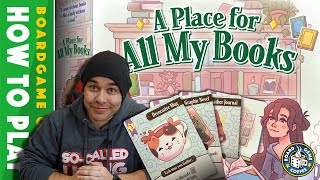
- Cozy, thematic integration with books and a social energy mechanic
- Engaging action economy between apartment and village
- Interesting stacking and pattern-based scoring with little projects
- Two-player rules are clear with a generous path to solo and multi-player variants
- Rule complexity and potential for downtime during teach phase
- Component and setup is busy; small tokens and boards can be fiddly
- End-game bookkeeping can be involved
- book collection, organization, personal projects, and social energy management
- Two locations: the player's apartment and a nearby village
- instructional, rules-focused with thematic flavor
Mechanics (from transcript analysis)
- end_game_trigger_and_scoring — Sun tracker triggers end after certain steps; end-game scoring includes books, projects, major accomplishments, and leftover battery.
- pattern_scoring_and_projects — Little project cards provide patterns; fulfilling them scores points via the Admire action or end-game bonuses.
- rule_based_gating_and_turn_order — You must move to a different action space before performing the action; occupancy and park mechanics influence movement.
- social_battery_management — Actions either gain or cost social battery; max 20; leaving the house is costly and requires planning.
- stacking_and_shelves — Books are stacked on shelves or in backpack/nightstand; stacks can be 1-6 books, with color restrictions.
- worker_placement — Meeple placement on apartment or village action spaces to perform actions; energy (social battery) is spent/managed.
Video topics + discussion points
Quotes (from this video)
- A Place for All My Books is a cozy little worker placement pattern building game where players stack books in different configurations in order to score personal projects.
- The end of the game is triggered when this sun token reaches the last slot on its track.
- Your goal in a Place for All My Books is to score more points than all the other players by the end of the game.
- Leave the house action costs five social battery to perform, and you have to plan how you leave the house carefully.
- And remember, have fun, keep gaming, be social.
References (from this video)
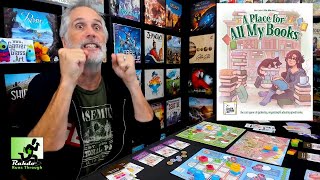
- Cozy, thematic theme with elegant integration of book-stacking puzzles
- Fast pace for a two-player experience (roughly 30 minutes)
- Color-blind friendly symbols on book colors
- Integrated player aids and clear on-board indicators
- Satisfying optimization loop: sort, gather, and admire to chain points
- Outcomes can hinge on drafting and timing of town trips
- Theme may feel niche to players who dislike domestic or non-confrontational puzzles
- Endgame complexity can be a bit high for absolute newcomers
- Cozy domestic sorting puzzle where players balance color-coded books to fulfill goals.
- Two players each with a miniature apartment, sorting and organizing books to meet personal projects and town objectives.
- Lighthearted, charming, domestic puzzle with gentle humor.
- Critter Kitchen
- Tesseract
Mechanics (from transcript analysis)
- admire action — Gain energy and progress toward endgame scoring by admiring completed projects.
- color accessibility — Symbols on book colors aid colorblind players, helping identify colors by shape.
- Endgame scoring — Score points for completed projects, tall green stacks, and other achievements; endgame is driven by totals and special cards.
- gather / create stacks — Gather top books from stacks to form a new stack, up to a height limit, organizing resources for objectives.
- set collection / stacking — Players collect and stack color-labeled books to meet tall-stack and color-constraint conditions.
- sorting action — Select a stack to redistribute its books into spaces with restrictions (no stack taller than six, max two per space).
- town actions — Spend energy to visit Town locations (Library, Used Bookstore, Book Exchange, Village Shop) to acquire cards and objectives.
- zen garden / objective modifiers — Zen garden-style objective influencing energy and timing; adds thematic flavor to optimization.
Video topics + discussion points
Quotes (from this video)
- I love Green books that's what I have more than anything else
- This is a book Lover's Dream
- Two-player run through
- We're kind of book worms in here
- Cozy comfortable Charming competition
References (from this video)
- Cuddly, cozy theme with beautiful production
- Delightful solo mode with Penelope Everready as a humorous companion
- Kickstarter-level deluxe options may be pricey
- Spatial puzzle with book-arrangement objectives
- Introvert with a bookshelf-based apartment; organizing books
- Ark Nova
- King Domino
Mechanics (from transcript analysis)
- Objective-based scoring — Turn in multiple completed objectives; optimize turns for efficiency
- Spatial drafting / grid layout — Players arrange books in a 2D grid to meet objectives; energy and town-dash mechanics interplay
Video topics + discussion points
Quotes (from this video)
- "It's so simple, but it's really clever."
- "This is a two-player head-to-head card combat game."
- "We are the aliens."
- "Bot or Not has me laughing a lot more."
- "Gen Con party game of the show, Bot or Not, unanimous."
- "Flip Tunes is my Gen Con game of the year."
References (from this video)

- cozy theme that remains approachable and friendly
- low-conflict, puzzle-forward experience
- clear, welcoming table presence with book-themed components
- some interaction is still possible (bumps) and may feel non-purely cozy to very strict cozy-definitions
- depends on preference toward worker-placement-style shared boards
- book collection and personal shelving puzzle
- a cozy apartment with a book collection; town activities nearby
- cozy, low-conflict with gentle puzzle emphasis
- Carcassonne
- Takaido
Mechanics (from transcript analysis)
- bumps and energy park — being bumped to the park increases energy and allows continued play
- puzzle-like placement — arrange books in stacks and solve placement puzzles on your board
- shared town, worker placement — town actions are shared; moving to town may bump you to the park for energy
Video topics + discussion points
Quotes (from this video)
- The resource wheel is very clever. So, this looks really neat.
- The town is a shared board and it's worker placement. But if someone wants to take your space, they can and they bump you into a space called the park which just raises your energy.
- Don't Skip Leg Day … came in a protein shaker bottle, which you could not use to make a real protein shaker.
- The packaging is part of the product experience; it should invite you to pick up and touch.
- If I’m gifting a game, I want to give something that feels special, not just another box on the shelf.
- Beasts’ art and card design are so memorable that people stop to look at the cards even before learning to play.
References (from this video)
- Cozy theme of collecting books
- Tactical play with pattern considerations
- Awesome solo automa
Mechanics (from transcript analysis)
Video topics + discussion points
Quotes (from this video)
- The boss battling was pretty interesting.
- The story was pretty cool.
- It's not my favorite boss battler or adventure games by any means this year, but still pretty fun.
- I love the stealth in this one. I'm a big fan of the IP, and I think this is an amazing video game adaptation.
- Adventure Done right.
References (from this video)
- high production quality and tactile components
- satisfying puzzle feel with turn optimization and combo potential
- strong solo mode that translates well to the theme and puzzle
- clear tutorial and approachable entry via the dice tutorial on the box
- cozy aesthetics and book-centric theme support the presented vibe
- puzzle depth can feel heavy and sometimes grindy
- luck influences objective overlap and timing, reducing agency at times
- the deck of other neat stuff includes meta advertising elements that some players find off-putting
- not as cozy in practice for some players as the packaging suggests
- organization, cataloging, and social life around books
- apartment and village where players gather, arrange, and read books to score points and manage social energy
- domestic, cozy theming with puzzle-like mechanics and light role-play of daily life
Mechanics (from transcript analysis)
- course-correct decision space — players must balance going out to the village with staying home to optimize turns and objectives
- deck-based cards that modify rules — globally alter what you can do on a turn and what gets counted for scoring; some cards bend or break rules
- end-of-round progression via sun tracker — leaving home advances the sun tracker and triggers end-game timing after a set number of rounds
- pattern-based scoring and objectives — score for books, completed projects, and major accomplishments, with timing advantages for who finishes first
- Resource management — manage social battery and book stacks to optimize turns and access to locations
- set collection / stacking / distribution — gather and rearrange books into stacks and distribute them to shelves or nightstands to trigger scoring and fulfill projects
- worker placement — move a small worker to actions either on the apartment board or at village locations
Video topics + discussion points
Quotes (from this video)
- Lately, I've been very, very apprehensive of games that call themselves cozy.
- This is a very much a multiplayer solitary affair through and through.
- I think the production is fantastic. There's something about reaching in that bag with all those wooden bits in there and pulling out the books.
- It's not cozy and it almost sounds like you're describing it kind of as grindy.
- I really like all those different parts that you're managing to set up that perfect turn and I do feel like there is a perfect turn for you.