Aeon Trespass: Odyssey is a 1-4 player campaign game about adventures, exploration and fierce battles with giant monsters. It’s a co-operative, choice-driven boardgame experience played over multiple sessions. Set in an alternate Antiquity, where a reality-shattering cataclysm killed the Olympian gods and unleashed the otherworldly Primordials, Aeon Trespass: Odyssey places the players in the roles of Argonauts, the only people who can fight off the darkness and make things right.
Take control of the Argo and its crew, train them and send them on adventures into the dangerous and mysterious lands of Ancient Greece (and beyond...). Learn the world's secrets and create new technologies that will give you an edge in combat - and outside of it. Manage your resources and develop your base of operations. Build new Facilities, craft new Weapons and equipment. Gather allies and forge political alliances with the world’s factions. And, most important of all, tame the Titans, arm them, evolve them and ride them to battle with the fearsome Primordials.
You win by defeating the main villains or solving a crisis, you lose if your Argonauts die, your crew abandons you, your ship gets destroyed, the villains fulfill their plot or time runs out. There are many ways to lose, but only a handful paths to victory.
During Battles, 1 to 4 players must cooperate to defeat 1 giant Primordial boss-type monster controlled by a sophisticated AI system. Outside of Battles, Aeon Trespass: Odyssey uses choice chain and choice matrix mechanics to track your decisions throughout the game. Those decisions matter and will have a drastic impact on all future play sessions, campaigns and playthroughs.

- Best story writing ever in board games
- Makes you feel things - thrilled, excited, scared, happy, sad
- Amazing story
- Cooperative boss battler
- Takes few hours to play
- Other host hasn't played much of it
- Chosen people syncing with Titans to protect world after Greek gods killed
- Ancient Greece with Titans
- Epic campaign cooperative
- Seventh Continent
Mechanics (from transcript analysis)
- Base management — Manage your base between missions
- boss battler — Fight huge Titan monsters
- Campaign — Story-driven campaign progression
- exploration — Explore map like Seventh Continent
Video topics + discussion points
Quotes (from this video)
- What does it tell about the board game if you play it a lot - you don't have any other board games or it's really really good
- It's freaking amazing - one of the best games of all time
- Best story writing I have ever played in board games - it makes me feel things
- This is a game where you cannot lose
- All the heroes have died fighting these monsters and all that's left is well you
- There's a reason why this really old game is still on BGG's top 100
References (from this video)
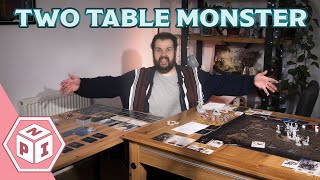
- Giant spectacle with extreme variability and dramatic moments
- Deep gear and Titan customization, with meaningful progression and strategic agency
- Strong potential for solo or small-group play with substantial narrative weight
- Overwhelming rulebook and constant new rule introductions; learning curve is brutal
- Teardown/setup and table requirements are unwieldy; not ideal for casual evenings
- Campaign structure can feel repetitive or meandering; some narrative threads and locations lack tangible cohesion
- mythology, epic exploration, hubris and cosmic consequence
- Ancient Greece-inspired world aboard a city-sized Argo; Titans, gods, and mythic forces shaping a sprawling, perilous campaign
- episodic, campaign-driven with story threads, AI-driven events, and dramatic boss encounters
- Sleeping Gods
- Gloomhaven
- Taunted Grail
- Tainted Grail
- Osworn
Mechanics (from transcript analysis)
- AI cards for primordials — On enemy turns, AI cards modify attacks and introduce new behaviors; reshuffled when wounds occur, creating unpredictable threats.
- Body Part (BP) cards — BP cards dictate which body part is targeted, its armor value, and potential on-hit effects; can alter the fight dynamically.
- Dice-based wound resolution — Roll multiple d10s to determine hits against armor, then use red d6s to convert hits into wounds; escalates with BP and AI card interactions.
- Escalation and deck degradation — Wounding the primordial worsens its BP/AI decks, pushing the fight toward harder conditions; risk-reward loop when choosing to wound.
- Exploration map and campaign pacing — A map of tiles used for exploration, crafting, diplomacy, and campaign progression; timeline-based battles every six days.
- Fate, Rage, and Danger economy — Resources that allow rerolls, increase attack efficiency, and track peril; escalate with each attack and injury.
- Trauma decks — Trauma cards introduce escalating penalties and sometimes powerful benefits; interlock with combat outcomes and dungeon/quest progression.
- Two-table or large-table combat setup — Combat is designed for multiple Titans (characters) and requires substantial table space; impacts how the game is experienced socially.
Video topics + discussion points
Quotes (from this video)
- I think this might be a masterpiece.
- Combat is the inverted Paradigm system and shows how crazy the randomness can be.
- You are simultaneously the hero and the audience.
- This is the world's most complicated board game.
- The core systems of combat are pretty understandable: roll a number, roll some dice again.