Age of Innovation is a standalone game set in the world of Terra Mystica.
Twelve factions, each with unique characteristics, populate this world of varying terrains. Here you will compete to erect buildings and merge them into cities. Each game allows you to create new combinations of factions, homelands, and abilities so that each game isn't the same as another.
You control one of these factions and will terraform the game map's terrain into your homelands where you can erect your buildings. Proximity to other factions may limit your expansion, but it also gains you significant advantages in the game. This tension adds to the appeal of the Terra Mystica series.
Upgrade your buildings to gain valuable resources such as tools, scholars, money, and power. Build schools to advance in different sciences and collect books, which you can use to make innovations. Build your palace to gain a powerful new ability or build workshops, guilds, and universities to complete your culture.
—description from the publisher

- High variability and replayability through factions, books, and innovations
- Accessible entry point for fans of Terra Mystica/Gaia Project-like systems
- Compelling combination of strategy and tempo with books and power tracks
- Action economy can feel constrained with limited total actions (14 rounds across the game)
- Innovation, books, and power generation with randomized factions
- A varied, book-driven, power-based civilization-building framework
- Dice-Euro with heavy variability and modular book actions
- Terra Mystica
- Gaia Project
Mechanics (from transcript analysis)
- books and innovations — Book-driven actions and Innovation tracks provide choices and scoring opportunities.
- Competency tiles — Randomized tiles grant production, resources, or scoring; tile color dictates potential programs.
- dice drafting — Roll and use dice to activate power actions and manage rounds.
Video topics + discussion points
Quotes (from this video)
- the placement restriction right is you either have to play next to a building of the same color or next to a road
- this game it was everything I wanted from it
- we were able to try it twice and it was fantastic
- the variability that I could want
References (from this video)

- high variability and replayability due to drafting and setup
- visually vibrant artwork and components
- strong sense of progression and interactivity
- steep learning curve
- can be heavy and lengthy to teach and play
- terraforming/new civilization development with variable start setups
- A Terra Mystica–style civilization-building scenario with modular drafting of factions and a terraforming-like progression
- system-driven progression with evolving power cycles
- Terra Mystica
- Gaia Project
Mechanics (from transcript analysis)
- engine-building — continuous upgrading of buildings and resources to drive forward the empire
- faction drafting — draft a faction that comes with unique abilities and interacts with a shifting map/board setup
- tile-based development and upgrading — buildings and power improvements that scale across the game
Video topics + discussion points
Quotes (from this video)
- Age of Innovation feels like it delivers the pinnacle experience of that kind of whole system.
- Twilight Struggle is a borderline masterpiece.
- The arc of Twilight Struggle is so exciting; tension grows across the board.
- This is Mage Knight Ultimate Edition—changing it to cooperative mode is incredible; I’d never go back.
- Eldritch Horror highs are the top board game experiences I’ve had.
- Agricola is the best board game we have ever played and it has stayed at the top for years.
References (from this video)

- For Terra Mystica fans who want new content
- Feels like unnecessary additions to an existing game
- Doesn't capture the elegance of original
- Adds 'frills' rather than improvements
- Overhyped by community
- Divisive - depends on Terra Mystica attachment
- Continuation of established series
- Similar to Terra Mystica
- Terra Mystica (predecessor)
- Gaia Project (similar disappointing expansion mentality)
Mechanics (from transcript analysis)
Video topics + discussion points
Quotes (from this video)
References (from this video)

- Engaging take on competitive resource management
- Opens opportunities for interactively aggressive and collaborative play styles
- Can feel confrontational for some groups
- Technological progress and strategic contention
- Industrialization era with a focus on innovation
- Competition-driven engineering race
Mechanics (from transcript analysis)
- Tile drafting / engine building — Players select actions that accelerate their own development while hindering others.
Video topics + discussion points
Quotes (from this video)
- you are buying a book by its cover
- theme does matter
- theme doesn't matter at all
- gameplay is more important than theme
- do nature themes suck
- logo has a squirrel who rolls dice
References (from this video)

- tight focus on faction pairing and home-region synergy
- diversity from innovations and book-based powers
- fast, snappy turns that keep the game moving
- large footprint and potentially long playtime for bigger groups
- high complexity to new players
- territorial development, home-region synergies, and terraforming-like constraints
- A Terra Mystica–like framework where factions have homeland types and are randomly paired.
- systems-driven, high-tan exploration of faction synergies with innovations
- Terramystica
- Gaia Project
Mechanics (from transcript analysis)
- Action economy — Turn order and decisions are designed to be snappy with quick turns.
- resource evolution via innovations — Books act as a resource to gain one-time benefits or ongoing powers.
- territory/region control — Players spread onto map areas that match their home type and gain bonuses.
- upgrading/building levels — Upgrade buildings to increase income and access new powers.
Video topics + discussion points
Quotes (from this video)
- Time melts away and goes by quickly when you're invested in the game.
- The turns are snappy, and the game feels quicker than you expect.
- This is Slay the Spire, a roguelite where if you die, you then have to go back to the beginning.
- The board is modular, so each setup is different and keeps the players engaged.
- Concordia isn’t a long game, but it is not a short game either; with five players it stretches to a couple of hours.
- Time does not exist when you're playing Twilight Imperium Fourth Edition.
References (from this video)

- great variability and replayability
- mechanics feel cohesive yet modular
- steep learning curve
- rich rule-set may overwhelm new players
- scientific advancement and modular tech paths
- terraforming and terraforming network expansion with a tecnology/book economy
- highly modular, variable setups with asymmetrical power tiles and books
- Terra Mystica
- Gaia Project
- Terra Mystica expansions
Mechanics (from transcript analysis)
- books as resources — books unlock powerful innovations and special actions
- decoupled faction boards — faction abilities are mixed and matched with various boards
- modular map and variable tech tiles — maps and tech tiles are randomized per game for high variability
Video topics + discussion points
Quotes (from this video)
- Second Edition is just a solid in that it takes everything
- it's a brain burner
- the floor for this game is just so high
- when the wife keeps begging to pull it out you just keep saying yes
- it's the one she's always asking to play
References (from this video)

- Close to Brass feel with modern twists
- Engaging mid-weight euro
- Some overlap with Brass fans may feel repetitive
- Engineering and modernization
- Industrial-age innovation race
- Strategy-driven
- Brass
- Brass: Birmingham
Mechanics (from transcript analysis)
- Auction/bidding and resource management — Acquire capabilities to advance
- engine-building — Construct innovative industries and chains
Video topics + discussion points
Quotes (from this video)
- I think it might just be the most underrated feature on Board Game Geek.
- I found it to be very very helpful for myself.
- the analyze feature is actually built into every game page.
- Lisboa might be one that I want to check out.
References (from this video)
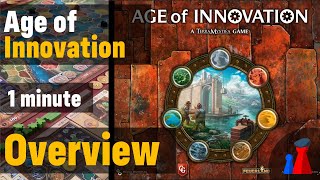
- Terraforming and map expansion create dynamic, ongoing player interaction and strategic tension.
- Palaces and tiles provide meaningful progression points that shape engine-building and long-term planning.
- Variable round objectives add replayability and push players to adapt strategies each game.
- A clearly defined six-round structure with explicit end-game scoring emphasizes planning and timing.
- Not explicitly discussed in the transcript; potential complexity is inherent to the game's design but not evaluated here.
- Technological advancement, architectural ambition, and strategic dominance through engineered progress.
- A civilization-building phase where competing factions explore, terraform, and develop cities across a map, aiming to optimize resources and scoring opportunities.
- Euro-style engine-building with asymmetric progression and a strong emphasis on planned advancement and end-game scoring.
Mechanics (from transcript analysis)
- Area control / map influence — Players vie for control of regions on a map by terraforming and building, with access to terrain shaping citadels and expansion opportunities tied to the terrain you unlock.
- City-building scoring — Constructing cities yields victory points and unlocks scoring opportunities along various tracks, driving urban development.
- Palace construction — Building palaces provides ongoing abilities and a clear progression path, acting as a core engine-building element.
- Progression in four disciplines — Advancement in four distinct disciplines unlocks bonuses and contributes to victory point accumulation, creating multi-track optimization.
- Six-round structure with final scoring — The game runs for six rounds, culminating in a final scoring phase where victory points determine the winner.
- Terraforming to access terrain — Terrain transformation is required to extend influence, create new build sites, and access special actions tied to different landscape types.
- Tile acquisition (competency and Innovation tiles) — Players draft or acquire tiles that grant powers, scoring bonuses, and strategic options, fueling engine development and strategic options.
- Variable round objectives (round score tiles) — Each game uses round score tiles to set changing objectives, increasing replayability and forcing adaptation mid-game.
Video topics + discussion points
Quotes (from this video)
- in the game players are controlling one of the factions and are trying to spread out on the map as much as possible
- terraform the land
- gaining competency tiles and Innovation tiles
- adapting their gaml to the variable round objectives given by the round score tiles
- the game lasts for six rounds and after final scoring the player with the most victory points will win
References (from this video)

- Strong thematic cohesion
- Engaging interactions between factions
- High complexity
- Longer playtime
- Innovation, development, and faction-based competition
- Futuristic industrial era with competing factions
- Asymmetrical, faction-driven strategy with modular goals
- Gaia Project
- Terraforming Mars
Mechanics (from transcript analysis)
- engine-building — Players build production engines across action choices
- Factions/roles — Each faction provides unique abilities and paths to scoring
- Resource management — Balancing multiple resources to advance tech and scoring
Video topics + discussion points
Quotes (from this video)
- the final score in this particular game was 180 to zero
- every single person at the table is having a blast right now
- best play of the year goes to age of innovation
- one of my favorite heavy games and a highlight of six-player play
- this board game is incredible
References (from this video)
- High variability and replayability
- Novel integration with the Terra Mystica ecosystem
- Long teach and heavy rule set
- Potential for analysis paralysis
- Technological advancement and terraforming
- Futuristic terraforming civilization-building world
- Euro-style engine with randomized factions/board setup
- Terra Mystica
- Gaia Project
Mechanics (from transcript analysis)
- Drafting/faction selection — Random board and faction setup at the start to shape play
- Resource management — Manage limited resources akin to a tech/innovation track
- tile/board placement — Place tiles/buildings to develop your civilization
- Victory point scoring — Endgame scoring via multiple tracks and bonuses
Video topics + discussion points
Quotes (from this video)
- the biggest change in this line is ... you only have one action per turn
- I would pull out Terra Mystica or Age of Innovation this replaces Terra Mystica
- it's a brain burner
- this is a total brain burner for me
- the goal is to get the timeline as close as possible
- you can only have two lines of cards on the table
- the Advocates are where the fun is
References (from this video)
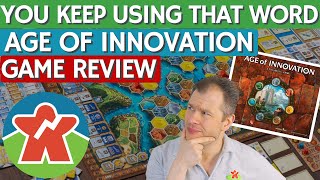
- high asymmetry and variety with many faction setups
- robust component quantity and quality for a big-box experience
- improved color and artwork versus older versions
- strong potential for deep strategy and replayability in a heavy euro frame
- very similar to Terror Mystica, with limited new rules
- setup is lengthy and the rulebook lacks a dedicated setup diagram
- iconography and the sheer number of options can cause analysis paralysis
- theme feels dry, with limited narrative immersion
- color-blind accessibility can be challenging
- long playtime, especially with four players
- terraforming, building, and tech advancement in a competitive euro-style world
- terraforming landscape in a faction-driven, resource management setting with terrain-based challenges
- mechanics-forward, with minimal storytelling
- Terror Mystica
- Gaia Project
- Teranova
Mechanics (from transcript analysis)
- area_control — players compete for control of regions on the board to maximize points and bonuses
- automa_and_solo_mode — solo mode via an automa system adds a competitive bot experience
- bonus_tiles_and_competency_tiles — collect tiles that grant ongoing bonuses and unique abilities throughout the game
- engine_building — players upgrade their boards and acquire buildings to unlock more actions and income
- tech_tracks_and_tiles — progress along technology tracks to gain power and end-game points
- tile_placement_and_terraforming — terrain is shaped to fit a faction's needs, enabling future actions and scoring opportunities
- variable_faction_asymmetry — each faction has a unique starting setup and special abilities, driving replayability
Video topics + discussion points
Quotes (from this video)
- it's basically Terror Mystica 1.5
- this is not a game that I would consider to be particularly Innovative in any way
- if you're brand new to Terror Mystica you're basically picking between Guia Project and this one
- it's a rich get richer game
- I'm going to give it a six out of ten
References (from this video)

- highly thematic with a strong sense of progression
- interesting balance between aggression and expansion
- not universally accessible; punishes missteps
- tracks can be polarizing
- technology race, rivalry, resource leeching
- Global map with multiple factions
- mechanistic, macro-strategy with personal power quirks
- Terra Mystica
- Gaia Project
Mechanics (from transcript analysis)
- Shared map with territorial expansion — Players push outward, expanding influence and scoring opportunities.
- Tracks and progression — Progression systems guide development and scoring.
- Unique faction powers — Each faction has distinct abilities affecting strategy.
Video topics + discussion points
Quotes (from this video)
- Be excellent to each other.
- Sidereal Confluence is grand. It is so grand it will not be contained by such trivialities as a table.
References (from this video)

- Meaty, strategy-forward gameplay consistent with Terra Mystica lineage
- Two-player suitability with potential depth
- Very heavy and potentially complex for new players
- Unaffected by rapid balance; may require multiple plays to master
- terra mystica-inspired heavy engine-building with a twist
- Terra Mystica universe environment with Gaia Project-like feel
- meaty, strategic planning with asymmetric play
- Terra Mystica
- Gaia Project
- Terra Nova
Mechanics (from transcript analysis)
- area influence / terra mystica-inspired — players develop regions on a map with asymmetrical powers
- asymmetry — starting conditions differ for players to create varied strategies
Video topics + discussion points
Quotes (from this video)
- this is a flip and write game
- open world style flip and write
- I'm very intrigued by the fact that it's designed by Stephen Aramini
- standalone sequel to My City
- two-player only fully Cooperative game
- pure deduction
- it's the next in the South Tigris series
- draft your actions at the very beginning of the game
- asymmetric compared to everybody else
References (from this video)

- High variability paired with a robust core system.
- Great thematic cohesion and replayability.
- Heavy, dense for new players.
- Rule precision matters; setup and teach time is non-trivial.
- variable book actions and innovations layered on a tight core system
- historic-tech era with a Teramystica-like lineage
- Terra Mystica
- Gaia Project
Mechanics (from transcript analysis)
- books/actions as a resource — books grant variable, powerful actions each game.
- innovations — randomized tech abilities that alter scoring and play.
- tight core engine (Terra Mystica lineage) — strong baseline rules with added variability.
Video topics + discussion points
Quotes (from this video)
- this is the Pinnacle experience of what I love in this
- the rule book is terrible but it is a dense rule book
- we love to give away board games
References (from this video)
Mechanics (from transcript analysis)
Video topics + discussion points
Quotes (from this video)
- There's no real order.
- There are ties on the dates.
- The 12 oldest and the 12 newest.
- There's just brownie points.
- I haven't played Age of Innovation.
References (from this video)

- lush production, deep strategic depth, strong thematic resonance with Gaia/Terra Mystica lineage
- not cheap, heavy setup considerations, learning curve present
- industrial era innovation and map-driven expansion
- A boxed, ambitious Euro-style engine-building game focused on infrastructure and innovation.
- epic economic engine-building with a premium presentation
- Gaia Project
- Terra Mystica
- Gaia Project (new iteration)
Mechanics (from transcript analysis)
- book-resource innovations — Innovations system layers into core play; players use book-like resources to upgrade capabilities.
- overbuilding/building replacement — Players can replace existing buildings with bigger ones to gain more power and scoring opportunities.
Video topics + discussion points
Quotes (from this video)
- this is one of the greatest deck building board games I've ever played
- it's pure joy, pure fun
- the energy in the room when Ready Set Bet is going
- thematic immersion in Thunder Road Vendetta is spot on
- Age of Innovation feels like the definitive evolution of this family of games
References (from this video)
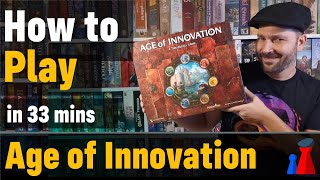
- Deep, multi-layered euro-style with varied action choices
- Rich interaction via adjacency and city mechanics
- Thematic integration through innovation and disciplines
- Multiple victory paths through cities, tiles, and round bonuses
- High complexity and long setup
- Steep learning curve for new players
- Heavy component management and tracking
- Innovation and civilization-building through tracks, tiles, and city founding
- Hex-based terraforming world with a focus on science and innovation, expansion of factions
- instructional, analytical, tutorial-like
- Terra Mystica
Mechanics (from transcript analysis)
- Building and upgrading — build workshops, upgrade to guilds, palaces, schools, universities; adjacent buildings affect power and city founding
- City founding — group of buildings with total power >=7 and at least 4 buildings allows founding a city for bonuses
- Competency tiles — gain competency tiles when upgrading to higher tiers; limit of one tile per type
- Innovation tiles — purchase innovation tiles with books; gain immediate/ongoing bonuses and new buildings
- Power tokens and bowls — gain and move power tokens through bowls; power can be spent to gain effects
- Resources and conversions — convert resources during actions; free conversions allowed after actions
- Round score tiles — round-specific scoring left side for immediate points; right side provides end-round bonuses connected to disciplines
- Sailing/river travel — advance along sailing track by spending scholars and coins, enabling movement
- Terraforming — convert hex terrain to your own by spending Spades and tools to enable building
Video topics + discussion points
Quotes (from this video)
- this is definitely in my top five best games
- the most important action in the game is terraform and construct a workshop
References (from this video)

- Building next to opponents provides mutual benefits
- Strong thematic connection between mechanics and interaction
- Terra Mystica style games all feature this positive interaction
- Building civilizations through proximity and resource exchange
- Space colonization
- Area majority and resource trading
- Terraforming Mars
- Gaia Project
Mechanics (from transcript analysis)
- Adjacent building cost reduction — Some buildings have cheaper costs if built adjacent to an opponent
- Area control with proximity benefits — Benefit from building next to opponents and opponents building next to you
- Power cycling mechanic — When an opponent builds adjacent to your building, they can cycle power by spending victory points
- Power management — Power can be used as free anytime actions or to trigger specific board actions
Video topics + discussion points
Quotes (from this video)
- If I'm interacting with people, I want it to be that we're each getting a little something something.
- Any game where you get to kind of mooch and be like, 'Hey, great. Thanks for doing that. I'm going to do this over here and score these points. That's fantastic for me. Makes me feel good.'
- I don't particularly enjoy just blocking in games. I don't really find that kind of interaction to be fun or interesting.
- You're always engaged with the game. You're always playing. You're always making decisions and doing things and that's super duper satisfying.
- There's never a time where you don't really want one.
- It's that positive interaction where you're always, every single turn, people are always going to be giving you cards.
- It's that constant stress of like making sure I get out of this a little bit more than you because we're both going to benefit.
- You're still trying to win the game. It's not a cooperative game by any means, but it's the fun tension of you're going to get something out of this.
- Hey, I get to use your stuff. That's really really cool.
- Everyone's infrastructure kind of works for you. It's just really really good.
References (from this video)

- rich, layered engine-building
- strong thematic integration with mechanics
- can feel like a busy overabundance of options
- learning curve can be significant
- building a complex, interconnected industrial empire
- Futuristic technological era with industry and innovation
- mechanics-driven storytelling rather than a linear narrative
- Gaia Project
- Terra Mystica
Mechanics (from transcript analysis)
- engine-building / tech tree — players develop a suite of interlocking abilities and actions
- Resource management — careful allocation of limited resources to drive progress
Video topics + discussion points
Quotes (from this video)
- I want to show you how the game plays and not to sell you the game.
- I’m one of the more genuine content creators.
- Mage Knight is the best game ever.
- Gaia Project beats Age of Innovation for me.
- I don’t like the idea of being a used car salesman.
- Star Trek: Captain’s Chair is an exciting licensed approach with lots of thematic promise.