It is the late 26th century. Earth is recovering from a catastrophic explosion that exterminated the majority of the population centuries ago and made most of the surface uninhabitable due to unearthly weather conditions. The surviving humans organized along four radically different ideologies, called Paths, to rebuild the world as they see fit: Harmony, Dominance, Progress, and Salvation. Followers of the four Paths live in a fragile peace, but in almost complete isolation next to each other. Their only meeting point is the last major city on Earth, now just known as the Capital.
By powering up the mysterious Time Rifts that opened in the wake of the cataclysm, each Path is able to reach back to specific moments in their past. Doing so can greatly speed up their progress, but too much meddling may endanger the time-space continuum. But progress is more important than ever before: if the mysterious message arriving through the Time Rift is to be believed, an even more terrible cataclysm is looming on the horizon: an asteroid bearing the mysterious substance called Neutronium is heading towards Earth. Even stranger, the scientists show that the energy signature of the asteroid matches the explosion centuries ago...
Anachrony features a unique two-tiered worker placement system. To travel to the Capital or venture out to the devastated areas for resources, players need not only various specialists (Engineers, Scientists, Administrators, and Geniuses) but also Exosuits to protect and enhance them — and both are in short supply.
The game is played in 4-7 turns, depending on the time when the looming cataclysm occurs — unless, of course, it is averted! The elapsed turns are measured on a dynamic timeline. By powering up the Time Rifts, players can reach back to earlier turns to supply their past "self" with resources. Each Path has a vastly different objective that rewards it with a massive amount of victory points when achieved. The Paths' settlements will survive the impact, but the Capital will not. Whichever Path manages to collect most points will be the new seat for the Capital, thus the most important force left on the planet...

- Coherent, immersive art that fits Mindclash's design language
- Art style may be dense for casual players
- Survival in a dystopian, time-shifted world
- Futuristic time-travel and resource management
- Dense, gear-and-time motif-driven illustration
Mechanics (from transcript analysis)
- Time travel / worker placement — Strategic planning with time-based actions
Video topics + discussion points
Quotes (from this video)
- we value artwork in board games
- I love good amazing components and beautiful artwork to the point where I'll buy games just for the artwork
- artwork can really help bring your game to life and your theme to life
- there are definitely people out there who will say I don't care what it looks like it's a great game because they're all about gameplay
- I'll spend time sitting down at a table playing this game for quite a while I want it to look nice
References (from this video)

- Very deep, thematic
- Engaging time/time-shift mechanics for experienced players
- Heavy learning curve
- Long play sessions may deter casual players
- Technological advancement, resource management under time pressures
- Futuristic/post-apocalyptic Earth with exosuits and time-distortion themes
- Heavy, thematic, engineering-focused
- Terraforming Mars
- Gloomhaven (in terms of depth and weight)
Mechanics (from transcript analysis)
- Resource management — Careful allocation of multiple resource types to meet project needs
- Time travel/time-shift — Mechanics that simulate time manipulation to optimize outcomes
- worker placement — Players place workers to harvest resources, build, and advance their timelines
Video topics + discussion points
Quotes (from this video)
- the future is mestizo
- good trouble
- we're not trying to get rid of nobody we're just trying to make space for everyone to be involved
- if you could change your mind i could change the world
- inclusion and diversity in gaming is very important
References (from this video)

- Cool theme
- Super fun gameplay
- Really crunchy
- Not as complicated as it looks
- Surprised at how much they enjoyed it
- Building settlements and time travel
- Dying planet - apocalyptic future
- Thematic sci-fi with worker placement
Mechanics (from transcript analysis)
- Area Control — Building settlements on main planet and personal area
- Exo-Suit Mechanics — Workers go into exo-suits to travel to different areas
- Time travel — Go back in time or jump forward in time for different actions
- worker placement — Placing workers on your board and capital to take actions
Video topics + discussion points
Quotes (from this video)
- Azul is just a classic classic game
- I will always want to play this game it's a staple
- Racing is my favorite game mechanic
- I love watching everything kind of like waterfall off of each other
- Castles of Burgundy is incredible I love Castle's birdie
- I love this game so basically like the world is dying
- The best part about Black Angel the little robot guys
- Bet on yourself always always I don't even care if I lose the game believe in yourself
- Dice Throne is an incredible 1v1 battle Yahtzee game
- Wingspan I am almost always in a game of Wingspan on BGA
- This game is beautifully designed it just feels good when you play it
- I can't win and I am getting freaking sick of it
- It's always a great time when it hits the table
- Paint the Roses is a Cooperative deduction game
- I've fallen back in love with it
- Some of the best gaming experiences I've had is playing that game
- I really really love Flamme Rouge it is an excellent game
- I will fall in love with this game it's got the recipe for it to be like a top 10 game
References (from this video)
- Noteworthy worker placement game
- science_fiction
- time_travel
Mechanics (from transcript analysis)
Video topics + discussion points
Quotes (from this video)
References (from this video)

- Array
Mechanics (from transcript analysis)
Video topics + discussion points
Quotes (from this video)
- deluxified is just absolutely crazy
- the joy from games, not from playing the games, not from how the games necessarily look
- one of the most important things you can own as a board gamer are shelves
- Please remember to like and subscribe and thanks so much for watching
- If you're a stat nerd like me and you want to know what you've played, how many times
References (from this video)

- deep, satisfying engine-building
- thematic integration with mechanics
- heavy rulebook
- long playtime
- sci-fi, time travel
- distant future time travel and resource management
- story-driven, heavy
- Arkham Horror: The Card Game
Mechanics (from transcript analysis)
- time travel/resource management — players manage resources and manipulate timelines to optimize outcomes.
Video topics + discussion points
Quotes (from this video)
- I am known for my channel Minimum Player Count mainly on YouTube but I first started on Instagram
- Welcome to the show
- we are not going to take it easy on you so maybe you should be a little bit nervous
- stop watching and go play a game
- you can also see some of my videos on board game spotlight
References (from this video)

- Aesthetically impressive with visually rich components and presentation
- Strong worker placement with multiple viable paths to victory
- Rich engine-building with a diverse set of scoring avenues
- Solid solo experience via Chronobot
- Two-sided factions with unique powers and a lot of variety in buildings and superpowers
- Exosuit expansion enhances visuals and overall experience (though optional)
- Expensive as a base game, and the expansion is often considered essential for a complete experience
- Very busy and dense with mechanics, which can be overwhelming for some players
- Learning curve is steep due to many interacting systems
- Time travel, resource management, paradox, and rebuilding civilization amid a competitive struggle.
- Distant future Earth after a meteor strike; survivors harness neutronium to influence the timeline and call ancestors.
- Science-fiction, epic strategic flavor with a heavy emphasis on timeline manipulation.
- Caverna
- Viticulture Essential Edition
Mechanics (from transcript analysis)
- endgame scoring and debt management — Points come from morale, base buildings, public objectives, and required supplies; debt can be manipulated via buildings to move eras.
- engine building — Players construct an interconnected system of upgrades throughout their board to power future actions.
- paradox mechanic — Gaining paradox via dice rolls; every three paradox yields an anomaly that costs victory points.
- Resource management — Gather minerals, water, and other resources; some actions require power suits and buildings to access spaces.
- solo mode (Chronobot) — Chronobot provides a robust solo opponent that behaves like a real opponent, enabling solo play.
- time travel / chronology management — Uses neutronium to signal ancestors and shift in and out of eras; involves moving focus across timelines and dealing with debts.
- worker placement — Players place units on spaces to take actions and gain associated advantages; spaces are limited.
Video topics + discussion points
Quotes (from this video)
- The chronobot is a solo player mode and it plays like an actual opponent
- Anachrony is a wonderful looking game
- I can't recommend the exosuit expansion pictured here enough
- they really complement the game and make it much more visually pleasing
- it's also an excellent example of the worker placement genre with a lot of options and paths to victory
- Each faction has two board sides and leaders each with different powers and abilities
- the building pools and superpowers have a great deal of variety
- if you like games have a lot of ways to score points
- However this is an expensive game and it doesn't feel complete without the exosuit expansion which is an additional cost.
- it's also very busy and there are a lot of mechanics and systems to learn
- For other great examples of games in the worker placement genre I recommend caverna or viticulture essential edition
- Think of this like a loan from the future that you will have to pay back at some point but also an opportunity to earn time travel points
- competitive: players are competing for resources and only one can win
References (from this video)

- very thematic handling of time travel
- strong atmosphere and design coherence
- engaging future-pic/tafac scenario with clever mechanics
- big learn-in due to complexity
- repetitive loops if not optimized
- resource management across timelines
- time travel and future-puture collaboration
- theme-driven yet mechanically heavy
Mechanics (from transcript analysis)
- Resource management — manage diverse resources across time to achieve goals
- time travel / past-casting — use past actions to influence present/future resources
- worker placement with exo-suits — specialized workers in exosuits carry out actions on the board
Video topics + discussion points
Quotes (from this video)
- time is an illusion
- it's a very linear game where you are going through the seasons
- everything you're doing makes sense in that world
- I think it's really, really cool
- I love distilled. It's got a lot of good sneaky theme in there
- this linearness really lends itself to the thematic tie-ins
References (from this video)

- Probably best AI opponent in all of board gaming
- Deep rich complex gameplay
- Feels like opponent wants to punch in mouth (in good way)
- Favorite worker placement game
- Pain in the ass setup time
- High complexity
- Doesn't get played as much as it should
- Build civilization
- Sci-fi world
- Strategic gameplay
Mechanics (from transcript analysis)
- AI Opponent — Chronobot AI that plays aggressively like a real opponent
- engine building — Complex engine building with many systems
- worker placement — Place workers to take actions
Video topics + discussion points
Quotes (from this video)
- I've played about 300 solo games so this represents the top of all the solo games I've played
- These are entirely my opinions based on my personal play experience
- I think this is one of the cleverest solo modes on the market
- When you win a game of Robinson Crusoe there are very few things in solo board gaming more satisfying
- The closest experience in board gaming to being the captain on a bridge in a sci-fi movie where everything is going to shit
- I'm probably a solo board gaming masochist
- I just love Thunderbirds as a solo game
- It feels like Legendary Encounters was built for the Alien theme and was built as an upgrade to the original Legendary system
- Probably the best AI opponent in all of board gaming
- Few games have that genuine sense of exploration
References (from this video)

- Unique time manipulation mechanism
- Asymmetrical objectives
- Resource management challenge
- Strategic depth
- Engaging theme
- Big box - difficult to table
- Complex setup
- Grand production intimidates some
- Dropped from #18/#19 to #22
- dystopian future
- time manipulation
- sci-fi
- Trickerion (wants to try)
Mechanics (from transcript analysis)
Video topics + discussion points
Quotes (from this video)
- I do think it's a masterpiece of a board game
- We have played villainous so much so much that we now see all of the flaws within it
- The more I play tapestry The More I Love It
- You can play Shakespeare versus a T-Rex and there's something hilarious about that
- I very much enjoy it and I think it's going to sit right where it needs to be
- Every time I play it I get so angry at it because there is an element of luck but it's a masterpiece
- It's probably the best produced board game I've ever seen
References (from this video)

- Rich, thematic technical depth
- Elegant core systems when not overwhelmed by modules
- Infinity Box and all mini-expansions create extreme setup and teaching overhead
- Scale and complexity can be off-putting for casual players
- Strategies of resource management, time travel, and exosuit-driven actions
- Futuristic/post-apocalyptic civilization rebuilding through time travel
- story-driven with dire stakes and modular tech paths
Mechanics (from transcript analysis)
- engine-building — Players develop their own tech and worker placements to generate resources.
- modular expansions — Infinity Box adds many modules that change gameplay depth and length.
- time travel / time mirrors — Actions and events can rewind or be affected by time-based decisions.
Video topics + discussion points
Quotes (from this video)
- Be wary if you're a completionist.
- The more stuff you bring out, the more the power level of a bunch of these characters goes up and the harder the game becomes to balance.
- Suburbia is a great Euro game, but the big box and all the expansions just get out of hand.
References (from this video)
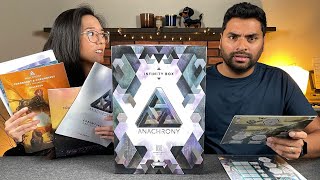
- Well-organized, tiered storage solution that clearly separates base game contents from expansions.
- High-quality components with upgraded metal resources and distinctive faction minis.
- Clear pathway for future expansions and a strong foundation for both base game and fractures of time playthroughs.
- Accessible introduction to a complex euro/engine-building hybrid with asymmetrical factions.
- Box is large and heavy; stock may vary across versions and kickstarter eras.
- Some players may need to invest time to understand how all trays interlock with multiple expansions.
- Not all content is included in every edition; some modules require separate purchases to access fully.
- Survival, resource management, and faction-driven ascent through engineered technology in a dystopian future.
- Post-apocalyptic Earth where humanity has vanished from much of the surface and factions vie for control using advanced exosuits and time-bending technology.
- Sci-fi with modular expansion lore and a layered, engine-building gameplay narrative that invites exploration of multiple factions and timelines.
- Dracaryon
Mechanics (from transcript analysis)
- dice_usage — Dice are used to manage certain actions and resolve events within the core game and expansions.
- engine_building — Players develop their own engine by creating buildings on their boards and expanding capabilities each turn.
- modular_expansions — The game supports multiple expansions that alter components, rules, and strategic options.
- resource_management — Players manage upgraded metals, energy cores, and other resources to power actions and builds.
- worker_placement — Workers (scientists, engineers, etc.) are assigned to world actions via resource and project placement mechanics.
Video topics + discussion points
Quotes (from this video)
- this is a very big box
- Infinity Box... layer by layer
- the base game now comes in this essential Edition
- fractures of time expansion really elevates the gameplay
- we're going to be building the buildings out onto our own personal player boards
References (from this video)
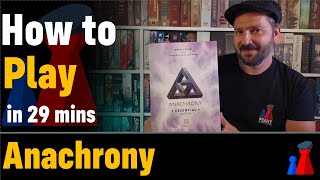
- rich thematic integration of time travel and resource management
- varied action spaces and modular pillars
- clear endgame emphasis with multiple scoring avenues
- time travel, resource management, empire-building
- Earth in a post-catastrophe future where factions vie for humanity's future and use time travel to shape outcomes
- Array
Mechanics (from transcript analysis)
Video topics + discussion points
Quotes (from this video)
- the game is played in up to seven rounds which in anacron are called eras
- you gain access to breakthrough tiles from the second pillar you acquire new workers and from the third pillar you acquire new buildings
- the evacuation action can only be used once in the game from
References (from this video)

- tight time travel mechanisms
- strong asymmetry and replayability
- high thematic integration
- complex rules to learn
- long play sessions
- time travel, resource management, mechs
- Distant future, time travel and crisis management
- grim, strategic
- Twilight Imperium
Mechanics (from transcript analysis)
- asymmetric factions and leaders — different powers for each faction and two leaders
- engine-building and resource management — develop production and robotics to avert crisis
- multi-phase play and expansions — base game with expansions adding adventures
- time travel mechanics — managing time travel to alter future and past states
- worker placement and action selection — workers and actions spread across multiple times
Video topics + discussion points
Quotes (from this video)
- Anachrony that's a fantastic game perfect choice I am delighted by your list Chris
- it's almost like euphoria in the sense that you have workers that are placed out there that you have to bring back at some certain point
- I think you would like this about Eclipse is there's combat
- space foundry underrated game
- it's totally unnecessary yeah but it was cool
References (from this video)

- deep engine-building
- immersive theme
- heavy rules, long play sessions
- time travel as a means to avert catastrophe
- time-twisting sci-fi future with resource scarcity
- serious, engine-building with heavy planning
- Gaia Project
- Twilight Imperium
Mechanics (from transcript analysis)
- time travel/temporal mechanics — manipulate time cubes to optimize actions and mitigate crises
- worker placement with resource management — place workers across multiple queues to gather resources and perform actions
Video topics + discussion points
Quotes (from this video)
- it's a net extreme positive
- the stress that i was experiencing in my job is completely gone
- there are no weekends when you work for yourself
- the discovery aspect of content creation
- learning multi-cam editing changed my life
- we call games three times a year for the math trades
References (from this video)

- Distinctive but understated cover
- Cover is forgettable and does not communicate gameplay
Mechanics (from transcript analysis)
Video topics + discussion points
Quotes (from this video)
- It's iconic. It is at least eye-catching; it's a classic.
- The box should tell us what we're doing in the game and how we're going to feel.
- This is top-notch stuff.
- I actually just ordered my copy, so this is obviously working for me.
- The cover sells the game, it screams what you're going to do.
References (from this video)
- thematic depth and challenge
- great if you like heavy Euro puzzle design
- very complexity-heavy
- long teaching curve
- resource management under time manipulation
- futuristic/post-apocalyptic with time travel
- story-driven brain-bender puzzle
- Ankhor? (Anachrony as heavy Mindclash title)
Mechanics (from transcript analysis)
- multi-layer puzzle — complex rules requiring players to track many interacting systems
- time travel action economy — spend time energy to perform actions across timelines
- worker placement — assign workers to gather resources and complete projects
Video topics + discussion points
Quotes (from this video)
- There are so many just different things about this game that it's hard to manage all the decisions
- the theme is extremely strong in this one, you can feel it in every action
- the app integration in Mansions of Madness is great and speeds things up
References (from this video)

- Rich and varied asymmetry with meaningful choices in each round
- Tight two-player engagement with clear escalation and timing pressure
- Strong thematic integration of time travel and evacuation
- High replayability due to multiple factions, timelines, and module options
- Steep learning curve and dense iconography for new players
- Two-player balance can feel punishing if you miss key asymmetries
- Setup and tracking of resources, timelines, and power-up tracks can be lengthy
- Time travel, resource borrowing from the future, faction asymmetry, and evacuation-driven scoring.
- Post-apocalyptic Earth where four divergent paths foresee the future and prepare for a dramatic evacuation as an asteroid threat looms.
- Lush sci-fi lore with distinct faction flavors and a strong thematic through-line tied to timelines and evacuation goals.
- Fractures of Time expansion (planning to explore in a future video)
- Guardians / Doomsday-style modular expansions (discussed as possible variants)
Mechanics (from transcript analysis)
- Asymmetric player boards — Each path (faction) has its own asymmetrical abilities, costs, and endgame scoring, leading to varied strategic approaches.
- Endgame evacuation objectives — After the asteroid impact, evacuee goals on each path determine major points and shape final scoring.
- Free actions and ‘paradox’ consequences — Certain actions grant free actions; paradox/anomaly rules add risk and strategic timing for endgame shots.
- Resource borrowing and conversion — Warp tiles let players borrow from the future, with repayment costs reflected on the timeline; conversion via nomads adds a secondary economy.
- Timeline / time travel — The central timeline and power plants allow moving back and forth in time to repay loans or alter future timing of actions.
- worker placement — Each player sends workers (and exosuits) to actions on the main board or their own boards to gather resources, build buildings, and push timelines.
Video topics + discussion points
Quotes (from this video)
- The timeline in the middle here serves as the round chakra of sorts for the game.
- Asymmetric paths add deep flavor and encourage varied strategies each run.
- Endgame evacuation goals provide a clear objective tied to your engine and timeline choices.
- Two-player games are tight; you feel the pressure every turn.