In a far-distant future, humans no longer inhabit Earth. The cause of their disappearance (or perhaps their demise) is unknown, but their absence left a void ready to be filled by another sentient species.
Over the span of untold generations, one species of the humble honeybee evolved to fill that void. They grew in size and intelligence to become a highly advanced society. They call themselves Mellifera, and they have made substantial technological advances in addition to the technology they adapted from human ruins, up to and including space travel.
In Apiary, each player controls one of twenty unique factions. Your faction starts the game with a hive, a few resources, and worker bees. A worker-placement, hive-building challenge awaits you: explore planets, gather resources, develop technologies, and create carvings to demonstrate your faction's strengths (measured in victory points) over one year's Flow. However, the Dearth quickly approaches, and your workers can take only a few actions before they must hibernate! Can you thrive or merely survive?
—description from the publisher

- Beautiful production and tactile components
- Strong engine-building flavor with clear synergy paths
- Excellent 2-player pacing and interaction via bumping
- High replayability due to tracks and hive development
- Slow starter for some players due to many options and tracks
- Can be dense for newcomers before the engine clicks
- Beehive engine-building and space frontier colonization
- Bees in space with colonies on a hive and a roaming queen bee around planets
- Procedural, resource-driven engine construction
- Overboss
- King Domino
Mechanics (from transcript analysis)
- Endgame tension via hibernation track — Bees enter hibernation, pushing the endgame progress when tracks fill.
- Engine-building through tiles and tracks — Create synergies across multiple tracks and tiles to maximize income and actions.
- Tile and resource management — Acquire hexagonal tiles and manage resources to improve your hive engine.
- Worker placement with bumping — Players place bee workers on action spaces; bumping can trigger alternate effects and keep interaction alive.
Video topics + discussion points
Quotes (from this video)
- I really liked it I love engine builder games and this definitely has a flavor of that
- Production is beautiful just like stunning
- Two player ramped really well
- This is the best bidding game we've ever played
- It's not complicated but there is a lot going on
- Live long and prosper my friends
References (from this video)
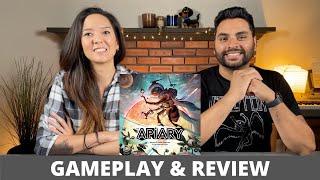
- Rich engine-building potential with asymmetric factions
- Deep endgame scoring with multiple routes (tiles, seed cards, and planet rewards)
- Tense two-player interaction and strategic tension at the endgame
- Long playtime in two-player games
- Steep learning curve due to many interacting mechanics and seeds
- Bee colonies, space exploration, hive management
- A far-future world where humans no longer exist and evolved honeybees explore space
- Narrated playthrough with asymmetric factions and evolving hive boards
Mechanics (from transcript analysis)
- development frames / tiles — Development tiles (frames) and recruit tiles expand capability and scoring opportunities
- endgame trigger — End occurs when hibernation tokens fill the comb or a player exhausts seven hibernation slots for two players
- exploration — Queen's Ship explores planets; discovering planets yields basic resources and special slots
- hive building / tile placement — Players place tiles and seed cards to grow their hive and unlock endgame scoring
- queen's favor track — A shared track that grants points as players advance; key for endgame scoring
- Resource management — Basic resources (fiber, pollen, water) plus advanced resources (wax, honey) drive actions and scoring
- retrieve / hibernate — Workers can be retrieved to gain income or trigger endgame via hibernation tokens
- Seed cards — Seed cards grant ongoing bonuses and endgame scoring multipliers; some seed cards modify strength or resources
Video topics + discussion points
Quotes (from this video)
- The object of the game really is just to score the most points.
- we're narrating everything that we do and explaining all the different actions that we take.
- the endgame is a real test of their engine-building and scoring potential.
References (from this video)
- high player interaction
- unique thematic mashup
- learning curve for unfamiliar bees-themed games
- bee management with science-fiction overlay
- bees and beehives with sci-fi twist
- designer-driven bee-centric design with thematic twist
- Tapestry
- Wingspan
Mechanics (from transcript analysis)
- bee_theme_resource_management — managing bees, hives, and pollination actions
Video topics + discussion points
Quotes (from this video)
- My job is to serve you. My job is to bring joy to your tabletop.
- Expeditions ... is a sequel very much mechanically and thematically.
- We are here to serve you and bring joy to your tabletop.
References (from this video)

- Dynamic worker pool adds meaningful pacing and strategic depth
- Space retheme preserves Wingspan familiarity while introducing fresh mechanics
- Seed cards and the two-resource economy deepen decision points without sacrificing accessibility
- Increased complexity compared to Wingspan may deter some casual players
- Dependence on publisher support and home community reception could affect perception
- Bees, research, space expansion
- Bees in a hive (initially grounded in beekeeping; later rethemed to space exploration)
- Naturalistic with sci-fi influences; thematic resonance beyond artwork
- Wingspan
- Catan
- Tapestry
Mechanics (from transcript analysis)
- Dynamic worker pool — A shifting set of available workers drives decisions and pacing across turns.
- Introduction of a second refined resource (wax) — Wax becomes a second refined resource in the space theme, enriching the economy and options.
- Planet exploration system (space version) — Exploration is repurposed from a grid to planetary exploration, enabling new flow and space-specific decisions.
- Resource conversion to honey — Three primary resources are converted into a honey resource, forming a core economy.
- Seed cards — Multi-use cards that can be discarded for instant resources or used for endgame scoring, introducing card-driven tempo and timing decisions.
Video topics + discussion points
Quotes (from this video)
- bees in space
- it's sequencing puzzle
- if you love wingspan and are looking for something a little bit different you know try this game
- DC seems like such an unlikely place to be like the center of an entire game design culture
- this is an amazing opportunity to work in the Wingspan system and put your own spin on it
References (from this video)
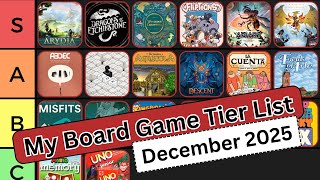
Mechanics (from transcript analysis)
Video topics + discussion points
Quotes (from this video)
- I am a little bit sad that I did not play this game before I made my top lists last year in December because this game is absolutely amazing.
- I'm not trying to farm views here. I'm just trying to be honest and transparent.
- If you lean into the theme like trying to dodge the bill, it is amazing.
- Stay safe and cheers.
- This was a great month for gaming and I really enjoyed a lot of games in December.
References (from this video)
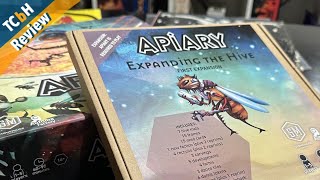
- Substantial content addition without heavy rules overhead
- Seven new Hive mats effectively double the original content
- Balanced updating of Ry and Secro factions; engineer and pharmacist tiles more balanced
- New Farm recruit development tiles add depth without overpowering the toolkit
- Packaging sustainability focus and minimal waste approach
- Includes updated rules reference and addressed balance concerns from base game
- Hive mats have awkward square corners
- Expansion is not mandatory; may not feel essential for casual players
- Some players may feel rebalance patches were unnecessary or understated
- Bees, growth, and spatial/resource optimization
- Bee-themed hive-building world; expansion content adds new hive mats, farms, and tokens
- abstract/strategic
Mechanics (from transcript analysis)
- Comprehensive rules reference and updated appendix — updated rules and references to streamline play
- Dance tiles / frames explore tokens — new tokens that broaden interaction with frames and exploration
- Engineers/Pharmacist tiles — tiles that previously auto-grab now require deliberate choice; rebalanced
- faction powers — updated to be less exploitable and more balanced with the base toolkit
- Farm recruit development carving tiles — 16 tiles introducing deeper development options with manageable complexity
- Gold carving tiles — new content to carve gold resources into the hive
- Hive mats — new modular mats that influence growth and placement decisions
Video topics + discussion points
Quotes (from this video)
- apiary expanding The Hive is maybe the most literal title for an expansion
- it's a more stuff expansion you know what I mean you got more seed cards more tiles more dances to buzz your busy butt
- the seven new Hive mats more than doubling the original allotment
- new Farm recruit development carving tiles not a huge amount 16 and all but there are some great additions in here
- not a mandatory expansion by any means
References (from this video)

- Accessible concept with approachable mechanics
- Thematic and family-friendly
- Some players may seek deeper engine-building options
- beekeeping and honey production
- Urban beekeeping / apiary theme
- light, approachable
Mechanics (from transcript analysis)
- Deck-building / hand-management — players build a deck and manage resources to advance goals
- Set collection / scoring cards — endgame scoring cards and in-deck opportunities drive decisions
Video topics + discussion points
Quotes (from this video)
- "we're going to do quarterly Vlogs"
- "If you are in the US feel free to be part of the giveaway"
- "the Meep store is closing"
- "two copies of this game"
References (from this video)
- 20-page rule book with one-page teaching guide
- Teaches all essential rules from teaching guide
Mechanics (from transcript analysis)
Video topics + discussion points
Quotes (from this video)
- The one thing I've realized from playing on board game arena is that I'm out of practice on scoring games. So I would say to game developers, make sure scoring is streamlined and not too convoluted.
- Musical immersion and satisfying feedback for interacting with the game. Fun game vs fun video game actions may not even have any actual utility, but they still feel good.
- Don't forget to design catchup mechanisms. The way Mario Kart World weighs its items based on racer position is such an enjoyable simple catch-up mechanism.
- Video games reward you for completing tough challenges with meaningful unlocks. Trek 12 is my favorite example of this.
- Video games stay fresh through patches, updates, and community content.
- Video games let you tailor the challenge to your comfort zone from casual mode to insane mode.
- Video games excel at simultaneous engagement. Everyone's playing all the time. Imagine Mario Kart where each player races one at a time instead of all at the same time.
- There are few things that are more intimidating than a 20 plus page rule book. Video games drop you into the action quickly and teach you as you play.
- Board games often withhold feedback until the final score tally. Video games give you constant feedback loops. Mid-game checkpoints and milestones could help players better understand how they're doing.
- I am much more of a tabletop game player than a digital game player. But I over the last few years, especially in researching Vantage, I researched a lot of video games.
References (from this video)

- clever dual-use of cards
- snappy, replay-friendly endgame structure
- potential for ties
- nature, social dynamics within a community
- bee colony and beekeeping ecosystem
- bright, bee-themed world-building
- Apistocracy
Mechanics (from transcript analysis)
- endgame trick-taking — endgame involves playing a hand of a trick-taking component called Wis
- worker placement with renewable card resources — cards act as renewable resources; spending a card to place a worker returns the card in the next turn
Video topics + discussion points
Quotes (from this video)
- Apiary is very much a bee game.
- Apistocracy kind of takes the idea of a beehive and turns it into a societal construct in Victorian England.
- I played two games of Smitten 2 with her husband this morning.
- The switch was super easy and seamless.
- You can't do that. you can only take one of these location actions.
- Vidiculture was a game that I designed from scratch from the ground up because I really wanted to design a game and put it on Kickstarter.
References (from this video)

Mechanics (from transcript analysis)
Video topics + discussion points
Quotes (from this video)
- 2023 was the greatest year in board game history for my tastes
- Conveyor belts are my favorite board game mechanism period
- This is a technological breakthrough for Games
- The greatest bag building game of all time
- Ode to the power and resiliency of Science and cooperation
- Wall-to-wall optimism and an Ode to the power and resiliency of Science and cooperation
References (from this video)

- Good game with potential for removal; speaker likes it but considers its place in purge
Mechanics (from transcript analysis)
- dexterity / resource management — Bee-themed engine-building with honey tokens and swarms.
Video topics + discussion points
Quotes (from this video)
- I will not be going through campaign games in this.
- I want to be more cutthroat than I ever have before.
- Quad Heroes is going. I hate it. I hate it so much.
- Monumental. If Monumental is still here in a year and hasn't been played, if next year's Purge, if I haven't played Monumental, it's going to go.
- Last Light can go. I'm not thinking off the shelf.
References (from this video)
- Distinct space-bee theme with flavorful art
- Rich engine-building with many upgrade paths
- Seed cards offer impactful strategic swing
- Overall openness supports creative play
- Complex rules may overwhelm new players
- Seed card hoarding can slow turns without a variant
- Potentially fiddly to track resources and tiles for beginners
- Bee-themed space exploration with hive management
- Space-based hive building and exploration
- Thematic engine-building with modular upgrades and seed cards
- Euphoria
- Wyrmspan
Mechanics (from transcript analysis)
- card management — Acquire, manage, discard, and convert cards for scoring and effects
- conversion and resource exchange — Convert cards and resources using worker strength to optimize scoring
- docking/worker recapture and shunting — Third worker triggers shunt; returned worker gains value; hibernation options
- endgame trigger — End when every space on the hibernation comb is filled
- exploration and resource generation — Move the Queen ship to unexplored spaces to generate resources
- growth and upgrades — Grow your force to access board extensions, farms, recruits and developments
- hibernation and scoring — Place hibernation tokens to claim rewards and free up workers
- income from farms — Farm tiles generate income per worker claimed
- seed cards and special tiles — Seed cards provide strong, game-changing effects; special tiles affect scoring
- tile management — Claim tiles to your ship board; unlocks bonuses and upgrades
- worker placement — Place workers on board spaces to gain actions and rewards
Video topics + discussion points
Quotes (from this video)
- The best thing about this game is space bees, I love this ridiculous theming
- Apiary is a game about space bees and I can't for the life of me figure out if it started off about bees first or if it was sci-fi first
- Seed cards are absolute game changers
- The openness of the game can be a bit overwhelming for new players