Architects of the West Kingdom is set at the end of the Carolingian Empire, circa 850 AD. As royal architects, players compete to impress their King and maintain their noble status by constructing various landmarks throughout his newly appointed domain. Players need to collect raw materials, hire apprentices, and keep a watchful eye on their workforce. These are treacherous times, and rival architects will stop at nothing to slow your progress. Will you remain virtuous, or be found in the company of thieves and black marketeers?
The aim of Architects of the West Kingdom is to be the player with the most victory points (VP) at game's end. Points are gained by constructing various buildings and advancing work on the Archbishop's cathedral. Throughout the game, players need to make a lot of moral decisions. However, only at game's end will their virtue be judged. A few underhand deals here and there might not seem like much, but fall too far and you will be punished. The game ends once a set number of constructions have been completed.
—description from the publisher

- Adds substantial depth with the co-op Tome Saga scenario and Age of Artisans expansion
- Artisan tokens, craft cards, and tools create meaningful strategic synergies
- Co-op pacing changes the feel of Architects, increasing tension and teamwork
- New board overlays provide fresh mechanics and resource pathways
- Endgame possibilities scale with player count and difficulty settings
- Co-op mode can feel punishing and mechanically dense, especially for first-time players
- Adornments and tools can seem like time sinks if players chase them at the expense of finishing the guild hall
- The overlord’s deck can swing quickly and unpredictably, potentially stalling or crushing the team late game
- Two-player games in this mode may feel too tight or unforgiving for some groups
- Managing multiple expansions simultaneously increases setup and teach complexity
- guilds, construction, overlord influence, and cooperative defense against chaos
- medieval fantasy city-building
- cooperative problem solving with occasional competitive undercurrents via the overlord
- Paladins of the West Kingdom
Mechanics (from transcript analysis)
- Apprentice and crafts system — the Age of Artisans expansion introduces apprentices, craft cards, adornments, and tools that modify how buildings and ongoing effects function.
- Donation and demand cards — players donate resources to fulfill demand cards; failures yield penalties for the team and successful completions grant points.
- Endgame triggers and event cards — the game can end by filling the guild hall or by the overlord ending the event deck; event cards can dramatically shift the final scoring.
- Guild hall overlay and apprentice market — an overlay board introduces new locations and a cycling apprentice market that refreshes periodically to expand board state and options.
- Overlord as a third actor — a separate deck and board control a non-player overlord whose scheme cards drive events and penalize players.
- worker placement — players place workers to perform actions at various locations (guild hall, cathedral, market, etc.). In co-op, workers belong to the team but are still managed individually.
Video topics + discussion points
Quotes (from this video)
- This is the co-op experience, no competitive play, against the overlord.
- Age of Artisans adds craft cards and artisans that count as two workers.
- We completed that card, that's nice.
- We were getting crushed turn one, felt pretty rough.
- Endgame can hinge on random event cards and the guild hall fill condition.
- Age of Artisans expansion is fantastic and highly recommended.
References (from this video)

- Engaging, highly interactive worker-placement core
- Strong thematic integration
- Cards (from this expansion) were underwhelming in this run
- Can be slow with larger player counts
- Arresting and managing workers within a city framework
- Medieval city-state; governance and building
- Strategic, heavy but thematic
- Raiders of the North Sea
- Agricola
- Feast for Odin
Mechanics (from transcript analysis)
- In-game arrest/jail mechanic — Arrest workers at a central location and redistribute them to your board.
- Inter-player interaction — Direct interaction through competition for actions and jail mechanics.
- worker placement — Take actions by placing workers and interacting with others' workers.
Video topics + discussion points
Quotes (from this video)
- I actually like all these games so uh and that is something I actually do too something with us getting rid of games is we often get rid of games that we actually like quite a bit
- it's super group dependent; one group this might be their favorite party game and another group this is like their worst nightmare
- I rate Wingspan an 8 out of 10; I have a great time with it
- Age of Innovation is a little better; Gaia Project is leaving but it's a great game
References (from this video)

- rich thematic setting with strong engine-building potential
- interesting tension between building and raiding
- some players find the rules heavy and repetitive
- solo mode relies on automation; balance can vary
- building a bustling medieval economy under pressure
- medieval realm with a later expansion about religious architecture
- Gloomhaven
- Spirit Island
- Caverna
Mechanics (from transcript analysis)
- deck-building and timing — cards provide actions that interact with board state and opponents
- Worker placement with action economy — players choose actions by placing workers with various benefits
Video topics + discussion points
Quotes (from this video)
- the three new solo games that I have played this last period since I have played these since this is coming out somewhat irregularly
- this is a fantastic solo game and the fact that the Box unrolls in order to become the board through which you have the camp and that's your fire
- it's a cooperative game and one of the things that would frustrate me as a higher multiplayer count game is that the solo and the multiplayer are exactly the same— you just divide up the components among other people
- there are a lot of really good games out there with just okay solo modes
- lean into those solo efficiency muscles and feel great about it
References (from this video)

- Tight pacing and fast turns with strong multiplayer feel
- Balanced and interactive, with clever prison/exile mechanics
- Theme can feel abstract if you’re not into euro-style systems
- Some players find expansions essential for deeper play
- Prison sentences for rivals, apprentices, and crafting a path to victory through efficient action sequencing
- Medieval west kingdom with guilds and political maneuvering
- Strategic, multi-path engine with emphasis on timing and interaction
- Vi Counts of the West Kingdom
- Paladins of the West Kingdom
Mechanics (from transcript analysis)
- deck-building / action-cards — Cards fuel choices and unlock powerful sequences.
- set collection / engine-building — As you gain apprentices and buildings, you create a personal win path with combos.
- worker placement — Place workers to perform actions, compete for positions, and manage your dungeon/prison themes.
Video topics + discussion points
Quotes (from this video)
- the customization in this game is insane
- this is such a clever system and again not too difficult to get your head round
- it's a dry point salad game
- the problem is is that i was experimenting and i don't think the experiment worked
- this is a build-your-own tableau game with a point salad style
- Cascadia is such a good gateway game
- it's not dead but that is a zatu sponsored video
References (from this video)
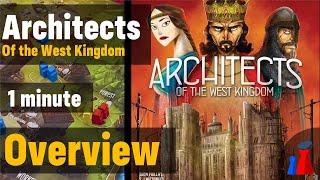
- Robust worker-placement economy with location bonuses that scale as you accumulate workers, creating satisfying tempo and engine-building potential.
- Tightly themed integration of architecture, religion, and governance that drives decision-making and adds thematic flavor to each action choice.
- Clear progression from acquiring apprentices to constructing buildings and advancing the cathedral, which creates multiple viable routes to scoring.
- Direct player interaction through hindering opponents adds strategic tension and non-passive competition to the engine.
- Pacing and table presence scale well with player count, offering room for strategic planning without losing the core tension.
- Learning curve can be steep for new players due to the interlocking rules and the need to predict how early choices influence later opportunities.
- End-game scoring can feel opaque without prior play or reference materials, which may slow down first-time sessions.
- At higher player counts, decision trees become dense, potentially increasing analysis paralysis and slowing down turns.
- Architecture, faith, guild politics, and strategic resource management within a growing city.
- Medieval kingdom in the Western realms, focused on architecture, religion, and governance as players compete to build and beautify the realm.
- Rule-driven with thematic flavor that emphasizes virtuous conduct, cathedral construction, and competing visions for the kingdom.
Mechanics (from transcript analysis)
- Construction and cathedral expansion — Building cards and cathedral components progress over the course of the game, representing architectural progress and creating scoring opportunities tied to project completion and placement.
- End-game scoring — At the end of the game, victory points are tallied to determine the winner, with points accrued from buildings, cathedral progress, resources, and virtue-related bonuses.
- End-game scoring and virtue track — A virtue track influences end-game scoring and available strategic options during play, adding a thematic layer that guides decisions as victory approaches.
- Opposition and hindrance — Players can hinder rivals by capturing their workers and sending them to the guardhouse to gain money, introducing direct interaction and competitive tension into tenure planning.
- Resource management and acquisition — Gaining resources is central to fueling apprentices, building cards, and contributing cathedral components. Efficient resource flow enables multi-step combos and synergy between actions.
- worker placement — Players place workers on various action spaces to garner bonuses and resources. Workers remain on spaces, enabling a developing engine where the number of workers amplifies benefits from each location.
Video topics + discussion points
Quotes (from this video)
- the player who has accumulated the most victory points will be the winner in architects of the West Kingdom
- track not only affects your final score but also some of your options during the game
- hinder their opponents by capturing groups of their workers and sending them to the guardhouse to gain money
- the more workers you have the more benefits you gain when you visit the location
References (from this video)
- Solid engine-building
- Elegant design with thematic integration
- Deep strategic options
- Steep learning curve
- Rules complexity can be a barrier for newcomers
- Architecture, politics, and guild-driven competition
- Medieval West Kingdom
- Strategic Euro with high interaction and tension
- Paladins of the West Kingdom
Mechanics (from transcript analysis)
- engine-building — Create a powerful action engine through careful build-order planning.
- worker placement — Assign workers to perform multiple distinct actions.
Video topics + discussion points
Quotes (from this video)
- 3M ball games is a channel that isn't around shifting product we're not around making Publishers look good for the purposes of selling more toys to you
- none of what we do here is specifically brought and paid for by by any publisher
- we want to be a voice of the customer
- if you want to keep independent voices out there in the board game Space who aren't doing just marketing then you know consider supporting a channel
References (from this video)

- different from basic worker placement
- arrest mechanic adds interaction
- prison system creates strategic decision-making
- good with 5-6 players
- snappy quick turns
- doesn't drag with higher player counts
- first in West Kingdom Trilogy
- Artisan expansion is a must-buy
- money economy slightly broken in base game (fixed by Artisans expansion)
- second expansion less essential
- no solo mode in base game
- medieval
- workers
- building
- kingdom
- economy
Mechanics (from transcript analysis)
Video topics + discussion points
Quotes (from this video)
- all these factors that go into this list and the games that I enjoy at any particular time
- I like deck builders, it's a good fun mechanic
- watch their brains click and then you're like yes got you hook line and singer
- it's only a game
- these people should not touch card games - hate those people
References (from this video)
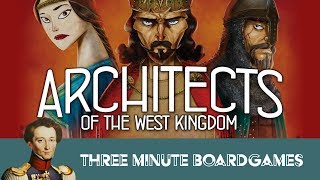
- Innovative worker placement with no resets leads to low downtime and efficient tempo when played quickly
- High player interaction via the reclaim/reclaim mechanics and jail/debt dynamic
- Strong thematic integration (cathedral, virtue, market politics) and a broad array of buildings and powers
- Faction cards and workshop options add variety and replayability
- Feels like a fresh take on worker placement compared to Raiders of the North Sea and Pillars of the Earth
- Complexity may be overwhelming for some players
- With a dozen action spaces, beginners risk analysis paralysis or slow early games
- The density of rules can produce a steeper learning curve and potential pacing issues
- political ambition, guild power, virtue, debt, and religious spectacle centered on cathedral construction
- Carolingian-era town-building and architectural competition, circa early medieval Europe
- competitive, story-light abstraction with direct player interaction and evolving town dynamics
- Raiders of the North Sea
- Pillars of the Earth
Mechanics (from transcript analysis)
- black market and buffs — A black market provides powerful bonuses but comes with costs; market spaces can become blocked and require rest to free up workers
- cathedral construction — Building the cathedral yields victory points and virtue bonuses, with limited final-step opportunities allowing strategic timing
- faction cards with variable powers — Double-sided faction cards provide universal and variable powers, increasing replay variety and strategic depth
- jail/debt/robbery mechanics — Overfilled spaces can lead to workers going to jail or debt; players can arrest, trade, or reclaim workers via the guard house and town center
- no refresh phase — There is no automatic reset of workers between rounds, increasing pressure to plan with the current workforce
- worker placement — Players place workers to gain actions, resources, and immediate benefits; workers persist until end of round rather than refreshing
- workshop and building plans — Assistance and new building plans can be acquired, offering buffs and expanded options for future turns
Video topics + discussion points
Quotes (from this video)
- Architects of the West Kingdom is a fascinating take on the worker placement and it's quite unlike any other game.
- No resets means very little downtime and game maintenance.
- Not a multiplayer solitaire game and you will need to keep an eye on your opponents.
- There's a lot going on in this game and it might be a bit overwhelming for some players.
References (from this video)
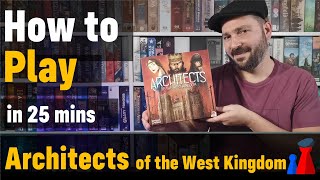
- Thorough, clear explanation of rules and location actions
- Good emphasis on the virtue track and its long-term impact
- Covers major mechanics: guild hole, black market, town center, prison
- Complex setup with many components and potential for confusion
- Rules-dense; may be intimidating for new players
- Power, virtue, and strategic construction within a medieval city
- Medieval West Kingdom, cathedral construction and civic governance
- Tutorial narrative providing step-by-step rules and setup guidance
Mechanics (from transcript analysis)
- Building construction and cathedral levels — Spend resources and engineer apprentices to place building cards or advance cathedral levels for points.
- Drafting and tableau management — Draft apprentice and building cards into a personal tableau; limit and discard rules apply.
- Endgame scoring with multiple categories — Score categories including cathedral, virtue, debt penalties, workers capture, and relics from buildings.
- Market and black market — Special spaces that grant various actions; black market resets add tension and choice.
- Prison/guards and capture — Capture opponent workers via town actions, and release or pay debts; influences scoring and resource flow.
- Resource management — Gather and spend multiple resource types (wood, stone, clay, gold, marble, silver, etc.) to pay costs and trigger effects.
- Virtue track — A position-based scoring and action-modifier track that affects end-game scoring and available options.
- worker placement — Players place workers on various locations to gain actions, resources, or effects.
Video topics + discussion points
Quotes (from this video)
- The Guild hole this is because through this action you can construct building cards or build levels of the cathedral
- The Virtue track depends on your marker's position; end of the game you gain victory points if you end up high
- The Black Market has three spaces for one worker only
- you can capture all workers of the same color even your own from one location
- this is your main source of gaining victory points
References (from this video)

- plays better at higher player counts
- fast-paced worker placement system
- workers cycling in and out
- unusual and highly recommended
- construction and planning
- medieval building
- strategic
Mechanics (from transcript analysis)
- fast paced — fast-paced worker placement with cycling workers
- worker placement — worker placement game
Video topics + discussion points
Quotes (from this video)
- this is my list the video says the top 100 board games of all time but it really is just my top 100 board games of all time
- three minute board games is an independent channel we dont take money from publishers and we do not do any form of paid content
- Mosaic has the ambitious goal of being a civilization game that can be played in two to three hours and it very much succeeds at this goal
- a game that does not need to be played with a traitor because the inherent selfish goals in this game created enough internal conflict
- I love space racing games and space corp is the game that is most racy as far as space racers go
- the term I use instead of gateway game is foundation game
- Sentinels could easily be a forever game the kind of game you just play over and over and over and over again endlessly
- Modern Art is a simple and brilliant and beautiful game and easily the best pure auction game Ive ever played
- Black Orchestra models some very clever things about how conspiracy is run
- when I asked the question hey what game should I play with my non-gamer friend who's interested in gaming but hasn't done much gaming I almost always answer Sentient Golem Edition
- Arkham Horror is the game that really made board gaming my number one hobby
- there are a few things more fun and rewarding in board gaming than organizing a fight in the arena
- Twilight Struggle is one of the best head-to-head games out there
- Santorini is the definition of an elegant design
- Arkham Horror the card game absolutely should be for you it's a hundred percent for me and it is my number one game of 2023
References (from this video)

- Really streamlined and smooth rules
- Easy to teach but with strategic depth
- Nice twist on worker placement mechanics
- Endless cycle of arrest and release adds interaction
- Expansion elevates gameplay to next level
- Plays relatively quickly around 60-90 minutes
- Flows without fiddly rules
- Generic medieval theme
- Building and constructing medieval buildings
- Medieval times, cathedral building
- Generic medieval theme but well-executed
- Raiders of the North Sea
Mechanics (from transcript analysis)
- Apprentice system — Use different apprentices for different abilities
- Building Construction — Build cathedral and various buildings for points
- Dynamic gameplay — No formal rounds, game ends when players finish
- Worker arrest — Arrest other players' workers to get money, but they must eventually be released
- worker placement — Workers become more powerful as you place more workers on a space
Video topics + discussion points
Quotes (from this video)
- It's the lower end of middle weight but I still think it's a solid game
- Medium and heavy weight doesn't mean that it has to be the most complicated fiddly thing to get through
- I love it when a game is just smooth streamlined gorgeousness
- This is a fantastic laugh out loud euro game
- This is definitely my definitive space game
- How dare you not play this game sooner
- The variety in this game is off the friggin scale
- This game just ticks all the boxes for me
- It seems like this game was designed for me
- Regardless of what's light medium or heavy as long as you're playing at the right stage for you it's only a game
References (from this video)
- Large worker pool (16 workers)
- Alternative reclamation mechanic via arrest
- Player interaction through arrests
- No standard refresh phase
- medieval
- building
- kingdom
Mechanics (from transcript analysis)
Video topics + discussion points
Quotes (from this video)
References (from this video)

- Accessible entry point into the West Kingdom trilogy
- High player interaction and variability
- Expandable with more content and variants
- Rules overhead can be daunting for complete beginners
- Can feel punishing if not played with attentive new players
- Worker placement, resource management, and penalties for missteps
- Medieval church-building setting with jail risk and political maneuvering
- Historical fantasy with a governance/temple-building flavor
- Lords of Waterdeep
- Paladins of the West Kingdom
Mechanics (from transcript analysis)
- Jail/penalty mechanic — Players can be knocked into jail as a risk-reward element.
- Resource management — Acquire and allocate resources to build structures and advance the church.
- worker placement — Place workers to score points, gain resources, or trigger special actions.
Video topics + discussion points
Quotes (from this video)
- International tabletop day is happening this weekend so I don't know if people celebrate it anymore.
- This is going to be a top 10 list for you, focusing on games for people who are new to the hobby.
- This is a stepping stone game that you can branch off to all other rolling rights or flip-and-write games that are out there.
- The Lost Ruins of Arnak is the heaviest game on this list, it might not be for everyone.
References (from this video)

- Strong lineage from Raiders of the North Sea
- Solid worker-placement feel with cathedral-building objective
- Relies on familiar worker-placement tropes for some players
- constructing a grand cathedral via worker placement
- medieval city-building / archbishop window
- historical-fantasy builder with thematic flavor
- Raiders of the North Sea
Mechanics (from transcript analysis)
- point-based engine building — Progression toward constructing a cathedral yields points
- solo bot interaction — A solo bot simulates opposition and can arrest players
- worker placement — Players place workers to take actions and gather resources
Video topics + discussion points
Quotes (from this video)
- it's basically a big game of Among Us
- the board game, the way they've done it, looks amazing
- I just want the price to come down
- the wife will probably actually play this one with me
- this looks like the perfect Monster Hunter game
- I went all in on this
- I am super hyped for this game
References (from this video)
- Solid engine-building feel with tense decisions
- Can be fiddly for new players
Mechanics (from transcript analysis)
- Worker placement with drafting / action track — Drafting workers and building reputation/actions through a structured track.
Video topics + discussion points
Quotes (from this video)
- Dominant species is a truly awful game that I really really dislike
- this is a very very light worker placement game
- the seventh continent for us
References (from this video)
- Deep strategy with multiple paths to victory
- Thematic integration with mechanics
- Complex balancing due to multiple paths
- Endgame can scale with player count
- virtue vs corruption, cathedral construction, religious/municipal politics
- medieval West Kingdom city-building
- emergent story through virtue track and cathedral actions
- Raiders of the North Sea
- Paladins of the West Kingdom
- Village
- Lewis and Clark
Mechanics (from transcript analysis)
- Engine-building via apprentices — Apprentices allow for divergent strategies and progression.
- The virtue track / black market / cathedral — Decisions affect virtue track; access to cathedral and black market changes game flow.
- Worker investment — Investing workers increases rewards on future placements.
Video topics + discussion points
Quotes (from this video)
- just try something fresh
- staring at stuff until the idea comes out
- you can't please everyone
- the place one pick one mechanism was very much like just a spark of an idea that worked
- you don't own the workers you share them
- it's not just building ... it's engine building with apprentices
References (from this video)

- strong game design and theme
- well-regarded engineering of actions
- complex for new players
- architecture, governance, duties, and authority
- medieval era, city-building and governance
- strategic, engine-building
Mechanics (from transcript analysis)
- worker placement — players assign workers to perform actions that build and optimize the city
Video topics + discussion points
Quotes (from this video)
- they are kaput they're gone
- the rights of the game has reverted back to the designers
- this expansion sounds neat
- expansion fatigue
- as long as I get to just shout boy all the time then I'm good to go
- I'm looking forward to cool things happening in the board gaming community
References (from this video)

- Deep engine-building
- Solid interaction with rivals
- Rule complexity can be a barrier for new players
- Guilds, resource management, and engine-building in a medieval setting
- Medieval city
- Host expresses growing affection while describing mechanics
Mechanics (from transcript analysis)
- worker placement — Players assign workers to take actions like drafting, building, or collecting resources.
Video topics + discussion points
Quotes (from this video)
- I really begin to love Architects more and more.
- Probably one of the best two player games out there.
- it's a really cool pushy luck game, it is very dependent on luck but it's also really fun and quite quick.
- lost cities again
References (from this video)

- Massive meeple presence and satisfying scale of actions
- Strong vertical progression and endgame tension
- Iconography can be dense for new players
- Some players dislike jail mechanic
- Architecture, craftsmanship, and political machinations
- Medieval city-building in a guild-driven context
- mechanics-first with thematic flavor
- Paladins of the West Kingdom
- Gallerist
- Kanban
Mechanics (from transcript analysis)
- Resource management — Gather and convert resources to score and upgrade actions
- Sequential actions and jail mechanic — Certain actions unlock more power; jail can restrict choices
- Worker placement with stacking/culmination — More workers in a location increase yields and penalties
Video topics + discussion points
Quotes (from this video)
- super fun, super cute
- pure work replacement and that's almost it
- the game is so good it reminded me how good this game is
- it's just so small, perfect for family weight
References (from this video)

- One of the cleverest solo modes on the market
- Clever AI opponent system
- Engaging worker placement mechanics
- Better at higher player counts with more interaction
- May need three AI opponents to really shine
- Worker placement with AI opponent
- Medieval kingdom
- Strategic gameplay
Mechanics (from transcript analysis)
- AI Opponent — Solo mode features an intelligent AI opponent that takes actions and occupies spaces
- worker placement — Place workers to occupy spaces and take actions
Video topics + discussion points
Quotes (from this video)
- I've played about 300 solo games so this represents the top of all the solo games I've played
- These are entirely my opinions based on my personal play experience
- I think this is one of the cleverest solo modes on the market
- When you win a game of Robinson Crusoe there are very few things in solo board gaming more satisfying
- The closest experience in board gaming to being the captain on a bridge in a sci-fi movie where everything is going to shit
- I'm probably a solo board gaming masochist
- I just love Thunderbirds as a solo game
- It feels like Legendary Encounters was built for the Alien theme and was built as an upgrade to the original Legendary system
- Probably the best AI opponent in all of board gaming
- Few games have that genuine sense of exploration
References (from this video)

- Tightly integrated mechanics with strong thematic flavor
- Engaging worker-placement decisions
- Can be heavy for newcomers due to multiple interacting systems
- Lorenzo Magnifico
- Grand Austria Hotel
Mechanics (from transcript analysis)
- set collection / archery of reputation — players collect specific cards/resources to fulfill building/advancement goals.
- worker placement — players place workers to perform actions that build their city and reputation.
Video topics + discussion points
Quotes (from this video)
- We're going to be playing Root live via TTS tabletop simulator with two other people who are previous tournament winners of Root.
- This is not sponsored at all this is just kind of a big shout out.
- Let's break down those barriers, let's get those games played.
- Tricarion is one of my favorite games of all time.
- Patchwork is the classic two-player puzzle game.
- We were sent the newest box which we're going to be reviewing as well as a second box.
- Put the word unlock in there, that way we know you want to be part of this.
References (from this video)

- Great art
- Part of a well-regarded series
- architecture
- medieval
Mechanics (from transcript analysis)
- worker placement — placing workers to build
Video topics + discussion points
Quotes (from this video)
- I got this for Christmas I have no idea how to play this
- I remember liking it I I I don't remember not liking it
- if you like dachshunds or if you like which is like the hot dog dogs
- I liked the first two times I played I was like oh that's fun and then the more you play just kind of grates on you
- Brittany said that if you ever play this with me again I will burn down this house
- I will never get over it it's done
- you could play it like one to 100 players
- my brain is exhausted I feel like this is one of those games gets you the gears going your head
- I have no idea what this game is but how cool is that art
- this is just chess but it's like shot glasses
References (from this video)
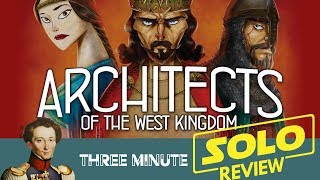
- Innovative no-refresh worker placement system that minimizes downtime and maintains momentum
- AI opponent that feels like a genuine sparring partner rather than a passive blocker
- Wide variety of buildings and assistants creates strong replayability and strategic depth
- Rhythm and tension are well-tuned; interaction between players and AI is engaging
- Steep learning curve due to the breadth of interactions and potential combos
- The volume of action spaces and decisions can be overwhelming for new players
- building projects, virtuous scoring, and cathedral construction in a competitive town
- Carolingian Empire, circa 850 AD
- strategic, rhythmic, and adversarial interaction with an AI counterpart; tournament-style competition
- Raiders of the North Sea
Mechanics (from transcript analysis)
- AI opponent deck — The AI is driven by a deck that turns over and resolves its effects; the AI deck strengthens over the course of the game via upgrades.
- Arrest and reclaim system — You can arrest workers in the town center to reclaim them to your board via the guardhouse, adding strategic tempo to worker management.
- Assistance and virtue tracking — Assistants grant ongoing bonuses; virtue (a scoring track) rises through virtuous actions and can be influenced by risky or virtuous choices.
- Resource management and building — Players collect resources (wood, ore, etc.) to construct buildings, a cathedral, and other bonuses, with VP tied to completed structures and bonuses.
- Worker placement with no refresh phase — Workers stay on spaces and provide amplified effects the more workers you place on a given spot; there is no mid-round refresh, so decision-density remains high throughout play.
Video topics + discussion points
Quotes (from this video)
- Architects of the West Kingdom is a fascinating take on a worker placement
- the best thing about this game is the innovative worker placement system
- no resets means very little downtime and game maintenance
- it's a sparring match with the AI
- this game could be considered the fourth game in the North Sea trilogy
References (from this video)
- Elegant track system with thematic consequences
- Dynamic tension around timing of end-game triggers
- Some players dislike track-heavy design or end-game pressure
- Building infrastructure and managing virtue vs corruption
- Medieval kingdom governance with church/king's storehouse theme
- Ethical and political power dynamics
- Zulkin
- Calus 1303
- Raider of the North Sea
Mechanics (from transcript analysis)
- Black Market and Prison mechanics — Tension via disruption and penalties tied to a late-game reset mechanism.
- Tracks (Virtue and Cathedral) and markets — Tracks provide bonuses and restrictions; players race toward end-game scoring on cathedral track.
Video topics + discussion points
Quotes (from this video)
- I'm Adam Porter I'm a game designer from Wales and I've been fascinated by worker placement games for a decade
- Five criteria immersion interaction tension feedback and decisions
- worker placement is a thematic description... describes a narrative of sending our little in-game avatars out to take actions
- the simple Act of placing such a token denies other players access to that action for the rest of the round
References (from this video)

- solid, smooth engine
- short playtime for a gateway worker placement
- arrest mechanic may feel punitive
Mechanics (from transcript analysis)
- worker placement with arrest mechanic — Place workers to gain rewards; opponents can arrest you, confiscating resources and money.
Video topics + discussion points
Quotes (from this video)
- mind was a big hit for me in 2018
- this is the second Wolfgang Warsch game
- Gloomhaven really did blow me away
- absolutely genius mechanisms
References (from this video)

Mechanics (from transcript analysis)
- worker placement with Automa/bot opponent — play against an automated opponent with evolving schemes via a toma card deck.
Video topics + discussion points
Quotes (from this video)
- I like the simple progression that you see in the game of Agricola in solitaire mode.
- there's a lot of room there for creativity and innovation.
- one thing that I found is really fun in a solitaire game is if there is a little bit of an element of story.
References (from this video)

- Nice red-orange background
- Figures centered looking directly at viewer
- Real attitude and personality in characters
- Scarred knight conveys medieval setting
- Castle scaffolding adds depth
- Stunning composition
- Castle building
- Medieval Europe
- Historical
Mechanics (from transcript analysis)
- worker placement — Medieval construction game
Video topics + discussion points
Quotes (from this video)
- The box cover makes a promise to the customer
- Every box cover tells me what I'm going to be doing and how I'm going to be feeling
- This artist is one of the best board game artists working in the industry right now
- This is how you do it
- This cover is a mess
- Striking iconic design
- The box cover is not selling the game