Arcs is a sharp, tactical space opera game, for 2–4 players, set in a dark yet silly universe. Players represent officials from a distant, decaying and neglectful Empire who are now free to vie for dominance whether through battle, gathering scarce resources or diplomatic intrigue. Ready yourself for dramatic twists and turns as you launch into this galactic struggle.
A deck of cards in 4 suits with ranks from 1-7 (2-6 for less than 4 players) defines the action selection system. These cards are played in a trick-taking adjacent system to select actions, take the initiative and declare Ambitions. The 3 declared Ambitions are what will score in that deal. Timing is everything. Bad hands must be mitigated by careful card play and benefitting from other players' card play.
Battles are resolved quickly with the attacker choosing their level of risk. The defenders must be prepared with adequate defensive ships and cards in their tableau.
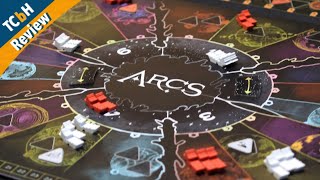
Each game contains a hundred wooden ships and agents, 18 custom engraved dice, a beautiful six-panel board, and tons of cards with over 60 pieces of unique art. The base game may be played without the optional Leaders and Lore cards (for an easier teach) or with them for a richer, fuller and asymmetric game. It is also the core of the campaign game (requiring the Blighted Reach Expansion), which provides an epic, more thematic experience.
- strong level of asymmetry by position, resources, and hand
- expansions (Blighted Reach) add depth and variability
- can be chaotic and heavy; rule clarity can be a learning curve
- interstellar exploration and factional play
- sci-fi space empire with modular asymmetry
- scenario-driven with evolving chapters
- Brass
- Root
- Dune Imperium
Mechanics (from transcript analysis)
- draft of leaders and lore — players draft leaders and lore cards that stack on top of a symmetric base
- three-act structure with chapters — each chapter changes resources, hand of cards, and strategic options
Video topics + discussion points
Quotes (from this video)
- asymmetry is The Game's capacity to encourage and force different decisions from players by creating unique advantages or disadvantages
- turn order is the plague the kill of so many otherwise symmetrical games
- it's a pure unfiltered symmetrical game and it's a perfect example for our base level
- a single difference will create a Cascade of changes that dramatically changes the play style and strategy between each player
- asymmetry lets us express and connect to a very human feeling of having personal strengths and weaknesses
References (from this video)

- clever integration of dice and tiles
- deep interactivity and potential for varied play
- engaging growth via tech upgrades and new aliens
- narrative app adds complexity
- dice/tiles stickers can be messy and require care
- rotating board play and alien encounters
- underwater/alien-inspired exploration with rotating mechanics
- narrative-driven with app support
- Ark Nova
- Underwater Cities
- Cosmic Encounter
Mechanics (from transcript analysis)
- app-driven campaign — app provides narrative and rule changes as play progresses
- dice-based resource acquisition — roll dice to target tile values and combinations
- tile placement with stickers — stickers on dice and tiles modify outcomes and abilities
Video topics + discussion points
Quotes (from this video)
- this is right now my game of the year just of Robin Hood
- it's a cat and mouse game
- the base game is strong; Leaders expansion can be excellent but problematic
- the deck building piece in the app is really cool it's really easy to use
- it syncs up to board game arena
- Fromage is 100% going to get a review for me at some point
References (from this video)
- Blends storytelling with asymmetry and trick-taking in a space setting
- Each character feels distinct with meaningful decisions
- Unreleased status; release date and availability uncertain
- Narrative-driven asymmetry with trick-taking elements
- Space-based, narrative-driven campaign across multiple sessions
- Campaign-style storytelling with evolving choices
- Oath
- Root
Mechanics (from transcript analysis)
- asymmetry — Different character decisions shape paths and powers for players
- Narrative Campaign — Story-driven progression across sessions with evolving outcomes
- Trick-taking — Central trick-taking mechanic where card play drives outcomes
Video topics + discussion points
Quotes (from this video)
- arcs is a narrative driven trick taking campaign game from Cole Worley and Leader Games
- each character feels different and gets to make different decisions
- it's such a quick polyamino game that feels like it gets over before it even begins
- the best part about Green Team Wins is the discussion and the banter that happens in between questions
- Mosaic is an engine building civilization game for one to six players
- by the end of the game all of our Empires are really churning along
References (from this video)

- epic scope in a small box
- great combat and scoring
- compact footprint
- epic combat with space fleets and ships
- space warfare/sectoral conflict
- epic scale packed into a small box
Mechanics (from transcript analysis)
- player-driven scoring — scoring determined by players' actions and choices
- trick-taking with action selection — combines social/goal-driven scoring with combat and maneuver choices
Video topics + discussion points
Quotes (from this video)
- Itto is one of the best party games ever made. It is a Dice Tower essential.
- Message from the Stars is such a great deduction game. I got a chance to teach it again recently and it just blows people's minds every time.
- I love this theme of the psychotherapists... it's so good, so rewarding.
- Rainbow has this fantastic mix of For Sale where you're trying to win different trenches of cards in the middle of the table—the depth is remarkable for such a tiny box.
References (from this video)

- Innovative integration of trick-taking with area control and asymmetric play
- Multiple open-ended scoring routes and flexible paths to victory
- Leader and lore cards add depth and replayability, with potential for evolving narratives
- Strong four-player dynamics and a distinct two-player puzzle that feels tactical
- Expansions promise a broader campaign experience and more varied setups
- Steep learning curve and rulebook clarity issues; some questions require outside references or community clarification
- Dice swinginess can produce large point swings and perceived volatility
- Base game lore/crafting is relatively thin; lore and narrative may not land for all players
- Balance across player counts and strategies can be unsettled, leading to runaway leaders in some sessions
- Memorization and information tracking can be challenging for players with memory demands or attention differences
- Asymmetry, ambition, and conquest via leader and lore cards
- Space opera in a distant galaxy focused on outpost building and planetary control
- Emergent, lore-lite with potential for deeper storytelling through leader/lore cards; base game has minimal fixed narrative
- Twilight Imperium
- Cosmic Encounter
- Root
Mechanics (from transcript analysis)
- Ambitions track and endgame scoring — Each card or action can contribute to Ambitions scoring; crossing a threshold triggers endgame and determines the winner based on points rather than purely military might
- Area control and tableau growth — Players establish and expand outposts on a central map, building a persistent spatial engine while managing resources and scoring through Ambitions
- Asymmetry via leader and lore cards — Drafted leader cards grant unique abilities, starting resources, or setup variations; lore cards can be integrated to flavor and diversify campaigns and score opportunities
- Campaign and expansion potential — The big box expansion introduces multi-year narrative arcs and modular storytelling that can transform the base game into a long-form campaign experience
- Dice-driven combat with color-coded risk — Dice come in different colors with varying risk/reward profiles; outcomes affect battles, resource drain, and board presence; swingy results create tension and potential for dramatic shifts
- Memory and information management — Players must track previously played cards and anticipate others’ hands, with the possibility of memorization giving a strategic edge
- Resource management with multiple resource types — Distinct resource tracks (e.g., Tyrant, Warlord, Keeper, Empath) influence what actions you can take and how you invest in scoring and expansion
- Trick-taking with initiative-driven rounds — Players play a card to follow the leading card's color/number; initiative sets the round's parameters; other players can respond with same color for higher value to gain actions, or play other cards for alternative effects; the deck is shared rather than each player owning a personal deck
Video topics + discussion points
Quotes (from this video)
- a race to win Victory Point driven game that combines area control with trick taking card mechanics
- The trick taking here is smart and it's hard in a lot of weird interesting ways
- I really like this game I think the game design is clean and elegant I think it is chaotic
- the lore and the narrative is falling flat for me
- Open-ended strategies there are a lot of different ways to go for victory here
References (from this video)

- high tension and tactical depth
- creative trick-taking mechanism
- engaging table dynamics
- polarizing; not for everyone
- tension and scoring
- Abstract, competitive trick-taking context
- high-tension puzzle
- Root
Mechanics (from transcript analysis)
- Trick-taking — hand of cards around three scoring mechanisms; dynamic lead determines scoring.
Video topics + discussion points
Quotes (from this video)
- There is a lot of tension around the table with arcs; the tension is utmost.
- This is one of the more polarizing games, but I enjoyed it.
- Mechs versus Minions is pure fun; you are manipulating this mech by running your command line.
- Race for the Galaxy which for both of us is our most played game from a physical play standpoint.
References (from this video)
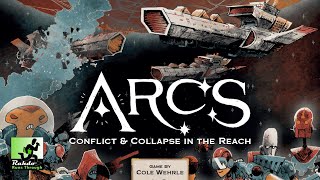
- rich, thematic artwork and personality on the cards, reflecting Cole Wehrle's distinctive style
- deep strategic depth with multiple viable paths (ambitions, diplomacy, and military pressure)
- strong asymmetry between factions (Upstart vs Elder) creates varied strategic options each game
- tight interplay of trick-taking mechanics with thematic ambition and resource management
- two-player pacing feels intimate and tense, with meaningful choices each turn
- rules-dense and systems-heavy; can be daunting for new players
- two-player balance can hinge on card draw and early lead, potentially leading to uneven momentum
- combat can be punishing and lengthy, which may slow down play for some groups
- board state and tokens require careful tracking; potential for misplays without careful setup
- psionics, ambitions, taxation, and military conflict across planetary systems
- space, galactic politics and empire building
- card-driven, trick-taking with asymmetric factions and evolving board state
- Root
- Oath
Mechanics (from transcript analysis)
- Ambitions and scoring tokens — players declare ambitions that determine scoring criteria; tokens track progress and influence end-of-round scoring
- area/planet control — players compete for systems and planets to gain resources, influence, and scoring opportunities
- combat with dice — combat uses blue and red dice to deal damage; hits translate into ship losses or trophies, with nuanced rules about initiative and trophies
- hand management — cards in hand determine actions, with value and suit affecting what you can do each turn
- initiative and card leverage — control of initiative affects the turn order and opportunity to push for game-altering actions
- Prelude and card discards — a transitional phase where resources enable extra actions before resolving card effects
- resource management and taxation — psionic, fuel, material, and other resources are earned, moved, and spent to take actions or secure card effects
- Trick-taking — players hold a hand of cards with pips and suits; the lead card determines available actions; followers may follow suit or not, influencing scoring and abilities
Video topics + discussion points
Quotes (from this video)
- Arcs is set in space
- it's a Space strategy game but it is also kind of a trick-taking game
- Arcs is deep I think strategically and tactically
References (from this video)
- did not deserve the hype
- prelude actions were forgotten in review
Mechanics (from transcript analysis)
Video topics + discussion points
Quotes (from this video)
- Remember it's only a game
- I am very much one of these people that if you go after my family or friends there will be hell to pay
- Five out of ten is average, it's a game that I would still play if you put it on the table
- I do really like closed drafting in games
- I love the way that you plan for this sort of stuff
- Power Grid is the worst contender for this, auctions in this just refuse to freaking end
- I want to see it more - the typewriter mechanic
- Area control is just kind of meh
- It's just so many of these games are just like oh we need to make a quick buck
References (from this video)

- Unique trick-taking mechanic
- Epic space theme
- Innovative gameplay
- Space odyssey
- Space
Mechanics (from transcript analysis)
- Space Exploration — Build spaceships, invade planets
- Trick-taking — Players play cards into tricks
Video topics + discussion points
Quotes (from this video)
- What are the hottest board games right now?
- Why are they so scorching hot?
- Are any of them worth your time?
References (from this video)
- Fresh take on a very old mechanic (trick-taking) as the core engine
- Ambition-based scoring creates dynamic, player-driven victory conditions
- Layered combat with differentiated dice adds tactical depth without excessive complexity
- Emergent powers from guild-like cards enable rule-bending interactions
- Prone to massive reversals and brutal swings with little safety rails
- Highly punishing if you get raided or fall behind; potential for discouragement
- High variance can undermine steady strategy in some sessions
- Ambition management can be opaque and volatile for new players
- Ambition, conquest, and scalable victory conditions through public goals
- Spacefaring civilization across a galaxy of planets and space routes
- Ambition-driven, emergent storytelling via player-chosen objectives
- Twilight Imperium
- Eclipse Second Edition
Mechanics (from transcript analysis)
- Action economy — Actions are taken via card-encoded actions (build, repair, tax, influence, secure, move, battle) with resource and unit management baked into the card system.
- Ambitions and scoring — Public ambitions provide scoring opportunities; declaring ambitions alters lead card values and influences scoring markers across a track.
- area/resource management — Goods accumulate on a player board; cities and fleets expand storage capacity and influence payment/identity of gains.
- Combat Dice — Three sets of dice (blue, red, yellow) with different risk profiles; outcomes affect ships and raiding outcomes.
- hand management — Players draw a six-card hand at chapter start and manage play to optimize actions and ambitions.
- player interaction and raid — Raids allow opponents to steal items based on raid keys; combat and diplomacy influence relative control of cards and resources.
- Trick-taking — Cards 1-7 in four suits; leaders play first, higher cards in the same suit beat lower; others can follow with different suits to take single actions, or play face down to take actions from the leading suit; declaring an ambition can set your lead card to zero.
Video topics + discussion points
Quotes (from this video)
- Arcs is something special but that also means it's likely to be an intensely polarizing game
- there are aspects of it that are simply brilliant, for example making basic trick taking the Cornerstone of the game
- the best thing about this game is just how fresh it feels despite using one of the oldest mechanics in gaming
- Arcs is brutal and unkind but in a way that seems to reward audacious plays
- Arcs more like flips: gold medal game
References (from this video)
- Clear framework to discuss luck and mitigation
- Shows how input/output randomness interacts with agency
- Complex to model precisely
- Abstracts some theme-specific flavor
- Card-driven combat with randomness shaping rounds
- Analytical framework for luck and agency
- TI4
- Quacks of Quedlinburg
Mechanics (from transcript analysis)
- Combat Dice — Output randomness tests decisions and outcomes.
- Random card hand each round — Input randomness provides the core puzzle and options.
Video topics + discussion points
Quotes (from this video)
- Randomness is the mathematical engine that produces unpredictability, while luck is how that unpredictability interacts with our plans and desires in the game.
- Mitigation is your defense against pure chaos, your weapons for taming the beasts of randomness.
- The more tools you have to mitigate bad luck, the more player agency you maintain.
- PA is equal to 1 - R * (1 - M) where PA equals player agency, R equals randomness and M equals mitigation.
- Coup's central bluffing mechanic allows you to claim any card at any time.
References (from this video)

- constantly changing objectives
- innovative ambition system
- multiple paths to victory
- complex yet streamlined
- tight resource management
- interesting strategic depth
- variable tempo
- above the table political gameplay
- space opera
- political intrigue
- resource management
- Twilight Imperium
Mechanics (from transcript analysis)
Video topics + discussion points
Quotes (from this video)
- you can only hate this game if you hate fun
- it's basically poker meets the Mind folks and it is absolutely brilliant
- Cole has tricked me into playing and liking a war game
- I've probably played this game two dozen times since it came out I am obsessed with it
- if you like the vibe of Ivy Studios stuff then fractured sky will likely hit as well
- everything just flows wonderfully in this game
- this is hands down my favorite entry in that genre
References (from this video)

- Unique blend of trick-taking with a space opera theme
- Campaign mode provides an alternative pacing and reduces pressure on individual ambitions
- Design shows thoughtful contrasts between base game and campaign expansion
- Base game is described as harsh or 'mean' in interaction
- Campaign adds complexity and requires commitment to multiple sessions
- High interaction can lead to paranoia about others flipping scoring lines
- High-stakes space conflict driven by tactical card play and shifting objectives
- Space opera setting with interstellar conflict and trick-taking combat
- Campaign-driven arc with evolving personal and group goals
- Wonderland's
Mechanics (from transcript analysis)
- Campaign progression — A structured campaign (Blighted Reach) that introduces a different experience from the base game.
- hand management — Players juggle a limited and often suboptimal hand to maximize round outcomes.
- objective-driven scoring — Each player pursues personal objectives that shape decisions and reduce sole reliance on collective ambitions.
- Trick-taking — Players compete to win tricks that influence the strategic state and scoring.
Video topics + discussion points
Quotes (from this video)
- Blighted Reach expansion is a very different experience.
- Absolutely nothing like it. Um the the way that it's [described in the discussion]...
- Tricktaking driving this space opera game.
- It's a unique game. Absolutely nothing like it.
- The arcs campaign is just three games. So, that's a... I can handle that type of campaign.
References (from this video)

- Dice-based combat
Mechanics (from transcript analysis)
Video topics + discussion points
Quotes (from this video)
- Mechanisms are the heart of every board game.
- Whatever you do, you play new cards, it's epic.
- Engine building is starting with almost nothing and then building a system that keeps on giving you things.
References (from this video)

- campaign-like flexibility
- variety in play styles
- complexity may deter casual players
- military alliances, space conquest, ambition
- space-faring factional skirmish
- strategic/war-game flavor with campaign flavor
Mechanics (from transcript analysis)
- action selection — choose actions to advance plans and ambitions
- Area Control — control of spaces and objectives to score
Video topics + discussion points
Quotes (from this video)
- I really love this idea of designer diaries.
- There are designer diaries actually at this point pretty much constantly on board game geek.
- There's tons and tons of reviews coming out on BG. People are asking questions.
References (from this video)

- Captures epic space conquest
- Simple action rules
- High replayability
- Extensive expansions
- Complex strategy
- Sci-fi epic conflict
- Space conquest
- Strategic space exploration
Mechanics (from transcript analysis)
- Trick-taking — Action selection mechanism
Video topics + discussion points
Quotes (from this video)
- I am a massive sci-fi fan
- There is so much game in this game
References (from this video)

- Learning session with a notable designer; enjoyable teaching context
- Unknown
- Unknown
- Unknown
Mechanics (from transcript analysis)
- unknown — Taught by Cole Worly; session described as enjoyable
Video topics + discussion points
Quotes (from this video)
- it's just it feels like a big family reunion
- the postcon depression this time is real
- the vibe is just generally really really friendly
- Packs unplugged is clearly super healthy it's clearly continuing to grow
- eating cheese and hanging with friends is awesome
References (from this video)
- tight core rules with strong replayability
- rich, evolving narrative that deepens with play
- player asymmetry adds meaningful variety and strategy
- increased complexity with expansions
- possible kingmaking dynamics and diplomacy friction
- occasional rule-book gaps or minor misprints
- asymmetry, political maneuvering, evolving narrative through player decisions.
- A science-fantasy galaxy where factions (Fates) contend across a three-act campaign.
- three-act narrative with evolving consequences and branching outcomes.
- Arcs: Leaders and Lore
- Arcs: Blighted Reach
Mechanics (from transcript analysis)
- asymmetrical factions — leaders and lore create distinct player abilities and paths.
- Dice-based resolution — core dice rolls drive combat and many actions.
- fates system — 24 Fates across three acts guide goals and narrative direction.
- trick-taking cards — court-card driven trick-taking mechanic for actions.
Video topics + discussion points
Quotes (from this video)
- it's a finely tuned tightly designed masterclass in game design arcs
- the mess is the first aspect of why it's so good
- the three act structure is Practically Perfect for storytelling
- the blighted reach is a three act mini campaign game You'll Play three games of arcs with the same people back to back until one of you is crowned the winner
- it's an evolving complex work that takes a level of patience to cut through and see that Brilliance behind the fussiness
- the mess became art
- I godamn love it for that
- my game of the year for 2024
- the blighted reach is a thunderous 9.8 out of 10
References (from this video)
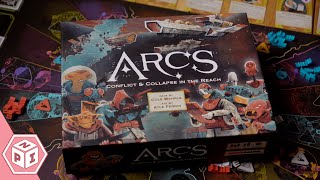
- deep emergent narrative through a tight ruleset
- strong asymmetry via guilds, ambitions, and initiative
- offers narrative weight and player interaction through negotiation and risk
- heavy learning curve and dense rulebook
- edge-case rules can stall or confuse new players
- ambition timing creates potential for analysis paralysis and unpredictability
- ambition, power, fate, and narrative agency
- Generational space opera within a crumbling galactic empire
- generational arcs with shifting initiative and asymmetric player goals
- Root
- Oath
- Twilight Imperium
- Eclipse
- Gaia Project
Mechanics (from transcript analysis)
- Ambitions and scoring — Five ambitions determine victory points; scoring is mission-driven rather than raw point accrual
- Combat Dice — Space battles use blue, red, and orange dice with risky outcomes; attacker controls dice and assigns damage
- guild cards and influence — Agents are placed on guild cards via influence actions; securing guild cards grants unique abilities
- initiative and lead mechanics — Initiative is earned by playing high-value cards in the lead suit; discarding a card can be required to seize initiative
- Resource management — Resources (fuel, relics, etc.) enable actions and are spent in prelude timing; resources can be captured, spent, or stolen via certain actions
- Trick-taking action system — Players play action cards by suit; following players must match suit and beat the lead card to gain the action; lead can be copied or pivoted with limitations
Video topics + discussion points
Quotes (from this video)
- Arcs is literary.
- Arcs is a skateboard.
- Arcs is a surfboard.
- Act one is the rise of the hero, the power fantasy full force endemic to many games of this genre.
- Fundamentally, art depicts conflict in space.
- Arcs is like a tasting menu.
References (from this video)
- Innovative design
- Complex strategic gameplay
- Highly popular in the board game community
- Potentially complex ruleset
- May be challenging for new players
- Conflict and collapse
- Space exploration
- Strategic exploration
Mechanics (from transcript analysis)
- Trick-taking action system — Declarative point system with complex interactions
Video topics + discussion points
Quotes (from this video)
- Middle Earth is in its glow up phase.
- These awards really impact how people view these games.
- Board Game Geek is the de facto hub of our hobby.
References (from this video)

- Innovative mechanics
- Unique blend of trick-taking and strategy
- Beautiful artwork
- Interstellar conflict
- Space
- Science fiction strategy
Mechanics (from transcript analysis)
- 4x strategy — Exploration, expansion, exploitation, and extermination
- Trick-taking — Card-based action selection
Video topics + discussion points
Quotes (from this video)
- We've got a full hour of gaming and goodness
- Stealing gnomes as a game mechanic
- Technology develops, gameplay evolves
References (from this video)

- Arcs presented as a great game with approachable, lighter-weight play
- Demoing Arcs was enjoyable and engaging for attendees
- No explicit cons discussed for Arcs beyond general demo fatigue
- unknown
- Gen Con booth and convention floor
- informal diary / live-event recap
Mechanics (from transcript analysis)
Video topics + discussion points
Quotes (from this video)
- I got to know my colleagues better by going into the sweaty Gen Con trench with them and figuring out how to make everything happen
- this is my Gen Con wrapup before I get too far away from the event to fully remember it
- it's a lot lighter work when you know that uh your product is really good
- the real highlight of that for me was getting to meet Amabelle Holland who I absolutely adore
- the John Company game of my life like it was wild
- War Story which by the way was really really good
- Gen Con was freaking awesome
- there were so many nice people at that party and we all just talked about Kurt Vonnegut's game
- I got to hang out with basically the team from catastrophe of people that are doing some stuff on Stonewall Uprising
- I absolutely impulse bought some solo RPGs
References (from this video)
- Deep strategic depth that rewards adaptive play and careful timing
- Meaningful interdependence between market control and combat
- Encourages players to read the table and respond to changing conditions
- Steep learning curve for new players
- Possibility of analysis paralysis due to hand and board variability
- Strong market focus can create dominance for predicting players
- Conflict, resource control, and strategic adaptation within a modular, evolving galactic map.
- A sci-fi setting involving spacefaring factions, sectors, and resource markets.
- Procedural, outcome-driven with emphasis on tactical play and momentum.
Mechanics (from transcript analysis)
- adaptive strategy — Must pivot and adapt to the evolving board state rather than rigid plans.
- ambition-driven scoring — Ambitions provide goal-oriented scoring based on holdings and actions.
- area/sector presence — Positioning ships in gates to deter raids and influence nearby sectors.
- Combat Dice — Resolution of combat using red dice with various modifiers and outcomes.
- hand management — Careful selection and timing of cards to optimize actions and momentum.
- initiative/sequencing — Gaining the initiative allows you to perform stronger plays and influence others.
- resource market_control — Aggressively controlling relics and psionic resources to support ambitions.
Video topics + discussion points
Quotes (from this video)
- five tips but they are far from the only tips that someone might have for Arc
- you need to adapt to the current board State
- there is no planning ahead what rounds two three and four are during round one
- it's a game where if you're going to do something lean in and do that particular thing very well
- don't be afraid to Pivot
- Arcs, when played as intended, is a mean nasty game
- Leave a ship or two in a gate that is going to stop players from just cruising on into your sector
- Everything that is good in arcs comes at a cost
References (from this video)

- Unique card play
- Unique scoring
- Space conquest
- Space
Mechanics (from transcript analysis)
- Trick-taking — Unique card play and scoring mechanism
Video topics + discussion points
Quotes (from this video)
- Let's talk about the hottest and most sought after games
- We're going to pitch them to you so you're going to find out everything that you need to know
References (from this video)
- Highly anticipated by board game community
- Getting strong buzz after Shut Up and Sit Down coverage
- Expensive to acquire
- Hyped beyond what players know about it
- Some people hate it
Mechanics (from transcript analysis)
Video topics + discussion points
Quotes (from this video)
- you're listening to the broken me show a podcast that speaks passionately about board games for the benefit of those who play them
- it's only a game
- this game is terrible absolutely terrible
- there's nothing to laugh at at this if something gets nicked off you chances are you'll never be able to Nick it back
- I never want to see it again
- if I don't play it I wouldn't really care
- there's no theme to keep me immersed in the game
- this is just such a waste
References (from this video)
- very popular
- two copies kept
Mechanics (from transcript analysis)
Video topics + discussion points
Quotes (from this video)
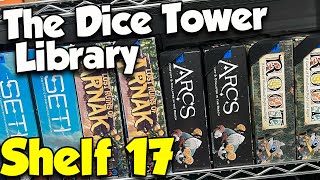
- Welcome back to the Dice Tours. We take a look at another shelf in the Dice Tower Library.
- if you like games about delivering the mail, this is it
- Just a solid game of quick, snappy turns
- AIA, what a great game about shipping. This is a fantastic, terrific game.
- You like Dominion, but you want it for dice. This is your game.
- Very very popular games all them. That's why there's two of each.
- Although, frankly, you should always play with the expansion.
- I just really am loving SETI. Fantastic game.
- I do like this game. I have a soft spot for it.
- Vast, not as popular as its successor, root
- My favorite game here is The Great Museum Caper. Nope. I forgot Magical Athletes there. Magical Athlete is amazing.
- I just love Tumbling Dice.
References (from this video)

- deep, asymmetric strategy with multiple paths to victory
- high interaction and opportunities for dramatic comebacks
- varied with leaders, lore, and relics to create many builds
- steep learning curve for new players
- readability could be improved; complexity can be intimidating
- resource control, raiding, and tactical battles
- Competitive, aggressive strategy game with empire-building elements
- high-tension, strategic, cutthroat
- Kingdom Builder
- Mage Knight
Mechanics (from transcript analysis)
- ambition-based scoring — Players reveal ambitions to determine end-game scoring values.
- cities/raids and majority control — Stealing resources and raiding opponents to gain majorities.
- deck-based triggers for battles — Leaders and lore cards grant powers; players pivot or copy into battles.
- dice and relics for variability — A per-round relic/die system adds unpredictable outcomes.
- resource tokens (limited supply) — Only five of each resource exist; scarcity drives decisions.
Video topics + discussion points
Quotes (from this video)
- It's incredibly thematic and the replayability is off the charts.
- The board game implementation of Slay the Spire is so good.
- This game is so much fun; it creates so many memorable moments.
- I can see myself pulling this out solo and enjoying it without the video game.
References (from this video)

- engaging card-driven engine
- distinct humor and style
- digital version support
- can be confusing for new players
- rule clarity needed
- diplomacy, conquest, resource gathering
- dark yet light-hearted sci-fi universe
- humorous, horn-driven flavor
- Dune Imperium
- Root
Mechanics (from transcript analysis)
- card-driven with four suits — actions determined by suit-based deck play
- diplomacy / resource gathering — alliances and competition for scarce resources
- trick-taking system — points and actions earned through trick-taking rounds
Video topics + discussion points
Quotes (from this video)
- hours of epic exploration and a world waiting to be discovered from the comfort of our own home planet
- cooperative fight against superpowered villains
- This is currently the number one ranked game on Board Game Geek
References (from this video)

- Exciting concept for a shorter session
- Leader Games provides a tight, elegant system
Mechanics (from transcript analysis)
- card drafting / action selection — Choose actions through arc-based card play with scoring dynamics.
Video topics + discussion points
Quotes (from this video)
- we had around 10,000 live views so people kind of dropping in and dropping out
- 1,282 challenge entries that's wild
- this is where we started to fall off of our schedule
- I will be staying up the full 24 hours again because it's just the best way to do it
- it's a food day
References (from this video)

- Multiple paths to victory
- Clever game design
- Unique gameplay
- Beautiful artwork
- Complex on first play
- Steep learning curve
- Space exploration and conflict
- Sci-fi space epic
- Complex strategic interaction
- Root
Mechanics (from transcript analysis)
- Area Control — Resource management and territorial control
- Trick-taking — Card-based tactical play
Video topics + discussion points
Quotes (from this video)
- Playing board games is so much more than just the game itself
- Board games allow you to run simulations to see a future that has not yet been realized
References (from this video)

- varied tactical options
- strong visual style
- dice luck can be high
- rule clarity needed for some players
- space, dice combat
Mechanics (from transcript analysis)
- card drafting — Draft and play cards to influence combat outcomes and movement.
- dice battles — Dice-driven combat across space battles with tactical decision making.
Video topics + discussion points
Quotes (from this video)
- There will be only one topic. Only one.
- We wanted to do our traditional deep dive into this year the 2025 American Tabletop Award winners, nominees, and recommended games.
- To prevent conflicts of interest, we ask people who have any connection to a game … to not submit any game that they have a conflict of interest with during that nomination process.
- The fundamental nature of taxonomic organization, right? There is no one rule that will satisfy every single person for where a game belongs in terms of like is it a good game for people that are getting into gaming?
References (from this video)

- Unique asymmetry in how game flows
- Burst scoring moments create surprises
- Exciting unpredictability
- Divisive among players
- Some players dislike unpredictability
- space exploration
- area control
Mechanics (from transcript analysis)
Video topics + discussion points
Quotes (from this video)
- Star Wars in a box
- We are talking about objectively the best games in the whole wide world
- The limit does not exist
- As mean as a game as you can play
- I love not knowing what's going to happen
- It's perfect
- Root is my type of game
- Most played game of all time
- This is phenomenal
- If you're in a horror movie is not everything dependent on luck
References (from this video)

- unique take on space opera with trick-taking core
- campaign provides evolving goals
- hand management can be punishing
- campaign adds complexity
- arc-style space empire-building and conflict
- space opera with a campaign bent
- campaign-driven, objective-based progression
- Eldor Sign
Mechanics (from transcript analysis)
- hand management — managing a limited hand to meet objectives and outplay opponents
- Trick-taking — core mechanic driving conflict and card play
Video topics + discussion points
Quotes (from this video)
- it's a big lavish production
- absolute classic
- this game is a dopamine hit
- it's comfort food
- this goes to Earth
- the end experience is greater than the sum of its parts
- it's a game that nails the gateway/accessible space
References (from this video)
- tight, cohesive design that blends old-school deliberate actions with modern strategic depth
- lower teach burden relative to other heavy games in the space
- strong support for two-player play and scalable play across 3-4 players
- high quality art direction and thematic space opera aesthetic
- rich, multi-layered decision space made possible by the action system and scoring
- high complexity and confrontation; not for casual gamers
- combat is dice-driven and includes randomness
- some may find the action system blunt until you engage with scoring and ambits
- base game is dense; expansions broaden scope but increase complexity
- political maneuvering, resource consolidation, empire-building
- A galaxy-spanning space empire with planets, sectors, and interstellar intrigue
- declarative scoring and a suit-driven action system inspired by trick-taking games
- Root
- Oath
Mechanics (from transcript analysis)
- Asymmetry and lore components — Base game supports asymmetry with optional lore cards and an expansion path (Blighted Reach) for varied setups.
- Battle and combat dice — Combat uses dice with risk levels; outcomes depend on attacking and defending ships, with damage and dice results driving confrontation.
- Court actions and taxation — Actions to influence the court, deploy courtiers, and tax or seize assets contribute to resource and influence control.
- Declarative scoring / Ambitions — Each round, the lead declares an ambition; a token gets allocated and scoring happens at the end of the chapter across multiple categories.
- End-of-chapter cycles — Up to five chapters (cycles) drive the game end; after each, the action deck is reshuffled and dealt again.
- Lead-suit prestige and off-suit options — Players can pitch an off-suit card for a single action or play a face-down card to take a single action, adding depth to hand management.
- Resource production and movement — Cities and starports boost resource capacity; starports enable mass-relay style movement; movement and expansion are central to strategy.
- Suit-based action system — Lead player selects a suit and gains access to actions tied to that suit; other players may respond with higher cards of the same suit to take actions or play off-suit cards for a single action.
Video topics + discussion points
Quotes (from this video)
- ARS might be their best title yet
- ARCs is both a game that can be played one and done straight out of the box
- ARS is an absolute Banger and that's our review
- this is a game of heavy confrontation reliant on strong turn-by-turn adaptation
- the teach and the rules overhead are substantially lower than Root and Oath
- arcs is in heavy contrast where it still feels tight and compelling
- it feels cohesive that it's hard to believe that it was designed with another Concept in mind
References (from this video)

- High player interaction
- Variable scoring
- Space exploration
- Space conquest
Mechanics (from transcript analysis)
- Card Play — Playing cards to influence actions and move ships
Video topics + discussion points
Quotes (from this video)
- The more cards you draw, the theoretically more points you will get, but you could burn down at any point
- If you have regrets better have deep regrets, not shallow ones
References (from this video)

- Great art style
- Similar to Root
- Highly anticipated
- Space
- Leader-based
- Root
Mechanics (from transcript analysis)
Video topics + discussion points
Quotes (from this video)
- moments during board games that formulate memories that you'll never forget
- there's just something for everyone
- it's all about the people
- the board gaming space has allowed me to just have so many incredible fun moments that i'll never forget
- it chose us via christy
- we're gonna have it at jeff's parents basement everybody's coming
- agricola sucks and everybody else seems to love it
- arnak is severely overrated
- i don't think gloomhaven should be number one on the list anymore
- humans are not good at rating things
- my nine is different than your nine
References (from this video)
- Interstellar exploration and conflict
- Science fiction universe
Mechanics (from transcript analysis)
Video topics + discussion points
Quotes (from this video)
- Our mission statement is about to create a diverse and supportive Gaming Community dedicated to playing discussing designing and promoting historically based board games.
- We're not here to make money. We're here because we love this hobby and we want to help people doing something that we love.
- SD Hiscon is an incubator—a place where designers meet, learn, and iterate, and where new voices can grow within a passionate community.
References (from this video)

- Innovative design
- Unique gameplay
Mechanics (from transcript analysis)
Video topics + discussion points
Quotes (from this video)
- These games are all about good times, good vibes.
- I'm a social butterfly extrovert, but occasionally I need me.
References (from this video)

- distinctive Kyle Farren art style
- dual play modes (base and campaign)
- war strategy with whimsical/artistic presentation
- sci-fi war game with artsy visuals
- dichotomy between silly and serious
- Root
Mechanics (from transcript analysis)
- base game vs. campaign mode — option to play standalone or in a campaign progression
- Trick-taking — central mechanic influencing actions and consequences
Video topics + discussion points
Quotes (from this video)
- we did not include any games on our list that are demo only
- this time we have four honorable mentions because they are mainly games that were on our previous list
- it's a standalone game in the same franchise as Mar Kaio but apparently it's a lot more accessible to learn
- the game seems like it's Snappy quick
- two-player only trick-taking game
- it's an asymmetric deduction card game
- we are going to be discussing 10 games that we are ENT anticipating
- we're in the business of crafting and selling dreams
- this is a Tablo building kind of engine building game
References (from this video)

- Unique win condition mechanics - don't need to fight to win
- Excellent at two players
- Many different viable strategies
- Can execute surprise wins by keeping plans hidden
- Space Wars
- Space Opera
- Strategic Conflict
- Root
Mechanics (from transcript analysis)
- Area Control — Players control different areas without necessarily fighting each other
- Asymmetrical play — Different factions with unique abilities
- Card Play — Cards with special abilities and scoring mechanics
Video topics + discussion points
Quotes (from this video)
- I believe that this game is the perfect board game (about Fromage)
- There's so many different strategies that you can do in this game (about Arcs)
- I freaking love civilization theme games (about Cilu)
- I love games when they're like the whole purpose is to stop you from doing what you're trying to do (about Ironwood)
- There's something beautiful and magical and cozy about this game (about Harmonies)
- I cannot get enough of this game (about River of Gold)
References (from this video)
- Clever integration of trick-taking with broader strategy
- Large-scale engagement and varied tactical options
- Esoteric and can be hard to bring to the table
- Not always quick to teach or execute for new players
- Trick-taking and area majority with combat and large-scale planning
- Large-scale strategic setting with multiple domains
- Esoteric, dense, and highly strategic
- Dwellings of Eldervil
Mechanics (from transcript analysis)
- area majority — Players vie for control of regions, influencing scoring and board dynamics.
- Combat elements — There is confrontation on a large scale, adding risk-reward to decisions.
- Trick-taking as action selection — Trick-taking mechanics double as actions and scoring vectors; strategic play hinges on card play decisions.
Video topics + discussion points
Quotes (from this video)
- reviews, rankings, lists are really snapshots in time
- It's a snapshot in time. And who knows, these things could even shift around if I were to do this again this time next year.
- I am a shallow gamer.
References (from this video)

- thematic space setting
- strong trick-taking core
- solo play option
- heavy for casual players
- steep learning curve
- space factions vying for influence
- space exploration / combat
- dramatic sci-fi conflict
- Root
- Cities
Mechanics (from transcript analysis)
- area-majority / control — claim spaces across sectors to gain influence
- solo / multiplayer play — supports solo play with scalable strategy
- Trick-taking — play cards to win tricks in a space-themed setting
Video topics + discussion points
Quotes (from this video)
- it's the cutest little game with these cute oversized Rocap bars
- Green Team always wins
- Endeavor Deep Sea... due to problematic slavery mechanic
- Windmill Valley is beautiful to look at
- I love cities
- Arcs is hot
- Cities USA coming soon
- Telestrations was hilarious
References (from this video)
- Rich, provocative design
- Thought-provoking mechanics
- Divides players; can be polarizing
- space opera with governance and fleet combat
- Space-themed city-building and empire-building
- dense, provocative, meta-narrative
- Other sci-fi strategy games
Mechanics (from transcript analysis)
- city-building/space ports — Players build cities and star ports
- space combat/territory control — Construct ships and attack to conquer territory
Video topics + discussion points
Quotes (from this video)
- Why in the Watcher's name would you make Slay the Spire into a board game when it is already a board game
- Daybreak... it's a miracle
- This game... it's a miracle.
- In it you play either as Sauron or the Fellowship and, just like the famous epic you'll be collecting cards in a tableau to combine abilities.
- There is nothing I can say in a segment that could explain what Arcs actually is
References (from this video)

- innovative combination of trick-taking with asymmetry
- strong leader expansion that adds depth
- expansion interplay can unbalance without careful play
- epic, cosmic conflict vibe with strategic layering
- arc-themed strategy with leader expansion
- cosmic encounter-inspired flavor with strategic depth
- Cosmic Encounter
Mechanics (from transcript analysis)
- campaign-like progression — campaign-like feel with progression via leaders and tiles
- leader expansion integration — leaders modify game dynamics and scoring across the arc
- Trick-taking — multifaceted trick-taking mechanics across interactions
- wedges and drafting — use wedge components and draft to shape play
Video topics + discussion points
Quotes (from this video)
- "the app integration integration with board game arena"
- "it's not like a normal Lane game"
- "you get three tiles in your hand"
References (from this video)
- Deep tactical decision-making with meaningful turns
- Ambitions scoring adds dynamic, evolving objectives each chapter
- Asymmetry through optional leaders provides varied play styles
- Clear rulebook and player aids; high rule clarity
- Comeback potential and dramatic shifts through targeting opponents
- Mean-spirited, conflict-heavy gameplay may not suit all players
- Two-player head-to-head focus can be intense
- Can feel luck-influenced due to theft/dice elements
- Steep learning curve and heavier setup impact for first plays
- Conquest, resource control, and tactical manipulation
- Space, galactic arena with planetary factions
- Array
- Root
- Oath
- Terraforming Mars
Mechanics (from transcript analysis)
Video topics + discussion points
Quotes (from this video)
- it's a space strategy game for two to four players with a little bit of trick-taking in it
- this game is not for conflict averse people
- this is a vicious game
- there are five of them and each of them is wanting you to get the most of a thing
- it's also the best game I've played this year
References (from this video)

- High tension and deep strategic planning with meaningful player interaction
- Brings novel scoring and initiative dynamics that keep rounds tense
- Strong opportunities for comeback and dramatic swings
- Steep learning curve for new players
- Can be punishing to mistakes and may intimidate casual players
- Ambition-driven scoring and high-stakes action economy
- A sci-fi strategic arena with spacefaring ambition and arc-based factions
- abstract, highly tactical with direct player interaction
- Mage Knight
- Twilight Struggle
Mechanics (from transcript analysis)
- action economy with limited actions — Players must optimize a small, per-round action set to achieve their ambition.
- initiative and lead manipulation — Who acts first and how many actions you get depends on the round’s dynamics and bidding-like choices.
- Trick-taking with variable scoring — Ambitions determine end goals and score, creating shifting incentives and strong reader effects.
Video topics + discussion points
Quotes (from this video)
- that whole thing of like okay well you know if I play in suit and beat it I can you know take the full number of Pips actions
- this is truly the tense board game I have ever played
- the exploration just feels like a really good fit for it
- it's so fun to move on one of those little lines and get a new piece
- the racing and slip streaming is really interesting
- I think it's always hard to remember between my birthday and Christmas because they're pretty close together
- this is one of the most intense experiences I've had with the table
- must own
References (from this video)

- From Leder Games
- Artwork by Kyle Farrenart
- Space theme
- Asymmetrical gameplay
- Beautiful prototype shown at Pax
- Now 3-4 player friendly for the hosts
- Three to four player only originally concerned hosts
- space exploration, civilization
- space
- science fiction
Mechanics (from transcript analysis)
- asymmetrical gameplay — Players start same but become asymmetrical as game progresses
- decision-driven mechanics — Game state determined by player decisions
Video topics + discussion points
Quotes (from this video)
- it was one of the coolest experiences I had at Pax
- anything that involves tile placement I am here for
- it is just a freaking blast
- the mechanics are just so good that none of the other stuff really kind of like matters to me
- I've fallen so much in love with undaunted
- if you put a cute cover on a game I will buy it I will play it and there's a very good chance that I will love it
- it looks incredible
- final girl is definitely one of my favorite games of all time
- the cover art drew me in it reminded me of like old war propaganda posters
- if anyone out there wild has red red ball or seen the red wall artwork this game is that
References (from this video)

- high player interaction and back-and-forth decisions
- clear, flowchart-style components help teach complex rules
- strong thematic flavor and crunchy decisions
- teaching curve can be steep for new players
- some turns can feel constrained if the right cards don’t show up
- space empire building and competitive action
- Futuristic sci-fi galaxy with sectors and technologies
- card-driven action resolution with player interaction
- Beyond the Sun
Mechanics (from transcript analysis)
- Ambitions scoring — Each round offers five Ambitions; the leading player selects one to drive scoring and strategic focus
- Card-driven action resolution — Lead suit with a card; other players may override or follow with higher value to gain actions proportional to pip count
- Direct player interaction and conflict — Aggressive play and confrontation through card-led actions and counterplay
- Turn-based engine with flow decisions — Players decide which actions to take and when to push for higher-value plays
Video topics + discussion points
Quotes (from this video)
- flowcharts are amazing
- it's not a trick taking game it's just an action resolution system using playing cards
- it's basically a Choose Your Own Adventure
- the technology tree is layered
- Moving Wild is fast, it's quick
References (from this video)
- High level of player interaction and dynamic negotiation
- Rich thematic flavor with expansion options (Leaders and Law)
- Varied strategic paths and evolving scoring create tension and comeback potential
- Rule complexity and downtime can be challenging for new players
- Lengthy sessions, especially with four players, may be taxing
- Ambition mechanics and multiple token types can be hard to track
- galactic conquest, resource management, trick-taking with political intrigue
- Galactic empire-building in a humorous, high-stakes space opera setting
- episodic progression through five chapters with evolving ambitions and court politics
- Call of Cthulhu
Mechanics (from transcript analysis)
- Ambitions and scoring — Ambitions determine end-of-round scoring opportunities; declaring ambition changes card value and unlocks points.
- Catapult movement — Star ports permit long-range catapult moves, dropping ships along paths to reach distant targets.
- Combat System — Three dice types (assault, skirmish, raid) with different risks and rewards; interception can modify outcomes.
- Court/guild card economy — Influence and secure actions on court cards; secure/gain cards, capture enemy agents, and manage relics and vaults.
- Gates and keepers — Gates create strategic objectives; keepers modify secure actions and governance of tokens in the court.
- Resource and unit management — Tax, build, move, repair, and defend ships and cities; tokens provide resources and enable actions.
- Trick-taking — Lead suit determines actions; players can surpass, copy, or pivot to take actions, driving the round's flow.
Video topics + discussion points
Quotes (from this video)
- NRB cruise that is happening in February next year.
- Lori is a problem.
- The chicken in me.
- Destroy the starport and trophies.
- You start next round able to claim two things potentially.
References (from this video)

- Deep strategic depth with emergent diplomacy and negotiation
- Rich thematic hooks and multiple win conditions via fates and ambitions
- High replayability due to varied fates, laws, and crises
- Satisfying endgame pressure and dynamic balance via clocks and scoring
- Rule complexity and edge-case interactions can slow new players
- Long play sessions and a steep learning curve, especially with arcs and fates
- Potential for analysis paralysis during negotiations and crisis resolution
- Empire-building, oligarchic control, diplomacy, warfare, and the tension between centralized power and decentralized feudal authority
- A sprawling, politically fractured empire with a Commonwealth of free cities and rival clusters; a stylized, feudal-pederal landscape where loyalties, monopolies, and city status drive power
- Macro-pable political saga with shifting factions, fates, and clocks that drive endgame scoring
- Oath: Chronicles of Empire and Exile
- Root
Mechanics (from transcript analysis)
- area_control — Control of clusters and cities, with lord/vassal dynamics and token placement determining influence and scoring
- dice_combat — Dice-based battles using a mix of blue, red, orange, and other dice to determine hits and interceptions, with various modifiers and retaliation systems
- fate_and_clock_mechanisms — Distinct fate decks and judge clocks add timing pressure and variable endgame conditions
- hidden_information_and_diplomacy — Preludes, edicts, crises, armistices, and negotiated settlements create shifting alliances and potential kingmaking moments
- modular_rules_interaction — Act-based setup with act-specific laws, regional rules, and evolving economies that dramatically alter play across acts
- resource_management — Monopolies, trophies, captives, and a rotating pool of resources (psionics, weapons, relics, fuel, etc.) driving actions and scoring
- vassal_and_lord_system — A dynamic feudal-like network where Lords, Vassals, and courts determine who can influence or secure which cards
Video topics + discussion points
Quotes (from this video)
- Arcs, designed by Cole Worley, published by Leader Games.
- Open economy while the magnate is regent; you may tax loyal cities more than once per turn.
- Ambitions at act three are grand and non-cumulative—two points for the first, four for both, escalating dramatically later.
- The Commonwealth isn’t just a backdrop; it actively constrains actions via armistice and shared protections.
- This game is a puzzle that can hinge on edge-case interactions that aren’t intuitive until you see them in play.