Backgammon is a classic abstract strategy game dating back thousands of years. Each player has a set of 15 checkers (or stones) that must be moved from their starting positions, around, and then off the board. Dice are thrown each turn, and each player must decide which of their checkers to move based on the outcome of the roll. Players can capture each other's checkers, forcing the captured checkers to restart their journey around the board. The winner is the first player to get all 15 checkers off the board. A more recent addition to the game is the "doubling cube", which allows players to up the stakes of the game. Although the game relies on dice to determine movement, there is a large degree of strategy in deciding how to make the most effective moves given each dice roll and measuring the risk in terms of possible rolls the opponent may get.
Backgammon may be the first game to be mentioned in written history, going back 5,000 years to the Sumerians of ancient Mesopotamia. During the 1920s, archaeologists unearthed five boards from a cemetery in the ancient town of Ur. At another location, pieces and dice were also found along with the board. Boards from ancient Egypt have also been recovered from the tomb of Tutankhamun, including a mechanical dice box, no doubt intended to stop cheaters.
The names of the game were many. In Persia, Takhteh Nard which means "Battle on Wood". In Egypt, Tau, which may be the ancestor of Senat. In Rome, Ludus Duodecim Scriptorum ("game of twelve marks"), later, Tabula ("table"), and by the sixth century, Alea ("dice"). In ancient China, T-shu-p-u and later in Japan, Sugoroko. The English name may derive from "Bac gamen" meaning "Back Game", referring to re-entry of taken stones back to the board. It was often enjoyed by the upper classes and is sometimes called "The Aristocratic Game". The Roman Emperor Claudius was known to be such a fan of Tabula that he had a set built into his coach so he could play as he traveled (the world's first travel edition?).
The rules in English were standardized in 1743 by Edmond Hoyle. These remained popular until the American innovations of the 1930s.
- portable, fast-paced
- high accessibility
- luck factor
- luck paired with strategy
- ancient racing game
- classic
Mechanics (from transcript analysis)
- Dice-based movement — movement determined by dice roll with doubling opportunities
- race style — two players race to bear off all pieces
Video topics + discussion points
Quotes (from this video)
- I'm primarily a solo gamer when I'm not playing solo I'm actually usually playing either at a game night with a whole lot of people or at a game Club at my school with my students
- the best way to start with downsizing my collection was to think about what I really never use
- there are only couple of exceptions in terms of two-player games I plan to keep
- that thing is a treasure that people and our family will fight for after I die
- so definitely keeping that one
- I have seven Wonders Duel here
References (from this video)
- strong social participation
- embedded in local culture and ritual
- informal or illicit gambling context may pose risks
- uncertainty, risk, social ritual
- Greece, Crete, gambling clubs and informal play spaces
- ethnographic, qualitative
- Second Life
- Poker
- King of Tokyo
Mechanics (from transcript analysis)
- board and checkers — two players move pieces around a track according to dice rolls and strategic decisions
- risk and social negotiation — participants negotiate stakes and social relations within a gambling context
Video topics + discussion points
Quotes (from this video)
- there's no such thing as a game that's separate from what's actually happening in your culture
- Hades is wonderful for that, it's a beautifully designed game and rich in content but also incredibly replayable.
- contingency is a good example of that
References (from this video)
- timeless and portable
- easy to learn, hard to master
- heavy reliance on luck can frustrate players
- race and luck
- Ancient world
- classic luck-driven strategy
- Chess
- Checkers
Mechanics (from transcript analysis)
- Dice-based movement — Turn outcomes are determined by dice; strategic bearing off.
Video topics + discussion points
Quotes (from this video)
- the spiritual significance of Senet I did not know that it had religious implications
- the board serves as conduit between the living realm and the spirit world
- one-stop shopping
- it's a descendant of duo deck and scripta
- nine pieces versus eight
- the idea of novelty is an interesting thing to discuss
- Ovid is playing a game with his readers as he's telling them to play actual board games
- monopoly is an iconic game that really encapsulates everything that we are
- we do not have written rules; everything is piecemeal from texts and archaeology
References (from this video)

- Easy to learn and quick to play
- Widely available and inexpensive
- Great two-player experience with feedback and back-and-forth play
- Classic, nostalgic appeal
- Significant luck element from dice rolls
- Can feel repetitive for some players after long sessions
- Strategy and luck interplay, head-to-head competition, social play.
- Abstract, traditional backgammon board game with dice, played on a wooden board with checkers; classic salon/board game vibe.
- abstract
- Obsession
Mechanics (from transcript analysis)
- Bearing off — Removing checkers from the board to win when all are safely home.
- Blots and hitting — Landing on a single opposing checker sends it to the bar, temporarily removing it from the board.
- dice-driven movement — Players roll dice to determine how many positions to move their checkers.
- Doubling cube — Players can raise the stakes by offering a double; accepted or dropped by opponents.
- Re-entry from the bar — Captured checkers must re-enter on the opponent's home board, affecting flow.
Video topics + discussion points
Quotes (from this video)
- this game slaps
- sometimes the classics are really the best
- something easy to play that's cheap to get
References (from this video)

- classic abstract strategy with dice
- not specifically the crusty focus of the round, but mentioned as a candidate
Mechanics (from transcript analysis)
- dice-driven movement / point-based strategy — move pieces based on dice rolls toward home while blocking opponent
Video topics + discussion points
Quotes (from this video)
- they do a lot of their own game design the game arts the marketing and blah blah blah
- it's constricting i hate it it's like super constricting, i feel like someone's choking your game
- we dress up for the first episode and he's like shoe you ought to dress up as well but i hate it
- you can find us on redravengames.com and on Twitter
References (from this video)
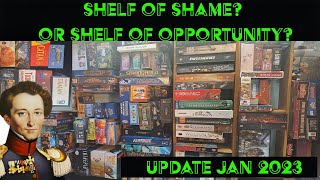
- Classic game with history
- Could interest modern audience
- Dice and strategy
- Racing and blocking
Mechanics (from transcript analysis)
- Dice rolling with strategy — Classic race game with blocking
Video topics + discussion points
Quotes (from this video)
- I used to call this a shelf of shame that was a pretty common thing to call it back in the day and I don't never really liked that term because I don't feel shame that I haven't got to these games
- this is mostly work like this is just a backload of things I probably should get to
- people will still be looking for it
- it doesn't matter if the game is like 20 years old people will still be looking for it
- I've painted this one and I spent a lot of time doing it
- there's no point putting them on the channel I think both of them have been out of print for like a decade
- one of the worst kickstarters by one of the worst studios in board gaming history
- Golden Bell Studios did everything wrong you could possibly think of
- purely toxic company run by incredibly terrible people
- it would be kind of a joke that I'd be able to do a three minute video of feudum
- this game has a tutorial video online that's like 40 minutes long
- The Rose explanation video feels like a parody but it's actually how the game is played
- nothing personally to me puts me off playing a game that then sitting down unboxing it and having a craft assignment
- stop making me spend hours assembling your damn games
- this is an uncontrollable mess right now
- I'm a full-time dad and I'm really doing this in the evenings
- I have a finite space and also it just puts pressure and stress on me having a whole bunch of crap there that I know I'm not going to get to
- I'm going to do a big cull
- I will be published by this company but that doesn't mean I'm going to be slavishly devoted to every single game they put out
- I am a sucker for cute animal games like I really am
References (from this video)
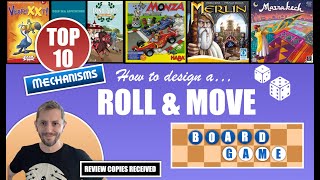
- One of earliest and most sophisticated roll and move games
- Strategic depth despite dice randomness
- Multiple piece selection creates decision space
- Strategic race
- Ancient race game
- classic
Mechanics (from transcript analysis)
- Bearing off — Strategic movement to remove pieces from board
- Multiple Piece Control — Players control multiple pieces and choose which to move
- roll and move — Ancient roll and move mechanism with significant strategic depth
Video topics + discussion points
Quotes (from this video)
- Where once randomness ruled modern games prioritized player agency designers strived to incorporate meaningful decisions into their games and role and move became a dirty word among the modern tabletop community
- I myself put out a video called dicer not the answer back in 2017 one of my most watched lamenting role and move
- In 2022 i feel like maybe just maybe we've tipped too far in the other direction thrown the baby out with the bath water
- This video is a quest for redemption
- When done well roller move is one of the most intuitive exciting mechanisms out there
- In a pure roll and move game the player rolls a die or spins a spinner and moves their playing piece according to the result
- In talisman you roll the die and then you choose to move clockwise or anticlockwise around the board that one deviation from the purest role of move games the decision to go left or right immediately put talisman head and shoulders above most board games on the market at the time
- Hero quest showcases the strength of the roller move mechanism its elegant simplicity and the excitement of a successful role outrunning an ogre
- It can be really frustrating to lose a long game which you were totally invested in purely because you rolled badly
- Spooky stairs is a great example of a game where the roll and move mechanism itself isn't tampered with but the basic race mechanism is turned on its head by incorporating a chaotic memory mechanism
- This game beautifully highlights the intuitive nature of roll and move as a mechanism
- More than any other on this list this game demonstrates how such a simple mechanism can create agonizing decisions and a hugely interactive variable board game experience I can't recommend this one enough
- Roll and move games don't have to be devoid of meaningful choices
- Formula d has a great roll and move mechanism which i haven't seen replicated in any other game
- Push your luck and roll and move complement each other nicely
- Among hobby gamers roll a move is widely considered something of an untouchable mechanism in 2022 and that's a shame
- Roll and move isn't a cursed mechanism
- Like every mechanism roller move has strengths and weaknesses
- It can be used effectively to create an exciting intuitive system or it can be used ineffectively to create a wildly random experience which feels primitive and unfair
References (from this video)
- Simple to learn, quick to play, with deep tactical decisions
- Satisfying when you hit or regain control by sending a piece to the bar
- Strong historic pedigree and global play both offline and online
- Accessible in many formats (physical boards, online play, inexpensive sets)
- Endgame can feel like a race and be frustrating
- Luck factor from dice can influence outcomes, especially early
- Complex endgames and blocking can be tricky for beginners
- Learning curve around bearing off rules and timing can surprise new players
- territory control and risk management
- Global/ancient board game context
- Abstract/minimal thematic framing
- Chess
- Go
- Catan
Mechanics (from transcript analysis)
- Bearing off — Once all checkers are on the home board, players remove them with dice rolls; excess moves are allowed for finishing.
- Dice rolling — Each turn a player rolls dice to determine how far to move checkers around a track.
- Doubling — A doubling die can be offered to raise the stake; the opponent may accept or resign, altering final score multiplier.
- Hitting and the bar — Landing on a space with a single opposing checker sends it to the bar; the opponent must re-enter from the bar before moving other pieces.
- Movement along a track — Checkers move clockwise toward the home board; rules govern how many spaces can be moved and where pieces can be landed.
- Re-entry from the bar — A checker on the bar must re-enter onto the opponent's home quarter according to dice roll, before continuing play.
Video topics + discussion points
Quotes (from this video)
- Backgammon is an ancient game, when people talk about old classics it's normally mentioned immediately after chess and go
- it's a global game with a fan base in the millions with a staggering amount of games played online each and every day
- some Modern board gamers might look at it and call it a dice chucking luckfest
- for me backgammon is an excellent game about tactical area control and managing risk
- the best thing about this game is knocking someone else's checker back to the bar it's super satisfying
References (from this video)

- nostalgia
- two-player options
- classic game, mechanics well known
- strategy and competition
- classic
- classic
Mechanics (from transcript analysis)
- Dice rolling — traditional backgammon play
- movement strategy — move pieces around to bear off
Video topics + discussion points
Quotes (from this video)
- Weight loss journey is back it's back and we are all in.
- we hit 22,000 subscribers
- 30k this year
- let's get fit together as a family
- we met so many RPG family members at conventions
References (from this video)
- Long and well-documented lineage; widely played across cultures
- Clear link to later family of racing/staking games, including modern backgammon
- Rules have evolved over millennia; historical accuracy varies by source
- Competition, risk, and probability through dice-driven movement
- Ancient racing game with widespread historical roots
- historical overview; respect for long-standing tradition
Mechanics (from transcript analysis)
- dice-driven movement — dice roll determines entry and progression around a track
- race and capture — players race to bear off pieces while opponents can capture pieces
Video topics + discussion points
Quotes (from this video)
- Okay ashtapada here the bad boy of the buddhist gaming scene
- the traditional nine men's morris board consists of three squares linked together with a series of points
- it's one of the earliest rule books in existence
- the history of go can be traced throughout chinese aristocracy for millennia
- backgammon's great granddad
- no one mancala game
- Senet is widely regarded as the oldest board game in the world