Welcome to the Northern Expanse, a place where nature is still unexplored, mystical and dangerous. When the humans first arrived, they thought they found an unspoiled paradise, filled with bountiful forests, lakes swimming with fish and cold freshwater flowing from the mountains. But as their settlements expanded and the surrounding forests grew thinner, nature itself pushed back. Great creatures known as Beasts emerged, and with their fangs, claws and mystical powers, they proved an incredible threat to the humans. In order to protect the settlements, humans enlisted specialised hunters, tasked with tracking and killing the Beasts before too many of their kin perish.
The Beast uses a deck of direction cards to move over forests, swamps and caverns, using guile and deceit to hide its track from the hunters. However, whenever a hunter moves over a location where the Beast has previously been, a trail appears. Only when a hunter searches a location or the Beast itself attacks an unsuspecting target is the Beast's actual position revealed. More so, each hunter has but one chance of searching each round, making it a tense and difficult decision. Hunters seldom have full information whether the trail they’re pursuing contains the Beast’s actual location, or if the trail has already gone cold.
Each action you perform in this game is done by playing a card from your hand (up to a maximum of two cards per turn). This means that if a player wants to search, attack or move, they need to have a card in their hand that lets them do that. Before each round, both hunters and Beast participate in a draft for the most important cards. All action cards can be used by both Beast and hunters alike.
In order to win this game, you either need to cooperate every step of the way if you play as a hunter, or skillfully outmaneuver your opponents if you play as Beast. On their own, hunters are never stronger than the Beast. Only when hunters communicate, strategize and combine their actions can they bring down the Beast before it’s too late.
—description from the designer
- Tight puzzle with meaningful decisions
- Excellent component quality and production
- Beast mechanic adds meaningful tension and variability
- Early-beast draws can end games quickly
- Can be intimidating for new players due to depth
- beast-driven escalation with four suits and beast cards
- Fantasy dungeon with escalating beasts and procedural tension
- Cooperative puzzle with competitive scoring twists
- Enthrone
- Covenant
Mechanics (from transcript analysis)
- Beast escalation and resolution — Beasts move through the columns; players cooperate to scare beasts away and manage threats.
- Beasts and column restrictions — Beast cards prevent playing certain suits in their respective columns until defeated or maneuvered.
- Card drafting and column progression — Draft cards and place into columns, advancing towards higher totals while beasts appear and restrict play.
- Endgame and Scoring — Deck and hands finite; scoring via progress, beast management, and column control.
- Negative scoring for incomplete goals — Endgame penalties for unfinished columns and missed objectives.
Video topics + discussion points
Quotes (from this video)
- Tony just absolutely rocked this game
- This is Covenant, Tony’s Euro of the year
- There are four actions on your board, and each action can trigger multiple effects
- The beasts are going to restrict which suits I can play
- The teach is easy, but the combos make it deep
- You can rotate the tiles and still score heavily if you plan well
References (from this video)
- productions and concept are appealing
- some variants make the chase feel dynamic
- balance/tactility can be frustrating
- card-driven balance can dull the chase
- cat-and-mouse chase
- mythological beast on the run
Mechanics (from transcript analysis)
- card_driven — actions and movement are driven by drawn/played cards
- hidden_movement — the Beast moves secretly while hunters try to track it down
Video topics + discussion points
Quotes (from this video)
- "This is a deck deconstruction game where you want to be the first player to abandon all of your artichokes"
- "hidden movement games are a strange one for me"
- "it's a very light game it's very quick bit of silly fun"
- "the more weird a theme is the heavier the game is"
- "Revive is such a great card driven Euro"
- "best game from 2022 No Doubt"
References (from this video)

- strong theme and atmosphere
- cooperative play with alternative approaches (team play)
- heavy and potentially intimidating for casual players
- one-versus-many; hunt to capture a beast
- hunt and beast mythos; heavy exploration
- immersive, theme-forward
- Dracula
Mechanics (from transcript analysis)
- card drafting — card drafting elements influence actions and hunts
- cooperative play — hunters cooperate in teams to track and defeat the beast
- Hidden movement — the beast moves secretly while hunters search
Video topics + discussion points
Quotes (from this video)
- Realm of Reckoning is a card drafting game for two to five players set in a dark, vivid afterlife torn apart by civil war and forgotten glory.
- With each shifting objective and everchanging strategies, no two plays are the same.
- Beast I've been uh interested in for a very long time.
- It's a one versus many game where the many are hunters who cooperate in an epic hunt to track and kill the beast.
- The stars are shining on the red carpet.
- You are the photographer. You are using your phone to take pictures.
References (from this video)
- Strong hidden-movement appeal
- High tension and variability with multiple beast options
- Encourages deduction and strategic positioning
- Learning curve can be steep for new players
- Component setup and rule lookup can slow first plays
- Mind MGMT
Mechanics (from transcript analysis)
- asymmetric roles — Different roles (hunters vs. beast) have distinct abilities and objectives.
- Hidden movement — Players perform secret moves to locate the opposing figure or achieve objective-based positioning.
Video topics + discussion points
Quotes (from this video)
- I really like hidden movement games
- I would like to play as the Beast
- it's basically like play a card do the thing
- the ships build like Lego
- there's a lot to think about
References (from this video)
- strong production expectations due to initial release praise
- appealing aesthetics
- hidden movement can be frustrating if not executing smoothly
- Hunter vs hunted in an atmospheric pursuit
- Unspecified setting with a monster/hunt theme for a hidden movement game
- mystery/pursuit with asymmetric information
Mechanics (from transcript analysis)
- Hidden movement — A player moves unseen while others try to deduce location or approach
- one-versus-all — One player faces multiple opponents in a competitive setup
Video topics + discussion points
Quotes (from this video)
- hidden movement games are something that I I'm kind of interested in but I've not really found the one for me
- I love bidding games
- the more people in this queues the more money you have to spend
- this is one of my most anticipated games from last year
- this is basically a game within a game
- it's lightning quick too it only takes around 15 minutes to play
- you can get a three-player game of this done in about an hour
- it's a passion project with some good historical context
References (from this video)
- High variety of beasts and hunters increases replayability
- Engaging asymmetrical design and tension
- Fast drafting and simple action turns
- Dynamic bluffing and prediction elements
- Strong thematic feel and excitement when Beast vs Hunters
- Multiple playstyles depending on monster
- Polish and balance can be uneven across beasts
- Long turns at higher player counts (three is ideal; four/five can be less smooth)
- Potentially swingy experiences depending on Monster choice
- Draft/card management can feel clunky and memory-heavy during play
- Requires a learning curve; not ideal for absolute beginners
- Beast-dominant sessions can overshadow Hunters in some games
- Asymmetric cat-and-mouse chase with hidden movement and strategic card drafting.
- A fantasy world where a concealed Beast hunts villagers while a team of hunters pursues it.
- Tense, competitive interplay focusing on misdirection, prediction, and fragmented information.
- Sniper Elite
- Terror Escape
Mechanics (from transcript analysis)
- asymmetric roles — Beast versus Hunters have different goals, abilities, and victory conditions.
- card drafting — Players draft from a common pool of action and support cards that affect both Beast and Hunters.
- Hidden movement — Beast moves secretly; tracks are revealed as it moves or when Hunters encounter revealed areas.
- Trap placement / territory control — Chips or traps placed on map territories to hinder Beast or reveal its path.
- Upgrades / deck customization — Cards and character sheets grant upgrades for Beast and Hunters.
Video topics + discussion points
Quotes (from this video)
- Beast is fun
- Beast is super fun I really enjoyed my games when I played the Beast
- Hunters not so much
- three is the best way to play
- you feel like you're the Mastermind of this game
- Beast is going to be at my place
References (from this video)

- Interesting theme with beast stalking prey
- First Kickstarter by new publisher
- Asymmetric gameplay concept
- Hidden movement barely exists in practice
- 90% of actions reveal beast on map
- Essentially dudes-on-a-map rather than true hidden movement
- Poor rulebook clarity with many FAQ moments
- First Kickstarter quality issues
- Character balance problems
- Some character powers too weak while others overpowered (Seer)
- Upgrade economy is tight and restrictive
- Some characters feel boring
- Game favors hunters over beast
- Needed more development time before release
- Color card restriction feels unnecessary and clunky
- One versus many hidden movement game
- Wilderness hunt
- Scenario-based asymmetric gameplay
Mechanics (from transcript analysis)
- card drafting — Players draft cards before each round with simultaneous reveal
- Color restriction — Must play red and blue cards in pairs, restricting options
- Hidden movement — Beast tries to hide from multiple Hunters (limited effectiveness)
- scenario-based — Different objectives and rules for each scenario
Video topics + discussion points
Quotes (from this video)
- I really enjoyed it clean you just take the cards you move up the prices
- I didn't really know much about this game because I missed a Kickstarter
- I am hyped for this game hegemony has probably been my best game I've played of the year so far
- You need to temper your expectations a bit for this game
- trade show it's just it's kind of irresponsible really
- I'm getting sick of it
References (from this video)

- Appealing art and components
- Tense moments when escalating numbers
- Clear core concept of counting and suit restrictions
- Beast mechanic can feel extremely swingy and luck-driven
- Table-talk rules can be confusing
- Solo variant adds little depth and can feel underwhelming
- Beasts and a numerical puzzle
- Abstract, cooperative card game with numbers
- Cooperative puzzle-solving with escalating difficulty
Mechanics (from transcript analysis)
- beast_cards — Beast cards add difficulty by forcing players to play certain suits and impacting progression; if triggered, they moved to a higher place and restrict future plays of that suit.
- cooperative_play_and_memory — Players see others' progress and attempt to manage order and avoid dead ends; solo variant adds memory considerations with face-up beasts.
- discard_tokens — Three tokens allow discarding that many cards before playing, to managehand quality.
- hand_management — Each player has a five-card hand and must play cards to increment a three-digit number without decreasing it.
- suit_leveling_and_number_construction — Players choose a suit and place cards into one's chosen place values (ones, tens, hundreds) to increase the total.
Video topics + discussion points
Quotes (from this video)
- it's incredibly swingy
- Beast is fine, but nothing special, nothing to write home about, just okay
- I don't find the strategy very taxing or very challenging
- This is not a very complicated solo mode
References (from this video)

- excellent theme
- strong artwork
- better balance than similar games like Mind MGMT
- thematically satisfying
- hidden movement asymmetrical gameplay
- wilderness hunting
- thematic confrontation
- Mind MGMT
- Mr Jack
Mechanics (from transcript analysis)
- asymmetrical gameplay — beast vs hunters with different objectives
- Hidden movement — one player secretly moves beast while others hunt
- track observation — hunters use tracks to locate the beast
Video topics + discussion points
Quotes (from this video)
- it's not just like how good is this game it's like how is our experience playing it
- a lot of these ranking lists people rank for different criteria mhm our criteria is primarily around fun fun and experience
- it might be my favorite polyomino game
- I love the theme I love that it's like this magical Library
- the mechanisms match the theme so well
- it gave me slay the Spire feel feelings
- my favorite solo button shy game ever
- chaos incarnate
- one of the best gaming experiences I've had this year
- if you love puzzles if you love those deduction style games like I think you'll love this
- I am a big fan of area control um and games that can do two-player area control well are very rare
References (from this video)
- Engaging hidden movement with asymmetric roles
- High variability via contracts, beasts, maps, and expansion potential
- Drafting action cards that influence both Hunters and Beast
- Two-player mode works well without sacrificing depth
- Hidden movement can be frustrating if players misread paths
- Medium-to-high complexity; not ideal for casual game nights
- Theme and setting may not appeal to everyone
- hunt, evasion, and asymmetric roles between Hunters and Beast
- Northern expanse where humans settle and wild beasts threaten communities
- dark, Nordic-inspired tone with tactical hidden movement
- Mr Jack
- Mind Management
Mechanics (from transcript analysis)
- Asymmetric abilities — Characters have unique, asymmetrical abilities (e.g., Seer) that affect gameplay.
- card drafting — Action cards are drafted back and forth; top-half cards are for Hunters, bottom-half for Beast.
- dual-color action play — On a turn, players can play one red card and one blue card to perform actions.
- grudges and upgrades — Grudges are spent to activate abilities, play cards, or upgrade powers.
- Hidden movement — Beast moves secretly; Hunters deduce location through tracks and map interactions.
- trap placement and zone effects — Hunters place traps in zones; traps trigger when the Beast is revealed or interacts with the zone.
Video topics + discussion points
Quotes (from this video)
- Hunters are never stronger than the Beast only when Hunters communicate strategize and combine their actions can they bring down the Beast
- it's a hidden movement game
- this game you're actually going to be drafting cards back and forth
- you can play two cards on your turn there's symbols basically one's red one's blue to keep it simple
- I think it is one of those games that you know it's not overly complicated to get to the table and play but there is a lot of complexity in playing optimally
References (from this video)

- Generated interest among viewers; discussion indicates curiosity about the game
- No concrete gameplay details provided in the transcript
- Beast-centered game concept
- Beast-themed game, discussed as a current topic
- unknown
Mechanics (from transcript analysis)
- unknown — Not described in the transcript
Video topics + discussion points
Quotes (from this video)
- Arboretum was designed by Dan Cassar with art and illustrations from Beth Sobel
- it's a very interesting balance
- this is a lovely game that has an effect on friendship
- the goal is to create a path starting with a one Maple and ending with an eight Maple
- a lovely game that has an effect on friendship
- 127 funded yes yes that is awesome that's awesome
- QT is our newest family member—the cat from Cat In The Box
- Hello fall, hello fall
- we love you bye now
References (from this video)

- Cooperative
- Really dig it
- Interesting mechanics
- Haven't played enough to review
- Beasts
Mechanics (from transcript analysis)
- Beast cards — Beast cards restrict playing certain suits in certain locations
- Card sequencing — Cards with numbers, three-digit slots, numbers must go higher
- Cooperative — Cooperative game where players work together
- Suit management — Choose suit, play all cards of suit
Video topics + discussion points
Quotes (from this video)
- This is so much to my taste and I played it a half dozen times really dig it and it's got fewer than 100 thumbs on the preview it's just like your tastes are not necessarily going to match up with anyone else's
- The perfect thing is something you're only going to find through repeated play. It's not going to hit you instantaneously
- It's more about playing something, liking it, you play it again, you play with different people, you want to introduce it to people, and over time it becomes the thing you love
- The good and bad of this job is that you play something, review it, do a video, and then never touch it no matter how much I like it
- You can do anything in games
- I value sleep there more than I value getting a post out
- It's just the cover the cover seems pretty funny to have around and just show people
References (from this video)
- strong thematic tension between hunters and the beast
- hidden movement creates suspense and chase dynamics
- diverse upgrade paths and minion mechanics add depth
- high rules complexity can overwhelm new players
- video occasionally highlights chaos and confusion
- dense information can slow early rounds for new groups
- Hunters vs. Beast; pursuit, survival, and territory control
- Northern expanse / forest map for four players
- humorous, in-character banter with dramatic role-play
- Dungeons & Dragons (D&D)
- Pokemon
Mechanics (from transcript analysis)
- card_drafting — Dawn phase drafts action and ability cards; players pick one to keep and pass others around.
- combat_and_damage — Beasts and settlers take wounds; damage tracking determines rounds and potential eliminations.
- contracts_and_rewards — Daily contracts grant rewards for meeting specific objectives during the day phase.
- day_night_phases — Three phases per round: dawn (draft), day (play cards and move), night (contracts, upgrades, heal/refresh).
- grudge_tokens — Tokens earned and spent to upgrade abilities and unlock powerful effects.
- hidden_movement — Beast movement is concealed; hunters attempt to reveal it through searches and movement clues.
- summons_and_minions — Beast and hunters can summon minions; these minions move and attack to influence the map.
- tracking_and_reveal — Trail tokens and a beast's last known location guide hunters; reveal conditions trigger moves and reveals.
- traps_and_habitat_tokens — Trap cards placed on the map; habitat tokens activate traps when the Beast is on a corresponding space.
- upgrades_and_talents — Night phase upgrades grant new talents or improved abilities; these are purchased with grudges.
Video topics + discussion points
Quotes (from this video)
- The dawn is coming and when it does we just sort of repeat those three phases again.
- bloody confusing
- we're all going this way
- Minority Report I'm going to think of something it's very good
- the end of the night we resolve upgrades and restore health
References (from this video)
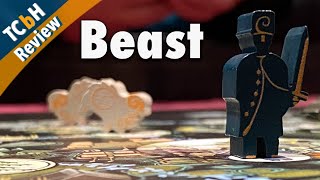
- Cohesive asymmetric design between Beast and Hunters
- Robust interaction around shared terms and core movement
- Extensive upgrade paths and loadout customization
- Strong round-contract system enabling variety and replayability
- Narrative leverage and modern take on hidden movement mechanics
- High visual and thematic ambition with compelling art direction
- Temperamental tendencies; can be brittle if not carefully managed
- Two-player mode demands one player manage two Hunters with heavy drafting
- High complexity can edge toward tedium at larger player counts
- Some production choices (standees and components) feel less premium than aesthetics suggest
- Limited initial expansion content (few contracts) and pricing for future packs
- cat-and-mouse pursuit with a rampaging monster tracked by Hunters
- European folk fantasy monster-hunting world
- contract-based rounds with customizable upgrades and abilities
- Mr X in Scotland Yard
Mechanics (from transcript analysis)
- asymmetric_roles — Beast and Hunters each have unique abilities and loadouts that shape strategy and interaction.
- card_drafting_and_play — Each round allows drafting up to two action cards (blue and red) that provide supportive or aggressive effects.
- contracts_and_round_structure — Every round is defined by a contract with specific rules, rewards, and victory conditions.
- grudge_experience_system — An experience system (Grudge) accumulates points to fuel abilities and customization.
- hidden_movement — Beast and Hunters operate with limited visibility; the Beast's location is tracked indirectly via trails.
- leveling_up_and_upgrades — Characters gain upgrades or talents through various effects and rewards across rounds.
- resource_and_health_tracking — Health totals and shared terms (attack, movement) drive combat and pursuit dynamics.
Video topics + discussion points
Quotes (from this video)
- Beast is far from the first in the genre to introduce asymmetric powers to hiders or Hunters but this is one of the first of its ilk to feel so cohesive and robust.
- Beast does so much to keep each game feeling unique and memorable.
- this is a game well worth checking out.
- the devil pig is in the details.
References (from this video)
- Unique gameplay
- Role transformation
- Predator vs Hunter
- Hunt scenario
Mechanics (from transcript analysis)
- Role switching — Beast becomes Hunter during gameplay
Video topics + discussion points
Quotes (from this video)
- We're going to rate some shelves
- Keep these friends in your life forever
- This is a heavy Euro game with a lot of moving parts
References (from this video)

- cooperative play
- interesting discard token mechanic
- strong table discussion
- requires careful communication
- potentially punishing if mismanaged
- Cooperative card-based strategy
- Fantasy world with beasts
- Tense, puzzle-like decision making
Mechanics (from transcript analysis)
- card-driven play on multiple tracks — Players play cards on three digit tracks, increasing values.
- cooperation and discussion — Players must communicate to coordinate actions and avoid bad plays.
- discard tokens — Three tokens to discard a card from hand to alter options.
Video topics + discussion points
Quotes (from this video)
- IP and the mechanisms do match pretty well.
- The progression of your character, that sort of slow motion deck building aspect.
- The biggest strategy is to conserve those discard tokens.
- This is not the top 10, it's the top 10 worst Christmas gifts we've ever received.
References (from this video)
- interesting drafting dynamic
- two-player tension when matched well
- not streamlined; setup is bulky
- balance is off; Seer upgrade can be overpowered
- rulebook and teaching are not strong
- survival and pursuit dynamics
- Hidden movement pursuit with Beast vs Hunters
- thematic tension; card-drafted actions drive play
- Fury of Dracula
- Whitechapel
Mechanics (from transcript analysis)
- card drafting — Both sides draft action cards that shape turns for Beast and Hunters
- Hidden movement — Beast moves and is intermittently hidden; hunters attempt to locate
Video topics + discussion points
Quotes (from this video)
- it's bone dry
- I cannot think of a single thing that it is
- this rolling right is a sweet game
- I actively thought that this was a bad game and I did not like my play of it
- prepare to die
- I think I should have given it a seven