Betrayal at House on the Hill quickly builds suspense and excitement as players explore a haunted mansion of their own 'design', encountering spirits and frightening omens that foretell their fate. With an estimated one hour playing time, Betrayal at House on the Hill is ideal for parties, family gatherings or casual fun with friends.
Betrayal at House on the Hill is a tile game that allows players to lay out the haunted house room by room, tile by tile, creating a new thrilling game board every time. The game is designed for three to six people, each of whom plays one of six possible characters.
Secretly, one of the characters betrays the rest of the party, and the innocent members of the party must defeat the traitor in their midst before it’s too late! Betrayal at House on the Hill will appeal to any game player who enjoys a fun, suspenseful, and strategic game.
Betrayal at House on the Hill includes detailed game pieces, including character cards, pre-painted plastic figures, and special tokens, all of which help create a spooky atmosphere and streamline game play.
An updated reprint of Betrayal at House on the Hill was released on October 5, 2010.

- Highly thematic and immersive Halloween experience
- Memorable haunt moments and dramatic reveals
- Replayability with variants and expansions like Widow's Walk
- Many haunts are known to be broken or unbalanced without house rules
- Complex rulebook can be intimidating for new players
- Hidden traitor, haunt discovery, cooperative-to-competitive flip
- Modular haunted mansion with evolving scenarios
- Scenario-driven with book reveals and haunt outcomes
Mechanics (from transcript analysis)
- Modular map and haunt revelation — Tiles are laid out, encounters resolve, and a haunt is triggered depending on dice and cards.
- Trait-based roles and team dynamics — Some players become traitors while others work to survive and solve the mystery.
Video topics + discussion points
Quotes (from this video)
- this game is absolutely fantastic
- it's the most thematic Halloween game you can get
- a toolkit that allows you to mold the game to you
- it's a very slimmed down version of werewolf
- Fury of Dracula is basically a very elaborate version of a very very old game called Scotland Yard
References (from this video)
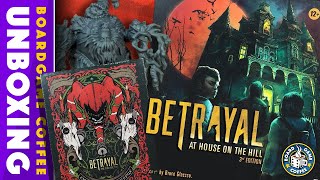
- Upgraded artwork and components in Third Edition
- Thick, sturdy minis and improved bases
- Coherent internal design with expanded content
- Inclusion of expansion content (e.g., Winter's Pale)
- Complex and lengthy rules can be daunting for newcomers
- Cost and box size may be prohibitive for casual players
- Survival horror, mystery, betrayal within a group
- A haunted house with modular room exploration and evolving events
- Story-driven, scenario-based with emergent narrative
- Original/Betrayal at House on the Hill (Earlier Editions)
Mechanics (from transcript analysis)
- Cooperative with internal conflicting goals — Group cooperation tempered by the looming betrayal.
- Event and item cards drive narrative — Decks of events, items, and omens shape the story.
- Hidden traitor / alternating empowerment — One player becomes the traitor and has separate objectives.
- Modular board / room-to-room exploration — Players explore rooms that unlock new areas and events.
Video topics + discussion points
Quotes (from this video)
- this is F this is fantastic
- how cool is that
- look at that, look how beautiful that is that is an amazing box
- I'm liking it, this is a chic game look
- the art on this is too good to pass up
- this is definitely a better graphic treatment
- these minis are so much nicer than the original
- we've got three tiles that match, check it out
- the new stuff is much improved
References (from this video)
- Over 50 different haunts
- Highly replayable
- Exciting room discovery
- Potentially repetitive room layouts
- Swingy gameplay
- Horror Exploration
- Haunted House
- Cooperative with Betrayal Mechanic
- Betrayal at Baldur's Gate
Mechanics (from transcript analysis)
- Haunt Trigger — One player potentially becomes the antagonist after reaching a creepiness threshold
- Tile exploration — Players flip tiles to discover new rooms in a haunted house
Video topics + discussion points
Quotes (from this video)
- Discovery is the big thing about this all about discovery
- Every single time you play the galaxy is completely different
References (from this video)
- Very easy to learn
- High replayability via haunts
- Strong social and thematic storytelling
- Some randomness and occasional wonkiness
- Aging components; not as polished as newer titles
- Haunt-based horror with traitor elements
- A decrepit haunted house explored by a group of adventurers
- story-driven with random haunts and evolving plots
- Widow's Walk
Mechanics (from transcript analysis)
- cooperative exploration — Players explore a modular house board, revealing rooms piece by piece.
- Haunts with text cards — 50+ unique haunts provide variability in gameplay.
- hidden traitor mechanic — One or more players become traitor and turn against the others.
Video topics + discussion points
Quotes (from this video)
- it's hard to capture that in a board game because you're playing it in a safe environment
- there's 50 haunts so the game is going to be different nearly every time
- this is number two on my list of best Halloween games
- it's a great co-op and it's a hard core it sounds like a really cool implementation of pandemic
References (from this video)
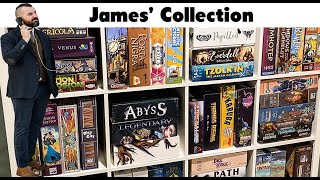
- Classic game
- Very unique experience
- Novel mechanism for time
- Great repeatable game
- Different every time
- Needs decent size group
- Supernatural mystery
- Haunted mansion
- Horror adventure with hidden traitor
Mechanics (from transcript analysis)
- asymmetric information — Traitor and heroes have different goals
- exploration — Explore haunted house revealing rooms
- Haunt reveal — Someone gets cursed and becomes traitor
- Scenario books — Different scenarios based on haunt triggered
Video topics + discussion points
Quotes (from this video)
- Agricola is one of those games that you just got to have in your collection if you like euro style games
- Porta is one of my favorite underrated games
- Broom service I absolutely love food service one of the coolest mechanics in board games 100 percent recommend this game it is a hoot
- Barron Park is my favorite polyomino Tetris in a board game game
- Orleans is a top 5 game for me period just one of my favorite games to play ever
- Power grid this was the game that got me into board gaming y'all
- Seven wonders this is a modern-day classic
- Betrayal at house on the hill every game is different
- King of Tokyo one of those games that you have to have in your collection
- If you like board games one or percent recommend this game
References (from this video)
Mechanics (from transcript analysis)
Video topics + discussion points
Quotes (from this video)
- I'm giving away a copy of Dead of Winter: The Long Night with this video
- To be in with a chance of winning, simply like this video, comment below and subscribe to Actualol
- If you're new to Actualol then check out the rest of my videos.
- I'm Actualol on Facebook and Twitter. I'm Jon Purkis, thanks for watching.
References (from this video)

- strong thematic atmosphere
- high replay value through variable haunts
- can become chaotic
- not ideal for very large groups
- survival and betrayal
- haunted house exploration
- story-driven with haunt events
Mechanics (from transcript analysis)
- exploration — players explore a modular house and trigger events
- Haunt/traitor mechanic — random haunt triggers alter rules and may reveal a traitor
Video topics + discussion points
Quotes (from this video)
- this is the sort of game that should be in just about every starting collection and that's sushi go
- a well-designed simple game is a thing of beauty and I think we should appreciate
- designing a good gateway game anyone can pick up and play is an art form in some ways
References (from this video)

- iconic theme and memorable moments
- high replayability via many haunt setups
- rules can be fiddly
- balance between players can vary by haunt
- Paranoia, betrayal, sudden shifts in goals
- Haunted house exploration
- Story-driven with modular events
- Dark Moon
- Arkham Horror
Mechanics (from transcript analysis)
- scenario-based twists — A dynamic event track introduces unique threats and revelations.
- semi-cooperative play — Players explore a haunted house until a traitor is revealed, shifting objectives.
Video topics + discussion points
Quotes (from this video)
- you are correct the answer is b
- it's actually a board game not an rpg
- Hanabi you actually got that in just in time
- new york zoo… happy birthday
- through the ages
- your latest game working circuits it's only 20 dollars
References (from this video)

- strong social deduction flavor
- high replayability due to scenarios
- can be scary for some players
- scenario balance can vary
- traitor mechanics / social deduction
- Haunted house exploration
- scenario-based storytelling
- Time Stories
- Rattle Battle Grab the Loot
Mechanics (from transcript analysis)
- Modular board — Rooms are revealed as players explore.
- traitor mechanic — One player becomes the traitor and secretly opposes the others.
Video topics + discussion points
Quotes (from this video)
- Black history is American history.
- Humanity is a co-op.
- We are all valuable.
- Two Black History months—the one for Black people and the one for everyone else—should be a moment to acknowledge our full history.
- Celebrating Black history year-round should be the goal.
References (from this video)
- Iconic haunted house experience
- High replayability due to evolving layout and scenarios
- Strong thematic immersion
- Rule complexity can be intimidating for new players
- Player elimination risk in some scenarios
- Paranormal mystery, shifting alliances
- Haunted house
- Dynamic, episodic with betrayal mechanics
- Mysterium
- Grindhouse
Mechanics (from transcript analysis)
- event-based exploration — Exploration of a modular house layout with evolving events and consequences.
- traitor/hidden role — A player or players become the traitor, changing objectives and dynamics mid-game.
Video topics + discussion points
Quotes (from this video)
- The best horror game on the market is in fact Final Girl. And I’m not just saying that because Van Rider Games is the sponsor this month for the channel. I am saying it because it is true.
- I love a theme. It's one of my favorite things.
- Stay spooky.
References (from this video)
- Atmosphere when it works
- Varied scenarios
- Fragile components
- Low reliability in real-table experiences
- Horror, teamwork under pressure, traitor twist
- A spooky mansion with shifting rooms
- Narrative-driven, modular scenario setup
Mechanics (from transcript analysis)
- Hide-and-seek / traitor mechanic — One or more players secretly oppose the party in later stages.
- Modular board / scenario-based play — Rooms and events change per game; dynamic storytelling.
Video topics + discussion points
Quotes (from this video)
- Don't keep games around unnecessarily because soon 5 years turn to 10 years turns to 20 years.
- The space on the shelves has been replaced by something new and exciting.
- Think of all the hundreds you've saved in insulation.
- Just focus on 100, 200 that you think are amazing rather than like being overwhelmed with indecision.
References (from this video)

- Brilliant concept of a mid-game betrayal twist
- Encourages strategic planning around a known surprise
- Twist can dominate if players know what to expect
- Older editions may vary in balance and component quality
- horror/mystery, player roles shift
- Haunted house exploration with mid-game betrayal twist
- role-reveal, story-driven with a twist
- Night of the Ninja
- Mythic-era social deduction games
Mechanics (from transcript analysis)
- Mid-game betrayal — A player is revealed to be the betrayer at roughly the halfway point, changing win conditions.
- Pre-game preparation for the unknown — Players plan around the expectation of a major twist rather than aimless exploration.
Video topics + discussion points
Quotes (from this video)
- Metal Gear Solid, without getting into spoilers, those who have played the original Metal Gear Solid on PlayStation 1 back in the '9s may be asking, how did they adapt that particular boss encounter from the video game to a tabletop experience? Isn't that impossible?
- I wear a huge grin on my face every time I think of that encounter.
- Meadow is a sweet game of set collection with a really interesting action selection system. The thing that really surprised me about it is the extra envelopes with additional cards to open at specific moments.
- There are lots of hidden clues on unexpected components in Unlock. I think escape room games in general do surprises really, really well in a non-campaign format.
- Jar says, 'When you purchase or play Jar Binks, you may spend two resources to gain one force and place him in your opponent's discard pile.'
References (from this video)

- Thematic
- Suspenseful
- Horror/Betrayal
- Haunted mansion
- Exploration with potential betrayal
Mechanics (from transcript analysis)
- Betrayal — One player will eventually betray the group
- exploration — Players explore a haunted mansion
Video topics + discussion points
Quotes (from this video)
- Halloween is only five days away
- Don't be so trusting of those you play with
References (from this video)

- thematic, spooky atmosphere
- classic trusted betrayal model with discovery and tension
- potential for abrupt betrayal moments may disrupt group dynamics
- co-op to traitor social deduction
- haunted mansion exploration
- event-driven exploration with hidden betrayal
Mechanics (from transcript analysis)
- co-op to betrayal — players explore and then one becomes the betrayer at a key moment
- modular tiles — tiled mansion layout with variable rooms and events
Video topics + discussion points
Quotes (from this video)
- it's easy to learn it's fun to play and it's easy to teach
- I can flip up that rulebook in five minutes I'll be caught up like that
- it's my all-time favorite rolling right now
- tell your story as you're doing it so you have your hero cards
- it's one of those games you want to save for Halloween or like a late night
References (from this video)
Mechanics (from transcript analysis)
Video topics + discussion points
Quotes (from this video)
- This video is brought to you by the 3minut board game patrons. Keep us independent by supporting us on Patreon.
- It's to talk these games out of my collection to say goodbye to them.
- The bigger the game boxes are, the easier they are to get rid of.
- The purpose of these videos is really catharsis for me.
- Two copies of Pandemic Legacy sheltered away.
- I have to thank my patrons and everyone who watches these videos for giving me this opportunity as well.
References (from this video)
- strong storytelling moments and dramatic reversals
- great thematic flavor and social interaction
- quality of experience can vary by session
- rules can be fiddly and forgiving for new players
- horror, betrayal, sudden shifts in play
- haunted house exploration with branching scenarios
- semi-scripted, with emergent twists
- Gloomhaven
- Dungeon Quest
Mechanics (from transcript analysis)
- Modular board — tiles and rooms assemble to form a new house each game
- story-driven events — event cards drive the narrative flow and change goals
- traitor mechanic — one or more players may secretly switch sides mid-game
Video topics + discussion points
Quotes (from this video)
- Donjon Quest is probably the best example of this, which is an awful game and a great game at the same time.
- it's an awful game and a great game at the same time but we have such a great time seeing the stories that the game tells us
- the curse of the good story... the burden of messy mechanics
- emergent content is what gives a game flavor
- the internet has made gaming culture better and more visible
- replay value is often sacrificed when pursuing strong narrative
References (from this video)

- Atmosphere and horror flavor
- High replayability with many haunts
- Tense social dynamics
- Balance can be uneven across haunts
- Older artwork and setup can be fiddly
- horror/survival
- Haunted house exploration
- scenario-based, modular haunt system
- Spectre Ops
- Fury of Dracula
- Escape the Aliens from Outer Space
Mechanics (from transcript analysis)
- event cards — Chapters and events drive the story and add tension.
- Modular board — The house layout is randomized each game, changing exploration paths.
- Traitor/haunt mechanic — A haunt triggers mid-game and a player may become a traitor against the group.
Video topics + discussion points
Quotes (from this video)
- betrayal at house of the hill is the tropius game ever made
- deception is one of the most accessible social deduction games for one
- it's a simple move and attack fighting game with variable player powers
- Chinatown is one of the greatest bargaining games ever made
- this is the best social deduction game ever made
- Cosmic Encounter the best of all the games
- board games provide so much of that because they're so social
References (from this video)
- classic, well-known cooperative-to-competitive arc
- strong theme and iconic status in the hobby
- supports many scenarios and replayability
- learning curve for new players
- some scenarios can feel repetitive if played frequently
- Traitor mechanics, betrayal in a haunted mansion
- Haunted house exploration
- Collaborative exploration that turns into an asymmetric, story-driven hunt
- Scooby-Doo version of Betrayal
- Rogue-lite haunted house variants
Mechanics (from transcript analysis)
- Haunt/traitor mechanic — one player becomes the traitor whose goal opposes the rest
- semi-cooperative exploration — players explore a mansion while creeping dread builds toward a traitor reveal
Video topics + discussion points
Quotes (from this video)
References (from this video)

- strong atmosphere and story variety
- great teaching moments for new players
- teaching curve for beginners can be steep
- balance can vary by haunt
- cooperative then traitor reveal
- haunted house exploration
- story-driven with modular rooms and haunt scenarios
- Betrayal Legacy
- Betrayal at House on the Hill (original baseline)
Mechanics (from transcript analysis)
- exploration — players reveal rooms and encounter events as they traverse a haunted house
- traitor mechanic — one player becomes the betrayer, game shifts into a different objective
Video topics + discussion points
Quotes (from this video)
- This is the first Legacy and that we've actually played as a legacy.
- it's got the classic Legacy like destroy your tiles and cards and put stickers in your books
- I was very excited when Restoration Games was going to bring this game back out
- I'm here overall I'm a fan of unmatched
- TABARU is a system the game you're getting with the system is going to be the bad karmas
References (from this video)

- Strong atmosphere and story potential
- High replayability due to many haunts
- Rules can be fiddly and some haunts feel unbalanced
- Setup can be lengthy
- haunt reveals and traitor twists
- A haunted mansion with evolving rooms and secrets
- scenario-based storytelling with a traitor mechanic
- Betrayal at House on the Hill (base game)
Mechanics (from transcript analysis)
- cooperative exploration — players explore a modular mansion together with variable rooms
- Haunt/traitor twist — at a certain point one player turns traitor and shifts the game's objectives
- Modular board — board layout changes with expansions and scenarios
Video topics + discussion points
Quotes (from this video)
- it's the best time and boy do we have some creepy crawlers for you
- for most lists for nrb i try to feature mostly games we haven't covered before but for this one i'm going to be covering a few ones that we have
- it's a pulpy cinematic style game for movie fans and zombie heads alike
- it's a heady tense and brutal deduction game
- there's no horror experience like nemesis
References (from this video)
- brand new miniatures in third edition
- improved components
- new character options
- repetitive gameplay
- broken haunts
- poor components in previous editions
- fundamentally unbalanced
- lacks horror atmosphere
- horror
- mystery
- house exploration
- Finders Keepers
Mechanics (from transcript analysis)
Video topics + discussion points
Quotes (from this video)
- you're listening to the broken meeple show a podcast that speaks passionately about board games
- i'm trying to keep this episode a little bit shorter
- i'm the sort of person who likes to play the sport not watch it
- i started my new job what two weeks ago now and it's going well
- all i hear about tsu is that if you play with anybody who knows how to play the game they're going to hate your guts afterwards
- ryan lockett what are you on so what are you seriously on
- this guy does not sleep this guy does not age
- this is just way too much stuff for one single person to undertake it's crazy
- i don't want to have to care anymore about sleep or aging
- convert me into a machine and i'll join the robot uprising
- it's only a game
- i am mainly just a case of i'll wait and see
- the amount of buzz that game has got has to put it at the top ten
- so many games so little time well who'd be a content creator with a job anyway
References (from this video)

- strong atmosphere and twists
- great storytelling potential
- variable setups keep it fresh
- longer playtime
- rules heavy for newcomers
- haunt/betrayal with storytelling twists
- haunted house exploration
- cooperative exploration that may turn into betrayal
Mechanics (from transcript analysis)
- haunt reveal / hidden traitor — Haunt triggers reveal of traitor and new win conditions.
- permanent penalties and evolving goals — blood tests, injuries, and changing victory conditions.
- story-driven events and omens — tiles trigger encounters, omens, and dramatic events.
Video topics + discussion points
Quotes (from this video)
- Cosmic Encounter time let's start the first game
- we are starting with Cosmic Encounter because that is the game that was chosen by our patrons
- donate you put a little comment with the name of the game
- the thing is dead