Betrayal Legacy marries the concept of Betrayal at House on the Hill — exploring a haunted mansion — with the permanency and multi-game storytelling exhibited by Daviau's Risk Legacy and other legacy games that followed. Betrayal Legacy consists of a prologue and a thirteen-chapter story that takes place over decades. Players represent families, with specific members of a family participating in one story, then perhaps an older version of those characters (assuming they lived) or their descendants showing up in later stories.
Why would people keep exploring a haunted mansion for decade after decade, especially when horrible things happen there? Curiosity, I suppose, or perhaps an ignorant boldness that comes from the belief that we know better than those who have come before. Look at all that we've learned, marvel at the tools we have at hand! Surely we'll all exit safely this time...
As with other Betrayal titles, the game is narratively-driven, with elements that record the history of your specific games. The tools mentioned earlier, for example, become attached to specific families. This isn't just a bucket; it's my bucket, the one my grandpappy used to feed his family's pigs when he was a boy, and while you can certainly use that bucket, I know how to wield it best from the time he spent teaching me how to slop. Yes, it's an heirloom bucket, and when kept in the family, I get a bonus for using it.
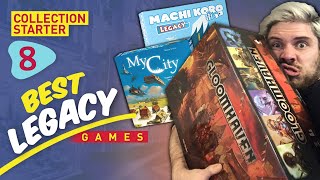
- Strong group cohesion and memorable first campaign
- Ritualistic play style that deepens over time
- Can be intense and long for some groups
- Requires a solid participant commitment
- Horror atmosphere and evolving haunt scenarios
- Haunted house exploration with a family legacy
- Group-driven rituals and progressively darker events
- Betrayal at House on the Hill
Mechanics (from transcript analysis)
- exploration of a haunted house — Rooms, events, and haunts trigger as you explore
- haunt and legacy progression — Haunts unlock new rules and keep a running memory of actions
Video topics + discussion points
Quotes (from this video)
- rip up cards
- story everywhere
- it's a super corrupt auction style of voting
- two things – one legacy games are very ritualistic
- heads into the unknown together
References (from this video)

- strong legacy mechanics with family lineage element
- engaging campaign structure that rewards long-term play
- long-term commitment required
- ripple effects can be off-putting for casual players
- legacy/heritage with evolving game state
- family through generations within a haunted house
- story-driven, evolving narrative
- Betrayal at House on the Hill
- Mansions of Madness
Mechanics (from transcript analysis)
- legacy progression — campaign-style where outcomes alter future plays, introducing new rules and components
Video topics + discussion points
Quotes (from this video)
- we're not afraid to call out that bs that can unfortunately come up
- we've got a long way to go
- tabletop games get coverage everywhere so that's fantastic
- you know we got a long way to go definitely
- tabletop games get coverage everywhere so that's fantastic
- it's the board game quiz show
- nine out of ten right now you're kicking butt
- tonight we run out of time but it was very entertaining to listen to you
References (from this video)
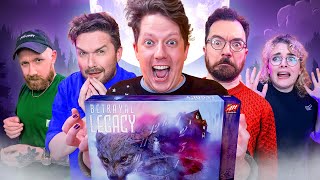
- Engaging legacy storytelling with a cohesive progression across chapters
- Rich thematic flavor blending gothic horror with family saga
- Dynamic, player-driven interactions and betrayals create memorable sessions
- Heirlooms and family ties add a satisfying sense of continuity across games
- Tight integration of narrative into mechanical decisions (haunt, chalice, etc.)
- Rules can be dense and initially confusing for newcomers to legacy-style games
- Sensitive or potentially disturbing portrayal of violence involving children and family dynamics
- Long setup and multi-session commitment may deter casual players
- Some players perceived the dice or luck elements as overly influential or unexpectedly harsh
- betrayal, hauntings, family legacy, and hidden loyalties within a gothic-horror setting
- Haunted mansion with 17th-century European-inflected milieu, centering on a family house and its evolving story across generations.
- campaign-driven, evolving story told through a Legacy deck, items, omens, and a persistent family lineage
- Betrayal at House on the Hill
Mechanics (from transcript analysis)
- Combat, stealing, and damage allocation — Attacks use stat dice, with the option to steal items after dealing damage. Damage is allocated to Might, Speed, or other stats, and can be redirected via choices during combat.
- Dice-based stat checks — Characters roll a number of dice equal to a selected stat (Might, Knowledge, Sanity, Speed); results determine success and consequences, including damage to stats.
- Hidden traitor/haunt setup — A haunt begins with a hidden traitor or witch dynamic; players may attack, steal, and act as obstacles as the haunt unfolds, with the eventual revelation shaping endgame.
- Items, Omens and Heirlooms — Characters can carry multiple items and omens; once per session a player may turn a drawn item into a family heirloom, permanently linking it to their family card.
- Legacy deck progression — A dedicated Legacy deck drives the unfolding story; cards are drawn from the bottom, reveal twists, and permanently alter future gameplay without shuffling the deck at the start.
- Obstacles and ghosts — Spaces may contain obstacles or ghosts; passing through incurs extra movement costs, and ghosts interact with certain items or haunt mechanics (e.g., Chalice of insanity affecting sanity and stats).
- Tile placement and border matching — Tiles are placed to form a house layout; players try to align borders and connect exterior paths to interior spaces, with secret passages influencing movement and exploration.
Video topics + discussion points
Quotes (from this video)
- Legacy deck part one stop do not open this deck or look at any cards until you're ready to start your first game.
- we won't Shuffle we will just draw cards from the bottom of them and do what it says on them.
- The Chalice and gives it its true name the Chalice of insanity.
- One of us is a witch but who is it draw the next five cards and turn them face up.
- The ghost tokens will interact with certain items like the Chalice of Insanity.
References (from this video)

- takes Betrayal to a new level with legacy mechanics
- deepens narrative through lineage and evolving encounters
- highly social; supports a full crew for Halloween sessions
- long campaign; requires commitment and schedule alignment
- balancing and group dynamics can be challenging over time
- haunted house with persistent, story-driven changes across generations
- Legacy evolution of Betrayal at House on the Hill; lineage/héritage storytelling
- long-form campaign with evolving rules and heirlooms
- Betrayal at House on the Hill
Mechanics (from transcript analysis)
- character retention and succession — play shifts to descendants; heirlooms and names carry meaning forward
- external storytelling elements — you name objects and those names echo across future sessions
- legacy progression — new rules and components introduced across playthroughs; legacy consequences persist
- story-driven encounters — encounters tied to locations and historical events; board and story evolve
Video topics + discussion points
Quotes (from this video)
- I really like the theme in this game because the campaign follows the movie.
- it's basically Zombie Side with the Knight of the Living Dead license mixed in there.
- hidden movement game
- we've also teamed up with people and you know this plays five players—one player playing Dracula and the other four playing the hunters
- it's got this really creepy feel to it because you are digging up bodies from a grave you are stealing bodies from a morgue
- it's a great legacy game and it's got a lineage type of thing
References (from this video)
- immersive narrative arc with group-oriented play
- replay value through evolving campaigns
- strong social and group dynamics when played consistently
- long form commitment required
- rules can become opaque with evolving components
- legacy-style storytelling where choices alter future sessions
- haunted house exploration with family lineage and evolving legacy
- campaign-driven with unfolding events and evolving rules
- Pandemic Legacy
- Betrayal at House on the Hill
Mechanics (from transcript analysis)
- cooperative mystery solving with misdirection — Players cooperate while some information is obfuscated by mechanics and storytelling.
- legacy campaign — Persistent progression across multiple sessions with evolving components and outcomes.
- scenario-driven escalation — Early chapters re-tread familiar ground but escalate through new components and encounters.
Video topics + discussion points
Quotes (from this video)
- it's a solid game with like this it pulls you in each stream
- the tutorial format really helps you experience it differently
- we had this new evolution of our game group for a good three months
- betrayal legacy is still sitting on my shelf unplayed but I was intrigued
- it's slower at the beginning but picks up and it's a good overall experience
References (from this video)

- strong thematic arc and story progression
- variety across chapters and house configurations
- lengthy commitment and potential onboarding challenge
- seasoned players may have a different experience than new players
- legacy progression and betrayal within a house
- haunted mansion / family estate with a campaign arc
- permanent changes, chapter-based storytelling with book inserts
- Betrayal at House on the Hill
Mechanics (from transcript analysis)
- cooperative exploration with a traitor — players explore a modular house, with a later betrayer among them
- legacy progression — permanent alterations to components and rules across chapters
Video topics + discussion points
Quotes (from this video)
- This is the first Legacy and that we've actually played as a legacy.
- it's got the classic Legacy like destroy your tiles and cards and put stickers in your books
- I was very excited when Restoration Games was going to bring this game back out
- I'm here overall I'm a fan of unmatched
- TABARU is a system the game you're getting with the system is going to be the bad karmas
References (from this video)
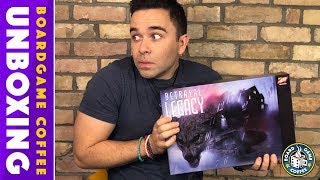
- Atmosphere and suspense are strong selling points, driving immersion from the first look
- Legacy progression provides meaningful, permanent changes that shape subsequent sessions
- The thematic execution aligns with a haunted-house experience, delivering a cohesive mood
- Packaging and hidden elements create a strong unboxing and reveal vibe
- Heavy rulebook and learning curve may slow initial setup and first plays
- Permanent decisions reduce replay flexibility after progress is made in a campaign
- Setup and storage can be fiddly due to numerous sealed decks and stickered components
- Minis are described as adequate but not standout, potentially impacting aesthetics for some players
- Legacy-driven horror and mystery where player decisions permanently alter the board, components, and narrative arc across games.
- A haunted mansion setting that unfolds across multiple sessions, blending exploration with a shifting, story-driven house and its inhabitants.
- episodic, unfolding narrative with evolving rules and permanent changes introduced through stickers, decks, and sealed contents.
- Betrayal at House on the Hill
- Betrayal Legacy (itself)
Mechanics (from transcript analysis)
- Character boards and trackers — Players track traits, fate, and potential effects on their characters through dedicated boards.
- cooperative exploration — Players move through a haunted mansion-like map together to trigger events and advance the story.
- Event and haunt decks — Event decks introduce new scenarios and haunt triggers; some decks are sealed and opened as the game progresses.
- Hidden traitor / betrayer mechanism — A betrayer is revealed during gameplay, creating tension and shifting objectives for the group.
- legacy progression — Permanent changes to cards, stickers, and player boards across plays; choices in early sessions shape later experiences.
- Permanent modifications and writing on components — Stickers and writable cards introduce permanent decisions, changing future plays and story outcomes.
- Secret passages and map modifications — Hidden sections and permanent alterations to the game map exist to surprise players and alter routes.
- story-driven scenarios — The campaign unfolds as a series of days/scenarios with narrative prompts guiding play.
Video topics + discussion points
Quotes (from this video)
- I'm digging this box art.
- This game is creepy.
- It's like the world's spookiest advent calendar.
- I'm getting a Game of Thrones vibe on this stag is a sigil.
- This game is spooky I don't get spooked up games this one might make Brittany cry.
- This is about the atmosphere and it's selling me a spooky atmosphere.
- This is gonna be a really fun creepy experience.
- The atmosphere is what sells it.
References (from this video)
- Legacy mechanics that teach as you go, creating a guided learning curve
- Thematic and atmospheric presentation with immersive components (pre-painted minis, stickers, journals)
- Modular house-building components (tiles, punch boards) that visually reflect progression
- Strong sense of replay value through evolving narratives and family-generation mechanics
- High production quality in artwork and component design (cover art, packaging, and interior layout)
- Spoiler risk in unboxing: cannot reveal many cards, books, or story elements until play begins
- Complexity and setup time common to legacy games may deter casual players or groups with time constraints
- Some contents are intentionally sealed or restricted to preserve surprises, limiting instant full review of components
- The narrative progression can create long commitments for groups who want shorter sessions
- Dependence on experienced group dynamics to fully grasp traitor vs survivor mechanics across generations
- Legacy progression, family saga, haunted house mystery, betrayal dynamics between traitor and survivors
- A haunted house that evolves across generations, with rooms and features added or altered over time
- Campaign-like, with journals, decks, and stickers shaping the house and story across multiple sessions
- Betrayal at House on the Hill
Mechanics (from transcript analysis)
- Character/family progression — Players assume roles as successive generations of a family, each with starting resources and evolving traits that influence choices and paths.
- Deck-driven events (legacy, purgatory, starter decks) — Different decks drive encounters, discoveries, and irreversible changes; some decks explicitly guide when and what to reveal or add.
- legacy progression — The game evolves across multiple sessions, introducing new rules, components, and story consequences that permanently alter the game state.
- Pre-painted miniatures and status markers — Miniatures and markers represent family members, locations, and status effects, contributing to the tactile experience.
- Rulebook integration with in-box teaching — The design emphasizes teaching through gameplay, with new rules layered in as the game progresses, rather than dumping all rules at once.
- Story journals and artifacts — A Bleak Journal and other narrative artifacts store lore, choices, and consequences that shape future playthroughs.
- Tile/plank and board construction — The house is assembled with tiles and punch boards, enabling a modular, evolving map reflective of the story’s progression.
- Traitro rvs Survivor dynamic — One or more players may become traitors depending on in-game events, shifting objectives and alliances mid-campaign.
Video topics + discussion points
Quotes (from this video)
- I'm pretty excited for this game
- I kind of like legacy games
- this is one of the games I was looking forward to getting this holiday season
- I love legacy games; they expand the storytelling possibilities beyond a single session
- I do more than just unboxings I do playthroughs, so if you’re new here meet me at the table
- the cover art, the stamp-like box design and the overall presentation is really appealing
- you’re going to create that house from Betrayal: House on the Hill and after you’re done playing through this game you’ll actually have your own house and your own game
- some of this stuff you can’t open yet because it’s part of the legacy journey and it’s intentional