It is the early 1800s, a time of immense construction and urbanization. You are a world-renowned master city planner who has been asked to redesign two different cities. Projects of such significance require the expertise of more than one person, so for each assignment you are paired with a partner with whom to discuss and execute your grandiose plans. Will your planning and collaborative skills be enough to design the most impressive city in the world?
Between Two Cities is a partnership-driven tile-drafting game in which each tile represents part of a city: factory, shop, park, landmarks, etc. You work with the player on your left to design the heart of one city, and with the player on your right to design the heart of another city. On each turn you select two tiles from hand, reveal them, then work with your partners separately to place one of those tiles into each of your two cities before passing the remaining hand of tiles around the table.
At the end of the game, each city is scored for its livability. Your final score is the lower of the livability scores of the two cities you helped design. To win, you have to share your attention and your devotion between two cities. The player with the highest final score wins the game.
The game features play for 3-7 players in 20-25 minutes, a 2-player variant for head-to-head competition as well as a solo variant (Automa).
- Potential for strong late-game payoff and synergy between cities
- Engaging drafting and decision tension
- Accessible core concept once learned
- Steep learning curve for new players
- Early resource access can be tightly constrained
- urban development and cooperative city planning
- City-building across two cities on a shared board
- abstract/strategic
- Atlantis Rising
- Dragon Academy
Mechanics (from transcript analysis)
- multi-city interaction — Performance in one city influences overall scoring and interaction with the other city.
- Resource management — Balance resources to optimize tile placement and scoring opportunities.
- tile drafting — Draft and place tiles representing districts to shape two cities.
- tile placement and scoring — Place tiles to maximize scoring for each city and meet constraints.
Video topics + discussion points
Quotes (from this video)
- Honey Buzz is always a difficult realm to complete, but it's really satisfying when you pull it off.
- Space Base, very friendly realm.
- It's a really satisfying game. It takes a little while to get started, but once you start getting resources from it, they can churn out quite a few resources.
- I really like the hidden victory points icon on the new champions hoodie. Pretty sneaky.
- This is a challenging round right here.
References (from this video)
- brisk, 20-minute playtime makes it ideal for larger groups
- novel two-city dynamic and neighbor interaction
- approachable mechanic set with clear decisions during drafting
- thematic presentation and artwork can feel bland or disconnected from the city-building vibe
- board size increases with player count and can be sprawling
- some civic-building symbols in Capitals expansion can be hard to parse quickly
- Urban planning with social negotiation; players operate as master city planners for adjacent cities and must contend with shared resources and scoring pressure.
- Two neighboring cities drafted on a shared board with opposing objectives, requiring players to balance two separate city grids.
- Competitive drafting with cooperative neighbor dynamics; social negotiation is a core engine rather than a narrative focus.
- Quadropolis
Mechanics (from transcript analysis)
- expansion integration — Capitals expansion adds new buildings and player mats that enable 5x5 city layouts and enhanced scoring for larger districts.
- neighbor interaction / negotiation — Players secretly decide which tiles to place in each city and then negotiate with adjacent players to influence tile placement, creating a social layer of strategy.
- scoring progression and reference materials — A scoring track/system, with a detailed score glance, guides endgame tallies and helps players understand how each district types interacts with scoring.
- set-building scoring and diversity — Houses score highly for diversity of building types; parks and factories provide specific scoring bonuses and penalties.
- tile drafting — Players draft building tiles for the city on their left and the city on their right, then pass the remaining tiles to the next player.
- two-city scoring with min rule — Each round and the final scoring hinge on two separate city grids per player; the final score is the lower of the two city scores, enforcing balance.
Video topics + discussion points
Quotes (from this video)
- I really like that kind of interaction and just yeah the design.
- you're gonna be competing for the highest scores at the end
- Between Two Cities is unique but the city building and presentation leaves much to be desired.
- this wonderful competitive co-op like buying presents for two lovers but fall short of capturing city building
- I love this player interaction like when I first I've shown this game to a ton of people and it just works for groups
- the two cities mechanic forces you to balance approaches across both sides, which is a fresh rhythm for a drafting game
- It's cool and we're totally okay with the two-city idea, but the theme and art could pop more
- Capitals expansion adds variety, but the symbol system for civic buildings can be fiddly
References (from this video)
- clear iconography and approachable teaching
- fast, tense drafting with meaningful decisions
- efficient play that scales well for groups
- presentation can feel drab compared to other contemporaries
- theme connection can be less visually engaging for some players
- Collaboration and competition in urban planning, shared city-building constraints
- City-building with a partner; two players cooperatively shape opposing cities via shared drafting
- structured, clean, grid-based planning
- Quadropolis
Mechanics (from transcript analysis)
- cooperative/competitive drafting — Two teams (or boards) influence each other’s city layouts through mutual drafting decisions.
- grid placement — Tiles must be placed to form coherent districts, with scoring depending on placement patterns.
- tile drafting — Players draft building tiles for two cities simultaneously at the table, balancing personal goals with partner constraints.
Video topics + discussion points
Quotes (from this video)
- I felt Quadropolis did a better job of that in terms of the art and again I described it as an elegant design something that was that just worked and it just looked good.
- This box barely fits everything once you have it all piled in; Quadropolis' insert is fantastic.
- Sim City on pause: Quadropolis delays scoring and lets you set up before payoff.
- There's not a single choice you make in the entire game you just roll dice sometimes you get a card that says ba tells you what it is and sometimes you get a card that does nothing and that's the A-Team.
References (from this video)
- teaches tile-laying, drafting, and scoring from multiple sources
- positive player interactions via cooperative framing within competition
- may feel abstract for some players
- the cooperative-leaning scoring can surprise new players
- cooperation with competition
- Medieval city-building in a shared two-city drafting puzzle
- cooperative drafting with competitive scoring
Mechanics (from transcript analysis)
- drafting — players select tiles from a hand to influence city layouts
- scoring multiple sources — points awarded from several condition-based criteria
- set collection — points come from combining different tile types and sources
- tile laying — players draft and place tiles to build two cities
Video topics + discussion points
Quotes (from this video)
- all the interactions between players are positive
- this list is designed around people just getting into the Hobby
- easy to learn and once some people know the game you can mix them up
- Forbidden Island teaches the basics of cooperative gaming and can be used as a launching point to other games in the Forbidden series
- the Resistance is probably the best of them
- Seven Wonders scales incredibly well from three to seven players
- One worker mechanic is an awful lot of fun
- Memoir 44 is the most accessible of them mostly because it feels like playing with toy soldiers
- Small World looks really dinky and inviting but it's a mercenary and brutal game
References (from this video)

- elegant design and easy to teach
- great group play with a clear objective
- balanced tension between the two cities
- requires spatial thinking
- some players may prefer heavier or lighter abstracts
- urban planning and collaboration with a competitive edge
- A competitive city-building game where players draft tiles to build two cities side-by-side, one to each player's left and right.
- Abstract spatial strategy with a light thematic veneer
Mechanics (from transcript analysis)
- city adjacency and placement — Strategic placement of buildings to optimize adjacencies and scoring
- dual-city scoring with balance — Your score is driven by the better of two cities but must keep both reasonably strong
- tile drafting — Players draft two tiles per turn and decide which city's board they go to
Video topics + discussion points
Quotes (from this video)
- it's like having a DVD player and then playing a different film on it each time
- the experience is so rich
- there's no replayability
- Time Stories completely delivers on that front
- no two games are the same once you played a scenario
References (from this video)
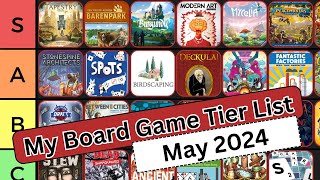
- Good game
- Very good game
- Haven't warmed up to it like other Stonemaier games
- Cooperative city building
- City building
- Cooperative game
- Stonemaier Games collection
Mechanics (from transcript analysis)
- Cooperative Drafting — Draft cards cooperatively with neighbor
Video topics + discussion points
Quotes (from this video)
- I rank like games pretty much like how I feel right now about them right it's possible that next month I will rank the games way differently
- Stonespine Architects definitely an a rank game for me um really amazing
- I just absolutely love this one of my most favorite puzzly polyomino games
- Château Burgundy is still in my top three games has been for a few years
- I do not like auction games but I absolutely love Modern Art this is amazing
- My City is like an amazing entry level deck builder but you can also play with people who like to play games a lot
- Slay the Spire could be one of my games of the year wow this game is amazing
- Fallout is really messed up by its winning condition
- Pop-Up Pirate it's funny but is it a good game no it's not really a game right
- I like vegetable themed games it sounds very specific but that's the way it is
References (from this video)
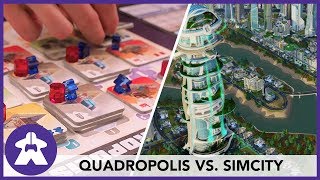
- Dual-city scoring encourages balancing two layouts
- Potential for varied strategy with different city combinations
- Complex drafting can slow down play
- Less thematic cohesion for some players compared to single-city games
- Cooperative-competitive city-building with dual-city scoring
- Two cities built in tandem; players influence both via shared drafting
- abstract/strategic
Mechanics (from transcript analysis)
- placement and scoring across two cities — Each tile affects scoring on both cities, requiring balance.
- shared decision-making — Players influence both cities through individual drafting choices.
- tile drafting — Draft tiles to contribute to two separate city boards in parallel.
Video topics + discussion points
Quotes (from this video)
- I love everything about the game in terms of the production value; the art isn't over-the-top, it's clean, the iconography and the color coding really helps with teaching the game.
- this game has nice pieces; the production value is strong and the acrylic components are a nice touch.
- everything about the game is balanced; you can't do everything.
References (from this video)

Mechanics (from transcript analysis)
Video topics + discussion points
Quotes (from this video)
- you're like one of the nicest people ever
- that was a perfect picture round you did awesome
- you got a total of 14 points emerson, which is huge
- look up emerson's games on bgg everybody they're fantastic
- cyber bunny
References (from this video)
- clever two-city mechanic that creates shared tension
- engaging for players who like drafting and tile placement
- requires good coordination between players
- can be less intuitive for first-time players
- fusion of cooperation and competition in a two-town build
- Collaborative-city-building between two coexisting cities
- sandwiching two players' cities into a shared result
Mechanics (from transcript analysis)
- joint drafting / city-building — pairs of players collaborate to draft and place tiles for two cities.
Video topics + discussion points
Quotes (from this video)
- the shortest review available on BoardGameGeek was 28 minutes long
- I'm tired of long reviews I'm going to make them ten minutes or less scripted
- no games for everyone
- the secret is that I have boxes for each section
- I'm an outsider and I'm actually okay with that
- we always give some negatives on every game
- bear cave
References (from this video)

- engaging drafting dynamic between pairs
- high interaction with teammates and shared scoring
- requires good communication between teammates; can be unforgiving if teams mis-coordinate
- cooperative competition with a partner to build optimal cities
- medieval-esque city-building in pairs
Mechanics (from transcript analysis)
- team-based drafting / tile placement — Two players co-design a city with a third player, balancing competing objectives across teams.
Video topics + discussion points
Quotes (from this video)
- we're not here to make friends we're here to break people
- one of the biggest personalities in a board game space
- it's a good investment
- the idea and it's it's mostly illegal now I believe
- this version is a ton of fun
- the table presence is terrific
References (from this video)

Mechanics (from transcript analysis)
Video topics + discussion points
Quotes (from this video)
- Say Anything board game challenge with a board gamey twist
- That is the say anything board game challenge definitely try this at home and let us know
- It's not as easy as people probably think it is
- We cheated maybe we should have draped something over them
- Both said Chronicles of Crime at least four times
- We were talking about the expansions in our heads
References (from this video)
- city building
- collaboration
Mechanics (from transcript analysis)
Video topics + discussion points
Quotes (from this video)
References (from this video)
- Cooperative city-building using polyomino-style placement
Mechanics (from transcript analysis)
Video topics + discussion points
Quotes (from this video)
- so apparently you're not a real board gamer until you own one of these things
- I am officially a white dude standing in front of a calyx
- across the top shelf a lot of these games will feature in my top 100 unsurprisingly
- this is a shelf hog it's a really good game and everything but it's kind of overkill in the end
- I can't afford to buy every single game out there I've got a lot on the shelves as you can see but I can't get everything
- a whole bunch of really cool little games in here and some of my particular favorites