THE GAME CONCEPT
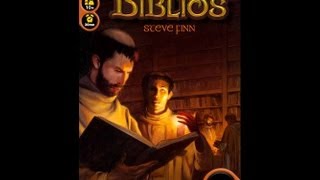
You are an abbot of a medieval monastery competing with other abbots to amass the greatest library of sacred books. To do so, you need to have both the workers and resources to run a well-functioning scriptorium. To acquire workers and resources, you use a limited supply of donated gold. In addition, you must be on good terms with the powerful bishop, who can help you in your quest.
OUTLINE OF GAME PLAY
The object of the game is to score the most Victory Points. You win Victory Points by winning any of the 5 categories: Illuminators, Scribes, Manuscripts, Scrolls, and Supplies. You win a category by having the highest total number of workers (Scribes, Illuminators) or resources (Manuscripts, Scrolls, Supplies) in that category. This is determined by the numbers in the upper left corner on the cards. At the start of the game, each category is worth 3 Victory Points. As the game progresses, the values on the Value Board will change and some categories will become worth more or fewer Victory Points than others. The game is divided into 2 stages: a Donation stage and an Auction stage. During the Donation stage, players acquire free cards according to an established plan. In the Auction stage, players purchase cards in auction rounds. After the two stages, winners of each category are determined and Victory Points awarded. The player with the most Victory Points wins.
GAME CHARACTERISTICS
The game involves a good deal of strategic planning, some bluffing, and a little bit of luck. The rules are easy to understand, but you have to play it a few times to develop a playing strategy. It plays differently from 2-4 players, but each game is equally fun and challenging.
- Fast, accessible filler game that plays quickly
- Strong two-player variant that feels tuned and balanced
- Engaging drafting and auction loop with a tangible tension from bluffing
- Box design that doubles as a book-like organizer and aesthetic appeal
- Clear iconography aids accessibility and reduces setup time
- Bluffing can be underutilized in some sessions
- As a filler, depth may feel limited for heavier gamers
- Outcome can skew heavily on draw luck and auction dynamics
- Color-coded manuscript cards and library-building objectives
- Library/book-collection environment where players vie for color-based manuscript sets
- Informative and enthusiastic strategy explanation
- For Sale
Mechanics (from transcript analysis)
- Auction — A second phase where players bid on cards using gold or bid cards; bidding is verbal allowing bluffing.
- bluffing — Bidding can be bluffable; players may pretend to have stronger hands to influence bids, with risk if caught and penalized.
- color_value_manipulation — Certain cards can modify the value of colors, altering end-game scoring dynamics.
- drafting — Players draft cards at the start and continue drafting as they draw, shaping their hands and eventual scoring.
- economy_cards_and_gold — Gold and cards are used to bid and acquire desired cards during the auction phase.
- set_collection / color_majority — Points are earned by holding the majority in each color based on the total value of cards in that color at the end.
Video topics + discussion points
Quotes (from this video)
- it's a pretty straightforward game; it’s pretty simple; it plays really quick
- it's filler that plays fast and has good momentum
- bluffing really only came into play once or twice
- it's a lot like For Sale
- it plays really quick; I played three times at my lunch break today
References (from this video)

- Compact, a good travel pick
- Tight decision space with meaningful moments
- Presents substantial decisions in a small package
- Abstract theme may deter thematic players
- Auction phase can feel brutal to some players
- book collecting and prioritization
- Medieval monastery/abbey vibe
- The King and I
Mechanics (from transcript analysis)
- auctioning / set collection — Two halves: drafting and auction phases to collect types (books) and optimize scoring across categories.
Video topics + discussion points
Quotes (from this video)
- flattening inserts and packing things within games
- rollerblades takes up one side of the inner suitcase
- you have some tips for Gen Con then some tips
- this is Sea Salt and Paper a tiny little cartoon
References (from this video)
- one of the best filler games
- unique scoring system that hides opponents' goals
- randomness and lightness may not appeal to heavier gamers
- card drafting and currency bidding
- flea market/card bidding theme
Mechanics (from transcript analysis)
- bid-based drafting — simulate bidding for cards to build set collections and accrue currency
- set collection / dice-based scoring — score based on card sets and dice-pip values
Video topics + discussion points
Quotes (from this video)
- this is definitely one of those games with a bit of laborious start but great payoff after you get your head around it
- it's a wonderful family-friendly filler, a puzzly style game
- one of my favorite games that i played last year
- it's essential if you like your two-player games
References (from this video)

- tight, elegant card game
- fast, accessible
- scales well with player count
- episodic scoring can feel opaque to newcomers
- book gathering, scoring by suits
- monastic book collection and bidding
- light, elegant
- 7 Wonders
- Sushi Go Party!
Mechanics (from transcript analysis)
- card drafting and bidding — draft cards and bid to acquire valuable books
- Set collection and scoring — score by collecting matching suits with value tracking
Video topics + discussion points
Quotes (from this video)
- it's a really intense game
- this is the meanest tree game out there
- it's the best trick-taking game of all time
- the economy in this game is probably one of the most interesting parts