In Black Forest, you start out with a small domain in need of new buildings and livestock. You’ll travel from village to village, to enlist the aid of the best specialists. Exploiting the abilities of these specialists lets you collect resources, lay out new landscape tiles (e.g. ponds and fields), and build a variety of buildings, which come in four types. Choose the right buildings, place landscapes, fire up your glass production, and expand your domain.
Uwe Rosenberg’s resource wheels, made famous in Glass Road (2013), return in Black Forest. Two resource wheels on your tableau help you keep track of your resources and production. Black Forest continues the story - as the name suggests — in the Black Forest. Among others, the main difference between the two games is the use of worker placement in Black Forest instead of simultaneous action selection.
A wide selection of buildings and their different effects offer many different paths to victory.
—description from publisher

Mechanics (from transcript analysis)
Video topics + discussion points
Quotes (from this video)
- What enters my collection is a whole another story.
- I'm absolutely hooked on it. I love Primal.
- If I add something to my collection, ideally I want to see it there a year from now, at least a year from now.
- It is such a good implementation of the Glass Road system.
- It's not forever, but it feels like a forever game for me.
References (from this video)

- Removes card system from Glass Road
- Multiple action space options
- Beautiful artwork
- Good miniaturization opportunities
- Well-organized building display
- Resource management depth
- Distinct from Glass Road
- Many viable strategies
- Tactical opportunities
- Can cause analysis paralysis
- Very many options to consider
- Heavy decision-making required
- Not for AP-prone players
- Forest settlement
- Resource management
- Building construction
- Glass Road
- Carcassonne
- Fields of Arle
Mechanics (from transcript analysis)
Video topics + discussion points
Quotes (from this video)
- Review and rant about board games - usually more the latter
- It's basically Seven Wonders Dual with a minor reskin on it
- Euro style area control is probably in my bottom five mechanics
- This game is not forgiving
- I'm kind of done with this whole genre
- I'd be the skeletons and he'd be the goblins
- This will cause your brain to ache
- The Expo is kind of more like a taster of what's to come
- Remember as always it's only a game
References (from this video)
- Clear iconography and approachable teaching for a Rosenberg mid-weight title
- Brilliant resource-wheel mechanic that replaces complex card systems with interactive, strategic planning
- High replayability due to large variety of buildings and deployment options
- Low luck factor; largely deterministic with strategic depth
- Beautiful, colorful art and a satisfying table presence despite its size
- Solid solo mode and a smooth teaching curve for players familiar with Glass Road
- Table hog; requires a spacious playing area and organized setup
- AP (analysis paralysis) can occur with new players or large groups due to many viable paths
- Heavy component load and punch-out setup can be time-consuming
- Resource management, building, and trade within a developing rural estate.
- Estate management in a stylized Black Forest environment with villages, forests, fields, lakes and tradable assets.
- Eurogame presentation with light thematic flavor and strong mechanical focus
- Glass Road
- Setti
Mechanics (from transcript analysis)
- Building placement on side boards — Players build on side boards with a large pool of two-sided buildings that provide various bonuses and end-game scoring opportunities.
- Endgame trigger via time clock / SLE clock — Game ends when a clock reaches a certain point on a player’s board, then all players get one final turn and scores are tallied.
- Resource wheels / resource tracking — Players manage two intertwined resource wheels; spending or gaining resources automatically advances the wheels, producing secondary resources.
- Set collection / animal husbandry — Recruit and place animals (cows, pigs) and other assets to earn points and enable conversions on buildings.
- Trade tiles / tradespeople and traveling Merchant — Actions are accessed via tradespeople; a traveling Merchant can swap tiles around to alter available actions.
- Worker/meeple movement along roads — Players move their meeples along a map via roads to nations' villages and tradespeople to perform actions.
Video topics + discussion points
Quotes (from this video)
- it's a solid game all around it's not difficult to teach even if you've never played Glass Road before
- the resource Wheels which was the best thing out of Glass Road you've taken away the cards
- this game is fantastic
- it's a comfortable 10 this is a benchmark for Rosenberg and Resource Management games
- I've already buzzed over Seti when I did that review but I think when all things considered this one is better than Seti
- this is easily my favorite game I've played this year
References (from this video)

- Accessible yet flavorful engine with macro decisions
Mechanics (from transcript analysis)
Video topics + discussion points
Quotes (from this video)
- "Fantastic game. Not going anywhere."
- "Oracle of Deli? I do like Oracle of Deli. It is one that I probably should get rid of."
- "Viticulture still safe. Rouge never going anywhere. Love this game."
- "Convert the cave farmers. I probably should get rid of it. It's so good though. It's really, really good."
- "Feast for Odin"
- "Glass Road versus Black Forest where I said I'm going to keep both."
- "I think I'm going to keep Black Forest for the gameplay that that gives. This is a new choice. I'm making these choices up on the fly."
- "Dominion is amazing. I absolutely adore Dominion. I think it's one of the best deck builders out there."
- "Lord of the Rings, Fellowship. This is totally safe. I love the experience that this gives me."
- "Sentinels of the Multiverse. That's another one where I like it a lot. I don't play it as much as I'd like to. It's a really satisfying game."
References (from this video)

- strong successor to Glass Road with a tighter, more focused engine
- high replayability
- some comparisons to Glass Road may affect perception
- evolving tableau optimization in a compact engine
- forested, abstract strategy backdrop
- elegant, compact, architecture-forward
- Glass Road
- Kverna
- Feast for Odin
Mechanics (from transcript analysis)
- abstract tableau optimization — build a scoring tableau with careful placement to maximize points
- duels/dueloid interactions — inter-player competition for shared resources and optimizations
Video topics + discussion points
Quotes (from this video)
- It's 80 through 71. We're counting down the list.
- This is a delightful game that is accessible, easy to teach, and incredibly replayable.
- Onward is the new version of Sky Tier. It's a MOA-style game with a volcano eruption climax.
- Canvas is a delightful game. It’s accessible, a great gateway, and the art is stunning.
References (from this video)
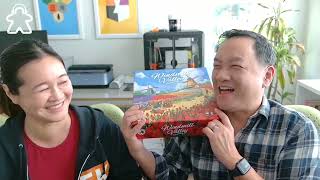
- builds on Glass Road concept with added player interaction
- merchant mechanic adds dynamic timing
- quite heavy and potentially punishing for new players
- village-building / resource management
- Black Forest villages and forests
- cozy, rustic
- Glass Road
Mechanics (from transcript analysis)
- rondell-style resource management — circular track of resources that influence actions
- tile placement / upgrading — place and upgrade to optimize resource flows
- villager/merchant interaction — visiting villagers and merchants influence tile exchanges
Video topics + discussion points
Quotes (from this video)
- it's like a summer camp where I get to play lots of games
- this is one of the coolest things about this game
- the turns are so Snappy; you're always ready to go
- it's a bigger game where you are building out and visiting villages in the Black Forest
- two things that I love in games: dice placement and engine building
- the art is fascinating; some people really did not like the art and some people really did
References (from this video)

- Simple turn structure
- Interesting resource management
- Variety of building options
- Relatively short playtime
- Initial complexity
- Overwhelming number of icons
- Limited player interaction
- Resource management and settlement building
- Rural European landscape
- Euro-style economic development
- Glass Road
Mechanics (from transcript analysis)
- action selection — Players move around a board selecting actions from different village tiles
- resource wheel management — Players manage resources on two interconnected wheels
Video topics + discussion points
Quotes (from this video)
- Two-player players are eating really well right now.
- We play a ton of Uwe Rosenberg games.
- We were happy to play four solid games back to back.
References (from this video)
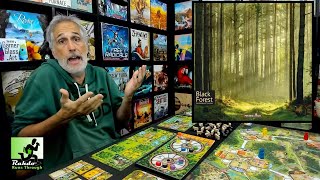
- Innovative production wheel that drives a dynamic engine
- High variability through random buildings and town layouts
- Satisfying planning and combo potential
- Tension and interaction in multi-town engine-building
- Two-player mode can introduce take-that interactions via the dummy/neutral player
- Setup complexity and large table space
- Endgame can feel lengthy or grindy
- medieval industry and resource management in a frontier forest
- 13th century Germany, forested region with glass huts
- engine-building with variable buildings and estate expansion
- Glass Road
Mechanics (from transcript analysis)
- commissions/ traveling salesman / commodities — spend commodities to move traveling salesman to other towns and trigger special combos
- estate expansion — advancing on a track grants new estates, increasing capacity and points
- production wheel — two rotating production wheels that generate resources and trigger buildable goods; rotation changes depending on resource allocation
- tiles/buildings with variable effects — random subset of big buildings each game; left/middle/right columns dictate resource costs and end-game scoring
- worker placement — place a single worker to take two actions in a town, with rest of game moving between towns
Video topics + discussion points
Quotes (from this video)
- Black Forest is the spiritual sequel to Glass Road.
- I absolutely adore this... I absolutely adore that this is a game about trying to combo multiple things next to each other.
- The traveling salesman system is brilliant; it lets you move resources and shift board state.
- Death By A Thousand Cuts — take-that moves in two-player mode feel spiteful and unnecessary.
- Glass Road has always been so amazing to me.
- Two-player balance changes with a third neutral pawn can feel like a hobbled three-player game.
References (from this video)

- tight Euro design by Rosenberg
- smooth gameplay and strong production
- clear theme tied to building and development
- information overload from many building options at setup
- building and resource management in a forest economy
- forest clearing and management
- Euro-style theme with thematic flavor
- Glass Road
- Castle Combo
Mechanics (from transcript analysis)
- board development — building placement and incremental progress on a shared board
- worker placement — action selection and worker placement on a grid of buildings
Video topics + discussion points
Quotes (from this video)
- If you enjoy the Ingenious game, I would definitely have a look at Ingenious 3D.
- Tower Up is the game that I would play with non-gamers.
- This is SETI, and it's cool from a mechanical perspective.
- The narrative is exceptional. The writing style is superb.
- Civolution has micro turns... your turn is generally fairly short and doesn't contain any chaining of actions.
References (from this video)
- Silky smooth gameplay with rules depth
- Perfect balance of complexity versus depth versus setup time
- Quick setup despite deep mechanics
- Excellent resource management system with dials
- 36 building tiles with A/B sides for 72 building choices
- Smooth rules that don't require constant rule book checks
- Great turn anxiety with interesting decisions
- Minimal teach time for mechanics
- Very replayable
- Can play multiple games back-to-back quickly
- Analysis paralysis can be significant
- Slow with slow players
- Requires right group or limited to three players
- Building and developing village infrastructure
- Medieval forest village
- Pastoral economic sandbox
- Glass Road
- Carcassonne
- Feast for Odin
- Fields of Arle
Mechanics (from transcript analysis)
- Building Construction — Build different buildings with A and B sides for variety
- Resource management with dials — Two dials track resources (sand creates glass, sand creates wood loss)
- solo mode — Includes solo mode with AI player
- Trade people abilities — Resolve abilities of trade people adjacent to your worker
- Worker placement with location movement — Move worker around map to take actions at different locations
Video topics + discussion points
Quotes (from this video)
- 2024 was not my favorite year ever not just in board gaming but kind of just in life in general
- it's nice that there's actually a game that says no how about we stop War for a change
- you want to stick Miyazaki from studio Ghibli and shove it into a board game it's just like that
- silky smooth silky smooth like the river itself
- I suspect this list is going to be very different to a few of yours
- this is the ultimate balance like you need a balance of complexity versus depth
References (from this video)

- Strong potential to grow with time
Mechanics (from transcript analysis)
Video topics + discussion points
Quotes (from this video)
- I gave it a 4.5 out of five. I think I would bump it to a five out of five.
- Massive Darkness 2 is still here. I just think it's an excellent game system.
- Cascadia Alpine Lakes was the second time I gave a five out of five to a Cascadia game.
References (from this video)
- Clever wheel mechanic that links resources to actions
- Strong interplay between buildings, resources, and timing
- Good replayability with multiple side B buildings
- Rule density can slow beginners
- Some players may feel overwhelmed by the number of buildings
- settlement growth, trade, and tableau-driven engine building
- medieval forest development and resource management
- engine-building euro with thematic forest and resource flow
- Glass Road
- Caverna
- Fields of Ypres? (reference to Rosenberg-style heavy euros)
Mechanics (from transcript analysis)
- Provisions and movement — Workers require provisions to move, tying movement to resource management.
- resource wheel — A central wheel tracks basic resources; spending shifts the wheel counterclockwise.
- Tableau/engine building — Buildings provide ongoing or one-time effects and resources.
- worker placement — Pawns are placed to perform actions at villages and tradesmen.
Video topics + discussion points
Quotes (from this video)
- Rolling Dice and taking names
- the wheel is basically your clock
- I love stock market games
- this is Emerald Skulls fast playing dice rolling game
References (from this video)

- high design quality for a Rosenberg title
- potentially deep with right players
- two-player scaling undermined by design choices
- felt like a departure from Birds/Reality balance
- blocking and resource competition
- two-player forest conflict
- heavy interaction with tight constraints
- Glass Road
Mechanics (from transcript analysis)
- two-player antagonism — block opponent moves and resources to disrupt plan
Video topics + discussion points
Quotes (from this video)
- The Crew does it better
- This is an abstract game in its heart
- I rage quit
- Goblins Hate Christmas sponsorship
References (from this video)

- engaging resource engine
- strong Rosenberg design language
- heavy for some players
- glassmaking history
Mechanics (from transcript analysis)
- Resource management — Gather and allocate resources to forge glass and fulfill goals.
- worker movement — Players move workers between villages to access actions.
Video topics + discussion points
Quotes (from this video)
- There will be only one topic. Only one.
- We wanted to do our traditional deep dive into this year the 2025 American Tabletop Award winners, nominees, and recommended games.
- To prevent conflicts of interest, we ask people who have any connection to a game … to not submit any game that they have a conflict of interest with during that nomination process.
- The fundamental nature of taxonomic organization, right? There is no one rule that will satisfy every single person for where a game belongs in terms of like is it a good game for people that are getting into gaming?
References (from this video)

- Returning the resource wheel idea to a new variant
- Tight scoring similar to Glass Road
- Not a direct reimplementation; potential for confusion with related games
- Resource wheel recreation; building and development
- German forest/agriculture theme
- classic Rosenberg style
- Glass Road
- Oran Bank Canal
Mechanics (from transcript analysis)
- resource wheel — resource generation through wheel mechanics
- worker placement — place workers to build and collect resources
Video topics + discussion points
Quotes (from this video)
- two-player only trick-taking game
- the Trump is constantly changing
- chapter one is drafting cards that's chapter one
- 60 to 120 minute playtime
- not a deduction game
References (from this video)
- Unique resource wheel mechanic
- Balanced, non-swingy resource economy
- Good thematic integration and board variety
- Provisions constraints can feel forced and limiting
- Interactions can feel limited or less tense than other titles
- Random job availability can disrupt planning
- Resource management, exchange, building to unlock new capabilities
- Medieval Black Forest region with resource exchange and town-building
- Procedural progression with resource-driven growth
- Glass Road
- Caverna: The Cave Farmers
Mechanics (from transcript analysis)
- automatic resource wheel — A rotating wheel system consumes one of each resource when spaces are exhausted, generating a mixed bag of resources.
- board movement and action economy — Players move around a board to perform actions; moving into another player's space requires a payment of a basic resource.
- provisions-based movement limitation — Movement and actions require provisions; players must manage provisioning to reach desired locations.
- resource conversion and building synergy — Resources are converted through buildings, enabling other actions and production chains.
Video topics + discussion points
Quotes (from this video)
- the best thing about this game and kind of the best thing about gloss road as well was the resource Wheels and this is a very interesting puzzle
- the resource wheels are really cool I like the concept and it's a really tricky puzzle
- I think personally I like the cards in gloss Ro better because as you said like it's more of that mind game thing
References (from this video)
- High potential as a candidate for game of the year
- Solid engine-building feel and multiple viable strategies
- Bright, colorful table presence
- Rules might be dense for new players
- AP can appear in longer four-player sessions
- Glass Road
- Paladins of the West Kingdom
Mechanics (from transcript analysis)
- resource engine & building — buildings and trades shape your strategy and endgame scoring
- resource management / turn sequencing — players manage resources and plan turns with relatively low rules overhead but multiple options
Video topics + discussion points
Quotes (from this video)
- It's only a game.
- Windmill Valley is a solid game from Bard & Dice, easy to teach and with nice table presence.
- Black Forest was a standout session, potentially game of the year material.
- Ezra and Nehemiah is mostly non-existent on theme, but it's Garfield, so I was curious to try it.
- Ark Nova has satisfying core mechanics, but it is a long, heavy ride.
- Setti is a solid but forgettable experience; it does the job but lacks a memorable hook.
References (from this video)
- engaging resource dial mechanic
- rich set of options
- strong integration with existing Glass Road concepts
- long playtime at four players
- potential complexity for new players
- Rural development / farming
- Black Forest region
- Resource-driven, strategic
- Glass Road
Mechanics (from transcript analysis)
- resource_dials — dial-based resource management replacing some cards
- tile_placement — map with buildings and travel interactions
Video topics + discussion points
Quotes (from this video)
- I gave an 8 out of 10 for Fractured Sky.
- This turned out to actually be a good bit of fun.
- it's a funkier version of Splendor.
- I would rather play Wingspan.
- the theme is really good and gameplay was excellent.
- it's Glass Road with resource dials.
References (from this video)
- Brilliant worker placement system
- Maintains classic resource wheels
- Better for most players than Glass Road
- Action combo building
- Two-player mode has aggressive take-that mechanics
- Neutral player movement blocking is frustrating
- Overly mean-spirited for some
- resource management
- worker placement
- Glass Road
- Uwe Rosenberg designs
Mechanics (from transcript analysis)
Video topics + discussion points
Quotes (from this video)
- life is too short to worry about games that don't work very well
- all of these games are really really cool in various ways
- Rich and deep and complex
- phenomenal
- no surprise that Designer artist Ryan Locket
References (from this video)

- clever resource wheel that drives decisions
- thematic integration with and fluid movement across the forest
- teaching and learning flow improves with play
- initial learning curve and some missing flavor text in the rulebook
- not all players may enjoy the heavy euroweight
- glass production and forest resource economy
- Black Forest, Germany; historical glass-making context
- eurogame with resource wheels and factory relocation
- Glass Road
Mechanics (from transcript analysis)
- moving production site — the glass factory is relocated around the forest as resources recover
- Resource gathering and conversion — collect resources, convert them to glass, and manage provisions for movement
- resource wheel — central wheel using diverse resources to produce glass components
- Two-action turns — each turn yields up to two actions by visiting paired craftsmen in a village
Video topics + discussion points
Quotes (from this video)
- The resource wheel is very clever. So, this looks really neat.
- The town is a shared board and it's worker placement. But if someone wants to take your space, they can and they bump you into a space called the park which just raises your energy.
- Don't Skip Leg Day … came in a protein shaker bottle, which you could not use to make a real protein shaker.
- The packaging is part of the product experience; it should invite you to pick up and touch.
- If I’m gifting a game, I want to give something that feels special, not just another box on the shelf.
- Beasts’ art and card design are so memorable that people stop to look at the cards even before learning to play.