In the quiet village of Ravenswood Bluff, a demon walks amongst you. During a hellish thunderstorm, on the stroke of midnight, there echoes a bone-chilling scream. The townsfolk rush to investigate and find the town storyteller murdered, their body impaled on the hands of the clocktower, blood dripping onto the cobblestones below. A Demon is on the loose, murdering by night and disguised in human form by day. Some have scraps of information. Others have abilities that fight the evil or protect the innocent. But the Demon and its evil minions are spreading lies to confuse and breed suspicion. Will the good townsfolk put the puzzle together in time to execute the true demon and save themselves? Or will evil overrun this once peaceful village?
Blood on the Clocktower is a bluffing game with players on opposing teams of Good and Evil, overseen by a Storyteller player who conducts the action and makes crucial decisions. The goal of the game is to successfully deduce and execute the demons before they outnumber the townfolk.
During a 'day' phase players socialize openly and whisper privately to trade knowledge or spread lies, culminating in a player's execution if a majority suspects them of being Evil. During a 'night' time, players close their eyes and are woken one at a time by the Storyteller to gather information, spread mischief, or kill.
The Storyteller uses the game's intricate playing pieces to guide each game, leaving others free to play without a table or board. Players stay in the thick of the action to the very end even if their characters are killed, haunting Ravenswood Bluff as ghosts trying to win from beyond the grave. If you arrive late to a game, you can enter after it's started as a powerful Traveller character with unusual talents and questionable allegiances. Each character comes with their own special ability and no two players in a game are ever the same character.
- rich interaction and social deduction depth
- different loyalties create dynamic strategic possibilities
- complex to learn due to multiple roles and interactions
- social deduction with loyalty and deception
- fantasy town with hidden roles
- story-driven with secret objectives
- Unfathomable
- Code Names
- Root
Mechanics (from transcript analysis)
- hidden roles and loyalties — players have unique powers and goals that shape play and alliances
Video topics + discussion points
Quotes (from this video)
- asymmetry is The Game's capacity to encourage and force different decisions from players by creating unique advantages or disadvantages
- turn order is the plague the kill of so many otherwise symmetrical games
- it's a pure unfiltered symmetrical game and it's a perfect example for our base level
- a single difference will create a Cascade of changes that dramatically changes the play style and strategy between each player
- asymmetry lets us express and connect to a very human feeling of having personal strengths and weaknesses
References (from this video)
- Excellent balance with multiple demon roles enabling diverse play and strategy.
- Robust outsider manipulation and a rich minion/demon ecosystem create dynamic information flow.
- Pixie mechanic offers a balance for double-claims and supports nuanced bluffing.
- Wide array of experimental townfolk/minion/demon roles that fuel storytelling and replayability.
- Strong emphasis on the moment-to-moment information dynamics and player interaction.
- Damsel is a high-risk, high-variance role that can be extremely challenging to play well.
- The script’s complexity requires an experienced storyteller to run effectively.
- Legion and other heavy edge-case variants add complexity that may overwhelm newer players.
- Rules-heavy interactions (poisoner, boons, etc.) can intimidate newcomers and slow games down.
- Social deduction, deception, and hidden information within a narrative-driven courtroom of suspicion.
- A village with a layered social dynamic of townsfolk, outsiders, minions, and a demon, all under a clocktower-driven night cycle.
- Dense, multi-layered storytelling where information asymmetry drives play and player interaction.
- Blood on the Clocktower
Mechanics (from transcript analysis)
- claims_and_counterclaims — Double-claims and role-bluffs are common, building tension and strategic misdirection.
- edge_cases_and_synergies — Special rules (jinxers, booms, etc.) create edge-case interactions that demand storyteller handling.
- hidden_roles — Players are assigned secret alignments with unique powers that influence information flow and voting.
- minions_and_demons — A demon and minions operate to influence the game from the evil side with secret coordination.
- night_actions — Certain roles act covertly at night, shaping the upcoming day’s information landscape.
- outsiders — Outsider roles add information asymmetry and complicate claims and alliances.
- social_deduction — Players infer who is lying, which roles are on which team, and how information is being manipulated.
- Voting — Daily nominations and executions decide the course of the narrative and who remains in play.
Video topics + discussion points
Quotes (from this video)
- excellent choice of three demons there
- outsider manipulation and a bunch of outsiders that are hidden the evil team can bluff as outsiders which is a big deal for them
- balance right there not just clocked out but social deduction like genuinely one of the best descriptions of the entire gaming genre uninformed majority versus informed minority
- it's the most powerful townsfolk in blood on the clock tower because it messes with the fundamental ability for the evil team who are already in the minority to band together
- this is a hard one it's an advanced script for sure
References (from this video)
- rich, thematic storytelling and bespoke scripts
- deep, role-based engagement with varied scripts
- approachable entry point into social deduction with storytelling depth
- niche appeal; can be intimidating for newcomers
- requires a dedicated storyteller to run well
- role-based social deduction and storytelling
- fantasy town with supernatural overtones
- epic storytelling through the storyteller and players
Mechanics (from transcript analysis)
- bluffing_and_voting — players vote to execute or save, with bluff and misdirection
- social_deduction — players have hidden roles and must deduce others' identities
- storyteller_role — a designated storyteller guides the narrative and reveals information
Video topics + discussion points
Quotes (from this video)
- it's the easiest thing in the world i should just get better at my job
- "the storyteller's job isn't for either side to wins almost like a dm in a dnd session; their goal is to make for an epic conclusion"
- i'm elbow deep in bloodstone tidal blades 2 banner festival
- you're basically space Uber or space lift
- cash grab means that you put no or little effort into a product and then you over price it
References (from this video)
- Rich and varied cast of roles (Harpy, Village Idiot, Banshee, Demon, Cannibal, etc.) create deep bluffing and deduction wrinkles.
- Host-centered narration and live role reveals keep the game dynamic and entertaining.
- High replay potential due to numerous role configurations, bluffs, and faction interactions.
- Rule density and many special interactions can overwhelm new players.
- Chaotic early-game discussions may be hard to follow without a firm grasp of every role's nuance.
- Social deduction, deception, murder-mystery, supernatural factions
- A supernatural town square with a storyteller guiding the game and residents who may be demon, minion, townsperson, or outsider—each with unique nighttime abilities and public/private information.
- Storyteller-led with live role reveals, improvisation, and scripted bluffing
Mechanics (from transcript analysis)
- Hidden roles with unique abilities — Each player has a character (Harpy, Village Idiot, Devil's Advocate, Banshee, Cannibal, etc.) that confers a specific night- or day-action and affects information flow.
- Night/day cycle and dual-phase consequences — Night actions reveal or conceal information; day discussions lead to nominations and executions, with special rules such as the Harpy Madness and Devil's Advocate protections.
- Publicly-private information & bluffing — Players must infer who is what, often lying about roles; multiple bluffs (Balloonist, Saint, Virgin, Outsiders) complicate deduction.
Video topics + discussion points
Quotes (from this video)
- it's a 10-player game so we don't have any Outsiders
- Don't Fear The Goblin
- Goblin Town what's the new village idiot
- you may nominate twice per day and vote twice per nomination
- this is a 10-player game so we don't have any Outsiders
- Don't Fear The Goblin
References (from this video)
- Players feel involved even after dying
- Unique player powers
- Complicated for the moderator
- Convoluted rules
- Murder mystery
- Social deduction scenario
- Storyteller-driven
- Werewolf
Mechanics (from transcript analysis)
- social deduction — Players try to determine the killer
Video topics + discussion points
Quotes (from this video)
- I'm hoping this video is mostly praising games rather than the last video which is just mostly dunking on games
- These are my personal feelings towards the game
References (from this video)
- Rich, multi-layered social deduction with deep bluffing mechanics.
- High interactivity and dramatic turnarounds during day/night cycles.
- Dynamic tension from the Marionette/Marionette-like mechanic and the potential two-pair evil setup.
- High complexity and rule-intensive; can be hard for newcomers to track all claims and implications.
- Possibility of chaotic reasoning and rapid shifts in information can overwhelm players.
- Hidden identities, bluffing, and social deduction with roles like Undertaker, Saint, Raven Keeper, Marionette, and Scarlet Woman.
- A mysterious town (Ravenswood) with a mix of townsfolk and supernatural roles; nightly actions and daytime voting drive the plot.
- Multi-character, improvisational dialogue with on-the-fly role revelations and strategic misdirection; heavy emphasis on bluffing and web of lies.
- Trouble Brewing (Blood on the Clocktower expansion/variant)
Mechanics (from transcript analysis)
- hidden roles — Players are assigned secret roles (e.g., Undertaker, Saint, Mariner/Marionette, Demon/Scarlet Woman) that drive each player's win conditions.
- Nightly powers — Most roles have nighttime actions (e.g., Undertaker learns who died; Raven Keeper learns a player's identity when they die; Investigator and other bluffs provide reads).
- Nomination and voting — During the day, players nominate someone to be executed; the group votes to determine who dies. The outcome shapes the remaining players and info landscape.
- Outsider/Marionette/Minion/Demon matrix — A web of special roles (Outsiders, Marinette/Marionette, Minions, Demon) interacts with the main roles to create misdirection and conflicting objectives.
- Public and private information — Some roles reveal information to certain players (e.g., Librarian reveals whether two selected players contain an Outsider), while others are fully hidden.
- Star passing / bluffs — Mechanics around players bluffing (e.g., claiming Mariner/Marionette or Saint) and the possible consequences of those claims on the game state.
Video topics + discussion points
Quotes (from this video)
- the unwritten rule of this game is that the newest player always pulls the evilest character
- the strength of the marionette is that they genuinely believe they're a good character
- there are two pairs of evil players
- this is a very fun Grim
- we're in a cool Jazz Cafe giving you snaps Ben
References (from this video)
- High interactivity and deep social deduction mechanics
- Rich setup with multiple interacting roles creates emergent storytelling
- Live playthrough captures bluffing, misdirection, and group dynamics effectively
- Very high learning curve; numerous roles and interactions can be confusing
- Online play can become muddled if players (or storytellers) mishandle timing or nomenclature
- Heavy reliance on player honesty and bluffing can frustrate newcomers
- social deduction, cooperation, deceit, and concealed roles
- Clocktower town with a supernatural/folk-hanting atmosphere
- live storytelling with a storyteller managing night/day phases and role reveals
- Legion (demon variant)
- Little Monster
- Vortox
Mechanics (from transcript analysis)
- Demon/minion variants — Different script variants (e.g., little monster, legion, vortox) alter who dies each night and how the demon/minion network behaves.
- Hidden roles with special powers — Minions, outsiders, and demons each carry unique abilities that influence nights, days, and the endgame. Examples include the fear monger, noble, bounty hunter, drunk, philosopher, pixie, damsel, huntsman, goblin, and boom dandy.
- Nominations and executions — Players nominate someone to be executed; the group votes and the person with the most votes dies. In certain demon/minion configurations, a single player (the fear monger) can nominate and execute to instantly end the game for one side.
- Not-in-play minion abilities — Some minions gain abilities that are active only if certain conditions are met or when their role is not in play, creating bluffing and bluff-detection dynamics.
- Outsider-to-townshfolk conversions — Outsiders (like the damsel) may convert or be converted (e.g., huntsman converting the damsel), shifting alliances and win conditions.
- Role reveals and bluff-checking — Multiple moments rely on players publicly claiming roles or bluffing about their true identity, then validating claims through checks, public discussion, or night actions.
Video topics + discussion points
Quotes (from this video)
- this is a very very high risk high reward script
- the best of all of us laurie is the noble
- we're in a race against time
- the game is about what information you can learn between the moment the game begins and the moment the game is on its final day
- boom dandy
References (from this video)
- deep, emergent bluffing and deduction with a large cast of thematic powers
- high replay potential via varied role combinations and scripted dynamics
- thematic cohesion around trains, fear, and nocturnal misdirection
- high complexity may overwhelm new players without a skilled moderator
- the large cast can slow early setup and require careful note-taking during play
- paranoia, deception, cults, outsiders, demon, minions, town justice
- A traveling train-thematic town during the night, with a clocktower as a looming motif; a Storyteller guides a morally fraught social deduction scenario.
- scripted role reveals interlaced with improvised banter; a format built around bluffing, misdirection, and variable power shifts
- Werewolf
- The Resistance
- Mafia
Mechanics (from transcript analysis)
- carousel of roles / role-swaps — Certain powers (e.g., minion/demon shuffles or the Poison chain) can cause roles to switch or be reinterpreted, generating dynamic tension as information changes.
- cult leadership and alignment switching — The Cult Leader can try to pull players into a cult by alignment switching and consensus; this creates a temporary alliance dynamic that can end or extend the game depending on outcomes.
- day and night phases — The game alternates between day discussions and night actions; certain roles activate or reveal information only at night or after specific events.
- hidden roles — Players are assigned secret roles (townsfolk, Outsiders, Minions, Demon) with unique abilities and information that must be inferred by discussion and voting.
- information asymmetry and bluffing — Across roles like the Banshee, Ballonist, Undertaker, and Night Watchman, players manage who they claim to be and how much they reveal, shaping the town's confidence and accusations.
- nomination and execution voting — During the day, players nominate a target for execution and then vote; the outcome determines who leaves the game (subject to Zealot modifiers and other special rules).
- poison mechanics (no-dashi / pucka poison) — The demon and certain outsiders can poison neighbors; poison effects can travel around the circle via power interactions, altering who is vulnerable or who is announced as poisoned.
- special announcements and wake-ups — Some roles cause private or public announcements when waking another player, shaping information flow and potential lies.
- town cry / organ grinder / other minion-minion interactions — Minion abilities can influence the narrative and information flow; some powers reveal or conceal information only under specific conditions, such as when a minion is nominated.
Video topics + discussion points
Quotes (from this video)
- All aboard the bad guy Express.
- it's basically a carousel of evil back to townsfolk.
- this is a game about fear and misdirection and who you think is good.
- you must vote for every nomination if there are five or more players alive.
- the demon who has to be killed to win is the one and only demon.
References (from this video)

- Rich social interaction and replayability
- Atmospheric and thematic immersion
- Requires a larger group and cooperative engagement
- Potentially lengthy play sessions
- Social deduction, deception, and group storytelling
- Gothic inn at night with tavern atmosphere
- Role-based social interaction with hidden information
Mechanics (from transcript analysis)
- hidden roles — Players are assigned secret roles with unique abilities.
- public voting / discussion — Daily phase where players discuss and vote on elimination decisions.
Video topics + discussion points
Quotes (from this video)
- Berlin is not a country
- London is not a country
- it's like the spot where you get together and just discuss anything fiction
- board game cafes were already so popular because we have such a chilled atmosphere
- you actually needed to reserve a table there
- The biggest audience are Walkins tourists and people who know board games maybe haven't played a lot
References (from this video)
- Complex strategic gameplay
- Unpredictable interactions
- Dynamic role mechanics
- High complexity
- Potential for player frustration
- Social deduction/hidden roles
- Ravenswood Bluff
- Legacy campaign
Mechanics (from transcript analysis)
- Alignment switching — Players can change from good to evil during the game
- Elimination — Players can be executed or killed during night phases
- hidden roles — Players have secret roles with unique abilities
Video topics + discussion points
Quotes (from this video)
- One of the best games we have ever filmed.
- Lunatic's not supposed to be fooled for the entire game.
- This is the whole game right here.
References (from this video)
- High engagement through dynamic bluffing and distrust
- Rich, overlapping role interactions produce varied narratives
- Excellent potential for dramatic reveals and misdirection
- Rule density can overwhelm newcomers
- Many micro-mechanics require careful tracking during live play
- social deduction, demon hunting, twin identities, public/private information warfare
- Ravenswood Bluff town and clock tower environs
- noir-inspired storytelling with in-play role reveals and meta-discussion
Mechanics (from transcript analysis)
- demon, minions, and flagging poisons — various roles include demons and minions; poison and outsider mechanics affect information flow and neighbor interactions.
- evil twin / good twin dynamic — two players are paired; one is the evil twin who can cause the good twin's loss if certain conditions are met, while the good twin seeks to expose and survive.
- night/day cycle with information reveals — actions occur at night or day, with information revealed via reads, deaths, or role actions, shaping the town’s decisions.
- private information and deception tools — roles such as artist, seamstress, juggler, flower girl, sage, savant, etc., provide private or semi-private information and bluffing opportunities.
- public nominations and voting — players nominate and vote to execute, with risk dynamics around keeping/destroying certain roles (flower girl, knacks, etc.).
- role-swaps and transformations — certain abilities can change a character’s role or alignment, creating emergent narratives and misdirection.
Video topics + discussion points
Quotes (from this video)
- Luke is our evil twin.
- I am the snake charmer.
- I am the seamstress and I’m holding off using my power until there’s a really good reason.
- The demon voted last night; there are four people involved in the read.
- You and an opposing player know each other if the good player is executed; evil wins.
References (from this video)
- popular evening activity
- high engagement
- not a full game demo; event context
- social deduction with roles
- Evening events at GridCon
- theatrical, party-game style
Mechanics (from transcript analysis)
- group play — turns shaped by player actions
- hidden roles — players have secret roles with special powers
- social deduction — public discussion and guessing
Video topics + discussion points
Quotes (from this video)
- it's the board game convention about 300 people
- click that that's that that's the point that makes it worthwhile
- obviously without you gridcon can't happen
- it's the financial contributions of my Patron supporters which are actually contributing not to gridcon they're contributing to me keeping the channel going
- Beck gave up her weekend to basically come and help support the event
- we raised four thousand five hundred and five pounds actually
- grid con 4 as I mentioned earlier on we're hoping to announce the dates for that early next year
References (from this video)
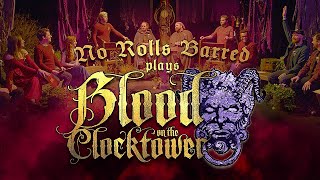
- In-person, high-energy social deduction with dynamic bluffing and counter-bluffing
- Rich, evolving information landscape driven by night actions and public votes
- Strong narrative through line of clock tower theming and moral framing (demon vs town)
- Varied, interesting set of roles that interact in complex ways (Recluse, Outsiders, Saint, etc.)
- High complexity and rule density can be intimidating for new players
- Long sessions with many discussions can be slow and occasionally repetitive
- Reliant on a consistent group; meta-reads from previous games can overly influence decisions
- distrust, deception, demon vs townsfolk
- Ravenswood Bluff, town square beneath the clock tower
- live, improvised social deduction with scripted roles and blown reveals
Mechanics (from transcript analysis)
- Bluffs and deception as core strategy — Many roles rely on misdirection; players bluff about their true alignment to influence votes and eliminations.
- Hidden roles and secret identities — Players are assigned roles (demon, minions, townsfolk, outsiders, etc.) with unique abilities, and others must deduce who is who.
- Night actions and information flow — Various players wake at night to perform role-specific actions that alter what information is available to others.
- Public voting and execution — During the day, players nominate and vote to execute someone, with a majority needed to remove them.
- Special roles with double-bluffs (e.g., Recluse, Saint, Undertaker, Poisoner, etc.) — Some roles can appear deceptively powerful or harmless, creating meta-deductions about what information is true.
Video topics + discussion points
Quotes (from this video)
- There is a demon here among you
- The clock tower stood watching as trust gave way to fear
- The demon remains
- There is a demon here among you, but then again wasn’t there always
- we killed that man who just wants to be on his own
References (from this video)

Mechanics (from transcript analysis)
Video topics + discussion points
Quotes (from this video)
- We have 63 games to talk to you about today.
- Grab a coffee, we're gonna go quick.
- We love board games and board gaming things.
- I just bought too many bones and dungeons dice in danger.
- If you're interested in buying board games, I feel like we missed a bunch.
References (from this video)
- Highly interactive gameplay
- Unique character abilities
- Storytelling elements
- Social deduction mechanics
- Complexity of rules
- Potential for misunderstandings
- Social deduction, hidden roles
- Ravenswood Bluff
- Collaborative storytelling
Mechanics (from transcript analysis)
- Elimination — Players can be eliminated through voting or night actions
- hidden roles — Players have secret roles with unique abilities
Video topics + discussion points
Quotes (from this video)
- I hope I could break the game.
- Don't let him leave. Strap your dad to your chair, make you watch.
- Legacy, baby!
References (from this video)
- rich, theatre-like social deduction with multiple bluffing avenues
- strong thematic flavor and memorable demon/minion roster
- flexible host/demon interactions create dynamic late-game swings
- high rule complexity that can confuse new players
- potential for long, tactical sessions with many reads
- heavy reliance on social dynamics which can be exhausting in longer runs
- mystery, deception, trust, and power dynamics among competing factions
- A haunted town square where townsfolk, minions, and a demon vie for control via social deduction and night/day cycles.
- script-driven, live-play with role-bluffs and in-game discussions
Mechanics (from transcript analysis)
- Bluffing and deduction — Players bluff about their abilities/alignments to influence others and identify real demons.
- demon-host dynamics (Leech/Vortex/Leper-style hosts) — Demon creation and host mechanics that influence who can act and when, adding strategic tension.
- hidden roles with win conditions — Each player has a role (e.g., Summoner, Exorcist, etc.) with unique powers and a factional goal.
- night and day phases with information flow — The game alternates between night actions and day nominations/voting, with information revealed through statements and reveals.
- public statements and gossip — Certain roles can make public statements or gossips that reveal or obfuscate information and trigger votes.
Video topics + discussion points
Quotes (from this video)
- basically if you've got a Summoner on a script you want to give them an interesting choice because they get to choose what kind of demon is in play
- I've put four demons on this script that all provide something different
- The three demon Bluffs that Lori will be receiving are The Village Idiot
- The Exorcist blocks the demon from acting for a night
- one of the only abilities that can power through the Sailor's cannot die ability
- this is one of the craziest nights we have had in this game
- I'm The Exorcist
- we're the boys we're the boys
References (from this video)
- Rich, chaotic social interaction
- Intricate rules with multiple win conditions
- Dynamic use of 'atheist' disruption to drive narrative
- Steep learning curve for new players
- Rule ambiguity can arise around storyteller power when an atheist is in play
- social deduction with demon legions and town alignment
- Ravenswood Bluff, a haunted town during a ritual-based mystery
- live-play, hosted storytelling with scripted reveals and improvisation
- Ravenswood Bluff (Blood on the Clocktower)
Mechanics (from transcript analysis)
- bluff distribution — bluffs are assigned to players to create confusion and strategic misdirection
- hidden roles / misdirection — demons/Legion minions masquerade as townsfolk or good players to mislead others
- night actions and awakenings — night phase reveals or conceals information; some roles reveal abilities publicly or privately
- social deduction — players deduce loyalties and roles based on statements, votes, and night actions
- storyteller power — the Storyteller controls deaths and can bend rules under certain conditions (atheist disruption)
- Voting and execution — public votes determine who dies; ties and turn orders shape outcomes
Video topics + discussion points
Quotes (from this video)
- this is a legion game so we have six Legions and four good guys
- one true statement and one false statement... there are no evil players in this game
- the Storyteller role in London collector often gets compared to the game master role in an RPG
- the atheist is a really good example of disruption... you want players to see all your content and win in a last desperate grasp
- the more possible worlds there are, the more stuff to tangle with
References (from this video)

- rich social deduction experience
- high engagement potential for live-streamed play
- variety in player roles and interactions
- filming live can be challenging due to the setup and pacing
- complex for newcomers without coaching or guidance
- social deduction, hidden roles, and collaboration
- Gothic town with occult elements
- group storytelling with dramatic twists and deductions
- Snake Oil
Mechanics (from transcript analysis)
- discussion and voting — Day/Night cycles drive investigations, accusations, and decisions through group dialogue and voting.
- hidden roles — Players have secret alignments and abilities that influence discussions and outcomes.
Video topics + discussion points
Quotes (from this video)
- adam is always evil
- we promised it and we're nerds of our word so i'm very happy to
- i just personally want to say thank you to everyone who is subscribed to this channel
- get on board you already have
- 50 000 subscribers on no rolls bard
- we are going to be streaming for 10 uninterrupted hours of board game club live on no rolls bard
References (from this video)
- Rich and varied role design with multiple bluffing avenues
- Vortex mechanic creates compelling tension and narrative payoff
- Strong story-telling potential for dramatic reveals and misdirection
- replayability through different role distributions and bluffs
- High complexity and learning curve for new players
- Downtime can be significant with many private discussions
- Reliance on a skilled storyteller to maintain pacing and fairness
- Dark fantasy intrigue, social deduction, and storytelling pressure
- Ravenswood Bluff, a Clock Tower town with players in roles such as townsfolk and outsiders
- Script-driven, vortex-enabled deduction with deception and misdirection
- Legion
Mechanics (from transcript analysis)
- Damsel/outside alignment dynamics — Certain outsiders like the Damsel alter the flow of information and threaten the town’s options.
- day/night cycle — Turns are segmented into day and night phases where different powers resolve or reveal information.
- Hidden Information — Many roles operate with private knowledge or information that is not shared truthfully by design.
- Role-based Powers — A large cast of unique abilities (e.g., Damsel, Vortex, Goblin, Balloonist, etc.) with specific win conditions.
- social deduction — Players assume hidden roles with aligned or conflicting goals; truth and lies drive the outcome.
- Vortex twist — A scripted condition that causes information to be false or misleading, complicating deductions.
- Voting and execution — Players nominate and vote on someone to execute; the outcome shapes the town's fate.
Video topics + discussion points
Quotes (from this video)
- Ravenswood Bluff the clock tower circus is in town and there are so many frights to see
- this is a script that's all about execution
- a million reasons to claim it's a really great role
- the Vortex will yield false info each day
- it's a vortex game both of Dan's neighbors are good so we can show him anything but the truth
References (from this video)
- Enhances organization with official accessories (token displays, name tags, and a tidy grimoire).
- Improves in-game communication through physical tools that are easy to reference during play.
- Official support for upgrade kits and compatibility with accessories promotes a cohesive ecosystem.
- Promotional focus may dilute discussion of gameplay mechanics for some listeners.
- Details about compatibility across all editions or expansions may require further clarification.
- Murder mystery, social intrigue, and storytelling through hidden roles
- A haunted town / fantasy social deduction in Ravenswood Bluff or similar setting where roles influence the narrative and outcomes.
- Player-driven storytelling with evolving suspicion and banter during day/night phases
Mechanics (from transcript analysis)
- day_night_cycle — Alternating phases where different actions take place and information is revealed.
- hidden_roles — Players are assigned secret roles with unique abilities, shaping interactions and strategy.
- social_deduction — Players deduce who is lying or misdirecting others based on in-game statements and actions.
- special_abilities — Roles confer unique powers that can alter the game state or pace.
- voting_and_lynching — During the day, players vote to eliminate suspects, potentially ending rounds quickly.
Video topics + discussion points
Quotes (from this video)
- Yes, with a new blood on the clock tower upgrade kit from PG expansions, you can finally be the storyteller of legend that you always wanted to be.
- With their token displays, you can easily communicate with other players using just one hand.
- All pieces are backed with soft melt to provide extra grip.
- BG Expansions catalog covers dozens of different titles.