Revered for its healing techniques, the town of Yharnam is rapidly degrading as a plague that turns people into beasts spreads uncontrollably. As a Hunter, it falls to you to quell this growing threat. You will have to fight through beasts, monsters, and townsfolk alike to survive the night and discover the source of this madness.
In the campaign-based action-adventure Bloodborne: The Board Game, players take on the role of Hunters, working together against the game to uncover the mysteries hidden within the city of Yharnam and beyond. Featuring unique Trick Weapons, each with various forms and powers, Hunters have to think quickly and adapt their tactics to overcome the multitude of foes that stand in their way. Learn their behavior, exploit their weaknesses, and strike them down! Featuring unique card-driven combat, luck has little place here — success or failure depends on your choices and how you approach each engagement!
Of course, against such horrific foes, death is a common occurrence, but worry not as death is no end for a Hunter. Those who fall in combat awaken in the Hunter's Dream, ready to return fresh to the fight. Be warned, however, that upon awakening you might find previous foes and obstacles returned, Worse, time is not on your side as the Blood Moon rises ever higher into the sky, spreading its madness across Yharnam. You must press ever forward if you and your comrades hope to complete the Hunt before the city meets an unfortunate end.
As you set out onto the Hunt, always remember the old adage:
"We are born of the blood, made men by the blood, undone by the blood. Our eyes are yet to open... Fear the old blood."
-description from designer
- excellent solo play, tight combat rhythm
- expensive, expansions exist
- Dungeon crawl meets video-game adaptation
- Gothic city, Lovecraftian horror vibe
- Campaign-like with modular boss runs
Mechanics (from transcript analysis)
- campaign-like missions — short campaigns with replayability
- deck-building — card-driven combat and boss fights
Video topics + discussion points
Quotes (from this video)
- it's always your turn
- one of the best solo deck builders you can get
- this is one of the most impressive solo titles from GMT
- this is such a fantastic puzzle
- a masterpiece of minimalism
- it's such a satisfying card play
References (from this video)
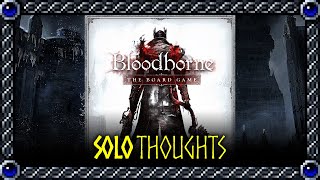
- strong table presence and component quality that feel premium
- great for solo play with a single character and a clear progression loop
- tight, tactical combat with meaningful hand management and timing decisions
- high replayability due to tile randomness, enemy behavior patterns, and multiple Hunters
- storyful atmosphere and theming that translate well from video game IP into board game form
- short, self-contained campaigns reduce long-term commitment while delivering substantial flavor
- rulebook can be unclear; several questions require FAQ or BoardGameGeek threads for resolution
- typographical issues and Arata-related polish gaps in some copies and expansions
- Chalice Dungeon expansion is very challenging and can feel punishing without adjustable difficulty
- expansions, while adding content, can bloat shelf space and require additional investment
- Dark, atmospheric hunt for arcane entities; progression of a hunter through perilous environments
- Gothic horror dungeon-crawler inspired by Bloodborne; hunter lairs and cursed cities
- Campaign-based, mission-driven with deck-upgrades and randomized tile exploration
- Mage Knight
Mechanics (from transcript analysis)
- campaign structure and per-mission stakes — each campaign consists of three missions; losing a mission ends the entire campaign, heightening tension and risk-reward decisions
- combat speed and timing — attacks have speed and damage values; the system emphasizes careful sequencing and hand-management to maximize effect
- Deck-building and hand management — start with a basic 12-card deck; defeat enemies to gain currency for better cards; you use 3 cards per turn and discard when moving or attacking, creating a tight resource-constrained rhythm
- enemy action deck — enemies act by revealing cards from an action deck; players infer patterns as the deck is revealed, with two-sided enemy cards increasing variability
- Loot and equipment progression — between missions you gain loot and equipment that augment your deck and capabilities, driving strategic choices
- one-character play and hunter variety — the base box supports playing as a single Hunter with four Hunters included; expansions add more variety and asymmetry
- Tile-based map exploration — the map is built from randomized tiles that generate as you progress; tile reveals alter objectives, threats, and routes
- timer/track-based progression — exploration is not unlimited; a track imposes time pressure to complete main objectives and manage pacing
Video topics + discussion points
Quotes (from this video)
- one of the things I love the most about this game is the fact that you can play just controlling one character
- this game has been super fun
- I would wholeheartedly recommend this game this is amazing
- the combat… the speed and the staggering… this system did an amazing job of expressing the video game in board game form
- it’s a short campaign
- I love the table footprint and the map doesn’t get out of control
- this is a labor of love and it shows
References (from this video)
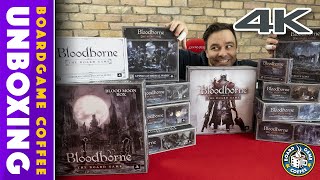
- stunning, highly detailed minis with evocative sculpts
- gorgeous, atmospheric artwork that mirrors the video game
- strong production quality and licensed IP polish
- robust campaign/drama with multiple chapters and boss encounters
- ample variety across boxes and expansions for ongoing play
- very heavy, boxy production requiring substantial table space
- long setup and unpacking with many sub-boxes can be time consuming
- certain expansion boxes receive mixed in–box lid designs or organization notes
- eldritch horror, hunter-patient mortal peril, cosmic dread
- Yharnam and surrounding nightmare domains in a gothic, Lovecraftian-inspired world
- campaign-driven with modular adventures and character/story cards
- Demon's Souls
- Dark Souls
- Bloodborne (video game)
Mechanics (from transcript analysis)
- Card-driven actions — players select actions from character decks/cards to perform movement, attacks, and interactions.
- Character progression and upgrades — player dashboards allow upgrading abilities and equipment across encounters.
- cooperative play — 1–4 players work together to survive encounters and progress through the campaign.
- double-sided weapon/equipment cards — weapons and tools present different effects when flipped, enabling strategic choices.
- enemy AI with multi-phase bosses — enemies and bosses have phase-based mechanics and evolving abilities across combats.
- tile-based exploration — environment tiles create the dungeon layout, providing varied terrain and encounter areas.
Video topics + discussion points
Quotes (from this video)
- epic minis.
- the game is gorgeous.
- Eric Lang worked on this.
- I can't wait to play this weekend.
- Bloodborne the Board Game is going to be epic on the table.
References (from this video)
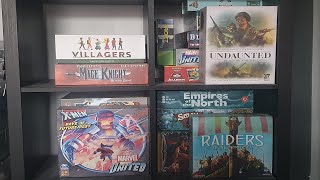
- Base game had strong potential to evoke Bloodborne atmosphere
- Base game felt unlike the video game
- Solo mode and house rules required to salvage experience
Mechanics (from transcript analysis)
Video topics + discussion points
Quotes (from this video)
- I absolutely adore Raiders of the North Sea
- Massive Darkness is the best Dungeon Crawler I've got
- the story was pants in all honesty
- I love space Hulk and so that one will always be staying
- Bloodborne the board game is terrible
References (from this video)
- Solid dungeon-crawler embodiment of the video game aesthetic
- Versatile for solo play and small groups
- Varied campaigns with replay potential
- Some players miss traditional dice or more overt RPG elements
- Campaigns can feel short if one is seeking longer arcs
- Dungeon crawler with a heavy emphasis on atmosphere and atmosphere-driven pacing
- Gothic, Lovecraftian-inspired Yharnam-like city
- Campaign-like, but with strong episodic scenarios
- Dark Souls: The Card Game
- Gloomhaven: Jaws of the Lion
Mechanics (from transcript analysis)
- Deck-based combat and loot — Combat and loot mechanics revolve around card management and timing rather than dice.
- scenario-based campaigns — Campaigns unfold through linked scenarios with varying objectives.
- Single-character viability — Designed to be played effectively with a single investigator, though you can use more.
Video topics + discussion points
Quotes (from this video)
- This game is amazing at creating an emerging narrative.
- I voted this number one adventuring game this year.
- Emerging narratives are just fantastic in Explor It.
- The lore, the art, the setting—the Gothic vibe here is unmatched.
- You can play solo without a DM and still have a deep experience.
- This is one of the best dungeon crawlers you can buy today.
References (from this video)
- Strong IP translation and satisfying dungeon crawl
- No dice mechanic (some players prefer dice-free)
- Steep learning curve and rulebook concerns
- Campaign length may feel long for casual players
- Brutal dungeon crawler with deck-building and boss encounters
- Bloodborne IP, gothic horror campaign
- Campaign-driven with narrative-driven boss fights
- Dark Souls: The Card Game
- Mage Knight
Mechanics (from transcript analysis)
- Campaign progression with story-driven missions — Progress through a series of interconnected missions
- Deck-building with health as a resource — Your deck doubles as your health and equipment pool
Video topics + discussion points
Quotes (from this video)
- it's such a bizarre game
- this is one of the best translations from video game IPs into board game form
- it's basically like Star Wars themed XCOM
- the closest thing you'll get to a first person shooter in board game form
References (from this video)
- House rules clarify and tailor the experience to player preference.
- Campaign-like pacing with a timer (hunt track) adds tension and progression.
- Rich flavor through thematic tools (Ludwig’s rifle, blood echoes, insights) and survivor narratives.
- Process for handling dream resets and non-respawning tokens provides a distinct strategic layer.
- House rules introduce additional complexity and potential confusion for new players.
- Campaign progression can be slower and more bookkeeping-heavy than base rules.
- Some rules are fan-made and not officially published, which may affect compatibility with other media.
- horror, survival, hunter versus monster dynamics in a gothic nightmare
- Yharnam’s plague-touched streets and ash-grey environments filled with beasts
- campaign-like, scenario-driven with house-rule modifications
- Dark Souls (video game)
- Bloodborne (video game)
Mechanics (from transcript analysis)
- Combat System — Card-driven combat using speed, attack values, stagger, dodge, and weapon slots; enemies perform Basic, Special, and Mob actions with potential abilities.
- Consumables and Special Items — Consumables are one-use; green chest tokens do not respawn; there are inventory limits and swapping rules after campaign chapters.
- Enemy Behaviors and Pursuit — Enemies have pursuit rules, can be influenced by actions like pebble usage to reposition or stall, and can gain bonuses via mob abilities.
- Hunt Track — The hunt track functions as a timer for the current campaign chapter; advancing to the end can cause a chapter failure if not completed in time.
- Inventory and Equipment Limits — Max five consumables, with two runes and two hunter tools in inventory; special items are one-use per campaign and can swap out after winning a chapter.
- Lamp and Hunter’s Dream — Access to the Hunter’s Dream is conditional on standing on a lamp tile; returning via the Dream resets enemies but not consumables; costs time and blood echoes.
- Movement — Movement is free but you can only move two spaces per action due to enemy pursuit; you do not discard a card to move.
- Progression and Rewards — Defeating beasts yields blood echoes and rewards; insights unlock safe havens and inventory upgrades; tokens grant persistent effects across chapters.
- Ranged Weapons and Refreshing — Ludwig’s Rifle (or similar) provides ranged damage; firearms can be refreshed with consumables (Quicksilver Bullets) on hunter turns.
- Survivor Interactions — Rescuing survivors develops a safe haven mechanic and advances side objectives; survivor tokens can be picked up or moved as missions unfold.
Video topics + discussion points
Quotes (from this video)
- the hunt track only acts now as a timer for the campaign chapter
- movement is free you do not have to discard a card but you can still only move two spaces
- consumables are one use only they go back to the consumable deck upon use
- this should be available as a download in the description below
- i enjoy this game but i enjoy it more with house rules
References (from this video)
- High-quality miniatures
- Challenging and thematic gameplay
- Generous prize package in the giveaway
- Strong sponsor involvement (GameToppers)
- Very challenging / punishing for players
- Giveaway restricted to North America
- Heavy components / large footprint may deter some players
- Horror, gothic exploration, hunting monsters
- Dark fantasy city of Yharnam and nightmare realms
- Cooperative, scenario-driven progression with escalating challenges
Mechanics (from transcript analysis)
- Boss encounters / narrative progression — Key boss fights and story-driven progression drive sessions.
- cooperative play — Players work together to defeat monsters and survive encounters.
- Dice-based combat — Combat resolution relies on dice rolls with modifiers.
- Modular board / encounters — Variable setup and encounters, with expansions changing layout and content.
Video topics + discussion points
Quotes (from this video)
- this contest is awesomer than i thought it was going to be
- all this and um and and more you're going to get
- this can all be yours
- bloodborne package
- the miniatures in this game look awesome
- it's awesomer than i thought it was
References (from this video)
- Cooperative two-player play with meaningful boss encounters
- Tight, evolving deck-building and card-driven combat
- Strong thematic integration with Bloodborne IP
- Deluxe painting and minis visually enhance the experience
- Campaign progression with upgrades and new strategic options
- Dynamic terrain and encounter setup create varied playthroughs
- Steep learning curve and setup time
- Poison and timing can punish mistakes heavily
- Campaign randomness can affect balance and pacing
- Expensive to collect all content and expansions
- Hunting, survival, and exploration in a cursed city
- Old Yharnam-inspired gothic horror setting with hunters and beasts
- Campaign-driven, boss-focused with evolving encounters and story cards
Mechanics (from transcript analysis)
- blood echoes economy — Echo tokens are earned from enemies and spent to upgrade cards and equipment.
- deck-building — Each hunter assembles and upgrades a 12-card deck, using blood echoes to purchase new cards.
- enemy/action decks — Enemies use a defined deck of basic, special, and ability cards to determine their actions.
- fog gates and lamp tiles — Fog gates block lamp-based spawns; lamps serve as starting points and travel anchors.
- hunt track timer — A time track progresses each round; reaching red spaces can trigger events or end the hunt.
- Status Effects — Poison, stagger, and other effects influence combat flow and card play.
- trick weapons flip sides — Weapons have two sides; players flip between sides to access different attacks and effects.
Video topics + discussion points
Quotes (from this video)
- this game is actually really cool
- I'm pretty excited for this one
- this has been a lot of fun
- bloodborne the board game by Cool Mini or Not