In Caesar’s Empire, you will be building Roads to connect Rome to new Cities across the board. Each time you build a Road, you score points. Every new City you reach will provide City and Treasure tokens that will be worth points at the end of the game. The game ends when Rome is connected to every City on the board. After adding the value of City and Treasure tokens to the points scored during the game, the player with the most points wins!
Caesar’s Empire uses a simple network-building mechanic. Each time you build a Road, you must connect Rome to a new City by placing one or more of your Road pieces onto the game board. You may build your Road anywhere you like on the board, as long as you start from either Rome, or a City whose token has already been taken. This means you may be continuing a Road started by another player! When you reach a City, you get to take its token, which can be worth points at the end of the game. Each City also provides a Treasure token. Treasures you find are added to your player board and will score you points at the end of the game, especially if you manage to make collections!
Once you’ve taken your City token and your Treasure, you score your route back to Rome. Each section of Road included in your route will score 1 point for the player it belongs to. As your route can include sections of Road placed by other players, you can end up giving points to your opponents!The game continues until all of the Cities on the board have been taken. Once the final City has been taken, players move on to final scoring.
At the end of the game, you’ll score points based on your City tokens. Each City has a value, which is the number on the back. This is the number of points you’ll score for that City. However, if you have more than one City token of the same colour, you will only score points for the one of the highest value. You then score the value of the different collections of Treasure on your player board. Collections can be of the same Treasure or different Treasures, and Gold is scored separately. The player with the most points returns to Rome to be showered with fortune and glory by Caesar himself!
- classic, evergreen feel
- multiple scoring pathways (including chaining back to Rome)
- some perceived overproduction in production quality can be a barrier
- root-building/tiles with Rome-themed chaining scoring
- Ticket to Ride
Mechanics (from transcript analysis)
- Tile-laying / chaining scoring — score through tile combinations and chaining paths that connect back to Rome.
Video topics + discussion points
Quotes (from this video)
- this is bonfire... kind of one of his more recent ones
- I thoroughly thoroughly enjoyed this two-player game
- it's remarkably fast as well I think I played it in about 75 minutes
- I think it's absolutely fantastic and one of the best two-player games I've played this year
- I love this game because the dice system in Bora Bora is great and the powers help balance outcomes
- expansion Mekka & Bah definitely did make a big change in the gameplay
- Caesar's Empire ... an evergreen feeling game that should be up there with Ticket to Ride
References (from this video)

- thematic ambition
- potential for deep strategy
- complexity may deter casual players
- unclear impact of rule tweaks
- empire building and politics
- Ancient Rome
- historical/epic
- Isle of Skye
- Carcassonne
Mechanics (from transcript analysis)
- area_control — control of territories across a map
- resource_management — managing commodities to fuel actions
Video topics + discussion points
Quotes (from this video)
- don't let the customer create their own shadow product in their head; you tell them what the product is, who it's for and why they should care
- the game maker gets to set the context
- if you innovate you risk confusing potential purchases but if you stick with familiar concepts how are you ever going to stand out
- you tell them to just play a few rounds and they'll enjoy it
References (from this video)

- clean, efficient design with deep strategy
- strong set-collection and route-based scoring
- engaging and relatively fast for a larger-box game
- initial appearances may be deceptive (looks gateway, plays deeper)
- component density may overwhelm casual players
- root building and set collection across empire routes
- Ancient Rome-inspired world, including asterix/obelix flavor
- punchy, strategic, fast-paced
- Ticket to Ride
- Carcassonne
Mechanics (from transcript analysis)
- punchy, fast-paced turns — snappy rounds with meaningful decisions on each move
- set collection with route tracing — collect tokens at new locations and trace the route back to Rome for points
- token-based scoring with passive victory potential — points accrue as you connect routes and pass through locations, even when not actively taking your turn
Video topics + discussion points
Quotes (from this video)
- an absolute blast to play
- this is up there with those classics
- clearly elegant and tightly designed
- it’s a pure two-player gem that should hit higher on the radar
- the box art is a little bit misleading and it makes it look boring, but the gameplay is far from that
- the game hits so many checkpoints
References (from this video)
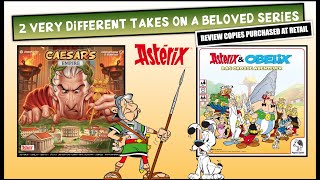
- engaging directional decisions with shared routes to Rome
- strong thematic coherence and art
- high information feedback and no luck-based tension
- tidy bookkeeping and token tracking can feel fiddly
- upkeep requires counting tokens across routes, which can slow play at higher player counts
- Empire expansion, conquest, resource control
- Ancient Rome, roads back to Rome, Roman camps, city networks
- Historical, strategic
- The Big Adventure
Mechanics (from transcript analysis)
- no-chance information game — There are no dice or random elements; it's a deterministic information-based game.
- resource & endgame scoring — Collect resources on connected cities; endgame bonuses for resource sets and impact of city values by color.
- route-building — Place legions to connect cities back to Rome; an unbroken chain yields VP per legion; connecting routes to Rome scores for players with legions in the chain.
Video topics + discussion points
Quotes (from this video)
- it's one of the simplest rule sets i've ever come across in a big box game
- Caesar's Empire features no chance elements at all it's a perfect information game
- the big adventure is packed full of references to the comics and i love it
- an asterix game ought to be light and breezy with nostalgic presentation and both games provide this in spades
- the final score of 10 reaches the highest rung and demonstrates just what an engaging game Caesar's Empire is
References (from this video)
- family-weight gateway with accessible theme
- emphasizes route-based planning and tile collection
- rule density can be intimidating for some players
- not all specifics are clarified in the video
- empire-building with roads and city control
- Europe-wide map; route-driven conquest
- family-weight gateway with city-tiles
Mechanics (from transcript analysis)
- network weighting — Early expansion and diversification contribute to point totals and strategic depth.
- route-building — Pieces are deployed on a map of Europe along predetermined roads to score.
- tile and token scoring — Claim tiles at cities and collect tokens that score on a sliding scale.
Video topics + discussion points
Quotes (from this video)
- I'm kind of making an effort to go through Knizia's back catalog because his games just resonate with me so well
- this is a 60 Minute area control game by Konitzia
- it's very concise, it's nice and small
- I'm always interested in trying games that do fly under the radar
- almost zero luck... deterministic
- I might have to think twice whether to cover this one on the channel
References (from this video)

- Accessible, light strategic game
- Engaging theme and quick plays
- Flight of fancy may be light for some
- Market saturation with similar titles
- light strategic build with shared incentives
- Roman expansion and road-building
Mechanics (from transcript analysis)
- Point-sharing / area influence — Players place roads to maximize personal points while often helping neighbors.
Video topics + discussion points
Quotes (from this video)
- I'm really curious to see how people react to it.
- The idea is that maybe I do this near the end of a month and then the update vlog obviously is a week later.
- It was a really fun time; it was a blast.
References (from this video)

- Elegant, smooth two-player experience for an area-control game
- Tight decisions and meaningful impact of each placement
- Clear, addictive loop with strategic depth
- Occasional sharp turns or openings for opponents to steal powers
- Area control and route-based scoring
- Ancient Rome, imperial expansion
- historical
Mechanics (from transcript analysis)
- Area Control — place tokens to influence regions; controlling borders yields points and blocks opponents
- Token economy / power tokens — special power tokens that can be captured to alter rules and scoring
Video topics + discussion points
Quotes (from this video)
- Caesar's Empire is a great game to try, and it plays well at multiple player counts
- this game is so simple and smooth that I absolutely love it
- Rise has a lot of potential to stay evergreen
- Tell Atom... the core twist on this game is that when you are drafting these Dice and community resources...
References (from this video)
- clever, clean design
- tight decisions with multiple routes to victory
- some players may find it modestly thematic
- set collection and resource management
- Roman-era route building and control
- lightweight, abstract-rooted
Mechanics (from transcript analysis)
- route-building — paths and areas influence scoring and expansion
- set-collection — players collect coins and routes to optimize scoring
Video topics + discussion points
Quotes (from this video)
- this is the best area control game out there
- a perfect 10
- I adore El Grande
- really nice game I taught this to a complete non-gamer
- I love Feld games this one is just an absolutely brilliant one
- it's one of the best two-player games ever made
- overproduced to say the least
- one of my favorite dice games and it's actually just broken into my top 100 for the first time
- the sudden death mechanism where if you are the first player to collect three buildings then you'll instantly win
- really cool decisions
References (from this video)
- Accessible yet deep area-control engine
- Fast table presence with meaningful choices
- Area control and route scoring
- Ancient Rome
- historical
Mechanics (from transcript analysis)
- Area Control — claim regions and influence via tokens split across borders
- Token-based power rules — power tokens can shape rules and scoring mid-game
Video topics + discussion points
Quotes (from this video)
- Caesar's Empire is a great game to try, and it plays well at multiple player counts
- this game is so simple and smooth that I absolutely love it
- Rise has a lot of potential to stay evergreen
- Tell Atom... the core twist on this game is that when you are drafting these Dice and community resources...
References (from this video)
- One of the reviewer’s favorite economic-style games
- economic/empire simulation
Mechanics (from transcript analysis)
- economic engine — players manage resources to grow their empire.
Video topics + discussion points
Quotes (from this video)
- I'm trying to only keep the games that I really love because of course I have so many games coming through on the channel.
- Theme isn't really important to me. It's all about the mechanisms.
- I do share a collection with my brother.
- Beige euros.