In Canvas, you play as a painter competing in an art competition. Players will collect art cards, layering 3 of them together to create their own unique Painting. Each card contains a piece of artwork as well as a set of icons used during scoring. Icons will be revealed or hidden based on the way players choose to layer the cards making for an exciting puzzle. Paintings are scored based on a set of Scoring cards which will change each game. Once players have created and scored 3 paintings the game ends.
On your turn you may take an Art card or make a painting. Art cards are selected from a row of cards in the center of play. Each of these cards has a cost associated with their position. After selecting an Art card you must pay its cost by placing an Inspiration token on each of the cards to its left. If you do not have enough Inspiration tokens, you may not select that card. Any tokens on the card you have selected are kept for future turns. The far left card costs no Inspiration tokens to take.
If you have three or more Art cards you may choose to make a painting. Select 3 of your art cards, arrange them in any order and then score them by comparing the visible icons on your painting to the Scoring conditions.
Once all players have made 3 paintings the game ends.
The player with the most points wins!
—description from the publisher
- high customization and aesthetic appeal
- easy to learn and teach
- relaxing, non-aggressive play
- clever scoring with multiple objectives
- great component quality and overlays variety
- expansion promises new content
- rules clarity can require checking the rulebook
- endgame scoring can be intricately complex to track across players
- potential confusion around symbol reuse per objective
- Creativity, color theory, and aesthetic composition
- Art studio/marketplace where painters draft canvases and create paintings
- Abstract, aesthetic-focused with emphasis on visual design and scoring through overlays
Mechanics (from transcript analysis)
- color wheel and symbol variety — Scoring rewards having one of each color and one of each symbol to achieve variety and completeness.
- inspiration tokens — Four inspiration tokens provide additional options when taking cards and impact scoring bonuses.
- market drafting — Players draft canvas cards from a market lane to assemble their canvas and fulfill objectives.
- overlay-based scoring / pattern building — The canvas has six slots with overlays; players stack symbols to meet adjacency and variety objectives, scoring multiple times while ensuring each symbol is counted per objective only once.
- set collection — Players collect symbol/color blocks to satisfy different scoring ribbons.
Video topics + discussion points
Quotes (from this video)
- this is a market drafting set collection game
- it's a pretty simple game to learn
- I just really enjoy the customization of building these canvas
- this is one of the games that we got to learn this last year and again it falls within that very like beautiful friend like easy to play
- it's relaxing chill games
- I love the overlay
- rules are written for a reason to be broken
References (from this video)

- Beautiful transparent card mechanics
- Elegant artwork creation
- Each painting gets unique name
- Better than expected
- Creating artwork
- Art Gallery
- Creative
- Gloom
Mechanics (from transcript analysis)
- Layered Card Play — Stacking transparent cards to create art
- Objective Matching — Matching colors, patterns, and shapes
Video topics + discussion points
Quotes (from this video)
- Foster the Meeple - a channel all about board games
- we have our team jeff team jamie patreons who are going to be voting on what the loser has to do
- i love res arcana res arcana is quickly becoming one of my favorite games
- adult where's waldo
- knocked our socks off
- i love it
- so much fun
- winter is coming
- board game city up in here
References (from this video)
- Accessible gateway game with added variety through expansions
- Aesthetically pleasing components and frame display visually appealing
- High per-expansion cost for limited added depth
- Storage and setup complexity increases with frames and multiple boxes
- Art creation and color blending
- Art world / painting cards in an art studio context
- Abstract, aesthetic scoring
- Canvas (base game)
- Canvas: Reflections
Mechanics (from transcript analysis)
- blending/icon copying — Blend icons using blend cards to copy adjacent symbols and unlock new scoring opportunities
- card drafting — Draft painting cards to assemble icons and symbols that score points
- scoring variability — New scoring tracks and wild symbols affect final scoring and frame-based bonuses
Video topics + discussion points
Quotes (from this video)
- this expansion just feels like you've chopped up your base game in order to make more expansions
- a race element and one icon on a card you could have had that in the base game
- it's a gimmick and for practicality it's an annoying gimmick
- 6 out of 10
- it's not cheap and all you're getting is one new icon
- the first one is better overall
- storage problem because you saw how much room these frames took up
References (from this video)
- beautiful components; tactile; creative
- subjective aesthetics may affect scoring
- visual art as engine
- art creation and layering
- puzzle/beautiful production
Mechanics (from transcript analysis)
- layered cards/tiles — overlay transparent cards to form pictures and meet goals
- set collection / goals — points come from meeting visual patterns and color combos
Video topics + discussion points
Quotes (from this video)
- Number 50 for me is a Vital Lerta game. A big cool thematic experience about what happens after a heist. This is Escape Plan.
- Invincible is my number 50.
- San Juan's one of my favorites; I love how those buildings synergize with crops and selling them.
- Spectral is one of those deduction games where you're just trying to avoid the curse and getting gems out there.
- This is one of those classic polyomino games. My favorite in the genre. This is Baron Park.
- Twilight Inscription is infinitely expandable.
- Adrenaline is a bit of everything: euro, shooter vibe, and tense last-hits moments.
- Robinson Crusoe—cooperative survival with fantastic stories.
References (from this video)

- Beautiful production and components
- Clear scoring via ribbons and back-of-card explanations
- Accessible and family-friendly
- Artistic process and orchestration of color/icon-driven artwork
- Art creation in a studio/creative space
- Ambitious, gallery-style competition to assemble masterpieces
Mechanics (from transcript analysis)
- color/icon matching and background integration — icons/colors determine scoring ribbons for finished art
- transparent cards — players manipulate translucent art cards to form compositions
Video topics + discussion points
Quotes (from this video)
- mind your business
- one board gamer at a time
- we love you bye
- epitome of a flip and ride experience
- it's not our job to police others or interrogate others, it's our job to just live our lives
- mind your business and last but not least just leave people alone who are not bothering you
References (from this video)

- beautiful components and theme
- layering puzzle is satisfying and tangible
- can be mentally challenging; not always light
- layered transparency cards forming a painting
- art studio; painting creation
- aesthetic-driven drafting
Mechanics (from transcript analysis)
- deck-building/ drafting of transparent cards — you draft cards that overlay to form a painting and influence scoring.
- set collection and layering — you layer cards to reveal icons and complete scoring conditions.
Video topics + discussion points
Quotes (from this video)
- D's not a rules follower
- on each person's turn you know one person draws calls out a resource and then everyone has to place that resource
- it's a gateway game and it looks beautiful on the table
- the alien player is giving the human team a word and saying this is the score for this word
- Lost Cities is tense and cutthroat in a very clean, simple way
- this is basically Dominion but with words in Paperback
References (from this video)
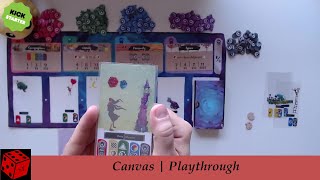
- Two distinct solo modes add replayability and challenge beyond the standard multiplayer
- Art-themed mechanics integrate with the visual design of canvas cards
- Clear ribbon-based scoring provides tangible feedback and strategic depth
- The Vincent AI adds pacing and tension to the solo experience
- AI disruption can feel punishing when cards become scarce
- Occasional analysis paralysis due to multiple viable options per turn
- Proximity and ribbon scoring rules can be non-intuitive for new players
- Creative expression through color and symbol alignment with a light narrative motif featuring Vincent as a playful in-game inspiration.
- Abstract, painterly world where players assemble color-symbol cards into small paintings and compete for ribbons based on proximity rules and color/symbol completion.
- Episodic, instructional, and competitive painting construction with a thematic voice surrounding artistic striving and playful rivalries.
Mechanics (from transcript analysis)
- endgame timing and ribbon scoring — The game ends after a painting is completed or a set number of rounds; ribbons are tallied per painting and contribute strongly to final scoring.
- inspiration tokens as currency — Tokens are spent to acquire cards and affect the deck; token economy influences risk assessment and option preservation during rounds.
- set collection and card drafting — Players draft cards that depict specific color-symbol combos and assemble them into paintings to maximize ribbons, balancing multiple requirements per card.
- Solo mode with AI interaction — A simple AI opponent (Vincent) reveals inspiration tokens, discards a card, and pushes the deck forward, simulating an opponent and increasing pressure in solo play.
- tile-placement and pattern scoring — Paintings are scored by patterns formed across the five cards, with proximity constraints and symbol-color combinations driving strategic placement.
Video topics + discussion points
Quotes (from this video)
- it's a solo scoring variant but the first one there is a simple ai that disrupts you
- it's a pretty cool painting
- that was the best round I ever had
- thank you for sticking around I hope you enjoyed this playthrough
- I would love doing more playthroughs on my channel
References (from this video)
- cozy, light, and accessible
- visually appealing with pretty art and clear iconography
- fast-playing and easy to learn in a digital implementation
- expansions add depth and variety
- base game has limited replay value
- tutorial could be more guided and proactive
- digital app pricing could be a concern for some players
- creative expression through painting cards, color and symbol-based scoring
- art studio/creative workspace featuring a scrolling tableau of art cards
- abstract art creation with modular, modular layering and scoring ribbons
- Small World
- Sentry Spice World
- Ark Nova (reference to earlier video)
Mechanics (from transcript analysis)
- card drafting — players choose art cards from a scrolling tableau, often for free first card then paying with inspiration tokens for subsequent cards
- end-of-round scoring and ribbons — points come from meeting multiple scoring conditions (ribbons and silver ribbons) across paintings
- inspiration tokens — tokens used to skip undesirable cards and manage hand size; inventory can hold up to five cards
- layered composition / puzzle building — three translucent layers per painting; alignment of symbols, colors, and textures to maximize ribbons
- set collection / pattern building — collect cards to meet scoring ribbons and motifs, layering three cards to create a painting
Video topics + discussion points
Quotes (from this video)
- Canvas, if you're not already aware, is basically a very straightforward game about making little art pieces.
- It's a very light game, like a very light, cozy light.
- It's all I'm going to do is just load up and show you what's what.
- It's a cozy, very light. Now, it is only the base game, so there's only so much variety.
References (from this video)

Mechanics (from transcript analysis)
Video topics + discussion points
Quotes (from this video)
- Two recommendations per category — a curveball for Jeff since he didn't know I was pulling out two classic picks.
- Draftasaurus and Catapult Kingdom are great for kids because eight-and-a-bit-year-olds can engage with simple rules and bright components.
- We want other people to love games, so you're going to get them games for Christmas whether they want them or not.
References (from this video)
- box is pretty and visually appealing
- innovative art-oriented mechanic that involves constructing a piece on a canvas
- core scorer/objectives feel vague at times
- set-collection focus may seem repetitive or underwhelming for some players
- artistic creation and scoring via set collection
- abstract art creation; players assemble art pieces using icon tiles on a canvas backdrop
- non-narrative; abstract/creative expression
- Clue
- Blue
Mechanics (from transcript analysis)
- area manipulation on a canvas — icons slide onto a pre-printed canvas to form art pieces and trigger scoring
- set collection — players collect icon tiles to complete objectives and score points
Video topics + discussion points
Quotes (from this video)
- we're going to retire on our board game collection
- we bought Canvas for some reason
- it's a social deduction version of Blue? I've never played Clue but they kept saying that
- I don't like deduction games but I really like this one
- it's so easy for new players
- shame on you buy more games
References (from this video)
- Beautiful artwork
- Strategic depth
- Unique mechanics
- Painting
- Art Studio
Mechanics (from transcript analysis)
- card drafting — Drafting transparent art cards to create paintings
Video topics + discussion points
Quotes (from this video)
- I've been begging my wife to play more board games with me for years now
- Every game you end up playing of this one is totally different
- It's all about communication and reading between the lines
References (from this video)
- beautiful art, accessible, strong gateway feel
- great visually and tactically engaging
- Board Game Arena version loses tactile feel
- creative composition and scoring through layered artifacts
- artistic painting layering
- visual puzzle with tactile element
- Canvas (base)
- Canvas: Reflections (expansion)
Mechanics (from transcript analysis)
- card layering / transparency overlay — layer transparent cards to paint a final image
- Pattern-building scoring — score based on how cards layer and cover areas
Video topics + discussion points
Quotes (from this video)
- It's 80 through 71. We're counting down the list.
- This is a delightful game that is accessible, easy to teach, and incredibly replayable.
- Onward is the new version of Sky Tier. It's a MOA-style game with a volcano eruption climax.
- Canvas is a delightful game. It’s accessible, a great gateway, and the art is stunning.
References (from this video)
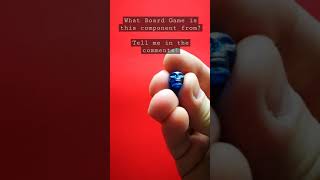
- Interesting component design
- Component was difficult to identify
- Art/Painting
- Mission-based gameplay
Mechanics (from transcript analysis)
Video topics + discussion points
Quotes (from this video)
- hey everyone this is rythekus and welcome to component monday where i had a board game component and you tell me in the comments which game do you think this belongs to
- shout out to scott gleason who was the only one to guess this game correctly
- this is week 8 and here is this week's component it's a little bit hard to see but i hope you can see it well there it's like a blue skull what game is this from what do you think
References (from this video)
- Beautiful, evocative art and components
- Accessible to families and casual players
- Tight, approachable decision space with meaningful choices
- Expansion adds extra depth and flexibility
- Too light for two players seeking deeper strategy
- Small components can feel fiddly for some players
- creative composition and layering of transparent cards to form artworks; public objectives drive scoring.
- Art studio and gallery space where players blend translucent artworks to craft three unique paintings.
- abstract, visual storytelling through art
- Honu Honu
- Hokkaido (card-laying puzzle family-weight titles)
Mechanics (from transcript analysis)
- card drafting — Players draft transparency cards to place into their artworks, choosing which colors and shapes to lock into their painting.
- end-game reveal scoring — At game end, players reveal their three paintings and tally ribbons for final points, with art composition and overlap affecting outcomes.
- inspiration tokens as currency — Inspiration tokens act as currency to acquire new transparencies or trigger painting actions, adding a small strategic economy.
- overlay/ layering — Placed transparencies overlay one another to create each painting, with outcomes dependent on how cards interact visually.
- public objectives and ribbons — Public objectives award ribbons based on how well a painting aligns with goals; ribbons convert to points at game end.
Video topics + discussion points
Quotes (from this video)
- it's very light but still with enough strategy
- the art is very nice
- Unique because in most trick-taking games you have to follow the leader
- I think it's very puzzly and that's the sweet spot for me
- the look of the board when you're placing out fire it's scary
- it's quiet; a tense environment knowing there are dire consequences for these cats
References (from this video)
- Stunning visual design and high-quality components
- Transparent cards create striking, display-worthy artworks
- Good options for solo play and relaxed multiplayer with downtime favorable to thoughtful decisions
- Retail price around €30 is reasonable for the component quality
- Two-player games can feel slow and interaction-light
- Aesthetic spectacle can outpace engaging gameplay for some players
- Mismatch between the art-focused presentation and the actual gameplay experience
- Kickstarter hype may not fully translate to retail experience
- Art creation, painting composition
- Art studio / painting world
- Abstract, gallery-style scoring
- Project L Vertical
- Splendor
Mechanics (from transcript analysis)
- card drafting — Players draft transparent art cards to assemble a painting across three cards per painting.
- Pattern building / triptych painting — Each painting consists of three cards; players aim to maximize scoring by assembling optimal combinations.
- Symbol-based scoring conditions — Scoring is driven by specific symbols and backgrounds visible on the cards and painting, with particular conditions for each round.
- Transparency-based art construction — See-through cards allow layering to form composite paintings and reveal combined artwork.
- Turn structure with hand-limit and painting requirement — On a turn, players either play a card to their painting or draw; when holding five cards, the player must finalize a painting (three cards).
Video topics + discussion points
Quotes (from this video)
- it's beautiful
- the biggest party piece is the looks of this game
- it's gorgeous
- the cards are transparent and they look good
- not good with two
- not what you expect from seeing it
- the selling point for me was the painting aspect, but it doesn't matter in the end
References (from this video)
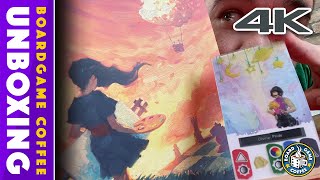
- beautiful art and components
- elegant box design with room for extras
- high-quality tokens and color palettes
- strong thematic cohesion between art and gameplay
- storage considerations due to non-insert packaging
- instructions occasionally unclear in places (as noted in the video)
- some components may be delicate and require careful handling
- creating and collecting art through layered painting cards and color palettes
- art studio and gallery environment with a focus on painting and curation
- abstract, painterly aesthetic emphasizing color, composition, and display
Mechanics (from transcript analysis)
- card drafting — players select art cards to construct their painting sets across rounds.
- overlay / transparency layering — art cards with transparency layers are stacked to create artwork and influence scoring.
- palette management — players manage color palettes that impact scoring and card interactions.
- set collection — points are earned by assembling cards that match scoring patterns and palettes.
Video topics + discussion points
Quotes (from this video)
- this is canvas
- it's a very pretty box
- it's a beautiful piece of art
- the back looks like a canvas stretched over a frame
- space in that box
- i'm actually really looking forward to this
- it's tiny and i like it
References (from this video)

- gorgeous art
- innovative use of transparent cards
- strong visual storytelling through cards
- production complexity
- potential fiddliness with layering
- set collection with a strong art-forward aesthetic
- art-gallery themed world where paintings are layered to score
- conceptual/artistic presentation
- Moonrakers
Mechanics (from transcript analysis)
- hand-management — players curate a hand of transparent cards to layer for scoring
- pattern-building / layering — cards are layered to form scoring patterns and objectives
- set collection — players collect painting cards and set them into patterns for points
Video topics + discussion points
Quotes (from this video)
- Canvas is a really cool hand management set collection game with these really awesome transparent painting type cards that you layer on top of one another to score points
- the art is just absolutely amazing
- Wingspan continues to be one of my favorite games of all time
- this game is perfect for anyone who's interested in escape rooms or ciphers and puzzles
- it's really easy to get to the table which is one of the reasons why we played it so often
References (from this video)
Mechanics (from transcript analysis)
Video topics + discussion points
Quotes (from this video)
- I know the games I play. I know the games I love to play. And I know the games that I theoretically want to play but don't actually play.
- I need at least one of those two things in play - either high personal interest or good reputation
- Designers, reviewers, other people mentioned
- I'm going to be trying to be more mindful about reality as opposed to the desires that I have
- These tend to be less of a priority. Like occasionally I dive into an unplayed game that isn't a review copy, but more often than not if I'm diving into an unplayed game, review copies do take precedence
- I have so many euros I love and so many that I'm behind on
References (from this video)
- beautiful, accessible artwork
- light and quick to play
- abstract theme may not appeal to everyone
- limited depth for repeat plays
- art creation and display
- art-themed card drafting and painting visuals
- abstract, aesthetics-forward
- Wingspan
Mechanics (from transcript analysis)
- card drafting — draft art-creation cards to assemble paintings
- tile/board construction — place cards to form a cohesive artwork on a canvas
Video topics + discussion points
Quotes (from this video)
- it's dry as a bone
- beiges all get out
- the church track doesn't seem worth the cardboard it's printed on
- I gave this a 10 out of 10
- this is probably the best trick-taking game I've ever played
- it's unwieldy as anything can you tell what is going on
- the IP is important and you better make it thematically rich
References (from this video)
Mechanics (from transcript analysis)
Video topics + discussion points
Quotes (from this video)
- This is highly subjective in general I award this to games that I find especially entertaining designed especially well or elegantly or view as a great overall package.
- I don't rate games on this channel with a number I don't really like doing that; rating a game is more complex than slapping a number in front of it.
- The definitive rating is how much I would recommend a game, and all games that award the Ace of Games too I would definitely 100% recommend.
- these three seconds is games award if a game is exceptionally good in my opinion and that concludes today's video.
- Wingspan is my most favorite game of all time... it gets the golden Ace of Games Award.
References (from this video)

- Accessible for new players
- Beautiful art and presentation
- Good introductory game
- Mediocre depth for heavier gamers
- Visuals can overpromise on theme
- Set collection with art-driven cards
- Suburbia
- The Castles of Burgundy (comparison in conversation)
Mechanics (from transcript analysis)
- set collection / pattern building — Draft cards featuring artwork to score toward abstract thematic goals.
Video topics + discussion points
Quotes (from this video)
- I'm very bold in my opinions, I hate it but I'm still willing to give it a second and third try because it's better it's an expensive game
- America blue shell is when you brace Mario Kart and then if you're in last place you get rewarded the blue shell
- it's a shared objective, you really pay attention to what other people are doing
- canvas... what a stinker... you're a pile of poops I love that game
- Rise of X added ... I had the Dreadnought portion and it replaced the main board
- I'll take it from me, I think he's French no he's Jamaican
References (from this video)

- visual beauty and clever overlay mechanics
- creative and accessible for many players
- setup and rule explanation can be lengthy
- artistic expression through layered visuals
- artist's studio and painting world
- Dixit
- Pictomania
Mechanics (from transcript analysis)
- image overlay — overlay translucent cards to create composite artworks.
- pattern fulfillment — achieve pattern-based objectives using layered artwork.
Video topics + discussion points
Quotes (from this video)
- Wavelength's a lot of fun
- Canvas is a great game it's beautiful and clever
- Crowd games sponsoring this giveaway
- a smaller more portable version of Terraforming Mars
References (from this video)

- Beautiful production and art direction
- Accessible rules that invite new players
- Elegant use of transparency to create layered artwork
- Expansions add meaningful depth
- Market mechanic can be fiddly for new players
- Transparency can cause wear or fiddliness over time
- Art creation, visual storytelling through layered cards
- Art-themed board game that simulates painting and composition
- Whimsical, aesthetically-driven
- Cascadia
- Canopy
Mechanics (from transcript analysis)
- art-based scoring ribbons — End-of-round scoring based on colored icon objectives that correspond to painting outcomes.
- market / pass to skip — A market mechanic where you pay with inspiration tokens to skip or push deeper into the market.
- set collection / tableau building — Players assemble cards to form paintings with layered foregrounds and backgrounds.
- transparent cards / layering — Cards are transparent and layered to create three-dimensional artwork in-game.
Video topics + discussion points
Quotes (from this video)
- man I love a pretty nature game
- the rule set is so easy that it's easy to bring new players into the hobby
- Canvas is such a pretty game
- the cards are transparent and layered to form three-dimensional art
- I like the singular rule books that combine everything into one booklet
- nature games are a tired genre for me, but Ever Bloom tries something different
References (from this video)

Mechanics (from transcript analysis)
Video topics + discussion points
Quotes (from this video)
- we are back on it
- we will be at cardboard caucus in des moines
- it's ladies night and the feeling's right
- oh that was such a great trailer i'm so excited to be among all these people
- we are going to be featured in the film series the first 20
- super thanks button on our videos
References (from this video)

Mechanics (from transcript analysis)
Video topics + discussion points
Quotes (from this video)
- we have only 19 unplayed games since then we played 14 of the games that were on that list
- we are challenging ourselves to play all of these games by the end of the year
- star wars rebellion is on the list and it's at the top