Cascadia is a puzzly tile-laying and token-drafting game featuring the habitats and wildlife of the Pacific Northwest.
In the game, you take turns building out your own terrain area and populating it with wildlife. You start with three hexagonal habitat tiles (with the five types of habitat in the game), and on a turn you choose a new habitat tile that's paired with a wildlife token, then place that tile next to your other ones and place the wildlife token on an appropriate habitat. (Each tile depicts 1-3 types of wildlife from the five types in the game, and you can place at most one tile on a habitat.) Four tiles are on display, with each tile being paired at random with a wildlife token, so you must make the best of what's available — unless you have a nature token to spend so that you can pick your choice of each item.
Ideally you can place habitat tiles to create matching terrain that reduces fragmentation and creates wildlife corridors, mostly because you score for the largest area of each type of habitat at game's end, with a bonus if your group is larger than each other player's. At the same time, you want to place wildlife tokens so that you can maximize the number of points scored by them, with the wildlife goals being determined at random by one of the four scoring cards for each type of wildlife. Maybe hawks want to be separate from other hawks, while foxes want lots of different animals surrounding them and bears want to be in pairs. Can you make it happen?
- Charming, approachable intro to modern games
- Elegant drafting mechanic with a tactile feel
- Physical components are appealing
- Can be less appealing to heavy gamers
- Polish of theme is light
- ecosystem building with animal tokens
- northwestern wildlife habitat with timbered terrain
- charming, accessible
Mechanics (from transcript analysis)
Video topics + discussion points
Quotes (from this video)
- these are ten really really good games
- this is one of the coolest games in terms of like turn angst and frustration
- it's timeless and very clean design
- this is a co-design but it's definitely got a lot of the dna in it through that tile placement and other little mechanisms
- an absolute blast to play
- Arc Nova is going to stand the test of time
References (from this video)

- Highly accessible and inviting
- Solid, satisfying puzzle with good depth
- Strong solo options
- Wonderful components and theme resonance
- Can feel similar to other tile-laying games after repeated plays
- May lack thematic depth for some players seeking narrative
- wildlife habitat design and pattern-building
- Pacific Northwest habitat mosaic
- abstract puzzle with ecological vibes
- Harmonies
Mechanics (from transcript analysis)
- pattern-based scoring — Score points by forming scenic habitat patterns and satisfying wildlife placements.
- solo mode options — Official and community variants simulate opponents for a solo experience.
- tile drafting and pattern-building — Draft landscape tiles and wildlife tokens to create a cohesive habitat board.
Video topics + discussion points
Quotes (from this video)
- it's simple it's fast it's elegant and it's oh so smart
- we're really big fans of harmonies around here
- it's focused affordable gorgeous and just a really damn good game
- Cascadia is a wildly popular game
References (from this video)

- easy to learn
- great solo scenarios
- low footprint
- replay variety can feel repetitive to some
- Eco/abstract, soothing
- Nature-driven ecosystem, wildlife
- Open-ended puzzle with variable boards
Mechanics (from transcript analysis)
- Tile-laying — place terrain tiles to grow your landscape
- token/meeple scoring — score via wildlife tokens and tile choices
Video topics + discussion points
Quotes (from this video)
- it's always your turn
- one of the best solo deck builders you can get
- this is one of the most impressive solo titles from GMT
- this is such a fantastic puzzle
- a masterpiece of minimalism
- it's such a satisfying card play
References (from this video)

- beautiful components
- very approachable
- great for casual groups
- some players want more variability
- ecosystem building and tile drafting
- North American Pacific Northwest wildlife sanctuary
- puzzle-like, abstract nature
- Calico
- Parks
Mechanics (from transcript analysis)
- set collection — Collect animal tokens for points based on patterns.
- tile placement — Place habitat tiles to form favorable ecosystems.
Video topics + discussion points
Quotes (from this video)
- “it's another episode of board games and brew where we don't have brew”
- “we launched our merch store”
- “Arc Nova is a tableau builder”
- “it's been chaos because everybody is trying to outsmart everybody”
- “159 games in a week or 10 days”
References (from this video)
- well-regarded family-weight game with broad appeal
- serves as the basis for Cascadia Jr.'s core ideas
- can be more complex for very young players
- tile placement, habitat creation, animal adjacency
- nature-inspired ecosystem building
- abstract, yet thematically coherent
- Indiana Jones Cryptic
Mechanics (from transcript analysis)
- tile drafting and placement — players draft and place tiles to construct habitats, scoring based on patterns and animal placements
Video topics + discussion points
Quotes (from this video)
- I fell into game design in 2017.
- What turned into me doing it in my spare time became I want to create another one.
- There was a six-month window for IP-driven design and then the entire studio would converge to finish the game.
- The studio environment was entirely different because it allowed us to work faster.
- This is probably the project which caused for the most teamwork.
- Cascadia Jr. focuses on a palpable dual puzzle for kids and uses three-pronged tiles to cut down play time.
References (from this video)

- Calm, accessible puzzle with high player engagement
- Beautiful components and theme
- May feel simple to seasoned gamers
Mechanics (from transcript analysis)
- Tile placement / hex grid — place habitat tiles and animal tokens to create ecosystems
Video topics + discussion points
Quotes (from this video)
- it's a treasure trove of puzzling riches and i love it
- this box is the campaign that takes the form of a delightful comic
- a gorgeous game unlike any i've played this year or most other years
- it's an app-driven competitive storytelling game which just boggles my mind a little
- it's all about family
References (from this video)
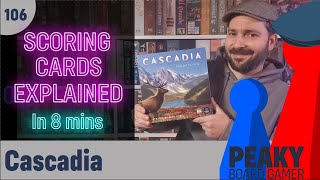
- Clear, step-by-step explanation of scoring cards
- Practical examples illustrating different scoring scenarios
- Concise coverage of all animal types and their scoring rules
- Limited coverage of setup and rules outside scoring explanations
- Reliance on narration without visual aids for all examples
- wildlife habitats and scoring interactions
- Pacific Northwest forest ecosystem
- educational walkthrough
Mechanics (from transcript analysis)
- animal_tokens_and_scoring — Place animal tokens on habitats and score based on specific card rules.
- line_of_sight_and_adjacency — Certain animals score using line-of-sight or adjacency between tokens.
- scoring_cards — Scoring cards A-D define distinct scoring rules per animal type.
- shape_and_group_scoring — Scores depend on group size, shapes, and adjacency or patterns.
- special_patterns — Some animals score via special patterns (e.g., lines for Elks, circular patterns, runs for Salmon).
- tile_placement — Place habitat tiles to form contiguous landscapes for animal placement.
Video topics + discussion points
Quotes (from this video)
- Moving to Elks Now, Elks need to be placed in specific shapes as indicated on the card.
- Salmons now work in runs.
- This run contains four Salmons, so I gain twelve victory points and this contains three, I gain another eight.
- Hawks work better when they are not adjacent to each other.
- This lonely elk is 1/6 of a full circle, so the player gains two victory points.
- So we have three Hawks that have another Hawk in a line of sight and I gain nine victory points.
- Finally, with the Foxes D card, the player scores victory points for pairs of Foxes.
- These were all the scoring cards of Cascadia.
References (from this video)

- Better game choice with four tile/animal pairs instead of three
- Mitigation system prevents worst-case scenarios
- Beautiful artwork of Pacific Northwest archipelago
- Solves Calico's chaos and luck issues
- Much better than Calico despite similar length
- Host brings it to game night events
- Best as 2-player game
- Similar length to Calico
- Requires strategic thinking
- wildlife
- ecosystem
- natural habitats
- Pacific Northwest nature
- Calico
Mechanics (from transcript analysis)
Video topics + discussion points
Quotes (from this video)
References (from this video)

- Beautiful art by Beth Sobel
- Relaxed but strategic
- Flexible player count (1-4)
- May feel repetitive for some players
- Habitats and wildlife conservation
- Pacific Northwest
- Calm, nature-inspired theme with strategy
- Streets
- Dinosaur World
Mechanics (from transcript analysis)
- drafting — Draft landscape and animal tokens
- Pattern Building — Create patterns for scoring
- tile placement — Place tiles to form landscape patterns
Video topics + discussion points
Quotes (from this video)
- Injustice anywhere is a threat to justice everywhere.
- The ultimate measure of a man or woman is not where he or she stands in moments of comfort or convenience but where he or she stands at times of challenge and controversy.
- We must learn to live together as brothers or we will perish together as fools.
- Always the right time to do the right thing.
References (from this video)
- tight edge-based scoring with many small decisions
- thematic wildlife puzzle with solid visual design
- high variability due to random tile draws and board setup
- strong tournament appeal and pacing in a live event
- bear scoring is sometimes underwhelming relative to other animals
- elk rings can be hard to complete in four-player games
- end-game scoring can hinge on tiebreakers and minor edges
- habitat creation and wildlife observation
- North American Pacific Northwest / Cascadia ecosystem
- nature-inspired, observational puzzle
- Azul
Mechanics (from transcript analysis)
- Habitat placement — placing tiles to create connected habitats for scoring
- pattern/edge scoring — forming animal rings and habitat connections to maximize points
- pine cones (tokens) — tokens that modify placement and grant end-game bonuses
- tile drafting — players select terrain/wildlife tiles to place and connect habitats
Video topics + discussion points
Quotes (from this video)
- the ring does not need to be connected to score. If you just show that they're in the ring shape, even if they're disconnected, it counts
- Triangle salmon is life.
- Triangle salmon is love.
- the name of the game is the cones.
- Foxes in general are probably the most consistent animal you want to be using in the game.
References (from this video)
- immediate understanding, elegant puzzle
- great for multiple players and newcomers
- some desire deeper strategic divergence between players
- ecology and region-building
- nature-tile puzzle with animals and terrain
- abstract, ecological
Mechanics (from transcript analysis)
- chain-build scoring — longer chains yield more points
- tile placement + animal scoring — build a landscape chain and score animal points
Video topics + discussion points
Quotes (from this video)
- this is a pretty simple almost like a gateway plus level bidding and set collection style game
- the way you acquire these cards is so cool as you have these discs
- one of the most addictive games that we have in our collection
- this is probably one of my front runners of my game of the year so far
- it's a fantastic design that's held up well
References (from this video)
- Very simple and easy to teach
- Every decision is meaningful
- Sense of progress throughout game
- Pleasant art style and wholesome theme
- Works for any game group and couples
- Variable scoring cards add replayability
- Lacks excitement and tension compared to similar games
- Pleasant but not exciting
- Could benefit from being 'nastier' or tighter
- Pacific Northwest
- Americas
- Habitat
- Wildlife
- Animals
- Ecosystem
- Calico
- Harmonies
Mechanics (from transcript analysis)
Video topics + discussion points
Quotes (from this video)
- This is the Undisputed king of light war games
- The order system Nails this ambiguity perfectly
- Earth is an engine Builder's Delight
- It's a brilliant game for couples
- Cascadia is in many ways a perfect game
- Too comfy for me
- Wormspan is a tight engine building game
- Most delightful and pleasant games available
References (from this video)
- excellent starter game
- great for solo and group play
- beautiful nature theme and art
- puzzle elements that are accessible to beginners
- scoring can feel abstract and potentially less thematic for some players
- habitat construction and wildlife management
- North American forest ecosystem with wildlife
- abstract puzzle with objectives
- Harmonies
Mechanics (from transcript analysis)
- set collection — players collect habitat and animal cards to meet scoring goals
- tile drafting — players draft terrain and wildlife tiles to place on their personal board
- tile placement / tableau-building — players place chosen tiles to build a pleasing and scoring-friendly layout
Video topics + discussion points
Quotes (from this video)
- Cascadia is an excellent starter game for your collection.
- Just start small.
- Anybody can play it.
- I think it's a perfect starter game for your collection.
- Can't Stop is possibly objectively, in my opinion, the best push your luck game.
- Just One is a classic party game. Everybody can play this.
References (from this video)

- Great gateway into heavier euro-style play
- Fast setup and engaging pattern-building
- Occasional rule wrinkles in expansions or variant play
- Some players want more thematic tie-ins
- Gateway-style strategy with abstract scoring
- Biome-themed tile-laying and habitat building with a nature-driven aesthetic
- Casual, approachable, quick to teach and play
- Top 10
- Scout
Mechanics (from transcript analysis)
- duck/cards drafting — Drafting of cards to drive scoring and tableau-building
- set collection / pattern building — Collect animal tokens and landscape tiles to score points
- tile placement — Place landscape tiles to create landscapes for scoring cards
Video topics + discussion points
Quotes (from this video)
- the customization in this game is insane
- this is such a clever system and again not too difficult to get your head round
- it's a dry point salad game
- the problem is is that i was experimenting and i don't think the experiment worked
- this is a build-your-own tableau game with a point salad style
- Cascadia is such a good gateway game
- it's not dead but that is a zatu sponsored video
References (from this video)
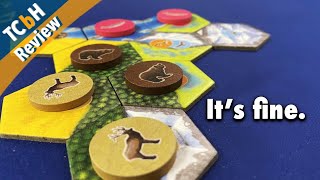
- accessible and affordable
- variety through randomized scoring
- family mode simplifies scoring for younger players
- strong table presence and theming
- lacks tension and consequential choices
- thematic representation feels abstract and distant from real-world ecology
- component production quality criticized as fuzzy/cheap
- occasional inconsistency in art/assets and printing
- habitat creation, biodiversity, and scoring through animal habitats
- Pacific Northwest-inspired ecosystem, forest and nature
- abstracted nature-based ecosystem builder
Mechanics (from transcript analysis)
- area scoring via largest connected landmass per terrain — points are awarded based on the size of the player's largest connected habitat for each terrain type.
- free choice via nature token acquisition — special nature tokens allow bypassing some drafting restrictions, enabling more flexible placement.
- randomized scoring via cards/setup — end-game scoring is influenced by random setup cards and nature tokens that can alter vibes.
- set collection and token drafting — players draft animal tokens and nature tokens to play onto habitats.
- tile drafting and placement — players draft hexagonal habitat tiles and place them to form a connected landscape.
Video topics + discussion points
Quotes (from this video)
- cascadia is fine it's pretty it's accessible it's cheap it has variety via randomized scoring
- the problem is that it feels completely devoid of tension mechanical tension thematic tension
- it's a pleasant albeit borderline passive abstract tile placement game
- i can barely muster any passion for it
- the rows of assembled elk or fox's homing adjacency can quickly devolve into an array of numbers colors and point acquisition
- the solo mode is a fine reflection of the multiplayer experience
- cascadia isn't a bad game it truly is fine but in my experience almost subliminally so
References (from this video)

- Accessible yet deep puzzle
- Good variability and scoring potential
- Artwork and theme integration may feel generic to some players
- eco-friendly tile placement
- Pacific Northwest wildlife habitats
- abstract/puzzle
- Bonanza
Mechanics (from transcript analysis)
- Pattern Building — players draft tiles and wildlife tokens to create landscapes and habitats
- set collection — tiles and tokens contribute to scoring based on habitat types and animals
Video topics + discussion points
Quotes (from this video)
- it's thanks to them that i can put time and love and humor into videos and not just churn out content for the youtube algorithm
- there's never been a sponsored video on this channel so i can decide what games to cover and you can trust that what i'm saying about them is honest
- do you want videos more often do you want to keep the new improvements
- i'm starting my top 50 games of all time series
- it's what i want it's why i saved up to pay for this experiment to prove it could work but i can't afford it long term so i need your help to make it permanent
References (from this video)

- great solo potential; smooth and accessible; visually appealing
- tile placement could feel repetitive for some
- ecosystem optimization and tile drafting
- Pacific Northwest ecosystem
- puzzle-driven, serene theme
- Calico
- Calico
Mechanics (from transcript analysis)
- set collection — scoring based on combinations of animals and landscape tiles
- tile drafting / tiling — players draft animal tiles and place ecosystem tiles to form points
Video topics + discussion points
Quotes (from this video)
- Number 50 for me is a Vital Lerta game. A big cool thematic experience about what happens after a heist. This is Escape Plan.
- Invincible is my number 50.
- San Juan's one of my favorites; I love how those buildings synergize with crops and selling them.
- Spectral is one of those deduction games where you're just trying to avoid the curse and getting gems out there.
- This is one of those classic polyomino games. My favorite in the genre. This is Baron Park.
- Twilight Inscription is infinitely expandable.
- Adrenaline is a bit of everything: euro, shooter vibe, and tense last-hits moments.
- Robinson Crusoe—cooperative survival with fantastic stories.
References (from this video)
- strong concept and ecosystem patterning
- popular evergreen title
- reviewer was lukewarm on the original version
- not the best experience compared to Cascadeo for this session
- pattern-building with ecosystem tiles
- Cascadeo
Mechanics (from transcript analysis)
- Pattern building / tile drafting — players build patterns with habitat tiles; scoring hinges on completing planted patterns.
Video topics + discussion points
Quotes (from this video)
- this is bonfire... kind of one of his more recent ones
- I thoroughly thoroughly enjoyed this two-player game
- it's remarkably fast as well I think I played it in about 75 minutes
- I think it's absolutely fantastic and one of the best two-player games I've played this year
- I love this game because the dice system in Bora Bora is great and the powers help balance outcomes
- expansion Mekka & Bah definitely did make a big change in the gameplay
- Caesar's Empire ... an evergreen feeling game that should be up there with Ticket to Ride
References (from this video)

- Strong theme of nature and the Pacific Northwest
- Accessible and satisfying decisions
- Theme can feel abstract to some players
- Nature and ecology
- Pacific Northwest, wildlife and habitat
- Abstract-territorial
- Ticket to Ride
- Wingspan
Mechanics (from transcript analysis)
- Pattern scoring — Earn points for pattern alignments with cards
- Tile-laying / pattern-building — Create a landscape by placing terrain tiles and animal tokens
Video topics + discussion points
Quotes (from this video)
- "Do themes matter? yes do they matter I have my book now I'm on the fence with this one"
- "Terraforming Mars could have been about the circus no but it needs the theme to work"
- "Quacks of Quedlinburg... you need all of that to really get into that Medieval theme"
References (from this video)
- Relaxing yet crunchy puzzle
- High replay value via tokens and scoring variability
- ecology and scoring based on tokens
- Nature-inspired wildlife habitat
Mechanics (from transcript analysis)
- solo-mode — Compelling solo play with a good challenge curve.
- tile-drafting — Draft habitat tiles and wildlife tokens to build a scoring tableau.
Video topics + discussion points
Quotes (from this video)
- the mere mortal tier I'm talking about people that have either no board gaming experience at all or at most they've played Monopoly Uno or maybe Katan
- the perfect uh game to introduce to someone to the Rand W genre
- this is the perfect game to introduce someone to the Roll & Write genre
- this is a great option especially if you know that they like card games or nature
- I've seen people draw some gorgeous Maps
- this game made me feel all smart and stuff
- Everdale is a fantastic puzzle
References (from this video)

- Good solo scenario implementation
- Nature
- Puzzle
Mechanics (from transcript analysis)
Video topics + discussion points
Quotes (from this video)
- I'm not as much of a completionist as I used to be
- I've got so much content in there already that probably still isn't played
- I've just kind of given up on Kickstarter
- Board game geek is kind of guilty for that
- I'm playing games to enjoy them and yes I play to win but I play to win in the spirit of the game
- Why am I spending this much money on a gamble it's not worth it
- These are the ones I like or these are Trends I don't like these are mechanics I don't like
References (from this video)
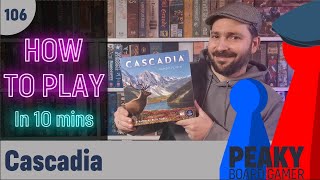
- Accessible for families and new players
- Multiple viable strategies via wildlife patterns and corridor scoring
- Solid balance between tile placement and wildlife placement
- Includes solo and family-friendly play options
- Overpopulation rules (types A and B) can be fiddly for beginners
- Token management and setup may feel fiddly to some players
- ecological balance and habitat design
- Pacific Northwest
- instructional/educational
- Calico
Mechanics (from transcript analysis)
- randomized drafting — each turn players select a paired habitat tile and wildlife token from the current options
- resource management (nature tokens) — nature tokens provide optional actions like wiping tokens or pairing any tile with any token
- scoring cards (pattern-based) — cards score specific animal patterns, groupings, and shapes for end-game points
- tile placement — players place habitat tiles to form their own environments that connect with existing terrain
- wildlife token placement — tokens representing animals are placed on compatible habitat tiles
Video topics + discussion points
Quotes (from this video)
- This is a tile placement game that reminds me of Calico.
- A lovely tile placement game for all family.
References (from this video)
- beautiful artwork by Beth Sobel
- fun gameplay
- engaging mechanics
- nature
- Pacific Northwest
- ecosystem
Mechanics (from transcript analysis)
Video topics + discussion points
Quotes (from this video)
- We need to respect one another regardless of race, creed, color, gender
- Let's just try to work together and be more proactive and productive as a society
- Games that just make us smile - when I think about them I just go yeah this makes you smile
- You can smile on every game because you win all of them
- I love the world that Ryan Loughton put together and it makes me smile
- When I know we're gonna put Dune on the table, I smile
- Parks gives me these pleasant memories
- I know I'm gonna have fun with my family and friends playing Ticket to Ride
- Now I can play in that Star Wars universe with Boba Fett and it makes me smile
- Our lists are like night and day
References (from this video)

- Solid gameplay
- Beautiful animals and terrains
- Represents Pacific Northwest well
- Expresses regional beauty and love
- Family-friendly
- Not yet available
- Building scenic landscapes with wildlife
- Pacific Northwest
- Nature-focused aesthetic
Mechanics (from transcript analysis)
- Beautiful animals — Features Pacific Northwest fauna
- objectives — Complete regional objectives for points
- Tile Matching — Match cards with habitat tiles for rewards
Video topics + discussion points
Quotes (from this video)
- love it love it love it
- that's gonna be a real big part of our collection
- Lost Cities is a two-player game it's evil y'all
- happy frustration
- it's kind of funny funny
- i like it better this time
- games have to grow on me
- beautiful game loved it oh man omg
- i love the artwork diverse
- this may be one of our favorites
- we are disappointed
- we didn't build a fort
- what are we doing
- if you ain't have fun what you doing
References (from this video)
- Better game than its predecessor Calico
- More player choice than Calico due to mitigation factor
- Beautiful artwork by Beth Sobel
- Quick pace with 2-4 players
- Zen-like smooth gameplay
- Good solo mode with scenarios
- Good replay value
- Better as a solo or two-player game than with three or four players
- Can run long with four players
- Building a park with terrain and wildlife
- Pacific Northwest landscape with terrain tiles and animals
- Abstract with thematic flavor
- Calico
Mechanics (from transcript analysis)
- Display Selection — Choosing tiles and tokens from a central display with a resource mitigation factor
- tile placement — Players place terrain tiles to build their park landscape
- token placement — Placing animal tokens on the terrain to score based on card conditions
Video topics + discussion points
Quotes (from this video)
- definitely kicks like Calico to the curb
- this is definitely the gateway seven wonders game, seven wonders is not a gateway game
- it's an opportunity game that's what I like
- it's interactive one of the more interactive euros out there
- no one is talking about this
- wow does it burn your brain
- the uniqueness factor at this game really works
- it's like the most flexible DM in the world
- every decision I make feels meaningful
- Ark Nova easily easily my number one of the year
- I fell in love with it like halfway through the game
- it's so good
- cannot wait to have this in my collection
- hallmark of a great game where you play it and you'll want to play it again as soon as possible
References (from this video)
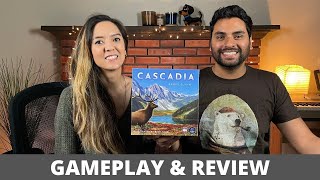
- Engaging, puzzle-like scoring options with variable scoring cards
- Beautiful components and theme; accessible for families
- Good player-count scalability and quick play pace
- Tile fatigue with many turns; some players may find the long drafting sequence tedious
- Strategy can be overfitted to specific scoring cards
- habitat creation and wildlife management in a Cascadia-themed terrain
- Cascadia region in the Pacific Northwest
- puzzle/strategy, area-control with variable scoring
- Calico
- Burden
Mechanics (from transcript analysis)
- end-game scoring and majority bonuses — Game ends when tiles run out and players score large habitat areas, tokens, and animal runs per scoring card.
- keystone tiles and nature tokens — Keystone tiles grant nature tokens; nature tokens provide strategic options and end-game value.
- nature token economy — Unspent nature tokens at game end are worth points; spending them can alter the board and refills.
- overpopulation and wipe mechanics — If all four animal tokens in the center are identical (or nearly), areas are wiped and refilled.
- terrain adjacency and placement — Tiles placed to extend existing habitats; terrain types affect scoring but matching is not required.
- tile drafting — Players draft a pair of tiles and tokens from a central pool each turn.
- token placement and animal matching — Tokens can only be placed on tiles displaying the corresponding animal symbol.
Video topics + discussion points
Quotes (from this video)
- This is a really neat game.
- The theme and artwork are really pretty.
- The game is fairly snappy and easy to learn.
- If you like Calico, you'll likely enjoy Cascadia.
- It's very puzzly and rewarding to optimize scoring cards.
References (from this video)
Mechanics (from transcript analysis)
Video topics + discussion points
Quotes (from this video)
- Cascadia which is always a joy to play
- Top 10 which is becoming one of my most favorite party games at the moment
References (from this video)

- elegant, approachable
- great for a wide range of players
- can be time-pressured for large groups
- habitat building with wildlife tokens
- Pacific Northwest wildlife sanctuary
- procedural puzzle
Mechanics (from transcript analysis)
- card drafting / animal tokens — draft animal tokens to score patterns
- tile laying — place terrain tiles to form habitats
Video topics + discussion points
Quotes (from this video)
- This is what it looks like to actually play a game.
- Step up your game. You're kind of you're kind of bad in games.
- The vibe is very very uh pleasant and is a lot of collegiality.
- It's amazing when you hear your mother in your ear, man. This is crazy town.
- Thank you for hosting this amazing event.
References (from this video)

- easy to learn, quick to play
- beautiful components and satisfying puzzle feel
- can be approachable but lacks deep crunch for some players
- table presence may be limited when crowded
- habitat balancing and tile/creature pattern building
- Pacific Northwest ecosystem with wildlife habitats
- puzzle-like, calm, approachable
- War of the Ring
- Gloomhaven
Mechanics (from transcript analysis)
- card drafting — Draft wildlife cards to determine creature points and habitat bonuses
- set collection / pattern-building — Achieve patterns for scoring by combining tiles and wildlife
- tile placement — Players place landscape tiles to build a contiguous habitat
Video topics + discussion points
Quotes (from this video)
- tray of coffins that's where the fun of Gloom Haven is buried
- it's super fun to create these (terrain/minis) it takes time it takes effort but your game will be so unique
- a great game but the feel of some of the components especially the money doesn't feel right
- Pokémon version of Splendor in Korea and you can't get it here but it just makes more sense for me cuz the cards you get are Pokémon and the chips are Pokeballs
References (from this video)

- Beautiful artwork by Beth Sobel
- Relaxing and peaceful theme
- Gorgeous visual presentation
- Good pattern-building mechanics
- Animals must follow specific placement rules
- Drafting adds strategy
- Ecosystem and habitat creation
- Pacific Northwest
- Nature-based theme
Mechanics (from transcript analysis)
- drafting — Drafting tiles and animal cards
- Pattern Building — Creating specific animal and habitat patterns
- tile placement — Placing habitat and animal tiles on personal board
Video topics + discussion points
Quotes (from this video)
- do those things that's going to keep us safe yeah so that we don't get overcome again
- the games from 2021 that we loved and we picked our top 10 games from that
- board games that bring the fun to the table
- i used to read yes you did when we first got married i would read yes i loved uh books
- i can do so much more yeah with board gaming than with golf
- they want to be known as the steam platform for board gaming
- embracer is becoming that you know so big that they're gonna be so diversified for geek culture
- we want to be that one-stop shop where if you're looking for people of color you want to hear what they have to say
- diversity inclusion that's what we're shooting for
- it's a beautiful game and you know the market you know because you gotta always look at the market
- i ain't mad at you
- the dice ain't nice
- we love you guys we we we're just glad you're still with us and keep on coming back
References (from this video)
Mechanics (from transcript analysis)
Video topics + discussion points
Quotes (from this video)
- Nemesis leave me alone
- Res Arcana don't hurt me now
References (from this video)
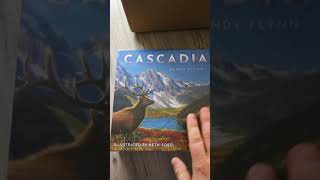
- Beautiful artwork by Beth Sobel
- Accessible and relaxing engine
- Quality production and components
- Score balance may feel tight for some players
- Less thematic narrative, more abstract
- ecosystem balance and wildlife habitats
- North American Pacific Northwest wilderness
- abstract strategy
Mechanics (from transcript analysis)
- drafting — Each turn you select a terrain tile and a wildlife token to place.
- pattern formation / habitat scoring — Score points by matching habitat patterns and adjacent wildlife.
- tile placement — Place landscape tiles to form habitats and ecosystems.
Video topics + discussion points
Quotes (from this video)
- it's cascadia
- look at this artwork by beth sobel it's really great
- i will be locking myself in my apartment the next few days and you will get a review very very soon
- these are limited and since my channel isn't that huge yet i didn't think i would actually get a copy
References (from this video)

- Simple ruleset
- Strategic depth
- Beautiful artwork
- Quick gameplay
- Engaging tile placement mechanism
- Scoring can be complex
- Limited player interaction
- Wildlife habitat and ecosystem building
- Pacific Northwest (British Columbia, Washington, Oregon)
- Tile placement strategy
- Calico
- Verdant
Mechanics (from transcript analysis)
- area majority — Bonus points for largest terrain groups
- set collection — Scoring points by creating specific animal groupings and terrain configurations
- tile placement — Players place habitat tiles and animal tokens to create interconnected ecosystems
Video topics + discussion points
Quotes (from this video)
- We're just a couple of turns in and just every time I play this it reminds me I love how it's just such a well-designed game
- These games with simple rule sets but offer a lot of strategy to them - those are my favorite type of games
References (from this video)

- solid, relaxing puzzly engine with scope for misplays
- great with varying player counts
- some players may find it lightweight compared to heavier euros
- eco-system development and wildlife conservation
- Pacific Northwest wildlife habitat
- procedural and puzzle-like
Mechanics (from transcript analysis)
- pattern-building / polyomino placement — place tiles to form habitats for scoring
- tile drafting — draft habitat tiles to lay out and score wildlife tokens
Video topics + discussion points
Quotes (from this video)
- temper your expectations people
- i want board games to be different
- it's the hotness news at the moment
- i definitely want publishers to push the envelope
- i'm not hyped about this at all
References (from this video)
- appealing nature theme
- gentle, approachable ruleset
- beautiful production and components
- may feel abstract to some players
- limited direct interaction
- nature management and ecological balance
- Pacific Northwest nature and ecosystems
- calm, nature-forward, puzzle-like
- Patchwork
- Wingspan
Mechanics (from transcript analysis)
- polyomino tile placement — tiles fit together to form scenic landscapes
- set collection — collect animals and landscapes for scoring synergy
- tile drafting — players draft wildlife tiles to place in their personal tableau
Video topics + discussion points
Quotes (from this video)
- cozy games is the big industry buzz word.
- There is a big market for people that just want to have a relaxing time playing board games.
- There is less plastic produced.
- shorter, snappier, and streamlined games.
References (from this video)

- Accessible, quick plays, high strategic depth for a light game
- Great for mixed groups and families
- Some players may want more interaction or bigger swingy moments
- tile drafting and spatial placement
- nature reserves with wildlife
- puzzle-like, relaxing
- Wingspan
- Crokinole
Mechanics (from transcript analysis)
- paired drafting / tile placement — Draft tiles to place habitats and animals for scoring points.
Video topics + discussion points
Quotes (from this video)
- There's no turning back.
- Race for the Galaxy is a contender for the best.
- The dopamine rush of every chip you draw from that bag.
- Quacks of Quedlinburg is such a pure fun game.
- Feast for Odin is a big sandbox design.
- Teach You is by far my favorite card game in terms of teaching and playing with new people.
References (from this video)

- accessible and calm
- great family game
- randomness can affect balance
- ecosystem tiling
- pacific northwest habitat
- Calico
- Patchwork
Mechanics (from transcript analysis)
- tile placement / token drafting — place habitat tiles and wildlife tokens to create optimal patterns
Video topics + discussion points
Quotes (from this video)
- This whole time I thought this was just a poster printed on the wall. You mean to tell me there's been real games in your background?
- To our audiences, Shagrin. This is not AI generated.
- I think a general theme like is I the higher the game, the more I like it like the higher on the shelf.
- It got demoted because of boxware.
- This is the biggest game in my collection.
- I'm missing one and I honestly don't know what game it is.
- What game should fit right there.
References (from this video)

Mechanics (from transcript analysis)
Video topics + discussion points
Quotes (from this video)
- Stonemaier games is 10 out of 10, would definitely recommend
- I'd much rather talk about a publisher who I really like to work with
References (from this video)

- Streamlined and accessible
- Visually appealing with depth under the surface
- Fast play with meaningful decisions
- Terraforming Mars
Mechanics (from transcript analysis)
- pattern/area scoring — Score points based on patterns and the arrangement of tiles and tokens.
- tile drafting — Draft hex tiles and animal tokens to build your map.
Video topics + discussion points
Quotes (from this video)
- I love how streamlined this game is.
- it's a drafting style game as you're trying to build up the civilization of cards
- one world worthy of all the hype
- this engine builder
- it's the crunchiness
- this is widely considered to be one of the best if not the best economic style board game of all time
- it's a joy to play
- you are destined to love it
References (from this video)

- Gateway friendly while still crunchy with landmarks expansion
- High replayability and strong tableau variety
- Base game strong but landmarks expansion elevates; base lacks some depth
- Theme not overtly ambitious but works well
- Wildlife habitat scoring with landscape tiles
- Pacific Northwest ecosystem with animals
- Relaxed and naturalistic ecosystem building
- Isle of Cats
- Santa Maria
Mechanics (from transcript analysis)
- entwined drafting — Draft terrain and animal tiles bundled together for composite scoring.
- tile laying and pattern building — Place tiles to form scoring patterns while matching animal types.
Video topics + discussion points
Quotes (from this video)
- Nations is the civilization game to beat quite frankly.
- Two great two player games in one countdown; the golden age of two player gaming.
- Isle of Cats Explore and Draw is the second greatest roll and write of all time.
- The Rival Networks is fast, tight, and makes you sweat from start to finish.
References (from this video)

- family-friendly
- easy to learn
- high replayability
- theme may read as light for some players
- habitat creation and wildlife
- Pacific Northwest wildlife habitat
- abstract yet nature-inspired
Mechanics (from transcript analysis)
- set collection — points are earned via randomized objective cards and wildlife patterns
- tile drafting — players draft habitat tiles and wildlife tokens to build their habitats
Video topics + discussion points
Quotes (from this video)
- it's a fantastic sort of family weight game that everyone can learn to play
- Cascadia sort of came out of nowhere and became a massive hit
- I absolutely love this game
- Wallenstein is still an awesome Euro game
- it's such a simple idea
- Ticket to Ride Europe ... it's a great way to learn modern euro play
- it's a quintessential Euro game
- it gives me a massive boner
- Power Boats is an awesome racing game
- Istanbul is an awesome Euro game that we keep coming back to
- EOS ... an awesome area control set collection game
- Las Vegas is one of our favorite area majority dice chucking stitch up games
References (from this video)

- beautiful balance of simple mechanics with depth
- fast to teach, high accessibility as a gateway game
- strong replayability due to variable scoring and patterns
- can be table hog for larger groups
- scoring can feel opaque to newcomers at first glance
- abstract ecological puzzle and habitat-building
- Pacific Northwest habitat and wildlife
- minimalistic, puzzle-driven
Mechanics (from transcript analysis)
- engine balancing with simple rules — Simple core rules enable deep strategic decisions without heavy complexity.
- player interaction via competition for patterns — Indirect interaction as players compete for the best patterns and land.
- set-collection / pattern scoring — Animals score in varied ways, with different species providing unique patterns.
- tile drafting — Draft habitat tiles and animal tokens to assemble a scoring tableau.
- tile placement & pattern building — Place tiles and animals on a modular board to form patterns and maximize points.
Video topics + discussion points
Quotes (from this video)
- it's a gateway game but man every single time I play it it is just it is working the juices
- beautifully balances really simple mechanics with a lot of depth in thinking
- two puzzles on top of each other
- I love games that have little goals you know throughout the game
- presentation is just beautiful to see this giant grid build up with the city
- absolute hit
- Terraforming Mars experience and just the entire game from start to finish is riveting
- it's a big box with giant minis and a huge table presence
References (from this video)
- great gateway experience
- strong solo mode
- expansion can complicate balance
- ecosystem optimization and harmony
- North American wildlife habitats
- zen, nature-inspired
- Calico
- Caldera
Mechanics (from transcript analysis)
- bag-building — Draw tokens to place animals and score
- tile-drafting — Draft habitat tiles and animal tokens
Video topics + discussion points
Quotes (from this video)
- it's a really cool design and simple to play
- this is one of my go-to social deduction games
- it's simple you know doesn't take too long and still gives you like an interesting story with a lot of freedom
- it's Zen-like bag-builder
- it's a big engine builder with the mechs
- it's a very cool negotiation game
References (from this video)

Mechanics (from transcript analysis)
Video topics + discussion points
Quotes (from this video)
- Unlock it's brilliant isn't it as an evocative title for an escape room game
- Seven Wonders yeah I love it
- Code Names is I'm reluctantly giving it an 8 here
References (from this video)
- Simple to learn
- Strong natural theme
- Accessible for new players
- May feel predictable after multiple plays
- Habitat and wildlife arrangement
- Pacific Northwest wildlife habitats
- Scientific but approachable
Mechanics (from transcript analysis)
- Card/token pairing — Each animal token pairs with a terrain tile to score
- Set collection / scoring by territory size — Score based on larger territories and animal tokens per card
- tile placement — Place terrain tiles to form larger territories
Video topics + discussion points
Quotes (from this video)
- Creature Comforts is a cozy family worker placement game
- Spirit Island ... it's a Cooperative game where all players play together
- Earth you build well your island essentially it's a tableau building game through and through
- Wingspan... it's an action selection game
- Life of Amazonia is a big game it's essentially a bag building deck building game
References (from this video)

- Simple gameplay
- Beautiful theme
- Tile and animal matching
- Quick play
- Pacific Northwest
- Landscapes
- Animals
- Nature
Mechanics (from transcript analysis)
Video topics + discussion points
Quotes (from this video)
- 170,000 logged plays... almost 500 times each day - how can this be the most played game
- the news must be fake in 365 days
- by the mission 35 you're like are we even playing the same game
- you have to go fast but the faster you go the closer the corner gets
- took something classic trick taking games been around for hundreds of years and made it into something more modern
- a lot of people play solo and if you play game solo it's much easier to get the gaming group together
- what's on the board stays on the board
References (from this video)

- family-friendly weight with mid-depth strategy
- aesthetically pleasing and table-friendly
- some variability depends on tile/deck luck
- ecology and habitat optimization
- northwestern forests with wildlife and habitat tiles
- Calico
Mechanics (from transcript analysis)
- set collection / token collection — collect wildlife tokens to score points based on habitat tiles
- tile drafting — players draft habitat tiles and wildlife tokens to build their ecosystem
Video topics + discussion points
Quotes (from this video)
- I guarantee that 90 of the games here I think you will enjoy
- this shelf is like this any game you pull out you know you can immediately play even if you don't remember all the rules
- I want it as well
- you have to move with the culture next to the wine I think he's a fan of me
- two players two player versus games exactly
References (from this video)

- family-friendly
- great solo mode and accessibility
- some players crave more thematic depth
- habitat design and wildlife management
- ecosystem and wildlife on a habitat island
- casual, puzzle-like
- Cartographers
- Wayfarers of the South Tigris
Mechanics (from transcript analysis)
- set collection — collect animal tokens for scoring
- Tile-laying — place habitat tiles to create ecosystems
Video topics + discussion points
Quotes (from this video)
- This Is A Feast for Odin
- I want to pick a game that has infinite possibilities
- 52 cards, 52 standard deck
- that is a fair call that's not a cheat
- You're spending your entire life on a desert island
- Friday touring machine
- Sometimes tenure is irrelevant
References (from this video)

- Elegant, approachable design with a satisfying puzzle
- Great accessibility for new players and casual playgroups
- Strong aesthetic and tactile components
- Abstract feel may not appeal to players seeking thematic heft
- Luck of tile/animal draw can influence short-term results
- Nature and ecological balance; peaceful puzzle
- North American landscapes and wildlife
- Abstract, puzzle-like with minimal thematic narrative
- Escape from Sunset Island
Mechanics (from transcript analysis)
- high_replayability — Different tile/animal combinations create varied setups each game.
- pattern_puzzle — Players aim for optimal patterns and scoring combos rather than conflict.
- tile_drafting_and_token_placement — Draft habitat tiles and wildlife tokens to build a cohesive ecosystem layout.
Video topics + discussion points
Quotes (from this video)
- the game called Escape from Sunset Island where one plays a zombie and all the other players are trying to escape but when the zombie catches the players they turn into a zombie
- Cascadia is quite good fun it's a similar thing
- three ways to escape ... snow cap by repairing it and getting fuel
- the leader will shuffle them and then he'll be like a push-your-luck thing
- cooperation bonuses so if you're in the same room as other people you get to activate the room twice
References (from this video)

- relaxing and approachable
- high replayability with flexible board layouts
- beautiful aesthetic
- Habitat construction with wildlife tokens
- Pacific Northwest ecological habitat
Mechanics (from transcript analysis)
- Patterning and matching — Strategic placement to maximize compatibility and scoring.
- Tile drafting and habitat placement — Pick habitat tiles and animal tokens to build a habitat.
Video topics + discussion points
Quotes (from this video)
- In times of stress the best thing we can do for each other is to listen with our ears and our hearts and to be assured that our questions are just as important as our answers
- The board game space is supposed to be a safe space
- we remove that cognitive bias
- the table is a great way where we can all be on equal footing