In CATAN (formerly The Settlers of Catan), players try to be the dominant force on the island of Catan by building settlements, cities and roads. On each turn dice are rolled to determine which resources the island produces. Players build structures by 'spending' resources (sheep, wheat, wood, brick and ore) which are represented by the relevant resource cards; each land type, with the exception of the unproductive desert, produces a specific resource: hills produce brick, forests produce wood, mountains produce ore, fields produce wheat, and pastures produce sheep.
Set-up includes randomly placing large hexagonal tiles (each depicting one of the five resource-producing terrain types--or the desert) in a honeycomb shape and surrounding them with water tiles, some of which contain ports of exchange. A number disk, the value of which will correspond to the roll of two 6-sided dice, are placed on each terrain tile. Each player is given two settlements (think: houses) and roads (sticks) which are placed on intersections and borders of the terrain tiles. Players collect a hand of resource cards based on which terrain tiles their last-placed settlement is adjacent to. A robber pawn is placed on the desert tile.
A turn consists of rolling the dice, collecting resource cards based on this dice roll and the position of settlements (or upgraded cities—think: hotels), turning in resource cards (if possible and desired) for improvements, trading cards at a port, possibly playing a development card, or trading resource cards with other players. If the dice roll is a 7, the active player moves the robber to a new terrain tile and steals a resource card from another player who has a settlement adjacent to that tile.
Points are accumulated by building settlements and cities, having the longest road or the largest army (from some of the development cards), and gathering certain development cards that simply award victory points. When a player has gathered 10 points (some of which may be held in secret), s/he announces this and claims the win.
- strong social interaction
- dynamic market-like negotiation
- replayability via variable setup
- negotiation can lengthen play
- balance can tilt with player interaction
- Trade, settlement, and exploration
- Islands with resource-based development
- Eurogame economic negotiation with evolving board
- Bonanza
- Panic on Wall Street
Mechanics (from transcript analysis)
- Trading — Players negotiate and trade resources to build roads, settlements, and cities.
Video topics + discussion points
Quotes (from this video)
- every card should work in exactly the same way and the simplest way of doing that is saying that you play the card once you get the benefit and then you discard the card
- it's a streamlined system so every card should work in exactly the same way
- the goal in a game of hive is to surround the queen bee
- you can see it laying out on the map as things get shut off by the other players
- there is something really satisfying and unusual about that experience
- a legacy game once in a while played with my wife
- it's basically a form of set collection... many different variations of sets which create different words
References (from this video)
- easy to learn and teach
- high player interaction through trading
- strong foundational mechanism for eurogame design
- replayability via varied board setups
- dice luck can skew resource distribution
- trading could stall if players aren’t willing to trade
- two-player setup can feel less dynamic without variants
- settlement building, resource management, and trade
- island of Catan undergoing colonization and development
- emergent, player-driven story formed by trading choices and expansion
Mechanics (from transcript analysis)
- Board placement / modular board — Hex-based modular board layout leads to variable resource accessibility per game.
- Resource management — Players collect and manage supply of brick, lumber, wool, grain, and ore to finance development.
- Trading — Players negotiate and trade resources to acquire what they need to build roads, settlements, and cities.
Video topics + discussion points
Quotes (from this video)
- katan which was the game that got me into board gaming and i played this game a lot with my family
- this is the first game i ever played where players have unique abilities now everybody has the same actions and special actions but the roles make the special actions even better
- the ai is nothing more than a stack of cards called the infector draw pile
- there's a lot of stress when playing this game but that's what made this game so good
- the epidemic card now typically this deck contains the cards you need to find cures move across the map or even special events but when this card is drawn the situation goes from bad to worse
- as the game built upon itself a story started opening up
- this was the og box with the original box art
- i am so pumped for this because i have a long history with warcraft games
- the premise is that you play as one of the iconic wild characters trying to control the scourge in azeroth with the goal of having a final battle against arthas the lich king
References (from this video)
- Engaging strategic decisions and dynamic negotiation with other players
- Combination of luck (dice) and strategy (placement, trading, and timing)
- Expansion variants add depth and replayability
- Strong social interaction and group gameplay
- Clear path to victory via settlements/cities and development cards
- Trading can become chaotic or lengthy in a multiplayer setting
- Dice luck can swing outcomes, leading to frustration for some players
- Resource scarcity or timing can slow progress and create dry turns
- Trade, exploration, and expansion under resource constraints
- Islands with scattered resources; players settle and trade to build up settlements, cities, and roads
- competitive
Mechanics (from transcript analysis)
- building_roads — Roads connect settlements and extend reach; contribute to longest road bonuses.
- development_cards — Purchasing cards that may grant knights, progress benefits, or victory points.
- dice_roll — Resource production determined by dice sums; tile numbers determine likelihood (red numbers correlate with higher roll probability).
- longest_road_and_largest_army — Bonuses awarded for the longest road and, when applicable, the largest army via knights.
- resource_management — Players manage multiple resources and timing of builds/trades to maximize advancement.
- Robber — When a 7 is rolled, robber moves to block a resource on a tile and can steal from a player.
- settlements_and_cities — Construct settlements and upgrade to cities to increase resource production and points.
- trading_between_players — Direct trades between players; bank trades and port advantages affect exchange rates.
Video topics + discussion points
Quotes (from this video)
- it's a declaration of war right off the bat isn't it
- you should have asked him to improve their offer
- betrayal
- it's a lot more
- there's a declaration of war right off the bat
- you can't help do that
- it's a great video
- the longest road
- oh my god
- that's a long shot but
References (from this video)
- Ticket to Ride
Mechanics (from transcript analysis)
- Resource management — managing and trading resources to expand
- set collection — players collect resources and build roads, settlements, and cities
Video topics + discussion points
Quotes (from this video)
- it's not just people of color we're talking about women too yes whether you have color or not underrepresented under-represented lgbtq yes so we'll have a nice diverse group of people
- Die Hard is a Christmas movie
- send in the questions we love hearing from you all
- family we just love being with you we couldn't let this day go by without visiting with you and talking to you
- we're launching a new show called OFPG Voices
- it's not just people of color we're talking about women too
References (from this video)
- High replayability and social interaction
- Familiar and accessible core loop
- Strong balance between competition and negotiation
- Downtime during trading can be lengthy
- New players may feel overwhelmed by rules interactions
- Resource management, exploration, and negotiation in a developing settlement
- Medieval/fantasy-inspired settlement building and resource trade
- Eurogame-style abstraction focusing on strategy, negotiation, and resource planning
- Catan
Mechanics (from transcript analysis)
- Dice_Driven_Resource_Production — Resource production is driven by dice each turn, creating variability and interaction.
- resource_management — Players collect resources and spend them to build roads, settlements, and cities to gain points and income.
- Settlement_and_Road_Building — Placement of roads and settlements creates income and victory-point opportunities.
- Trading — Players negotiate and trade resources with each other to acquire what they need.
Video topics + discussion points
Quotes (from this video)
- Katan here as well
- you can't do that the rule book states that you can move adjacently but it does not specify that I cannot move anywhere else
- this expansion which turn turns all the colors back into the red ones
- this doesn't even have cubes
- Boom the next guy oh man this is such a freaking great game
- I roll for five damage
- how about my game we already have played it 14 times
- we could play my game
- this is such a freaking great game
- never oh man this one looks super cool have you no I never have that I only do what the hell man what is this nothing does your mom know
References (from this video)
- excellent gateway game
- engaging trading mechanics
- good for 2-4 players
- 25th anniversary edition is beautiful
- 3D edition components are exceptional
- replayable with variants
- sometimes compared negatively to Monopoly (unfairly)
- settlement
- resource management
- trading
- island colonization
- Monopoly (negatively compared, different games)
Mechanics (from transcript analysis)
Video topics + discussion points
Quotes (from this video)
References (from this video)
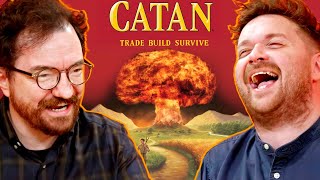
- high-energy, fast-paced banter that keeps the show lively
- creative reimagining of Catan with a satirical British setting that adds humor and novelty
- dynamic social interaction and improvisation that showcase group chemistry
- rules are informal and frequently bent, which can create confusion or perceived imbalance
- dice luck can dominate late-game outcomes, undermining strategic planning
- thematic and mechanical changes may dilute the original strategic depth of Catan for some players
- resource gathering, road construction, and settlement expansion with satirical, British-flavored worldbuilding
- post-apocalyptic wasteland / desert landscape that doubles as a geographic stand-in for the United Kingdom
- humorous, chaotic, improvisational with meta-commentary on the game and the players
- Sid Meier's Civilization V
Mechanics (from transcript analysis)
- building roads — spend resources to lay roads connecting settlements, striving to reach the sea and complete a network.
- building settlements — place settlements on intersections to gain access to adjacent tiles; in this house-rule run, the traditional vacant-intersection rule is removed.
- Development cards — buy development cards that provide various effects; includes a Monopoly-like moment where a player can claim all of a resource type from others.
- dice-rolled resource production — players collect resources from hexes adjacent to their settlements when numbers are rolled (2 dice).
- house rules — core alterations include replacing ore with clay, and discarding the traditional requirement for vacant intersections; the game uses a post-apocalyptic, satirical UK map as its frame.
- longest road — the longest continuous road earns additional victory points and can shift the lead dramatically as the game progresses.
- Robber — a robber token can be moved to block production on a tile, typically triggered by rolling a 7 or by card effects; used for strategic disruption and banter between players.
- Trading — players exchange resources with each other and with the bank, often negotiating under humorous duress; in this variant, trade dynamics are playfully skewed by the host's improvisation.
Video topics + discussion points
Quotes (from this video)
- stupid game for stupid people.
- This is a desert.
- The clay gods favor me.
- Hold your horses right there because what we're going to trade in for wood.
- The dice just want this game to go on forever.
- This is a stupid game for stupid people. It stinks.
- The longest road now, I have the longest road.
- We are building the M6. You were building the M1.
- Hello, nerds.
References (from this video)
- Resource management and trading
- Viking settlement
Mechanics (from transcript analysis)
- Resource Trading — Players must trade resources to prosper
Video topics + discussion points
Quotes (from this video)
- Board games are better than they've ever been
- Modern board games offer an escape to a place that makes sense, where you're in command of your destiny
- The biggest change with modern games is how friendly they are
References (from this video)

- groundbreaking gateway game; strong trade dynamics
- runaway leader issues; can slow with poor groups
- trade and negotiation
- settlement on an island with resource negotiation
- historic-fantasy world-building
- Ticket to Ride
- Carcassonne
Mechanics (from transcript analysis)
- resource trading and settlement building — gather resources and trade to build roads, settlements, and cities
Video topics + discussion points
Quotes (from this video)
- What's the best entry-level board game? Wrong question. There is no best entry-level board game. There's only the chart.
- This is the chart chart.
- Don't optimize too hard. We aren't playing scythe right now.
- This is the gateway to an entire genre.
- For entry-level gamers, you want to have that fun to admin ratio heavily tilted towards fun.
- If someone has real enthusiasm for a game, just play it.
- Trust on your group, trust on your instinct.
- It's the gateway game that opened the floodgates to the modern industry.
References (from this video)
- Simple, gateway-friendly rules that are easy to teach
- High interactivity via trading and competition for resources
- Strong replayability and broad appeal across ages
- Flexible to house numerous variants and expansions
- Luck-based resource production can dominate outcomes
- Appears dated to some players and scales poorly with very large player counts
- Can be lengthy with expansions and 4-5 players
- Resource management and negotiation
- Hex-based island world where players settle, trade, and build on resource tiles
- Modular board with variable setup; evolving through expansions
- Space Base
- Sidereal Confluence
- Monopoly
Mechanics (from transcript analysis)
- development cards and robber — Buy development cards for benefits; the robber can disrupt production and steal resources
- Dice-driven resource production — Roll two dice each turn; tiles with matching numbers produce resources for adjacent settlements and cities
- Settlement and road building — Place roads and settlements on hex intersections to expand influence and gain resources
- Trading between players — Free-form negotiation and trade to acquire needed resources
- Upgrade to cities for more resources and points — Upgrade settlements to cities to increase resource yield and victory points
Video topics + discussion points
Quotes (from this video)
- it's a gateway level game
- Seafarers is my personal recommendation
- the harbor master goes in every single game
- you can mix it with a bit of Seafarers or mix it with the Harbour Master and the Rivers of Catan
- it's a pretty good scenario mix to go for
References (from this video)

- Accessible entry point with engaging trading dynamics
- Modular board creates replayability
- Strong theme of exploration and settlement
- Dice luck can create uneven resource flow
- Trading can lead to stalemates or frustration
- Component management can be fiddly for new players
- resource management, negotiation, settlement building
- A fictional island where settlers establish a new society and trade resources
- tile-personification and playful cosplay framing
- Monopoly
Mechanics (from transcript analysis)
- building and expansion — Players place roads, settlements, and cities on a modular board
- development cards (optional) — Acquiring development cards that grant various effects
- dice-based resource production — Resource cards produced each turn based on dice roll and number tokens
- Trading between players — Players negotiate and trade resources to build roads, settlements, and cities
Video topics + discussion points
Quotes (from this video)
- you must be ameritrash
- it's not a trick it's a treat dracula
- i'm settlers of catan
- i'm in monopoly house
References (from this video)

Mechanics (from transcript analysis)
Video topics + discussion points
Quotes (from this video)
References (from this video)

- iconic gateway Euro game with broad appeal
- strong player interaction via trading
- can be lengthy with multiple players
- balance can be sensitive to player counts
- resource management and trading
- settlement-building on a modular island
- classic Euro-style
- Code Names
- Space Base
- Patchwork
- Wingspan
- Blood Rage
- The Crew
- Splendor
Mechanics (from transcript analysis)
- set collection / resource management — Gather resources to build roads, settlements, and cities.
- Trading — Players trade resources to optimize development and points.
Video topics + discussion points
Quotes (from this video)
- there arose such a clatter I sprang from the table to see what was the matter
- now code names now space base now Patchwork and wingspan
- they Bend up the cards they don't wash their hands they Place their workers
- gamer whose turns don't take all darn day
- happy gaming to all and I hope that you win
References (from this video)
- Accessible to multiple age groups
- Introduces strategic thinking
- Elegant design
- Promotes player interaction
- Settlement building and resource management
- Uncharted island
- Colonization
- Monopoly
- Sorry
- Risk
Mechanics (from transcript analysis)
- Resource Generation — Roll dice to determine resource production
- Trading — Players trade resources to progress
- Victory point accumulation — First to 10 points wins
Video topics + discussion points
Quotes (from this video)
- Catan has sold over 30 million copies worldwide
- The impact Catan has had on us and our hobby is measurable
References (from this video)
- Highly interactive gameplay
- Replayability
- Strategic depth
- Can become repetitive
- Luck-based elements
- Exploration and settlement
- Resource management on a fictional island
Mechanics (from transcript analysis)
- Dice rolling — Determines resource production
- Resource Trading — Players trade resources to build settlements and roads
Video topics + discussion points
Quotes (from this video)
- Board gaming is more than cardboard tokens and wooden meeples... it's part of the glue that binds relationships
- These silly games provided me a way to connect with my dad before he passed away
References (from this video)
- engaging trading and negotiation
- high replay value due to variable board
- introduces families to resource management with accessible rules
- can cause disagreements or tense trades among players
- growth through resource management and negotiation
- island of Catan with settlers trading and building
- economic/negotiation-driven
Mechanics (from transcript analysis)
- Resource management — players collect resources and use them to build roads, settlements, and cities.
- trading/negotiation — players trade with each other to obtain needed resources and optimize their position.
- variable board setup — the hexagonal terrain tiles are laid out differently each game.
Video topics + discussion points
Quotes (from this video)
- Settlers of Catan ... it's really, it's the game that got us into the hobby
- it's a great family game night game you look angry with your family because you gotta do some trading
- Alhambra is a great game we go back to it again again because it is fun
- you need to have Mick because he loves to research the rules
- it's awesome must have
- it's a drafting card drafting game where you card draft to build your civilization
- Dominion is a true card drafting game
- Carcassonne is great put it in your collection
- Century spice road it's a true gateway is for beginners and it's so much fun
- it's called crank it is a card drafting game with a board game attached to it
References (from this video)
- Accessible package for beginners
- Doesn't take all day
- Simple to learn
- Great interaction with other players
- Introduced host to the hobby
- Luck-based gameplay
- Settlement
- Resource management
- Building
Mechanics (from transcript analysis)
Video topics + discussion points
Quotes (from this video)
- When starting out in this hobby, losing is a huge pressure on the newbie. But what if you lose and win together? That's why horrified is a perfect cooperative game
- Monopoly is simple. You usually roll two dice and have a bad time. Well, in this game, you roll two dice and have a good time
- Engine builders are really cool because you always start with nothing and then build up from that point on and it makes you feel fantastic
- This is a game that drew me into this hobby and I'm happy I'm here
- And we went throughout this whole segment without saying that Monopoly sucks. Isn't that great?
References (from this video)
- Accessible gateway to modern board gaming
- Encourages social interaction and negotiation
- Can be slow and luck-influenced for beginners
- Robber mechanic introduces randomness that can slow decisions
- Resource trading and settlement expansion
- Uninhabited island colonization with resource-based development
- Euro-style economic strategy with negotiation
- Ticket to Ride
- Carcassonne
Mechanics (from transcript analysis)
- development cards and robber — Development cards grant benefits; robber blocks resource production.
- Resource production and trading — Resources produced by dice rolls; players trade to expand.
- Tile placement / hex grid — Players build settlements and roads on a modular board.
Video topics + discussion points
Quotes (from this video)
- PAX unplugged is going to be huge and a fantastic positive force in the board gaming community.
- open gaming area is huge and there are vast numbers of tables where everybody could be gaming.
- PAX is bringing in a whole new crowd this is a great thing for our industry right now.
- Philadelphia is a beautiful city, absolutely gorgeous, a classic northeastern United States City with grit.
- This is going to become like a Gen Con and even more, I think, going forward.
References (from this video)
- Classic gateway game
- Accessible mechanics
- Many expansions available
- Did not make current top 20 list due to space constraints
- colonization
- economic
- strategy
Mechanics (from transcript analysis)
Video topics + discussion points
Quotes (from this video)
References (from this video)

- Engaging negotiation and player interaction
- strong replayability through variable starting positions
- clear victory conditions and measurable progress
- dice luck can heavily influence outcomes
- learning curve and rule elaboration can be barrier for new players
- can become confrontational during trading or expansion fights
- Resource management, exploration, and negotiation to expand settlements
- Islands with settlements and resource trading, a developing island society
- Competitive negotiation with interpersonal drama and thematic romance
Mechanics (from transcript analysis)
- building — construct roads, settlements, and cities to gain points and advantages.
- development_cards — purchase cards that grant progress, points, or special abilities.
- dice-rolling/resource production — dice rolls determine resource generation for players, creating variability each turn.
- largest_army — awards extra points for the largest army via knights.
- longest_road — awards extra points for the longest continuous road.
- resource_management — manage resource cards and costs to optimize development paths.
- Trading — players negotiate and trade resources to enable builds and strategy.
Video topics + discussion points
Quotes (from this video)
- you've stolen my heart
- the longest road you can think of
- life on katana is hard
- we could settle here
- i didn't freely give you my heart
- i don't want to love you
References (from this video)

- gateway for many new players
- strong social interaction via trading
- resource imbalance and luck can affect early game balance
- settlement building and resource management
- Colonial-style resource production and trade
- classic gateway euro
- Ticket to Ride
- Carcassonne
Mechanics (from transcript analysis)
- Network/route building — Expansion of settlements along resource-producing tiles.
- Trading — Direct asset trades between players to optimize resource flow.
Video topics + discussion points
Quotes (from this video)
- "top 23 board game terms that we mentioned quite a bit"
- "we want to ramp up quicker"
- "we're going to pick out the top 20 is where we started but then we said well it's 2023 so we're going to give you the top 23 board game terms"
References (from this video)
Mechanics (from transcript analysis)
- resource trading + building — players collect resources to build roads, settlements, and cities; trading is central.
Video topics + discussion points
Quotes (from this video)
- tableau builders feature a wide and diverse range of markets and currencies
- the beauty of this mechanism is the chain reactions that it creates when you take your turn
- it's a really nice feedback loop
- the world feels bigger than your own little player area
- tableau building is a core, solid mechanic that many designers build around
References (from this video)
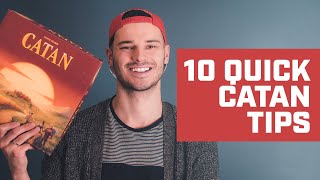
- Clear, actionable tips closely aligned with core Catan dynamics
- Logical progression from resource value, probabilities, to endgame planning
- Incorporates probability, negotiation, and denial (robber) concepts succinctly
- Assumes standard rules; variations or house rules may shift priorities
- Some tips may oversimplify meta-game dynamics across different player counts
- trade, exploration, and expansion through resource management
- an island of Catan with modular resource hexes and an evolving frontier
- competitive negotiation augmented by probabilistic resource generation
Mechanics (from transcript analysis)
- building and expansion — Construct settlements and cities, build roads, and upgrade to cities to expand influence.
- Development cards — Purchase cards that grant Knight bonuses, progress, or victory points.
- Port trading — Harbor rules allow enhanced trades with favorable ratios, affecting strategic planning.
- Resource management — Players collect and spend five resource types (wood, brick, wheat, sheep, ore) to build and develop.
- Robber — Move a robber to block resource production and steal from opponents, influencing probability and timing.
- Trading — Players negotiate trades with each other to optimize resource access and board position.
Video topics + discussion points
Quotes (from this video)
- 10 practical tips you can use in your next game of settlers of catan
- tip number one value of resources
- choose your strategy it's always a good thing to have a plan
- aim for the longest road achievement
- aim for the largest army achievement
- diversify your resources as much as possible
- never trade with winning player that's a player who's two points away from winning
- monopoly development card
- it's generally a good idea to place your roads pointing towards the edge of the board
References (from this video)
- high accessibility
- clear economic concepts and negotiation dynamics
- potential for chaos in large groups
- can be lengthy
- trade, resource management, development
- Islands and colonization
- player-driven expansion and exchange
- Carcassonne
- Azul
Mechanics (from transcript analysis)
- building and roads — settlements, cities, and roads expanding influence
- Development cards — technologies and advantages via cards
- Resource Trading — barter and negotiate between players
- tile-based board — hex map with resource-producing hexes
Video topics + discussion points
Quotes (from this video)
- purposeful play is the goal
- the unexamined game is not worth playing
- be aware when you're teaching historical games in the classroom when you're playing historical games as a player
References (from this video)
- Influential classic
- Great social interaction and negotiation
- Can lead to analysis paralysis or long negotiations
- Negotiation, resource management, development
- Modular island colonization with resource trading
- Classic, social negotiation-driven
- Carcassonne
Mechanics (from transcript analysis)
- Dice rolling — Produce resources based on dice outcomes.
- Negotiation / trade — Trade resources with other players to advance.
- Set collection / expansion — Build settlements and upgrade to cities to score.
Video topics + discussion points
Quotes (from this video)
- it's a great game
- it's a hit
- it's beautiful it's got great chunky components
- the sweet spot
- it's a puzzle
- it's a fun game
- it's the love of the game
References (from this video)
- presents a peaceful facade while embedding competitive, potentially cutthroat dynamics
- well-known and accessible; strong recognition and broad-popularity cache
- serves as a fertile platform for critiquing broader social issues (colonialism, capitalism) through gameplay
- detached design provides a clear lens for examining how mechanics shape experience and interpretation
- embedded colonial and labor-themed implications can be problematic or troubling
- detached design can obscure real-world ethical dimensions and violence of resource-driven expansion
- the aesthetic and thematic presentation may sanitize or masks harder social critiques
- limited direct representation of labor and human cost in the game’s portrayal
- trade, negotiation, resource-management, and colonization under a peaceful veneer
- Katan island settlement; hex-based empire-building on a shared map
- detached design; theme explicitly foregrounded after the fact while mechanics drive play
- Risk
- El Grande
- Through the Desert
- Carcassonne
- Puerto Rico
- Mombasa
Mechanics (from transcript analysis)
- development/knight cards (military options) — acquire and use cards that can influence resource flow, trade dynamics, and interaction with other players.
- dice-controlled resource production — roll dice each turn to determine which hexes generate resources for players who have settlements adjacent to those hexes.
- hex-grid modular board — the island map is composed of hex tiles that create a changing landscape and resource distribution each play.
- resource management and growth scoring — points are earned primarily through settlements and cities, tracking population-like growth of a developing empire.
- settlement and city placement with roads — players place settlements and cities on hex intersections and build roads to connect resources and expand influence.
- trading and negotiation — players trade resources with each other to acquire needed materials and advance their plans.
Video topics + discussion points
Quotes (from this video)
- I'd expressly designed Katon to be a peaceful game in which participants did not fight but instead traded and cooperated with each other.
- A game in which every player, even if they lost, could retain their dignity and be proud of the little empire they had created.
- Katon can be broken down into seven very simple mechanisms.
- Detachment says I'll give you a theme, put the mechanisms over the theme.
- Peaceful feelings can be produced by design choices that still include competition and risk.
References (from this video)
- high replayability
- strong social interaction and negotiation
- accessible for new players
- potential trading imbalances
- winner can depend on initial resource luck
- settlement-building, expansion, and trade
- Island settlement with resource-generating hexes
- procedural, practical
- Rivals of Katana
Mechanics (from transcript analysis)
- Negotiation/Trading — players trade with each other to acquire needed resources
- Resource management — collecting and trading resources to build settlements and roads
- tile placement — placing hex tiles to form the game map and resource regions
Video topics + discussion points
Quotes (from this video)
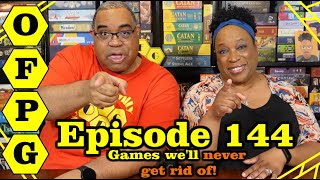
- these are ten games that we will never get rid of
- anything katan ain't leaving
- Code Names ain't gonna go nowhere
- it's a party game two to eight players
- Star Wars Outer Rim... it's open world
- Splendor... it's an engine builder
- Mars from Stronghold Games forever
References (from this video)

- Iconic gateway European-style board game
- Strong player interaction and negotiation
- Highly replayable with multiple expansions
- Can be punishing for beginners
- Resource imbalance can be a hurdle for new players
- settlement, exploration, and trade
- Island settlement with resource-based trading and building.
- resource-driven strategy with social negotiation
- Ticket to Ride
- Pandemic
Mechanics (from transcript analysis)
- Set collection and resource management — Gather resources to build roads, settlements, and cities.
- Trading — Barter resources with other players to advance your position.
Video topics + discussion points
Quotes (from this video)
- It’s not just for geeks anymore!
- Board games are not just for geeks anymore!
- If you are socially able You’re invited to the table
- Take shots at your friends, playing Cash ‘n’ Guns
- Buy a Ticket to Ride
References (from this video)
- Iconic and widely recognized; approachable for non-gamers
- High replayability and social interaction through trading
- Historically a gateway Eurogame that helped popularize modern board gaming
- Luck from dice can dominate early outcomes
- Expansion and player count can affect balance and duration
- Resource management, settlement-building, and trade
- Fictional island of Catan with resource trading and exploration
- Eurogame flavor with approachable thematic veneer
- Monopoly
Mechanics (from transcript analysis)
- building and expansion — Players place settlements, roads, and cities to gain points and advantages.
- Development cards — Development options add strategic depth and variability.
- Dice-driven resource production — Dice rolls determine resource generation each turn.
- Resource Trading — Players trade wood, brick, sheep, grain, and ore to build and expand.
Video topics + discussion points
Quotes (from this video)
- I believe Marvel's codenames is without a doubt one of the greatest pop culture board games available today
- the diplomacy of this game is really where it's at
- it's pop culture, it's become a pop culture icon in the world
- monopoly is is like everything you just said times ten
References (from this video)
- gateway into the hobby
- easy to teach and social
- engaging negotiations and trade dynamics
- Resource development and competitive trading
- Island settlement with resource acquisition and trade
- Array
Mechanics (from transcript analysis)
Video topics + discussion points
Quotes (from this video)
- this is an area control game where you gain control of planets through exploration and combat
- the action selection and resolution
- there are these brain games that are going on during this entire phase of putting down the orders
- i honestly felt i was not going to be able to understand how to play this game
- smirk as you put one of your older tokens on top of somebody else
- i love playing protoss and there's nothing better than building a carrier
References (from this video)

- Accessible entry point to modern board gaming with deep strategy in longer play
- Strong player interaction via trading
- Resource generation can feel RNG-driven
- Beginners may struggle with longer setup and rules
- settlement-building and trade
- Island of Catan with variable resources and road-building expansion
- neutral, gameplay-driven
Mechanics (from transcript analysis)
- Development cards — Acquire cards that provide points or advantages.
- Resource Trading — Players trade resources to build settlements, cities, and develop roads.
- tile placement — Hex tiles produce resources based on dice outcomes and placement strategy.
Video topics + discussion points
Quotes (from this video)
- Deck the halls with pretty card game
- oh come play Katan uh game of Island settlers gain wheat sheep wood brick and ore
- I am so glad you're going Christmas caroling with me this year
- World series of board games happening in Las Vegas in September 2023 with a grand prize of 25,000
- this isn't an excuse to talk about board games
- oh hey are you the best gamer in the world wanna find out for sure then why not check out the world series of board games
- I bet the dice luck will be good for you
References (from this video)
- Building settlements
- Island settlement
- Resource trading
Mechanics (from transcript analysis)
Video topics + discussion points
Quotes (from this video)
- It's so hard for us to come together to be cooperative
- If you don't have dessert you get hurt
- We wore out the cards we played it so much
- Multi-use card to the fifth degree
- Some games are nice to me some are not
- You can have both of them in your collection
References (from this video)
- gateway euro with social interaction
- easy to learn
- dice randomness can slow planning
- resource management and negotiation
- island of Catan with settlers and trade
Mechanics (from transcript analysis)
- set collection/trading — gather resources and trade to build settlements
Video topics + discussion points
Quotes (from this video)
- It's a truly magical event.
- This is one of the greatest players in the world in terraforming Mars.
- Guardians of Galaxy all the way up through. She's amazing.
- I woke up, I saw my daughter's name on there. That was pretty cool.
References (from this video)

Mechanics (from transcript analysis)
- Resource management — Players collect and trade resources
Video topics + discussion points
Quotes (from this video)
- Board games are about sharing with other people
- We're changing lives one board game at a time
- It's a shared sense of beauty and contemplation
References (from this video)
- Iconic status in the eurogame space
- Simple onboarding with deep strategic potential
- Expansions can overwhelm newcomers
- Balance and player interaction can vary with variants
- Resource management and negotiation
- Settling and trading on an uninhabited island
- Open-ended, player-driven narrative
- Monopoly
- Ticket to Ride
- Carcassonne
Mechanics (from transcript analysis)
- base-building — Expand roads and settlements to secure resources
- set collection/resource management — Trade, gather, and build settlements to earn points
- Trading — Direct exchange of resources between players
Video topics + discussion points
Quotes (from this video)
- the brand is not the message which is being sent out it's the message which is being received
- you can't control your brand you don't own it but you can influence it
- a strong brand stands for something it's focused it's an experience it's something to be nurtured
- monopoly is one of the biggest brands in the toy world and it's certainly the biggest in tabletop gaming
- branding assets are strong and iconic that little metal dog monopoly money go to jail do not pass go
- as a designer your personal brand matters
- your brand is your reputation it's the way people think of you when you're not around
References (from this video)
- Ubiquitous modern classic
- Consistently searched for years after release
- High engagement potential
- Colonization
- Resource settlement
Mechanics (from transcript analysis)
Video topics + discussion points
Quotes (from this video)
- I used to call this a shelf of shame that was a pretty common thing to call it back in the day and I don't never really liked that term because I don't feel shame that I haven't got to these games
- this is mostly work like this is just a backload of things I probably should get to
- people will still be looking for it
- it doesn't matter if the game is like 20 years old people will still be looking for it
- I've painted this one and I spent a lot of time doing it
- there's no point putting them on the channel I think both of them have been out of print for like a decade
- one of the worst kickstarters by one of the worst studios in board gaming history
- Golden Bell Studios did everything wrong you could possibly think of
- purely toxic company run by incredibly terrible people
- it would be kind of a joke that I'd be able to do a three minute video of feudum
- this game has a tutorial video online that's like 40 minutes long
- The Rose explanation video feels like a parody but it's actually how the game is played
- nothing personally to me puts me off playing a game that then sitting down unboxing it and having a craft assignment
- stop making me spend hours assembling your damn games
- this is an uncontrollable mess right now
- I'm a full-time dad and I'm really doing this in the evenings
- I have a finite space and also it just puts pressure and stress on me having a whole bunch of crap there that I know I'm not going to get to
- I'm going to do a big cull
- I will be published by this company but that doesn't mean I'm going to be slavishly devoted to every single game they put out
- I am a sucker for cute animal games like I really am
References (from this video)

- iconic gateway euro
- strong social interaction via trading
- depends on negotiation; can stall
- may feel unbalanced with aggressive players
- settlement expansion and trade
- settlement building on resources-driven world
- classic Eurogame with social dynamics
- Codenames
- Space Base
- Patchwork
- Wingspan
- Blood Rage
- The Crew
- Splendor
Mechanics (from transcript analysis)
- set collection/resource management — players collect resources to build roads, settlements, and cities
- Trading — players barter with others to obtain needed resources
Video topics + discussion points
Quotes (from this video)
- "Code Names, now Space Base, now Patchwork and Wingspan, on Blood Rage, on the crew, on Splendor and Katan."
- "Take your turn. Take your turn. Take your turn. Play."
- "He spoke not a word, but went straight to his work."
- "Take care cuz I'll be back again."
- "For gamers who cheat or gamers who whine, or gamers whose turns take up far too much time, they bend up the cards."
- "The shelf elf gives them what they deserve."
- "happy gaming to all and I hope that you win."
References (from this video)

- Accessible gateway into Euro-style strategy
- Strong social trading component
- Luck-based dice can feel unfair at times
- Balance criticisms from some players
- Resource management and negotiation
- Colonizing an untamed island with resources
- Emergent stories driven by player interaction and trade
- Ticket to Ride
- Carcassonne
Mechanics (from transcript analysis)
- Resource management and dice-based production — Roll dice to generate resources for building and development
- Roads and settlements — Construct roads and settlements to gain points
- Trading — Negotiation with other players to trade resources
Video topics + discussion points
Quotes (from this video)
- The experience of playing is the social thing I hadn't had since playing the snares.
- I would love to go to New York City to meet up and play games.
- There is a board game for everyone, and you gotta find yours.
- The social interaction is what makes party games so special.
- There are games out there that are more a step up and I would like to explore them.
References (from this video)
- iconic gateway game
- strong social interaction and negotiation
- length can vary with player counts
- settlement-building and negotiation
- Islands colonization and resource trading
- economic/strategic
- Carcassonne
- Ticket to Ride
Mechanics (from transcript analysis)
- settlement_building — build roads, settlements, and cities using resource trades
- trade_and_negotiation — players trade resources to satisfy development goals
Video topics + discussion points
Quotes (from this video)
- not hard to learn but it's hard to master something like that
- I hatch a game awesome game it is really fun
- two free tickets to Gen Con that's cool
- not hard to learn but it's hard to master
References (from this video)
- pioneered and popularized modern euro-style play
- high social interaction through trading
- theme and colonial framing criticized in contemporary discourse
- potential for imbalance with robber and strategic blocking
- resource management, trade, and expansion
- island of Catan with settlers establishing roads, settlements, and cities
- competitive, open-ended development
- Catan
Mechanics (from transcript analysis)
- resource production and dice — dice determine resource income each turn, fueling further actions
- tile placement — placing settlements and cities on a hex grid to claim terrain and resources
- trading and road/building — players trade resources and build roads, settlements, and cities to score points
Video topics + discussion points
Quotes (from this video)
- board games create a sense of family how do you how you get that kind of family feeling
- trust is very interesting
- openness and I think is very helpful in general
References (from this video)

- Not engaging to one player
- Settlement
- Trading
- Economic
Mechanics (from transcript analysis)
Video topics + discussion points
Quotes (from this video)
- moments during board games that formulate memories that you'll never forget
- there's just something for everyone
- it's all about the people
- the board gaming space has allowed me to just have so many incredible fun moments that i'll never forget
- it chose us via christy
- we're gonna have it at jeff's parents basement everybody's coming
- agricola sucks and everybody else seems to love it
- arnak is severely overrated
- i don't think gloomhaven should be number one on the list anymore
- humans are not good at rating things
- my nine is different than your nine
References (from this video)
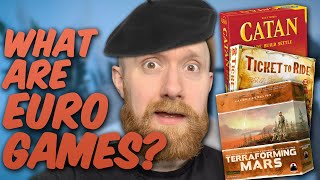
- Accessible to new players; easy to explain
- Strong social interaction through trading and negotiation
- Solid gateway to Eurogame concepts
- Luck factor in resource generation (dice)
- Potential for stagnation or slow early game depending on setup
- resource trading, settlement building, negotiation
- Isle of Catan, early exploration and settlement
- light thematic narration focused on growth through resource management
- Risk
- Diplomacy
- Twilight Imperium
- Memoir 44
- Axis & Allies
Mechanics (from transcript analysis)
- building — Roads, settlements, and cities are built to expand influence and points.
- Development cards — Optional cards provide bonuses and strategic options.
- Resource gathering — Players collect resources based on your settlements/cities and dice outcomes.
- Trading — Players negotiate trades to balance resources and progress.
Video topics + discussion points
Quotes (from this video)
- The reason i love katan is it is it's so easy to explain.
- euro games are smart games for smart people
- it's like doing a jigsaw puzzle with friends
References (from this video)

- deeply social and highly replayable
- robust trading and negotiation dynamics
- player interaction can be intense and contentious
- robber mechanic can feel punitive for some players
- resource trading and settlement building
- island of Catan
- world-building through negotiation
- Carcassonne
- Terraforming Mars (resource management and expansion vibe)
Mechanics (from transcript analysis)
- building — construct roads, settlements, and cities to score
- dice resource generation — resources are produced based on dice roll for each hex
- Trading — open trading between players for resources
Video topics + discussion points
Quotes (from this video)
- it's a little bit of a mind like okay what is this other person going to write down
- it's another light easy game
- there's two ways to win and it's harder to win as human
- I love being the dead person... clues from the grave
- open trading... they liked the aspect of you can be deceitful in a sense of so wow I like being good friends
- cartographers... the four rounds goes off the Four Seasons scoring
References (from this video)
- Enduring quality
- Consistent high quality
- Family friendly
- Positive inclusive community
- settlement building
- resource trading
Mechanics (from transcript analysis)
Video topics + discussion points
Quotes (from this video)
References (from this video)
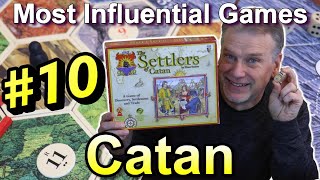
- Introduced many players to euro-style, resource-management games
- Served as a gateway that sparked enduring hobby engagement and community
- Hex-based map and layout are visually appealing and strategically rich
- Wooden components and tactile quality were notable in early editions
- Fostered social interaction through trading and negotiation
- Influenced a generation of designers and the broader design of eurogames
- Dice-driven randomness can slow progress and create luck-based swings
- Robber mechanic can slow turns and frustrate players who expect steady engine-building
- Some setups can lead to early positional dominance or stagnation without good balancing
- Initial learning curve and rule complexity can be challenging for brand-new players
- Economics, trade, and territorial expansion on a developing island
- An island settlement on the fictional island of Catan; resource-driven expansion and development
- Emergent strategy driven by resource management, negotiation, and spatial placement
- Lorenzo Magnifico
- Coimbra
- Star Fares
Mechanics (from transcript analysis)
- building and expansion — Placing settlements, upgrading to cities, building roads to connect territory and increase influence.
- Development cards — Acquiring development cards provides potential points, special abilities, or other effects.
- Dice-driven resource production — Resources are produced on players' hexes adjacent to a rolled number; probability correlates with die values, influencing strategy.
- Resource management under randomness — Players must adapt to fluctuating resource income due to dice outcomes, shaping long-term planning.
- Robber — A robber mechanic blocks resource production on one tile and allows stealing from opponents when moved.
- Trading between players — Players negotiate trades to acquire needed resources to build roads, settlements, and cities.
Video topics + discussion points
Quotes (from this video)
- number 10 item on my list which is katan
- this game was first released in 1995 and designed by klaus toiber
- i don't want to play any strategic game that has dyson i was tired of being beholden to bad rng
- Settlers of catan was a game changer
- it was my gateway game into this hobby
References (from this video)
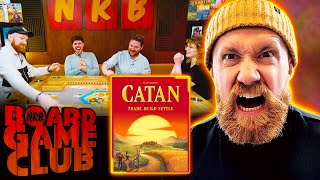
- Encourages lively negotiation and social interaction
- Strategic depth with multiple paths to victory
- Rules are approachable, but the game scales with player count and choices
- High replayability due to modular board and card variability
- Dice luck can heavily influence outcomes and pacing
- Negotiation can stall progress or lead to perceived unfairness
- Longer play sessions can test patience in a group
- Blocking and proximity dynamics can make certain turns feel suboptimal
- Trade, settlement expansion, and negotiation among competing players
- Resource-based island economy with harbors and modular hex map
- Eurogame flavor with light storytelling and emphasis on resource management
- Monopoly
- Takinoko
Mechanics (from transcript analysis)
- Building and upgrading — Construct roads, settlements, and cities; upgrade settlements to cities to increase resource generation and points.
- Development cards — Purchase development cards for potential victory points or special actions on future turns.
- Dice-driven resource generation — On each turn, dice determine which hexes produce resources for adjacent settlements.
- Longest road / resource denial via robber — Players compete for the longest road to earn victory points; moving the robber can block production and steal resources.
- Trading — Players trade resources with each other and with the bank/harbors to acquire needed resources.
Video topics + discussion points
Quotes (from this video)
- one of the most treasured games in the entire hobby
- first rule of board game club is never built your house out of straw or out of sticks when you could build it a sheep
- settle my little darling settle like your lives depend on it
- the game ends when one of us has 10 victory points on our turn
- we're going to tell you why they sponsored it right now
- longest road
References (from this video)
- Accessible gateway game
- Heavy emphasis on negotiation and strategy
- High replayability
- Luck-based resource generation
- Potential for player imbalance or 'hot potato' dynamics
- Trade, settlement building, and resource management
- Islands of Catan with resource-based development
- emergent through player interaction
- Carcassonne
- Ticket to Ride
Mechanics (from transcript analysis)
- building roads, settlements, and cities — Expansion via construction
- dice-based resource generation — Resources produced by dice rolls each turn
- Robber mechanic — Blocking resources and stealing when applicable
- trading and negotiation — Players trade resources to build structures
Video topics + discussion points
Quotes (from this video)
- Hero Quest is a great game but it's also great because it's kind of bad.
- it's a framework... you start thinking about what other races, classes, monsters, furniture, stories, weapons, items could be added
- the anticipation that anything could be around the corner by populating the board with the furniture as you go
- Damage Buff... I'm going to help other people succeed
- I would do this full-time tomorrow if I could
- the ham sandwich on white bread leaves you room to explore all the possibilities
References (from this video)

- Encourages negotiation and diplomacy
- Accessible to new players while offering depth for veterans
- Strong replayability due to variable board and resource distribution
- Clear path to victory through building and development
- Dice luck can skew resource income
- Robber can slow or stall player progress
- Resource imbalances may create resource hoarding or blocking cycles
- Trade, development, and competition for victory points.
- Modular island with hex tiles where players settle and trade to accumulate resources.
- Strategic negotiation and resource-driven growth with evolving board state.
Mechanics (from transcript analysis)
- Building and network expansion — Construct roads, settlements, and cities to gain victory points and expand influence.
- Development cards — Acquire cards that can provide knights, progress, or victory points.
- Dice-driven resource production — The sum of two dice determines which hexes produce resources each turn.
- Modular board and resource distribution — Hex board can be set up differently each game, altering resource access and strategy.
- Resource management — Players collect resources (wood, brick, sheep, wheat, ore) and spend them to build roads, settlements, and cities.
- Robber mechanic — A roll of 7 or the robber card allows blocking resource production and moving the robber to a hex.
- Trading — Inter-player and bank trading to optimize resource intake.
Video topics + discussion points
Quotes (from this video)
- it's about damn time in a minute i'm
- gonna need a simple little wooden resource to pump me up
- longest road
- to purchase developments
- i trade too much
- three more wheat
References (from this video)

- Accessible entry point to modern euro-style gaming with social interaction.
- Luck of resource dice can create uneven turns and perceived imbalance.
- Trading, exploration, and settlement-building in a competitive market.
- Resource development on a hex-based island with settlements and roads.
- Non-narrative, macro-scale strategy with evolving map and resources.
Mechanics (from transcript analysis)
- Area development — Expansion of presence on the map through placement of structures.
- Resource management — Collect and allocate resources to build roads, settlements, and cities.
- Trading — Players exchange resources with each other to accelerate development.
Video topics + discussion points
Quotes (from this video)
- never socializing outside the hobby
- this isn't about him anymore this is about one day waking up to a world where board gamers are accepted by society
- remember just don't be yourself tell him how fun it is to play as a 17th century farmer in agricola
- let's play star wars rebellion with him
- for Risk Legacy
- remember that guy we invited round to play Game of Thrones after five hours he started crying
- i play a lot of warhammer
References (from this video)

- Innovative negotiation and interaction
- High replayability
- Luck can influence resource production
- Can become dependent on trading dynamics
- Trade, expansion, and development
- Resource-based settlement on a modular hex map
- Eurogame negotiation with balance of luck
- Risk
- Monopoly
Mechanics (from transcript analysis)
- Modular board — Hex tiles create a changing map layout per game.
- Resource management — Balancing resource income to build settlements, cities, and roads.
- Trading — Players trade resources to optimize growth.
- worker placement — Send workers to gather resources and activate actions.
Video topics + discussion points
Quotes (from this video)
- The golden age of board games is effectively over.
- Kickstarter didn't save the hobby from oblivion. It gutted it.
- The next golden age won't be crowdfunded. It won't be online.
- The next golden age will be created by people like you and me in spaces away from all the noise at tables where you'll be playing games with the people that you love.
- Deluxe editions became the norm.
- We stopped funding games themselves and we started funding promises.
- The truth is, all gamers, you and I, have killed the industry.
- If the game is good, I will play it.