In Citadels, players take on new roles each round to represent characters they hire in order to help them acquire gold and erect buildings. The game ends at the close of a round in which a player erects his/her eighth building. Players then tally their points, and the player with the highest score wins.
Players start with a number of building cards in their hand; buildings come in five colors, with the purple buildings typically having a special ability and the other colored buildings providing a benefit when you play particular characters. At the start of each round, the player who was king the previous round discards one of the eight character cards at random, chooses one, then passes the cards to the next player, etc. until each player has secretly chosen a character. Each character has a special ability, and the usefulness of any character depends upon your situation, and that of your opponents. The characters then carry out their actions in numerical order: the assassin eliminating another character for the round, the thief stealing all gold from another character, the wizard swapping building cards with another player, the warlord optionally destroys a building in play, and so on.
On a turn, a player earns two or more gold (or draws two building cards then discards one), then optionally constructs one building (or up to three if playing the architect this round). Buildings cost gold equal to the number of symbols on them, and each building is worth a certain number of points. In addition to points from buildings, at the end of the game a player scores bonus points for having eight buildings or buildings of all five colors.
The expansion Citadels: The Dark City was initially released as a separate item, but the second edition of the game from Hans im Glück (packaged in a tin box) and the third edition from Fantasy Flight Games included this expansion and can be recognized by its rectangular box (not square). With Dark City, Citadels supports a maximum of eight players.

- Stunning artwork and components that feel thematic and durable
- High replay value due to a large slate of characters and district configurations
- Excellent scaling with player count; supports short and longer games with solid pacing controls
- Engaging drafting/character interaction that encourages strategy and bluffing
- Some character combinations can create power lagoons or lull the table into repetitive patterns if not monitored
- Certain rounds can drag when players chase specific strategies or combos, potentially slowing down the cadence
- Political strategy, resourceful bluffing, and city-building under time pressure. The game emphasizes control, tempo, and the strategic use of a diverse roster of characters with unique abilities.
- A fictional medieval kingdom where noble houses vie to shape a burgeoning capital by building districts and managing resources.
- Competitive, asymmetric play where players leverage character powers to influence the city’s development and scoring.
Mechanics (from transcript analysis)
- card drafting — At the start of each round, players draft district cards through a king-like turn order. The chosen card goes into your tableau; the rest are passed to the next player, creating a rolling drafting ecosystem that shapes each player's options for the round and the game.
- character abilities — A central feature is the use of characters with unique, often interruptible powers. A player can activate a character's ability on or before their turn, and some abilities affect other players, manipulate resources, or alter the order of play. The interaction of these powers is a core driver of strategy and table talk.
- district building and resource management — Players spend gold or district cards to build districts, placing them face-up in a personal or shared tableau. Districts provide ongoing effects, costs, and sometimes type-based bonus points, which makes resource allocation and the timing of builds critical to success.
- endgame trigger and pacing — The game ends when a player completes their seventh district. The round continues to finish the current sequence, ensuring that endgame timing and last-minute shifts in power dynamics can change final tallies.
- scoring by district type and coin economy — Final scoring rewards diversity (types of districts owned), completion of seven districts for a premium, and points tied to coins shown on districts. This multi-layer scoring encourages players to balance breadth (types) and depth (zoning) while managing wealth.
- tableau construction as a strategic engine — Each player's district tableau evolves over the course of the game. The choice of districts, combined with the effects of built districts and character interactions, creates a dynamic engine that scales with player count and timing.
Video topics + discussion points
Quotes (from this video)
- we haven't played the previous editions of citadels so we can't compare
- stunning artwork components to boot and superb replay value
- Citadel gets an 8.5 out of 10
- it's great for any level Gamers
References (from this video)
- Really didn't like it
- Felt mean
- Cards destroyed plans unexpectedly
- Other players could lengthen game
- Would actively turn down playing
- Card-driven city construction
- Medieval city building
- Thematic
Mechanics (from transcript analysis)
- Destruction cards — Cards that ruin other players' plans
- Role selection — Choosing roles that activate abilities
Video topics + discussion points
Quotes (from this video)
- It wasn't just the hundred sort of best designed games this was the hundred games that I feel that I'm particularly sort of connected to
- The games that have a place in my heart really games that I've got a lot of nostalgia for
- It felt a bit like doing a roll and write game but without all of the sort of convenience
- I wish I still had castles of burgundy and notre dame
- The main thing that got in the way for me was all the iconography
- I do use board games as an escape from screens and technology
- I really like the production of cockroach poker
- I found it was a game where I could see the ending coming and then someone would just go and there we go we've got another 20 minutes now
- It feels like something other than a board game
- The decisions you make in the game are very very slight
- Right up my alley
- I do really like push your luck
- That's my favorite game
- Abyss is my second favorite game
- I love pekka pig
- I just think it's ugly
References (from this video)
- Dramatic, role-driven interaction
- Hidden roles add suspense and unpredictability
- Historically popular party-like experience
- Pacing can feel off, especially with higher player counts
- Some roles can create uneven or frustrating outcomes
- Not as streamlined or focused as Coup/Love Letter variants
- role drafting, bluffing, and building structures
- Medieval city-building with secret roles
- dramatic, social interaction driven by role reveals
- Coup
- Love Letter
Mechanics (from transcript analysis)
- building — Use money to construct buildings represented by cards.
- end_game_trigger — The game ends when the seventh building is completed.
- hidden_information — Roles are kept secret until resolved, affecting decisions and tension.
- role_drafting — Draft roles each round; roles resolve in a fixed turn order.
Video topics + discussion points
Quotes (from this video)
- This is the grandparent of all tile-laying games.
- You draw a tile and then you must place that single tile.
- It's very simple. It's very laid-back, but there's just enough strategy to it that it's quite enjoyable.
- I actually really enjoyed it.
- There are no ways to mitigate the dice.
- This is the heart and soul of the game. It's this resource gathering mechanic.
- I actually really liked it.
- The tempo of the game is really nice.
- Your entire economy is built off of these workers that you have.
- There are three different colors of workers and you have to keep them hidden.
- This is the heaviest of the four games that we played.
References (from this video)

- Tense, high-stakes interactions with strong bluffing elements
- Two-phase structure (character draft and turn-based execution) creates dynamic suspense
- Rich theme integration and memorable moments (e.g., crown dynamics, assassinations)
- Assassin mechanic can feel punitive or unbalanced at times
- Endgame can hinge on last-turn decisions and luck with draws
- Some players felt the interaction could derail toward mean-spirited play
- Rule nuances and card interactions can be confusing for newcomers
- Machiavellian governance, assassination, bluffing
- Medieval-style city-building and political intrigue
- banter-driven, competitive, high-tension
- Cash and Guns
Mechanics (from transcript analysis)
- actions_phase — On a turn you may gather resources, spend coins to build districts, or use your character's power; you can also draw district cards.
- character_powers — Each character has a unique power (e.g., assassin, thief, king, merchant, warlord, bishop, architect, magician) that shapes strategy and interaction.
- character_selection — At the start of each round players select a character with a unique power; activation order is determined by character rank, influencing turn order.
- city_building — Districts have costs and point values; some districts grant special abilities or bonuses; players race to seven districts to trigger endgame.
- endgame_condition — Endgame is triggered when a player reaches seven districts; remaining players finish the round, then scores are tallied.
Video topics + discussion points
Quotes (from this video)
- It's brutal. This is a mean mean game.
- This is a really good game. It's a very good game.
- The choices are really hard in this game.
- The assassin can kill another character, thus stopping them from having a turn.
References (from this video)

- rapid rounds; social deduction-lite
- fun, modular bluffing interactions
- can feel harsh at higher player counts
- Role selection and bluffing
- Medieval city-building / political intrigue
- Bohnanza
- San Juan
Mechanics (from transcript analysis)
- drafting / set collection — draft cards to build a city and score
- Role selection — players secretly select roles that influence actions
Video topics + discussion points
Quotes (from this video)
- Acropolis is light, but thinky and very approachable for a wide group.
- The best thing about this Barcelona is the action selection system.
- Spellbook is a beautifully themed engine builder with a lot going on under the hood.
- Ticket to Ride Europe remains a timeless gateway game with a clean map and straightforward drafting.
References (from this video)

- Deluxe edition has all expansions
- Variety of mechanics
- Good family game
- 2-8 players
- Treacherous cards can be harsh
- Building districts while avoiding treachery
- Medieval city building
- Role selection intrigue
Mechanics (from transcript analysis)
- bluffing — Trying to avoid being targeted
- set collection — Building up city districts
- Variable player powers — Different role abilities each round
Video topics + discussion points
Quotes (from this video)
- It's so hard for us to come together to be cooperative
- If you don't have dessert you get hurt
- We wore out the cards we played it so much
- Multi-use card to the fifth degree
- Some games are nice to me some are not
- You can have both of them in your collection
References (from this video)

- Easy to teach
- Strong bluffing interactions
- Works well with a variety of player groups
- Can be stressful with larger player counts
- Reliant on players' reading of others' intentions
- Bluffing, deduction, and drafting of district characters
- Medieval city with character roles
- Competitive bluffing with social deduction elements
- Mini Diversity
- Love Letter
Mechanics (from transcript analysis)
- bluffing — Players try to mislead opponents about their intent and chosen character
- drafting — Players select characters for their turn from a draft pool
Video topics + discussion points
Quotes (from this video)
- Mini Diversity is a one to seven player game
- it's extremely hard even on its easiest setting
- it's a card bluffing game and it's drafting
- three seems to for me is the perfect number
- Tiny Epic Galaxy is there is a lot of strategy in this tiny little box
- Doxy - it's the perfect size
References (from this video)

- Strong player interaction and social bluffing
- Dynamic and chaotic, which many players find highly entertaining
- Rich variety of character abilities and potential strategies
- Can be complex to teach and learn, especially for new players
- Downtime and chaotic play can undermine strategy for some groups
- Political intrigue, bluffing, and take-that style interaction through character powers.
- A stylized past kingdom with kings, nobles and urban districts.
- Character-driven vignettes and social manipulation driving the flow of play.
Mechanics (from transcript analysis)
- Assassination/stealing/magic interaction — Characters such as Assassin, Thief, and Magician enable direct interaction and disruption.
- Character roles (role selection) — Players secretly choose a character each round; order and powers shift with each choice.
- City district building — Spend coins to acquire district cards to build a personal city; seven districts ends the game.
- End-game scoring with special bonuses — Points come from district costs and special scoring rewards from certain districts or combinations.
- hand management — Players draw and discard district and token cards, managing resources to build.
Video topics + discussion points
Quotes (from this video)
- Citadels designed by Bruno Fiduti.
- The aim of the game is to build the most impressive City.
- these characters mostly exist for players to dick each other over
- oldest player is the one who starts with the king's crown
- Crown a new king
References (from this video)

- Fast, tense rounds with dramatic power swings
- High interaction through role-based abilities
- Powerful roles require careful timing and can feel punitive
- Escalation can lead to near-inevitable betrayals
- bluff, role selection, aggression
- A fantasy-city-building theme with assassins and nobles.
- playful yet ruthless bluffing
Mechanics (from transcript analysis)
- end-game card-based scoring — Build eight cards to trigger end-game bonuses and final scoring.
- secret role drafting each turn — Players select roles with different powers to influence the round.
- self-interested/bluff-driven play — Most roles negatively impact others, encouraging misdirection and manipulation.
Video topics + discussion points
Quotes (from this video)
- meanest board games ever made
- the unofficial tagline is ruining friendship since 1959
- that's mean
- there are so many ways to hurt people in the estates
- the heart of the game is traveling around fighting off beasties and trying to complete tasks vital to your own personal success
References (from this video)

- works great with 5-6 players
- simple rules but strategic
- good variety with character selection
- evergreen game that holds up well
- can be weak with 2-3 players
- 7-8 players may be too many
- medieval city building
- role selection
Mechanics (from transcript analysis)
Video topics + discussion points
Quotes (from this video)
- There is a difference between how great a game is and how much my personal enjoyment like my drive my passion for getting the game out is
- should you really be really focusing on it in terms of a top 100
- these games are awesome
- I just want to talk about these top 50 games which I can do in about five videos Max
- a game might be rated at a really high level in the past and then drop for me
- just a simple role selection drafting game
References (from this video)
- Short play time around 30 minutes
- Simple rules that are easy to learn
- Strong social deduction and bluffing mechanics
- Re-released with new art and additional characters
- Ideal for players who enjoy backstabbing and confrontational gameplay
- Classic game that has aged well after 23 years
- Can be too confrontational for family game nights
- Plays somewhat poorly at 2 or 8 players, best at 4-6 players
- Assassin and Thief roles can be harsh and create revenge cycles
- Can trigger visceral and angry reactions from players
- Picking the Assassin every turn does not guarantee a win
- Urban development and social deduction
- Medieval city building
- Competitive play with role selection
- Small World
- Mission Red Planet
Mechanics (from transcript analysis)
- card management — Players manage building cards and character cards throughout the game
- drafting — Each turn players draft character cards in secret before revealing and acting
- Role selection — Eight different character roles with unique powers: Assassin, Thief, Magician, King, Bishop, Merchant, Architect, Warlord
- set collection — Collecting all five colors or multiple cards of one color provides benefits
- social deduction — Players must deduce roles and figure out which role to take to avoid being robbed or assassinated
Video topics + discussion points
Quotes (from this video)
- Citadels is 23 years old at the time of this review and my copy of the game is almost 20 years old and pretty worn out
- Citadel's strength is its social deduction and figuring out what role to take that doesn't end with you being robbed or murdered
- The best thing about this game is when the Assassin has a 50/50 chance of getting you and they still miss
- this is also the game I've played where I have most frequently seen visceral and angry reactions from players, be warned
- Citadels the 'C' word of board gaming
References (from this video)
- strong early appeal and replayability
- interesting role interactions early on
- drags on over time and can overstay its welcome
- thematic and strategic payoff can feel diminishing with repeated plays
- role-drafting and building for points
- medieval city-building and governance
- classic euro with social interaction
Mechanics (from transcript analysis)
- building and money management — use resources to construct buildings and score points
- card drafting of roles — players draft roles that interact and affect income and actions
- hidden roles and tension — interplay of abilities creates tension and strategic choices
Video topics + discussion points
Quotes (from this video)
- the tile placement itself was meaningful
- the randomized grid of cars with all these different scoring criteria on them
- I still do think highly of this when it still holds my shield of quality
- didn't stay in the collection because it didn't stay played
- the more and more I played it the less satisfaction I got from it
- extremely highly rated
- gateway level game and the gameplay is fun, it's unpredictable, it's wild
References (from this video)
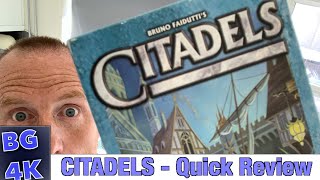
- scales well from 2 to 8 players
- tight, tense decisions with binary risk/reward choices
- expansion-ready with bonus characters and buildings
- easy to teach core mechanics and quick to play
- high replayability due to multiple characters and strategies
- rules can be tricky with many exceptions and interaction nuances
- game can drag on in some player counts or with certain card effects
- keeping track of all character abilities may require reference to the rulebook
- political power and city development through role-based powers
- Medieval city-building with noble houses vying for control
- competitive role selection and district drafting with hidden information
- Puerto Rico
- Masquerade
- Mission Planner
Mechanics (from transcript analysis)
- character selection / drafting — Players select a character each round, each with unique abilities and activation order.
- district building — Players acquire and build district cards to score points.
- end-game scoring and bonuses — Scoring involves district points plus end-game bonuses; first to eight districts is not a guaranteed winner.
- gold economy / auction — Gold is earned and spent to acquire districts and trigger effects.
- Hidden Information — Character choices are kept facedown and revealed in turn.
- player interaction / disruption — Some characters can remove or impede opponents (e.g., assassin, warlord).
- round-based activation order — Characters have a defined activation order from 1 to 8 each round.
- special abilities by district color — Different colored districts grant different bonuses and effects.
Video topics + discussion points
Quotes (from this video)
- it's not the first player that gets to eight districts it's gonna win the game it's the player who has the most points
- we're gonna give it a 4/5
- it's a lovely sort of binary opposition in choices
- you really wanna take control of every character in the game