Oranges or lemons or both? Create a new plantation or extend an existing one? Collect landscape tiles or rather build onto a finca in order to cultivate the most points during the next evaluation?
Citrus provides players with new challenges, and little is left to chance. The moves are simple, but the decisions are tricky. Players build citrus plantations for points, yet in order to build, it's essential to harvest your plantations from time to time as this is the only way to bring new income into your account – but when is the timing right? And most importantly, which plantation should you harvest, thus taking it out of the race for the important points during the finca scoring?
Citrus is a tile-laying game for 2-5 players ages 10 and up with a playing time of about 50 minutes. The game contains a simplified family variant as well as a short version of the game. Citrus is particularly suitable for two players.
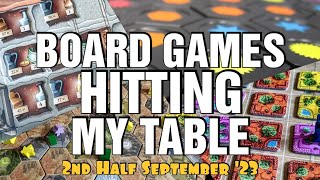
- Dynamic economy in a tight abstract package
- Engaging push-pull of placement and money
- Lovely, compact placement game with satisfying tension
- The price/row mechanic can be punishing for beginners
- Theme is abstract and may not appeal to all players
- Kier
- Isle of Sky
Mechanics (from transcript analysis)
- Area control / economy interaction — You pay to take tiles in a row or column; filling the board shapes influence scoring and position.
- Tile drafting / grid placement — Draft tiles and place them on a grid; money is needed to place tiles; rows/columns have different costs; economy and area control interplay.
Video topics + discussion points
Quotes (from this video)
- this is where I talk about all of the non new to me games that I have been playing
- thoroughly thoroughly enjoyed this recent play
- it's just a lovely T placement game
- this is one of the best two-play games of all time
- I love this game
- an absolute blast of a game
- the combos are fantastic
References (from this video)

- works surprisingly well at two players
- tight, strategic decisions
- area control games can feel abstract to some
- production/control of board zones
- tile-placement area-control with a citrus-fruit theme
- abstract, tactical
Mechanics (from transcript analysis)
- Tile placement / area control — players place tiles to control zones and maximize points
Video topics + discussion points
Quotes (from this video)
- I think Concordia is one of the best games ever made, full stop
- two players it works extremely well because the downtime is gone
- it's a brain burner game
- the tension in the two-player game is great
- loads of content to explore, tons of replayability
References (from this video)

- clean elegance and timeless euro feel
- great balance between accessibility and depth
- beautiful production and thematic tone
- less common knowledge may hinder initial adoption
- area control can feel slow to resolve at higher player counts
- agriculture and regional dominance
- orchard development with tiles and area scoring
- abstract/clever
Mechanics (from transcript analysis)
- area majority via surrounding hubs — surround and claim points from hubs tied to orchard tiles
- chain-building and area influence — create chains to maximize scoring opportunities
- tile placement with area control — lay tiles to connect orchards and form scoring hubs
Video topics + discussion points
Quotes (from this video)
- this is a really interesting game
- one of the best examples of that mechanism being used correctly
- infinite replayability
- timeless, evergreen status
- flows wonderfully and rewards careful planning
References (from this video)

- unique grid-take mechanic with cascading effects
- tight money management makes decisions meaningful
- underrated, elegant euro design
- money management can be punishing
- some players may dislike the high calculation load
- growing fruit chains and managing chains for scoring
- tile-laying orchard management
- balanced, strategic
Mechanics (from transcript analysis)
- grid drafting and chaining — draft rows/columns; placing tiles forms chains for scoring in orchards
- money/resource management — money constraints influence tile placement and scoring opportunities
Video topics + discussion points
Quotes (from this video)
- there aren't that many euros that do take an hour or less
- tons of different ways to win this game
- it's a very nice looking game you know nice fantasy feel
- this has a very distinct gamer; nothing else like this in my collection
- Ra has one of the best time-to-depth ratios I've ever seen
References (from this video)

- Beautiful autumn hues
- Core mechanic around creating groupings to score
- Harvesting autumn produce with warm color palette
- Autumn harvest, oranges and harvest-themed fruit/veg
- Descriptive, almost lyrical about colors and harvests
Mechanics (from transcript analysis)
Video topics + discussion points
Quotes (from this video)
- Why is the Red Cathedral an autumn game? I just feel like it has an autoutminal look to it.
- I personally find it to be quite cozy.
- I'm picking Yido and uh that's my pick and there's nothing anyone could do about it.
- No one is going to agree with me.
- The one thing I would love is there are no board games that I am aware of that were designed to teach a foreign language.
References (from this video)

- tight economic tension that rewards careful planning
- high replayability from grid shifting and pricing choices
- low thematic flavor, abstract in feel
- complexity may overwhelm first-time players
- colorful tile placement with resource management
- abstract fruit/agrarian theme
- tightly designed, almost tactile economic puzzle
Mechanics (from transcript analysis)
- Row/column selection with auction pricing — taking a row/column changes the grid and requires paying money; purpose is to maximize color sets
- tile placement — players acquire and place colored fruit tiles on a grid-based board
- Worker/resource trade-off — money is tight; removing a worker reduces income but enables future actions
Video topics + discussion points
Quotes (from this video)
- there is this more injected element of player interaction
- it's a genius twist
- the market is completely driven by the players
- money is such a tight resource in this game
- the rules overhead is very low
- a timeless design
- you can bet your funds on other people being right
- loads of things to weigh up, a complete package of the game
References (from this video)

- tight money and worker management creates meaningful decisions
- underrated value for price and accessibility
- strong engine for tile-placement with area control
- money management can be punishing for new players
- abstract strategy with orchard-like scoring
- Orchards and thinkers in a fruit/powerful-cognition theme
- hybrid abstract-Euro
Mechanics (from transcript analysis)
- area control / majority — Place tiles around thinkers to build control and score points.
- money/workers management — Commit workers to new orchard arrangements and manage funds for placement.
- tile drafting — Draft rows or columns of tiles, each increasingly expensive as you take more.
Video topics + discussion points
Quotes (from this video)
- this has been a real steady Eddie on my top 100 list for many many years now one of Kia's most iconic kind of bidding games
- I love the way that you can manipulate the market here as you and your neighboring opponents can draft cards from the same racks of cards in order to manipulate that stock price
- this game is so good and after playing so many games I think maybe this one got lost in the shuffle at the time but now I've given it the time of day it is just an excellent engine builder
- super fun dice rolling game as you're trying to roll a huge cluster of Dice and select one of those pit values
- one tile system ... really dynamic and interactively restrictive in a good way
- there are so many ways you can approach this game by spreading yourself thin and being good at everything or just being really good at one thing
- the nagging tension of these rats coming to plague you
- a wonderful evergreen for me