City of Horror is a backstabbing survival-horror game. As in classic zombie movies, a shambling horde is invading the city. The goal is to survive the assault. (Un)fortunately, surviving often means sacrificing some of your fellow players to the undead...
Each player controls several characters with different abilities; these characters can move to various limited-capacity locations, which they can then barricade and scavenge for items and weapons. Critical situations, such as zombies breaking in and eating a character, are resolved using a vote.
The basic game mechanisms are the same as in Mall of Horror (also designed by Nicolas Normandon), but City of Horror differs in both materials and game play in a number of ways: the city map changes each game, twenty characters are included, they can use antidotes (or die), action cards become scarce as the game goes on, you can gain points with stuff other than surviving characters...

- A fresh take on zombie-themed games by prioritizing survival, negotiation, and social dynamics over pure headcount killing.
- High degree of player interaction and tension, which creates memorable moments and emergent storytelling.
- Significant variety from card interactions, location-specific actions, and the probabilistic element of zombie spawn patterns.
- Strategic depth emerges from resource management, timing of exhausting powerful actions, and careful alliance-building.
- Narrative flavor and thematic coherence (survivor-centered threats) are strong selling points for fans of thematic Euro-style experiences with heavier social mechanics.
- Learning curve can be steep; the rules and interactions are dense, which can slow early sessions and intimidate new players.
- The game can feel brutal or abrupt, since a single bad vote or miscalculated move may dramatically tilt the outcome against a player.
- Reliance on social manipulation means personality-driven play can significantly skew balance and enjoyment for some players.
- Endgame ramps up quickly, which may shorten play sessions for players who struggle to negotiate effectively under time pressure.
- Survival, negotiation, betrayal, and social strategy under constant threat from the undead.
- A zombie-infested urban landscape spanning multiple districts; the game unfolds over four hours (four rounds) with the central tension being the protection of survivors and the management of limited resources, all within a collapsing city atmosphere.
- Player-driven, negotiation-rich experience where alliances form and fracture around resource control, with a strong emphasis on managing scarcity and moral hazard.
Mechanics (from transcript analysis)
- Card-driven economy and currency — Cards serve as currency, enabling exchanges, movement, and actions. The stock of cards in hand influences negotiation leverage and can determine who has the resources to survive a given round.
- Endgame survival objective — The objective is to maximize surviving characters across four rounds while ensuring they remain uninfected by acquiring antidote/syringe tokens and using strategic positioning and alliances to weather zombie threats.
- Invasion and zombie spawning — Invasion cards reveal the map-facing threats and spawn zombies and supplies, altering risk assessments and zone statuses for the upcoming phase.
- Location-based actions and centralized board flow — Actions are location-specific, with certain spaces offering unique effects (e.g., observation from the water tower, church actions, armory options, etc.). The board's central zone sequencing drives the rhythm of play.
- Secret card play and negotiation — Item/action cards can be played in various ways to influence outcomes, including deals with other players (e.g., trading or coercing others to target opponents) and potential trades across multiple turns.
- Secret movement choice — Each player secretly selects a movement card with a location on the board and reveals it simultaneously, driving the round's spatial dynamics and conflict points.
- Special actions exhaustable — Each survivor has a powerful once-per-game action that can be exhausted to shift the game state, typically reducing victory point value if used later. Players weigh whether to exhaust these actions early or save them for late-game leverage.
- Voting breakpoints and social risk — Social mechanics like voting and deal-making create ongoing tension, since alliances are fragile and betrayals are common as players try to preserve their own survivors.
- Zombie attack and voting to die — When a space contains a threshold of zombies, a death vote is triggered to determine who dies. The presence of multiple survivors on the same space increases an individual's voting weight, and a tie-breaker (first player) resolves deadlocks.
Video topics + discussion points
Quotes (from this video)
- Survival and negotiation take precedence over zombie-killing in City of Horror.
- Everything is a bargain in this game; it's all about figuring out what's worth what during the negotiations.
- This game is pure player interaction; it's the backbone of the experience.
References (from this video)
- strong thematic fit for a negotiation-driven zombie scenario
- rich potential for betrayal and alliance-building
- some players feel negotiation depth isn't as deep as promised
- social dynamics can overshadow mechanics for some groups
- Survival through alliances, voting, and strategic positioning within a collapsing city
- Zombie apocalypse in a city with a focus on social negotiation and factional actions
- tense, negotiation-driven with political overtones and betrayal dynamics
- Last Night on Earth
- Zombie Side: Black Plague
- Dead of Winter
- Zombie 15!
Mechanics (from transcript analysis)
- character abilities and point values — Each survivor has a unique ability and a point value affecting endgame scoring
- crises and resource management — Global crises require timely card contributions and resource decisions
- negotiation and voting — Players form alliances, pool votes, and vote to exile or influence others' fates
Video topics + discussion points
Quotes (from this video)
- Last Night on Earth is the B Movie of zombie board games
- it's a game to be enjoyed for its spectacle not its airtight game design
- the negotiation in city of horror isn't as rich as I'd like
- Dead of Winter is a fmatic masterpiece but not just in its glimpses of storytelling
- if you like the sound of a zombie game with a timed element then you absolutely should check out this game
References (from this video)
- Light-hearted tongue-in-cheek theme
- Variety of characters to choose from
- High interaction and diplomacy; strong social dynamics
- Mean-spirited nature can strain friendships
- Balance can depend on player dynamics
- dark humor, social deduction, doomsday survival
- in a town where players move between locations; zombies attack and players vote people out
- tongue-in-cheek, mean-spirited gameplay about voting out others
- Diplomacy
- Game of Thrones (board game)
Mechanics (from transcript analysis)
- character selection and asymmetry — Players choose from multiple characters with different abilities; some are better or worse, including an elderly granny.
- location-based zombie attacks and voting-out — Zombies invade town locations; players vote which character to banish/evacuate as zombies approach.
Video topics + discussion points
Quotes (from this video)
- it's a very mean game
- you look at a lot of these zombie movies and stuff there's always that jerk in the movies
- it's basically voting for what your friends is going to die
- present-day zombies start coming through
- you get knights on a motorcycle
- silver steed
References (from this video)

- really good game
- unique negotiation mechanics
- interesting theme execution
- requires specific friend group that can be mean
- very confrontational
- players tend to eliminate host immediately
- requires different social dynamics
- zombie apocalypse
- survival
- negotiation
Mechanics (from transcript analysis)
Video topics + discussion points
Quotes (from this video)
- I'm very Cutthroat here - I much rather save budget for a new game, save space for new games
- not all games are forever games - sometimes it's totally okay to buy a game with the expectation of playing it for about five years and then not wanting to play it again
- I can still respect I played a lot of Steam, but I just don't want to play it anymore
- there's so much hate on like oh you can't be like dipping your chosen to miniature games - but as adults there's so much hate on that
- when you own a lot of games there's a lot of rules up here and the tough thing is that when there's so many rules up here you need some games that you teach or play later to be a little intuitive
- the difficulty I have with it is that when I explain it to new players it's tough to explain - each player has a different ruleset
- I think that's one of the first games that if it didn't invent that concept at least popularize it
- if the game is going to warrant me having to do separate explanations for everybody, extra effort - it's got to be really damn good and Vast isn't really damn good
References (from this video)
- Unique character dynamics
- Interesting voting mechanism
- Can be cruel to players
- Survival
- Zombie apocalypse town
- Cooperative survival with betrayal
Mechanics (from transcript analysis)
- Voting — Players vote to kick out characters from safe zones
Video topics + discussion points
Quotes (from this video)
- helps relieve the tension of life
- walk away from the table with a giant grudge
References (from this video)
- Strong thematic resonance with group dynamics under pressure
- Tense voting rounds that mimic post-apocalyptic governance
- Voting can slow pacing for some groups
- The theme may feel bleak or repetitive for some players
- survival, governance, moral compromise
- Post-apocalyptic survivors hiding in buildings against a zombie horde.
- grim, tense, socially tactical
Mechanics (from transcript analysis)
- building survival and sacrifice dynamics — Zombies and events push players toward hard, personal choices under pressure.
- hidden one-off powers — Characters have unique abilities that can sway votes and outcomes.
- voting to allocate supplies — Most decisions are decided by vote, influencing what resources survivors receive.
Video topics + discussion points
Quotes (from this video)
- meanest board games ever made
- the unofficial tagline is ruining friendship since 1959
- that's mean
- there are so many ways to hurt people in the estates
- the heart of the game is traveling around fighting off beasties and trying to complete tasks vital to your own personal success
References (from this video)
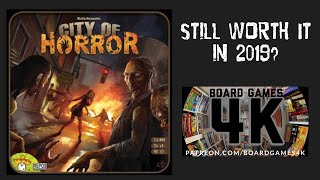
- strong backstab/negotiation tension that can spark memorable stories
- creative storytelling opportunities with imaginative players
- the shrinking-board mechanic reinforces theme and creates claustrophobic moments
- rules flow is clunky and difficult to grasp; iconography amplifies confusion
- some survivor characters feel useless or underpowered
- player elimination can lead to long periods of downtime
- heavy reliance on icons and reference sheets disrupts immersion
- removal of the action card system weakens strategic options
- backstabbing, survival, moral compromise
- Zombie apocalypse in a city with locations such as church, bank, armory, war tower, crossroads, and hospital
- emergent storytelling through player interactions, negotiations, and betrayals
- Dead of Winter
- Zombicide
- Shadows over Camelot
- Battlestar Galactica
- The Resistance
Mechanics (from transcript analysis)
- action card considerations — Action cards influence options; removal or scarcity of action cards affects strategy and flow.
- area/space limitation — Locations have limited space, forcing people to compete for slots and triggering tense dynamics.
- character abilities — Survivors have unique abilities; some characters may be underpowered or useless depending on draw.
- crossroads/round structure — The game proceeds through four turns leading to a helicopter/vaccine-based end condition.
- map progression and board shrink — Certain events shrink the board (armory, water tower), creating chokepoints and increasing tension.
- Simultaneous action selection — Each player secretly selects a location card; all selections are revealed at once.
- vote-based elimination — After an attack, players vote to determine who to throw under the bus; affected survivors are at risk.
- zombie attack trigger — If zombie presence at a location reaches a threshold, an attack is triggered and resolution involves player voting.
Video topics + discussion points
Quotes (from this video)
- the icon driven aspect to this game is a pain in the bum
- we cannot recommend this in 2019
- the board shrinks... the map gets smaller
- you can make up some really, really good stories if your imaginative enough
- some survivors are completely useless
- elimination can leave you sitting there doing nothing for the rest of the game
References (from this video)
- Unique character dynamics
- Dark humor
- Potentially uncomfortable theme
- Survival
- Zombie apocalypse town
- Character-driven survival
Mechanics (from transcript analysis)
- Character elimination — Players decide who to sacrifice to zombies
Video topics + discussion points
Quotes (from this video)
- these are my top five morbidly dark themes in games that make me laugh
- do not play it boring just like you're trying to score points tell the story