In Corrosion, each of you manages a factory and deploys engineers to build up diversified scoring and production engines. In the steam-filled air, however, your biggest enemy is time because most machines and gears rust away quickly, so you are well advised to also produce chrome gears and invest in rustproof and powerful chrome machines.
On your turn, you can either play an engineer card or turn the corrosion wheel of your factory:
Playing engineers mostly gains you new machines and qualified engineers. Other players can copy your engineer's action by playing an engineer of the same suit but a higher grade.
Turning your corrosion wheel puts your machines to work and returns engineers to your hand, but also causes old gears and machines to rust.
To be successful, you must cleverly co-ordinate your engineers and corrosion wheel and smoothly shift from one efficient engine to the next.
The game end is triggered once the special point supply or the award supply run out. Then, whoever was able to score the most points with their machines and awards wins.
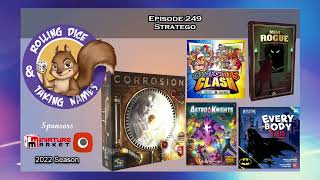
- Innovative spinny wheel mechanic drives engine-building tension
- Chrome machines stay on the board, preserving key options
- Strong theme integration with corrosion concepts
- Flexible, scalable design with potential for expansions
- Long playtimes, especially at four players
- High complexity and learning curve leading to AP
- Requires experienced players to reach optimal engine synergy
- Rust, corrosion, and machine-driven strategy
- Industrial-age factory setting with rusting machinery
- engine-building with mechanical tension and resource management
- Terraforming Mars
- Aeon's End
Mechanics (from transcript analysis)
- chrome_machines — Up to three chrome machines stay on board and provide ongoing benefits.
- copy_actions — If you have a higher-valued engineer of the same suit, you can copy its action.
- end_condition_and_victory — Victory points come from chrome machines and specific set collections.
- engine_building — Assemble machines using gears and steam to create working engines.
- resource_management — Manage steam, gears, and water to power machines.
- wheel_mechanic — Spin the spinny wheel; rotating it advances game state and triggers actions.
Video topics + discussion points
Quotes (from this video)
- it's not a rondelle it's a spinny thing
- formatting is key
- corrosion for me it's a thinking game
- it's stupid fun
- short y'all it only plays in like 30 to 45 minutes
References (from this video)

- interesting twist on engine-building
- tight and efficient
- longer playtime
- some designs feel opaque
- industrial age machinery and corrosion
- engine-building with non-permanent engines
- tightly themed, high puzzle density
- Gaia Project
- Lords of Hellas
Mechanics (from transcript analysis)
- rotating engines / non-permanent components — you pay for machines, rotate engines to trigger effects, and discard as they expire
Video topics + discussion points
Quotes (from this video)
- this one might be the most diverse one
- i thought this game had some really tacked on mechanisms that just did not need to be there
- this is basically a kids game
- it's striking, but not everything lands
- a very solid gateway game
- goa is a great example of classic euro design
References (from this video)

- engine building, evolution of tech
Mechanics (from transcript analysis)
Video topics + discussion points
Quotes (from this video)
- you start rich and you're trying to blow as much money as you can as quickly as possible by making bad investments
- this one however has a quite a different feel to a lot of the other rolling rights
- it's strictly two player puzzly abstract style game
- this is the newest printing of the bunk
- this one actually uses the between two cities mechanism where you're working with the people to your left and right except on this one
- it's a game that's fascinated me
- the idea of puzzle this stuff around get the ideal family photo
- gamers bingo
References (from this video)
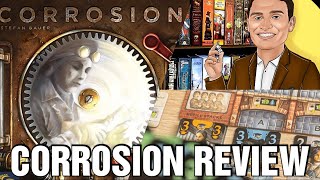
- high tension and timing-driven engine-building
- strong variability with chrome machines and turning machines
- satisfying big-turn effects where many machines activate
- compact two-action core shell with depth from temporary bonuses
- end-game duration feels too long; 90-minute target not met in practice
- two-player following mechanic can slow flow and feel jarring to some
- rule-book lookups required for some iconography; minor learning curve
- Temporary engine upgrades and optimization under time pressure
- Industrial, steam-powered factory with an engine-building theme
- Technical, instructional review with live-play explanation
Mechanics (from transcript analysis)
- card drafting / following — Play a card and other players may follow by playing higher valued cards of the same suit to take bonus actions
- engine building / wheel rotation — Rotating central wheel triggers machines and reshuffles actions
- Resource management — Manage chrome gears, gears, water tokens to activate machines and score points
- set collection / end-game objectives — Acquire end-game tiles/objectives scoring points
- timing pressure — End-game triggers based on white tokens and objective depletion; endgame length affects strategy
- utilization vs depreciation — Gears can rust and be wasted if not used; chrome gears stay fresh
Video topics + discussion points
Quotes (from this video)
- engine building is right up my alley
- the tension and pressure of trying to get these things built before a specific time
- this is a nice engaging game with a lot of options
- it's a real nice interesting but relatively tight design
- the best player is going to win the game