CrossTalk is the party game of subtle conversation in which two teams race to guess secret keywords. Each round, teams select a clue-giver, and those clue-givers are given knowledge of the same secret keyword. The goal of the clue-givers is to help their teammates guess this keyword before the other team.
The round begins with both clue-givers writing a one-word clue to give their team in private. Then, clue-givers will alternate providing one-word public clues to everyone — but there is a catch! After your team gives a public clue, the other team — and only the other team — may attempt to guess the keyword. Clue-givers will need to use their private clue to provide context for the future. This will allow them to slip public clues by the other team.
The round ends when one team correctly guesses the keyword or both teams run out of guesses. Each correct guess is worth 1 point, and the first team to earn 5 points wins.

- Promotes teamwork and quick thinking
- Good for groups with memes and inside jokes
- Clues can be too obvious or too obscure, affecting balance
- Secret clues and teamwork
- Team-based guessing party game
- Competitive clue-giving with possible misdirection
Mechanics (from transcript analysis)
- one-word clues — Clues are given to help your team guess a secret word while the other team tries to guess as well.
Video topics + discussion points
Quotes (from this video)
- top party games to play once we kick kova to the curb
- these games all play really well with a high player count
- these games should be easily accompanied with a beveragino
- after this pandemic is over you know i'll be ready to celebrate with a drink in hand
References (from this video)

- strong tension and cooperation within teams
- intelligent clue design creates challenging connections
- simple design with deep strategy
- not always intuitive for new players
- learning curve around clue strategy and timing
- communication, clue-giving, and deduction across teams
- party game about guessing through clues
- clever, puzzle-like social deduction
- Code Names
Mechanics (from transcript analysis)
- public vs private clues — Givers provide clues that both teams can hear, while private clues tie to the secret word.
- team guessing with public clues — Teams must deduce from both private and public clues while trying not to reveal too much.
- two clue givers per team — Each team has a pair of clue givers who know a secret clue to convey publicly.
Video topics + discussion points
Quotes (from this video)
- it's interactive and pushes you to think about what others are doing
- there's so many cool formatic touches to this game
- it's one of the most challenging guessing games
- it's the purest example of a hidden movement game
- there's Jeopardy your characters could die
- I love word games
- Clank is my favorite deck building game because of that push or luck
- it's a completely different party game that blindfold surprisingly just adds something
References (from this video)
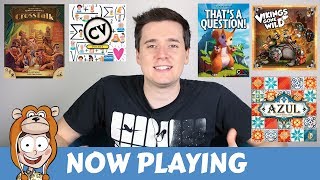
- Great twist on a party game
- Encourages creativity in clues
- Works well with large groups
- May rely on players' creative ability
- Replayability not strongly compelling
- word guessing party game with clue-giving
- Teams guessing with a secret word; clues must not reveal too much to the opposing team; a hidden word context is provided to both sides
- light, social, party-game flavor
- Code Names
- Word Slam
Mechanics (from transcript analysis)
- advanced variant with whiteboards — additional whiteboard to draw lines between clues, emphasize connections, or seek synonyms
- Clue giving — each team gives a clue to guide their teammates
- hidden word — a secret word shared across teams that influences clues
- word guessing — teammates guess a word based on one-word clues
Video topics + discussion points
Quotes (from this video)
- I love Crosstalk actual love because it's one of my favorite new party games.
- it's simply that you're there you're as a guesser you are completely lost
- Azul is again coming from Plan B games and this is an abstract game albeit a very pretty one
- I appreciate that and then the rest of the game is about collecting symbols
- Vikings Gone Wild is a deck building game that I've had a lot of good things about
References (from this video)
- Clever, cerebral and different from Code Names
- Solid round-by-round tension
- Not as accessible as some party games
- Frustration can arise if clues align poorly
- communication, word guessing
- social deduction, team-based
- Code Names
Mechanics (from transcript analysis)
- Clue-based word association — Clue givers craft private clues to convey a target word; teams guess it.
- Limited discussion — Teams cannot discuss between themselves; clues are written and revealed.
- Public hints via hint board — Hint board allows selective hints to guide teams.
Video topics + discussion points
Quotes (from this video)
- this is one of those very simple little games where I played it and I thought I wish I'd thought of that
- Accessible everybody can understand it
- it's the best real-time cooperative game that I've played
References (from this video)

- Highly interactive and funny
- Strong group cohesion and shared jokes
- Iconography and components could be better
- Subjective clues may favor certain players
- Word association and clue-giving
- Hidden word party game with two teams
- deliberate, humorous
Mechanics (from transcript analysis)
- Hidden word clueing — Clue givers provide hints while trying to prevent the other team from guessing.
- Inside jokes and social interaction — Gameplay sparks ongoing humor and memes within groups.
- Two-team play — Teams compete to guess a word based on clues.
Video topics + discussion points
Quotes (from this video)
- Sagrada is a really cool dice placement puzzle
- beautiful art and design of the game
- a really cool bounty hunting pick up and deliver game
References (from this video)

- clever, clandestine clueing
- approaches excellent balance of communication and deduction
- clues can be overly cryptic and frustrating
- requires careful listening and interpretation
- clue-giving without clarity
- cryptic communication
- clever, strategic
- Telephone/Chinese Whispers
- Decrypto
- Monikers
Mechanics (from transcript analysis)
- public clues with private inference — one team gives a clue publicly; the other team guesses; the clue-giver must avoid giving away too much
Video topics + discussion points
Quotes (from this video)
- the answer to every question is a color
- it's basically a game of listing things
- you have to come up with a fake definition for an obscure word cockalorum
- the cards are way more interesting than a hat full of TV chefs
- it's great fun trying to convince them that you can be trusted whether you're good or bad
- write fake acronyms and laws
- the original Christmas party game is the Hat game or Celebrity where you all write famous names on strips of paper
- Kokoro isn't just a great sofa game it's a great game every card flip brings elation or frustration
- it's like reading from a Sherlock Holmes novel as you meet with witnesses
References (from this video)
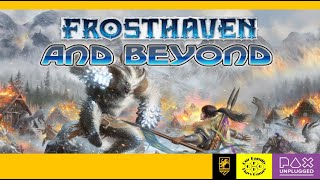
- Strong character design and class balance
- Engaging town-building mechanic with meaningful upgrades
- Accessible card design improves readability for players
- Puzzle book adds a novel, uncover-based progression to the campaign
- Box organization and punch-board setup complexity
- Initial learning curve for new players joining mid-campaign
- Crowdfunding scope and production scaling challenges mentioned
- Campaign-driven exploration with evolving societal factions
- A developing world featuring outposts, town-building, and ongoing narrative history
- Story- and puzzle-driven progression with both town and character arcs
- Forgotten Circles
- Jaws of the Lion
Mechanics (from transcript analysis)
- Boss and attack modifier systems — Two-sided boss cards and evolving town modifiers to reflect progression
- Cooperative dungeon-like exploration — Players work together to explore and resolve scenarios in a shared environment
- Puzzle book integration — Puzzles provide hints and unlock new content across the campaign
- Redesigned character ability cards (lichonography) — A new readable card system to replace dense text on older cards
- Resource-to-progress economy — Resources flow into buildings and personal quests that advance the campaign
- Town-building progression — Upgrade buildings to generate resources and unlock story moments
Video topics + discussion points
Quotes (from this video)
- it's basically all the information you need except for the monster setups for each room
- we've balanced that out to make sure you know all the characters are less fragile
- this is going to be big it's a lot of adventures it's going to be expensive
- the two player balancing is a focus with inspiration system
- it's also a license partner we're working with... they'll do recordings and foretelling narration