Collection Status
Your Rating
Description
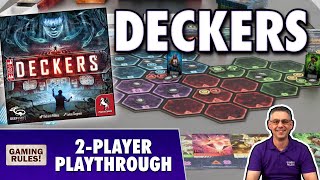
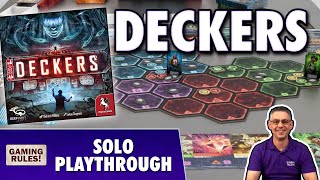
As Deckers, you will hack into a network of five servers, either solo or cooperatively as a team of up to four, winning or losing together.
The network is operated by one of the available Super-Massive Computers (SMCs), each with a different level of complexity and its own unique style of defenses that you will need to overcome.
Once jacked into the servers, you will assume Decker profiles, each with a special ability, moving across the server's spaces and uploading Decker pieces onto the network to expand your control while removing as many of the SMC's pieces as possible. Each round you get a new objective you try to fulfill to gain the upper hand. If you manage to complete the final objective, you ultimately claim victory.
Year Published
2025
Transcript Analysis
Browse transcript mentions, sentiments, pros/cons, mechanics, topics, quotes, and references.
Total mentions: 12
This page: 12
Sentiment:
pos 11 ·
mix 1 ·
neu 0 ·
neg 0
Showing 1–12 of 12
Video DqP7qDDWkxM
Unknown Channel playthrough at 0:00 sentiment: positive
video_pk 13168 · mention_pk 38519
Click to watch at 0:00
Overall sentiment (raw)
positive
Pros
- Rich, puzzle-driven gameplay with deep strategic options
- Dynamic scaling based on number of players
- Engaging asymmetrical decker mechanics and ghosting
- Exciting, tense play sessions with meaningful decisions
Cons
- Steep learning curve and heavy rule-set
- Occasional risk of analysis paralysis during setup
- Complex interactions can be overwhelming for new players
Thematic elements
- Hacking, infiltration, and cooperative puzzle solving against a hostile AI (Glom)
- Cyberpunk hacking networks and server installations
- Puzzle-driven, objective-based with asymmetric roles
Comparison games
- Mother
- Sentinel
- Tempest
- Viking
- Spider
- Tsunami
Mechanics (from transcript analysis)
- ghosting/movement — Program avatars move by ghosting through installations to other servers.
- installations and ghost paths — Installations enable moving/ghosting, with Monty's green-program special rules.
- objective scaling and deckers — Objectives scale with number of deckers, altering requirements per objective.
- program upgrades and modifications — Upload and modify programs using yellow/green/red tokens to create better tools.
- sparks, guardians, and explosions — Sparks accumulate on open spaces; guardians defend spaces; explosions propagate hazards.
- spawn and SMC attack phases — Cycle-based turns with spawn steps, end-of-turn moves, and a final SMC attack to determine success.
Video topics + discussion points
No key topics recorded for this video.
Quotes (from this video)
- This game is very much a a puzzle and learning the puzzle.
- To win the game, you need to complete gold.
- First spawn step is skipped.
- Green is safe.
- We managed to have no sparks on the same space as programs.
- You have won.
References (from this video)
No references stored for this video.
Video EnOMKLo9kOM
BoardGameGeeek top_10_list at 5:49 sentiment: positive
video_pk 11196 · mention_pk 32929

Click to watch at 5:49
Overall sentiment (raw)
positive
Pros
- strong deep-paint/production value
- liked as a deep print collaboration; solid fit for Spiel origins
- engages with solo and group play well
Cons
none
Thematic elements
- cyberpunk / matrix-like intrusion into mainframes
- infiltration of a digital network as hackers
- techno-noir, high-stakes hacking
Comparison games
none
Mechanics (from transcript analysis)
- co-op / solo play with asymmetric powers — players take on roles of hackers with unique abilities to complete objectives.
- mission-based objectives with evolving rules — each round has new objectives and the final objective determines the win.
- network navigation / hacking theme — you explore a network and interact with various supercomputers as you progress.
Video topics + discussion points
No key topics recorded for this video.
Quotes (from this video)
- This is a fun one. It's cozy. It's relaxing but there is strategy and stuff like that and it looks like super beautiful.
- I love this game so much. It's a perfect big group family game.
- Inish is back in hotness and that's because there is a big box version with a new expansion that's on crowdfunding right now.
- The art and the production value seems so top tier.
- It's a solo campaign now, and that makes me color me more intrigued.
- Fate of the Fellowship is so good. We played a four-player game and it was freaking incredible, y'all. Epic, man.
References (from this video)
No references stored for this video.
Video TvVeSW1Zdxs
Box Delights general_discussion at 1:06 sentiment: positive
video_pk 10868 · mention_pk 32052
Click to watch at 1:06
Overall sentiment (raw)
positive
Pros
- clear rulebook presentation and readability
- strong thematic flavor with immersive cyberpunk world
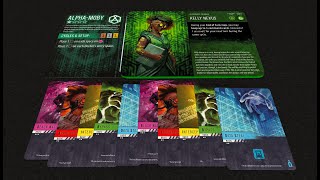
- high component quality and readable texts on SMC cards
- significant asymmetry and deck-building depth
- upgrade area expands strategic options and planning
- modular board and boss variety support replayability
Cons
- learning curve due to new terminology and rule changes from Renegade lineage
- early setup can be verbose and may slow initial play
- some players may find initial card-color taxonomy complex
Thematic elements
- Cybersecurity, hacking, network infiltration, and boss battles
- Cyberpunk network environment where hackers battle a series of SMC bosses
- Tech-noir flavor with flavor text that enriches worldbuilding
Comparison games
- Renegade
Mechanics (from transcript analysis)
- asymmetric boss fights — each SMC boss has unique setup, difficulty (stars indicate how hard it is), and rules that affect gameplay.
- color-coded command cards — cards are color-coded (red, yellow, blue, green, purple) with distinct roles and interactions; purple is a wildcard that can substitute for other colors.
- deck upgrading and program deployment — upgraded cards replace basic cards in the deck; players install and operate programs on the network to perform actions.
- deck-building — each deck has 15 base cards; players upgrade cards to replace or augment their hand, creating asymmetry and progressional power.
- hand management — the upgrade area acts as an extension of the hand; players must consider cards in hand and in the upgrade area together.
- modular board / setup variability — board is composed of five server tiles with different layouts; each SMC boss presents different setup conditions.
- objective cards / countermeasures — gold objectives end the game upon success; copper and silver objectives provide rewarded outcomes or penalties, affecting endgame strategy.
- token spawning and progression — rounds spawn black circle tokens (sparks) that scale by copper, silver, and gold levels; tokens can flip to white and have different spawn rules per deck.
Video topics + discussion points
No key topics recorded for this video.
Quotes (from this video)
- Sebastian, who's been focusing on the graphic design and the clarity and the rule book and all that stuff, has done a fantastic job trying to lay everything out in such a much clearer way for players.
- The deck is always 15 cards.
- You're pirating up your Deca through its deck, his deck of 15 cards.
- It's a real multi-dimensional game.
References (from this video)
No references stored for this video.
Video g2UDvKFMsbs
Unknown Channel top_40_list at 1:24 sentiment: positive
video_pk 10169 · mention_pk 29911

Click to watch at 1:24
Overall sentiment (raw)
positive
Pros
none
Cons
none
Thematic elements
Comparison games
none
Mechanics (from transcript analysis)
Mechanics unknown.
Video topics + discussion points
No key topics recorded for this video.
Quotes (from this video)
- Unstoppable is my number one of 2025.
- Is it as good as Exceed? Heck no. But it's good enough that we'll play it sometimes.
- The core card play is so good. The combos and cooperation are great.
- My son and I have really enjoyed the 1v1 mode in Yomi 2.
References (from this video)
No references stored for this video.
Video gEgJ6nG5z4g
Shut Up & Sit Down general_discussion at 1:31 sentiment: positive
video_pk 9384 · mention_pk 27671

Click to watch at 1:31
Overall sentiment (raw)
positive
Pros
- Cooperative mechanics
- Deck building
- Compact package
Cons
- Visually unpleasing board design
- Empty/sparse aesthetics
Thematic elements
- Hackers infiltrating computer systems
- Digital/Hacking
- Thematic
Comparison games
none
Mechanics (from transcript analysis)
- cooperative gameplay — Players work together as team of hackers
- Deck building — Tech building to hack into systems
Video topics + discussion points
No key topics recorded for this video.
Quotes (from this video)
- We're back from SL with one of the biggest board game holes we have ever had
- hottest Euro game of the fair
- engine building and playing out cards and taking them back
- racing game without racing
- one of the best covers illustrations
- really thinky game
- This is a really fun and simple game
- don't judge board games from their cover
- makes your turn feel great if you have great cards
- they're actually really, really good
- don't know what's going on in that game right now
- There aren't a lot of good pirate games out there
- I'm always a sucker for cool historical themes
- unique twist to the already known detective genre
References (from this video)
No references stored for this video.
Video 2vMu6GGLN2g
Unknown Channel playthrough at 2:08 sentiment: positive
video_pk 6467 · mention_pk 19115
Click to watch at 2:08
Overall sentiment (raw)
positive
Pros
- dense, interconnected sandbox puzzle with a strong sense of emergent strategy
- solid solo and cooperative play, with scalable depth and replayability
- market/upgrades provide meaningful choices and combo potential
- player aids and reference cards reduce the burden of constant rule-checking
- ambitious thematic integration into a cyberpunk hacking setting
Cons
- steep learning curve; many interacting systems can overwhelm newcomers
- solo play is not officially codified; relies on designer guidance or house rules
- dice-based Infect actions introduce luck risk; some runs can hinge on favorable dice
- upgrade cards are randomized; early progress can feel hindered by bad draws
Thematic elements
- cyberpunk hacking, rebels (deckers) fighting to reclaim freedom
- A near‑future dystopian cyberpunk network where a neural supercomputer has taken control of society.
- procedural, objective-driven storytelling within a modular network puzzle
Comparison games
- Dominion
- Netrunner
- Mage Knight
Mechanics (from transcript analysis)
- cooperative puzzle solving — 1–4 players work together to complete a set of increasingly difficult objectives across cycles.
- deck-building — Each player maintains a 15-card deck; players draw five cards, and can acquire upgrade cards from an upgrade area; the deck evolves over time.
- ghosting — Green installations enable ghosting: a ghost projection can act on spaces the avatar cannot, enabling strategic maneuvering around Guardians.
- green/telekinesis / shifting — Green programs allow shifting and remote manipulation of tokens, including installations and sparks.
- infect action (dice-based combat) — Red programs attack via an Infect action resolved with dice; success can remove sparks and, with certain cards, trigger additional effects.
- installations — Three programs of the same color on a space become an Installation, offering powerful network-wide abilities (e.g., teleportation, cheaper actions).
- modular network board — The board represents a network of servers; setup can be randomized via cards and players choose a starting configuration.
- movement and pathways — Blue programs create pathways; movement along these paths can be free between adjacent blue spaces, influencing routing decisions.
- Sparks and guardians — Sparks are enemy tokens that move around; three on one space spawn a Guardian; three guardians destroy programs if not managed.
- upgrade market and discard rules — Upgrades are purchased with command points; advanced commands return to the upgrade area after use; the market acts as an extended hand.
- upload / install / convert — Players upload programs to servers; thrice-sorted colors on a space can be converted into installations with special abilities.
Video topics + discussion points
No key topics recorded for this video.
Quotes (from this video)
- This game is a dynamic puzzle and you need you need people who are prepared to sit down and figure it all out with you.
- What a puzzle. What what a what a puzzle.
- That was brilliant.
- This is a sandbox sandbox puzzle.
References (from this video)
No references stored for this video.
Video z8ET6boO8lM
Beyond Solitaire rules teach at 0:04 sentiment: positive
video_pk 6287 · mention_pk 18606
Click to watch at 0:04
Overall sentiment (raw)
positive
Pros
- Rich solo puzzle experience that rewards planning and foresight
- Smooth, upgrade-driven progression when compared to the Renegade base
- Diverse SMCs and goals offer noticeable replayability and scalable difficulty
- Clear, tactile components and accessible rules for solo play
Cons
- Cooperative play can be slow and cumbersome without very patient players
- May be a niche appeal due to heavy puzzle focus and cyberpunk theme
- Entry price and complexity could deter casual gamers
Thematic elements
- Cyberpunk-esque hacker warfare with modular, evolving AI opposition
- Hackers targeting and subverting world-run supercomputers to undermine oppressive AI systems
- procedural, scenario-driven with variable goals and adversaries
Comparison games
- Renegade
Mechanics (from transcript analysis)
- Card management and hand optimization — Players draw and manage a hand of cards to maximize action efficiency and hit evolving goals.
- Color-coded action economy and upgrades — Blue for movement, Green for positioning, Yellow for modification, Red for combat; upgrades transform cards into stronger pieces.
- Goal-driven scoring with partial progress rewards — Progress on goals provides benefits; failure penalties are mild, encouraging continued play rather than abrupt termination.
- Grid/network movement with installations and ghosting — Blue installations allow long-range movement; Green enables ghosting so you can act as if on other spaces; movement chains are powerful.
- Infect action dice combat — Red actions involve dice-based combat against sparks, with modifiers and risk assessment.
- Modular goal system tied to SMCs — Each game uses a different set of goals and Supercomputer (SMC) rules, changing win conditions and difficulty.
- Resource scarcity and threat spawning — Sparks and guardians spawn and can trigger cascading effects if not contained, creating tension and planning needs.
- Turn-by-turn planning with execution vs symbol-based actions — Players choose between executing card text or using symbols as wilds, influencing tempo and strategic depth.
- Upgrade and evolution path (installations, upgrades, guardians) — Programs can become installations; guardians add new threats and require indirect strategies to neutralize.
Video topics + discussion points
No key topics recorded for this video.
Quotes (from this video)
- I think this is a solo game where you're playing with one or two deckers.
- The premise of Deckers is basically the same as Renegade; you are hacking into world-spanning supercomputers.
- The puzzle can go on and on, and the setup variants add depth to every run.
- This is for solo players who like to sit here and enjoy your game, rejoice.
References (from this video)
No references stored for this video.
Video jck3n4dY11c
The Brothers Murf top_10_list at 4:07 sentiment: positive
video_pk 5955 · mention_pk 17641

Click to watch at 4:07
Overall sentiment (raw)
positive
Pros
- timely cyberpunk premise with an evolving system tension as AI/friction increases
- avatar/identity mechanic adds thematic flavor
Cons
none
Thematic elements
- corporate cybersecurity battles in a sci-fi world
- futuristic, cyberpunk hacking scenario
- story-driven hacking perspective with avatars
Comparison games
- generic cyberpunk hacking games
- Ark Nova-style team coordination (not explicit in text, but implied by team play)
Mechanics (from transcript analysis)
- cooperative card-driven hacking — players collaborate to hack into a central system via cards
- identity-based abilities — the persona you assume during a hack grants unique bonuses
Video topics + discussion points
No key topics recorded for this video.
Quotes (from this video)
- Look at this cover. For that reason alone, I immediately went, 'Cool. That's my most anticipated game from Essen.'
- I'm judging a game by its cover, but your cover is massive real estate. Don't tell me to not judge games by their cover because it is important.
- Oh my gosh, this is that game at Essen every year that I'm immediately just like, do I pay someone to buy it at Essen and then ship it to me? I shouldn't.
- Sanctuary is kind of a smaller version of Ark Nova. I really, really like Ark Nova, but this is... a tile-based version that's quicker to table.
- This feels kind of like a Terramystica kind of game because there are four tracks and you invest to boost different aspects.
References (from this video)
No references stored for this video.
Video 29nDnSsIbjc
Broken Mele game_review at 1:46 sentiment: mixed
video_pk 3472 · mention_pk 10295

Click to watch at 1:46
Overall sentiment (raw)
mixed
Pros
- Good production quality for the price (~30 pounds).
- Thoughtful storage design with tuck boxes and organized inserts.
- High replay value: ten deckers, varied objectives, and upgrade options.
- Strong thematic artwork and cohesive cyberpunk aesthetic.
Cons
- Steep learning curve from a 27-page rulebook and heavy wall-of-text explanations.
- Rulebook is dense; learning to play can take multiple sessions.
- Two big random elements (card draws and upgrade availability) can drastically impact outcomes.
- Starter scenario is punishing and not beginner-friendly.
- Limited time to upgrade cards; not enough opportunities to diversify decks in a typical game.
- Dice introduce a notable luck factor in key actions like infecting guardians.
Thematic elements
- Cyberpunk hacking and program management
- Cyberpunk network/server hacking scenario
- Procedural, objective-driven puzzle
Comparison games
- Civolution
Mechanics (from transcript analysis)
- area influence / push and ghosting — Colored programs influence movement, push enemies, or ghost actions from different positions on the board.
- deck-building / card drafting — Each player uses a personal deck of cards to perform actions by spending symbols on cards; upgrading cards gradually changes options.
- dice-based combat for defenses — Red and other colored dice resolve attempts to defeat or disable enemy defenses/guardians.
- grid / token placement on a server map — Players move an avatar and manipulate programs on a randomized server layout while defending against mainframe defenses.
- objective-driven puzzle structure with tiered objectives — Gold objective is mandatory to win; silver and bronze are optional bonuses that mitigate negatives or grant rewards.
Video topics + discussion points
No key topics recorded for this video.
Quotes (from this video)
- The gameplay loop with the puzzle is pretty intriguing and a good little bit of fun.
- Massochist game where the difficulty setting from the get-go is already set to hard.
- If you want a challenge this one will give it to you, but if you're looking for something that's more of a 50/50 win rate, you're not going to get that here.
- The starter scenario punches you in the face.
- This is a solo puzzle and it's not a massive negative.
References (from this video)
No references stored for this video.
Video ccRBPP-B0wY
Bots the Lights playthrough at 0:00 sentiment: positive
video_pk 3313 · mention_pk 9804
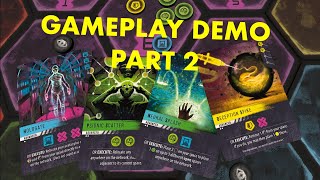
Click to watch at 0:00
Overall sentiment (raw)
positive
Pros
- Accessible entry point for new players due to a clear objective and introductory tier (SMC focus).
- Rich, interlocking mechanics that reward planning and sequencing.
- Dynamic market/upgrades create meaningful decisions and emergent strategy.
- Color-modification and guardian rules encourage deliberate network design.
Cons
- Rule density and multiple rule interactions can overwhelm newcomers.
- Guardian mechanics can create punishing cascades if mismanaged.
- Longer sessions may lead to analysis paralysis for some players.
Thematic elements
- Cybersecurity/hacking in a competitive network-building setting, with color-coded programs, guardians, and sparks driving tension.
- A futuristic cyberspace network where players place and upgrade programs on a grid-like server space, battling guardians and manipulating colors to optimize defenses and actions.
- Live-playthrough with explanation and strategic commentary focusing on rule interactions, setup, and ongoing optimization.
Comparison games
none
Mechanics (from transcript analysis)
- avatar movement and relocation — The avatar (in-game marker) can relocate across the network via specific card effects to reposition threats or opportunities.
- color modification economy — Colors (yellow, black, white, purple, blue, red) interact through modification and replacement rules to shape capabilities.
- deck-building and card management — Draw, acquire, and upgrade cards to influence network actions, with some cards returning to upgrade areas.
- grid/network placement and spatial control — Programs occupy spaces on a network; adjacency and space type (open/closed) affect outcomes and guardian interactions.
- guardian mechanics and endgame triggers — Guardians introduce cascading effects; two adjacent guardians can end the game, with danger varying by the space type.
- resource tokens (sparks) and actions — Sparks are produced and moved to trigger effects, with rules governing how many can be placed and where.
- upgrade and installation system — Cards can be upgraded or installed; yellow installations come with bonuses and color-based modification rules.
Video topics + discussion points
No key topics recorded for this video.
Quotes (from this video)
- Remember, Alpha Moa is the easiest SMC.
- This is really at the introductory one.
- It's only one star and you should find this a little bit of a walk in the park.
References (from this video)
No references stored for this video.
Video JZK_zPsacRM
Board Game Geek Podcast top_10_list at 1:04:20 sentiment: positive
video_pk 621 · mention_pk 1816

Click to watch at 1:04:20
Overall sentiment (raw)
positive
Pros
- Stylish production and accessible rules
- Support for solo play and varied modes
Cons
- Can feel similar to other cyberpunk card/board hybrids
Thematic elements
- Salvage and competition in a server world
- Cyberpunk servers and digital heists
- Loose theme integrated with mechanical play
Comparison games
- Renegade
- Netrunner
Mechanics (from transcript analysis)
- Cooperative/competitive play — Can be played solo or in teams; decision space adapts to player count
- Tile/map-based server spaces — Modular board or map elements representing networks
Video topics + discussion points
No key topics recorded for this video.
Quotes (from this video)
- Three years. That's just crazy to me.
- It's always a challenge looking through the preview list to pick out games for this.
- You can definitely feel the excitement for Spiel Essen 2025.
References (from this video)
No references stored for this video.
Video 1TVpJ_ujsaU
Unknown Channel top_10_list at 3:54 sentiment: positive
video_pk 400 · mention_pk 1190

Click to watch at 3:54
Overall sentiment (raw)
positive
Pros
- tough cooperative puzzle with meaningful choices
- progression feels rewarding as you improve
Cons
- crunchy puzzle with some luck elements
- hard on newcomers to grasp depth
Thematic elements
- cooperative hacking thriller
- cyberpunk-hacking scenario against an AI overlord
- deck-building progression with strategic planning
Comparison games
- Primal the Awakening
- Horrified
Mechanics (from transcript analysis)
- Card-driven actions — cards enable movement, attacks, and system interactions
- deck-building — build and play cards to advance objectives
Video topics + discussion points
No key topics recorded for this video.
Quotes (from this video)
- it's my turn. The thing is that it is also one of the worst things about this game cuz sometimes you'll be waiting forever to take your turn.
- I really love this set because I love Teenage Mutant Ninja Turtles.
- This stands out because it's a very tough cooperative board game with tons of choices and you most likely will lose a few times before figuring it out.
- This game is freaking fantastic.
References (from this video)
No references stored for this video.
Transcript Navigation
Showing 1–12 of 12