Decorum is a cooperative, hidden information game where you and your partner share the same objective: decorate your home in a way that makes you both happy. The problem is, different things make each of you happy and nobody says exactly what they need. Can you find a happy compromise, or is it time to move out?!
-Play through 30 unique scenarios, each introducing new twists and challenges.
-Keep your conditions a secret, they say how you want the house decorated.
-Add, remove, and swap objects or repaint rooms to make the house look just right… for you.
-Respond with “Love it”, “Hate it”, or “Fine with it” to work together toward a perfectly decorated home.
-There is a solution for each scenario, the trick is figuring it out in time.
At its heart, Décorum is a pretty straightforward logic puzzle. There are a small number of ways to arrange the internal pieces that meet all the requirements listed on the player’s rule sheets simultaneously. The twist of Décorum is that it’s also a hidden information game. No player has all of the rules. While playing, the players will have to watch their partner’s moves just as carefully as they’re planning their own. Even more crucially, they’ll have to communicate why they’re making the moves they’re making–using the very limited means we’ve provided them.
Décorum might be about solving a puzzle, but it’s really a game about communication and compromise. The real challenge isn’t just solving the problem with the limited information you and your players have; it’s dealing with the frustrations that will inevitably occur when your partner does something that messes up your plan. In order to be successful in Décorum, there will come a point where both players will have to let go of their initial strategy for how they were going to finish the board and start paying attention to what their partner is doing instead. By introducing and providing an incentive to resolve conflict, Décorum mechanically encourages (or even requires) a positive form of compromise.
Each player draws a "Scenario" card that lists a set of criteria of what types of décor a room must have or cannot have. For example "No room may contain a lamp" or "Every room must contain a wall hanging". Players keep their criteria secret.
The play surface is a board displaying various rooms in a house. Each room has multiple items that can potentially be placed in the room. Players take turns placing, moving, or removing colored tokens on the board, where each token represents an item of home décor. Each token placed may conform with, or violate, the other players' criteria. After each token is placed, other players may state they like the item of décor, as placed, or they do not like the item of décor, as placed. Further discussion or explanation is not allowed.
The game ends when all players' criteria are satisfied.
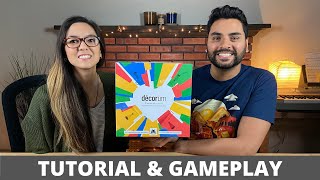
- Engaging two-player negotiation with clear goals
- Dynamic interaction through back-and-forth room updates
- Heart-to-heart moments create meaningful information sharing
- Rules can be fiddly and require careful tracking of constraints
- Two-player mode demands explicit communication to align multiple conditions
- Household negotiation and balance of needs through design choices
- A newly moved-into house; two players decorate a home
- Scenario-driven, lighthearted and competitive-cooperative
- Decorum (four-player variant)
Mechanics (from transcript analysis)
- Campaign/scenario deck — Game includes multiple scenarios or campaigns and custom scenarios for playthroughs.
- Color painting — You can repaint a room's walls to different colors to meet needs.
- Heart-to-heart (information exchange) — At designated rounds, players read a condition to the other to reveal information about needs.
- Item type constraint — Each room can only contain one of each item type.
- Pass action — You may pass instead of performing an action.
- Room-based action — Each turn affects one room; you can add, remove, swap, or repaint items in that room, respecting type rules.
Video topics + discussion points
Quotes (from this video)
- the game comes with several scenarios that you can go through together as a campaign of sorts
- you can swap out an item for a different type of that specific item
- we are ending the game
- the house must contain exactly three out of the four styles
- I'm fulfilled
- read out one of the conditions on your card that you feel like your housemate must know
References (from this video)
- co-op at core with conflicting objectives
- interesting negotiation dynamics
- can be complex to coordinate among players
Mechanics (from transcript analysis)
Video topics + discussion points
Quotes (from this video)
- no one's made a game about that
- decorum is a co-op yes it is not too co-op
- we would shut the game down
References (from this video)

- strong co-op feel
- clever scoring that rewards teamwork
- artwork considered minimal by some
- theme may not be exciting for all
- decor and personal taste on criteria
- room-design and interior criteria racing
- cooperative constraint-satisfaction with a twist
Mechanics (from transcript analysis)
- cooperative puzzle — players align rooms to meet common criteria
Video topics + discussion points
Quotes (from this video)
- it's not cohesive at all
- we're going to rate our games on a scale of one to ten
- OFPG endorsement for the top picks
- don't sleep on Acropolis
- you can carry Cat in the Box easily
- we love you bye now
References (from this video)

- strong art style
- cool house meeting mechanic
- communication is limited and tricky
- cooperative puzzle about meeting objectives with limited communication
- A house with belongings and missions
- parlor-room style with hidden roles and objectives
- Charterstone
Mechanics (from transcript analysis)
- Cooperative puzzle with hidden objectives — Players attempt to satisfy objective sets without full information
Video topics + discussion points
Quotes (from this video)
- charter stone is a legacy worker placement game
- the art is amazing
- it's an absolutely underrated gem of a game
- rolling right to game night
- the parfait of puzzles
References (from this video)

- Improves communication
- Unique concept
- Collaborative problem-solving
- Home Decorating
- Home Interior
Mechanics (from transcript analysis)
- limited communication — Hidden objectives with conflicting goals
Video topics + discussion points
Quotes (from this video)
- I've been begging my wife to play more board games with me for years now
- Every game you end up playing of this one is totally different
- It's all about communication and reading between the lines
References (from this video)

- strong theme and tension
- balancing cooperation and self-interest
- semi-cooperative structure may frustrate some players
- passive-aggressive cohabitation
- a shared home with decor choices
- tense negotiation around limited resources
- Calico
- The Castles of Burgundy
Mechanics (from transcript analysis)
- semi-cooperative play — private goals; players influence decor while negotiating with others
Video topics + discussion points
Quotes (from this video)
- I think it's the best version of Code Names and that's Code Names Duet
- we belong in this space
References (from this video)

- Therapeutic potential and relationship-building prompts
- Guaranteed to cause fights; requires facilitation
- Communication and avoiding fights
- Coupled decorating session with a partner
- Therapy-leaning but lighthearted
- Idea to Therapy
- Hive Mind
Mechanics (from transcript analysis)
- Cooperative / negotiation — Players decorate a shared space while managing conflicts and communication strategies.
Video topics + discussion points
Quotes (from this video)
- The weirder, the better. I love it.
- It's going to be a real hit.
- This is all in fun as per usual.
References (from this video)

- surprisingly rich in negotiation and dynamics
- strong concept and memorable play experience
- requires active participation to shine
- depends on group dynamics
- domestic life and interior design
- decorating and cohabitation with secret preferences
- cooperative with hidden agendas and negotiation
- The Mind
- Dixit
Mechanics (from transcript analysis)
- communication constraint — players must convey likes/dislikes without explicit statements
- secret preferences — players receive hidden goals and must communicate non-verbally
Video topics + discussion points
Quotes (from this video)
- Spirit Island not Spirit Away mind you it's a great movie if we were giving away Badges of approval for movies Spirited Away a batch of approval but Spirit Island also and this is greater than games
- Spirit Island is a fabulous game... it's fantastic
- Terraforming Mars yes it's our favorite ugly game terrifying Mars is amazing
- I would play that anytime you brought it out
- it's so freaking cool
- we're giving away four copies of Sagrada to four different people
References (from this video)

- Unique theme
- Passive-aggressive gameplay
- Potentially triggering personal experiences
- Passive-aggressive roommate interactions
- Shared living space
- Cooperative negotiation
Mechanics (from transcript analysis)
- Cooperative negotiation — Players place items in rooms with hidden personal goals
Video topics + discussion points
Quotes (from this video)
- explore, kill, die, mutate, repeat
- one more game
References (from this video)

- Engaging blend of cooperation and social negotiation
- Clear and thematic house-meeting mechanic
- Scenario-based replayability with varied room setups
- Humorous tone supports interaction and discussion
- Can run long for casual groups
- Secret objectives may confuse new players
- Potential downtime during negotiation and discussion
- Cooperative decoration interlaced with secret objectives and passive-aggressive negotiation.
- A four-room shared house (bathroom, bedroom, living room, kitchen) where roommates decorate to meet secret goals.
- Scenario-driven with a campaign flavor; house meetings reveal progress and tensions.
- Monopoly (satirical segment reference)
Mechanics (from transcript analysis)
- cooperative play — Players work together to redecorate while pursuing individual secret objectives.
- Fulfillment victory — All players must be fulfilled with the house to win; otherwise the game ends without consensus.
- House meetings — After rounds, players meet to discuss progress and share one objective with another player.
- Secret objectives — Each player has specific goals that must be fulfilled, kept hidden until fulfillment.
- Turn actions — On a turn you can add, swap, repaint, or remove items in rooms.
Video topics + discussion points
Quotes (from this video)
- it's the most passive aggressive thing you could possibly do in this game
- I am fulfilled
- Round two, I hate that lamp, I hate that lamp so much, it's horrible, it's nice, it's all fine
- we're playing decorum we are all going to be housemates trying to decorate this house to all of our very specific tastes
References (from this video)
- accessible for families
- fun social interaction
- some conflict with decoration approval can slow game
- cooperative with personal goals
- decorating spaces with conflicting objectives
- semi-cooperative with disagreements
Mechanics (from transcript analysis)
- Semi-cooperative — players decorate and must approve each other's work while pursuing own goals
Video topics + discussion points
Quotes (from this video)
- these are the revelations i'm putting out what revelations you put now you know fossilists was one of my k-teams
- Creature Comforts man it is such a cute game such a fun game
- two to four players it's a gateway from london and new york
- it's semicolon yeah because that's how you're going to come now you're going to say semicolon
References (from this video)

- Clear, accessible rules explanation tailored for new players
- Engaging cooperative mechanic that balances private goals with open-ended cooperation
- Flexible play variants for 2-player and 3-4 player games
- Strong thematic flavor through setup stories and color/object matching
- Learning curve around private goals and how to communicate hints without revealing them
- Rules-heavy sections for multi-player variants (house meetings) may slow pacing
- Some players may find the hidden-information aspect stressful if miscommunication occurs
- cohabitation, relationship dynamics, domestic design challenges
- A shared living space with four rooms where roommates pursue conflicting households’ needs
- scenario-based, story-driven coaching of two partners trying to satisfy private conditions without revealing them
Mechanics (from transcript analysis)
- cooperative play — Players work together to fulfill private conditions without disclosing them to each other
- fulfillment checks — On a turn, players perform an action, then check whether their conditions are met, followed by a partner's feedback
- Hidden Information — Each player holds a private condition card that defines goals not shared with the partner
- limited communication — Comments during turns convey sentiment about actions without revealing hidden conditions
- player interaction in multi-handed variants — In three-to-four player games, additional house meetings replace heart-to-heart mechanics, enabling short-term hints without disclosure
- scoring and heart-to-heart moments — Rounds include special moments where players reveal one condition to each other to guide strategy
- tile/board placement and set collection — Objects and colors are placed into rooms to satisfy room-specific and condition-specific requirements
Video topics + discussion points
Quotes (from this video)
- decorum is a cooperative hidden information game that plays 2-4 players
- the fate of your cohabitation depends on it
- no matter how dire the situation seems know that it is always possible to satisfy all the conditions on both players cards
- a scenario ends in one of two ways either both players have fulfilled all the conditions on their card or after the 30th round
- in a two-player game you will have a maximum of three heart to hearts
- the trick is figuring it out without telling your partner what you're trying to do
References (from this video)

- Clear two-player focus with built-in two-to-four player variants
- Presents a solvable puzzle with a definitive path to completion
- Hard to satisfy all players at 3-4 players
- Scales less cleanly to higher player counts
- home design, interior decorating
- A two-player house-decorating puzzle with rooms and specific requirements
- abstract/constrained puzzle
- Baseball Highlights 2045
Mechanics (from transcript analysis)
- tile placement — placing house tiles with color and room-type constraints to satisfy players' goals
Video topics + discussion points
Quotes (from this video)
- Don't cross in front of my light again
- Please play this game. No one plays this game.
- Pure greed. Score points is fun.
- Two players is very popular player count.
- Cinema's a lie. Narnia is not real.
References (from this video)

- Unique theme
- Humorous gameplay
- Innovative concept
- Passive-aggressive roommate interactions
- Shared living space
- Cooperative with hidden objectives
Mechanics (from transcript analysis)
- hidden objectives — Players have secret missions for decorating a shared space
Video topics + discussion points
Quotes (from this video)
- We love this corner of the internet that we share with you
- Everything can be a chant and everything can be a shirt
References (from this video)

- Shows passive aggression
- Illustrates human dynamics
- Social dynamics
- Communication
Mechanics (from transcript analysis)
Video topics + discussion points
Quotes (from this video)
- moments during board games that formulate memories that you'll never forget
- there's just something for everyone
- it's all about the people
- the board gaming space has allowed me to just have so many incredible fun moments that i'll never forget
- it chose us via christy
- we're gonna have it at jeff's parents basement everybody's coming
- agricola sucks and everybody else seems to love it
- arnak is severely overrated
- i don't think gloomhaven should be number one on the list anymore
- humans are not good at rating things
- my nine is different than your nine
References (from this video)

- Fun thematic premise
- Streaming-friendly
- Unknown publisher/designer
- decorating and arranging space
- home decoration
- passively/aggressively decorating together
Mechanics (from transcript analysis)
- cooperative table presence — Collaboratively decorate a shared space
- pattern/decision making — Strategize decoration choices
Video topics + discussion points
Quotes (from this video)
- we have 160 games sitting on our Shelf of Shame
- YOLO YOLO
- we have big news coming but we don't know when
- it's a mess again because we take games out and then we just throw them back in there willy-nilly
- we might end up streaming
- the 25,000 prize money could fund board games
References (from this video)

- Strong theme with HGTV vibe
- Encourages strategic discussion and collaboration
- Limited on-turn communication can frustrate some players
- decorating a house and achieving secret goals
- home decorating project with a houseful of objects
- fun, conflict-resolving with a home vibe
Mechanics (from transcript analysis)
- information sharing intervals — Occasional windows allow players to share information and coordinate
- placement / object drafting — Take decor items and place them in the house; players secretly pursue goals
- restricted communication — On your turn you cannot openly communicate; you reveal opinions publicly at judging moments
Video topics + discussion points
Quotes (from this video)
- Board games make the best gifts
- Gift guide for 2022
- I'm Alex from Might I Suggest a Game
- We're going to be giving away one of the games that's on my list today
- Hit subscribe and that little bell button so you can get notified when I post new content
- If you're looking for a super simple card game with really beautiful art that's going to be easy enough to explain to your parents
- This game is tactile and fun
- Thanks so much for sticking around for my holiday gift guide for 2022
References (from this video)

- cooperative with no quarterbacking
- equal participation among players
- can be frustrating at times
- home decor and passive aggressive decision making
Mechanics (from transcript analysis)
- cooperative deduction — players work together to reach a common goal with hidden information
- Hidden Information — each player knows something others do not
Video topics + discussion points
Quotes (from this video)
- It's better than code names. I I I have said that and I will stand by that on this channel.
- Wow, that was fast. I really appreciated how quick it was.
- Castles of Burgundy is just a solid game all the way through.
- So Clover is the quintessential inside jokemaker.
- In the Palm of Your Hand feels so different. I just really love the novelty of it.
- Phantom Inc., with its spooky vibe and Ouija-board feel, has been a big hit in our group.
References (from this video)

- thematic and visually appealing
- negotiation adds social interaction
- nightmare for players who dislike take-that themes
- decor and negotiation with take-that elements
- decorating a home/apartment
- thematic but with negotiation tension
Mechanics (from transcript analysis)
- Area control / placement — place rooms on an apartment/builder board
- negotiation — players negotiate with each other while decorating spaces
Video topics + discussion points
Quotes (from this video)
- it's a no-brainer right
- insta buy
- this is definitely something I want to check out
- I would definitely want to check that out
- I love art-themed games
- the art by Vincent de Trey is great
- insta buy for me as well
- this looks amazing
References (from this video)

- dynamic fit for passive-aggressive players
- plays well in a two-player dynamic
- ambiguity and hidden information can cause friction
- question-asking can reveal objectives
- passive-aggressive domestic competition
- two players with a home and personal objectives
- dialogue-driven, objective-based interaction
Mechanics (from transcript analysis)
- hidden/objective-driven play — each player has private goals revealed at intervals, influencing decisions
- two-player asymmetric goals — objectives partly conflict, driving interaction
Video topics + discussion points
Quotes (from this video)
- this game is so good at literally you get a storybook and it'll be like go here do this when this happens this is what it means and read this page and it just teaches you as you go in such like a beautiful way
- I really liked it I'm not sure how you felt I don't know how I feel yet we've only played two or three
References (from this video)

- great two-player experience
- replayable with different scenarios
- strong collaborative feel
- came as a sponsored playthrough; players may be skeptical
- availability varies
- collaboration under constrained conditions
- cooperative scenario-based gameplay
- cooperative puzzle-solving
- Pandemic
- The Mind
Mechanics (from transcript analysis)
- cooperative play — players work together to achieve shared goals
- Scenario-based progression — play through linked scenarios with evolving challenges
Video topics + discussion points
Quotes (from this video)
- we've dropped our tier system
- there's going to be a lot more content on this channel over the summer
- Arc Nova is addictive and it's great to play
- we're celebrating our three-year anniversary on YouTube next month
- I miss doing this we haven't done this in so long
- I'm not sure I'm a good storyteller, but I like doing podcast-style content for Patreon
References (from this video)
- unique and puzzly; engaging when players are into it
- can be hard to communicate; misreading cards can stall play
- first play may feel challenging
- communication and hidden reasoning
- puzzly social deduction via clue-giving
- clever and sly
- Mistaken identity-type games
Mechanics (from transcript analysis)
- clue-giving and deduction — players give clues to guide others toward the correct interpretation
- limited/ambiguous communication — clarity is constrained, increasing interpretation challenges
Video topics + discussion points
Quotes (from this video)
- Dino Island adds a bunch of different nuance; it adds more fun to the game
- Spots adds some complexity that Can't Stop that I just feel like isn't needed
- oros is kind of like this combination of area control and tile movement type game that is pretty freaking unique
- the premise of the game and the way it plays I think is so much fun
- this is a game that was made for somebody like me it is very puzzly
References (from this video)

- Tense, thematically on point
- Appealing art and design
- Tension can be divisive if group not aligned
- Tension and cooperation in a shared space
- Co-habitation with a roommate; passive-aggressive living situations
- Realistic, relatable humor
Mechanics (from transcript analysis)
- information_sharing — Strategic sharing of limited information to achieve common goals.
- phased_actions — Distinct phases with opportunities to communicate and coordinate.
Video topics + discussion points
Quotes (from this video)
- this year is flying by
- The Crew is just a perfect nice and easy cooperative game
- i've been really enjoying six nymph
- Phantom Ink is a really great game and would highly recommend it
- Mind Management is a masterpiece
- So Clover by Repost Production is climbing the rankings
References (from this video)

- clever cooperative mechanic with a social twist
- accessible with a thematic twist on house problems
- co-op tension may frustrate some players if goals feel unreachable
- cooperative puzzle with conflicting criteria
- domestic living / roommate dynamics
- slightly humorous, social
- Patchwork (analogous puzzle assembly feel)
Mechanics (from transcript analysis)
- cooperative puzzle with voting — players must align on criteria to satisfy all
- negotiation and communication — discuss and adjust goals to meet rules
Video topics + discussion points
Quotes (from this video)
- it's Christmas time
- these five under thirty dollars
- it's a gateway game
- it's a co-op not co-op
- the Matrix baby yeah
- we love this show; it's going to be our biggest episode
References (from this video)

- high player interaction
- fun group dynamics
- may not appeal to players who dislike deduction
- domestic life and negotiation
- cooperative deduction about roommates decorating a living space
- campaign with scenarios
Mechanics (from transcript analysis)
- cooperative deduction — players collaboratively deduce goals and constraints
- scenario-based campaign — different setups depending on players
Video topics + discussion points
Quotes (from this video)
- Planet Unknown worms its way into my brain like that
- the first 1000 people to use the link in the description below will get a one month free trial of skillshare
- I love deduction games
- this video is sponsored by skillshare
- it's not a parody it's real weird
- hands down my favorite game of 2022 is Planet Unknown
- I cannot wait to play more at this if you like flipping rights and games with combos
References (from this video)
- Fun puzzle with negotiation and teamwork
- Good for groups
- Can feel chaotic if everyone negotiates at once
- decorating and negotiating with other players
- A shared living space and decorating a house
- semi-cooperative puzzle
- Dollhouse Decor
- The Castles of Burgundy
Mechanics (from transcript analysis)
- Communication/negotiation — Players discuss and decide where to place items to meet criteria.
- Cooperative/competitive puzzle — Players work together to satisfy house criteria while negotiating.
Video topics + discussion points
Quotes (from this video)
- It's a sweet spot that's a sweet spot.
- It's worth every penny and looks beautiful on the table.
- We love you bye everybody.