"You are a monarch, like your parents before you, a ruler of a small pleasant kingdom of rivers and evergreens. Unlike your parents, however, you have hopes and dreams! You want a bigger and more pleasant kingdom, with more rivers and a wider variety of trees. You want a Dominion! In all directions lie fiefs, freeholds, and feodums. All are small bits of land, controlled by petty lords and verging on anarchy. You will bring civilization to these people, uniting them under your banner.
But wait! It must be something in the air; several other monarchs have had the exact same idea. You must race to get as much of the unclaimed land as possible, fending them off along the way. To do this you will hire minions, construct buildings, spruce up your castle, and fill the coffers of your treasury. Your parents wouldn't be proud, but your grandparents, on your mother's side, would be delighted."
—description from the back of the box
In Dominion, each player starts with an identical, very small deck of cards. In the center of the table is a selection of other cards the players can "buy" as they can afford them. Through their selection of cards to buy, and how they play their hands as they draw them, the players construct their deck on the fly, striving for the most efficient path to the precious victory points by game end.
Dominion is not a Collectible Card Game (CCG), but the play of the game is similar to the construction and play of a CCG deck. The game comes with 500 cards. You select 10 of the 25 Kingdom card types to include in any given play—leading to immense variety.
—user summary
Part of the Dominion series.

- pioneering deck-building genre
- fast-to-learn, high variance
- aging theme
- aesthetics and complexity may feel dated to some
- Deck-building and expansion
- Medieval/early modern kingdom building
- Abstract procedural generation
- Quacks of Quedlinburg
Mechanics (from transcript analysis)
- deck-building — draft, trash, and upgrade a personal deck throughout the game
- set collection — acquire cards that synergize for points/abilities
Video topics + discussion points
Quotes (from this video)
- these shelves are too cool to suggest anything
- i'm drooling and looking at games
- i really like the looks of it
- best looking arrangement shelf
- i want this collection as well
References (from this video)

- pioneer of modern deck-building games
- high replayability and accessibility
- randomness and interaction can be high; some players prefer more direct interaction
- deck-building economy and empire growth
- medieval/renaissance-inspired kingdom building
- procedural generation of decks
- Obsession
- Labyrinthos
Mechanics (from transcript analysis)
- deck-building — players acquire cards to improve their deck and gain points
- set collection — acquiring different cards yields victory points
Video topics + discussion points
Quotes (from this video)
- be an accomplice
- step out of your comfort zone
- a safe space for a minority group is not the place to prove a point
- our goal is to make this world a better place one board gamer at a time
- we need people in the trenches with us getting their hands dirty
References (from this video)

- Pioneering deck-building rapid play
- High replayability via many kingdom combinations
- Can feel repetitive after many plays
- Deck-building and engine building
- Medieval kingdom development
- Abstract / mechanic-driven
Mechanics (from transcript analysis)
- card drafting — Select cards from supply to add to your deck.
- deck-building — Acquire cards to form a powerful personal deck.
- economy — Articulate cost structures via treasure and actions.
Video topics + discussion points
Quotes (from this video)
- I'm absolutely pumped and I'm going to get every question 100% correct there will be no guessing I will definitely know all the answers exactly.
- we'll see how good your semic Curren board game knowledge is all right we'll see so let's go to the first picture and name this game.
- I have to check this out I'm so interested.
- these were all deck builders and so very nice.
References (from this video)
- Creates sense of personal progression and ownership
- Allows meaningful deck customization
- Generates momentum as deck improves over time
- Limited opponent interaction with personal deck
- Deck construction and empire building
- Medieval kingdom building
- Abstract
Mechanics (from transcript analysis)
- Deck building — Players build their own personal deck throughout the game by purchasing cards from a central pool, with cards being added to discard pile and shuffled to form new deck
Video topics + discussion points
Quotes (from this video)
- that sense of destruction sheer destruction of the playing space and you don't get that much in board games
- i think that's a really nice level of interaction in games because it's not mean spirited it's not vindictive but it still means you've got to constantly keep thinking
- i've got my own deck that alone is exciting and different to the vast majority of games that i had played in the past
- the deck is created as we play we're buying cards from a central pool
- everybody's got a bit of the same information a bit of different information and it makes the game really really intriguing
- everybody's running around a table shouting over each other trying to find the people with the same card
- i've played it with my german family and my english family who can't speak to each other because i don't speak the same language but they could all play happy salmon together
- everyone's got their own set of poker dice and they're rolling them all at the same time you're not having to wait for somebody else
- these are just the most fantastic little components that i've i've found in games i absolutely love them
- it takes six minutes to play which is three rounds of drawing one minutes each and three rounds of guessing one minute each
- it's so frustrating it just gets in the way it's not fun
References (from this video)
- Groundbreaking genre-defining design that coalesced the deck-building concept into a simple, repeatable core loop
- Clear engine-building rhythm: buy, gain, trash, and chain to increasingly powerful turns
- Foundation for a vast ecosystem; multiple expansions offered new mechanics and diversification
- Relatively low early-game player interaction and a degree of predictability once kingdom cards are revealed
- Randomness is present in card draw and market availability, which can influence outcomes more than skill in some games
- deck-building engine that cycles through a market of kingdom cards to build a powerful, individualized deck
- fantasy medieval kingdom-building via card-driven action
- procedural engine-building emphasis with a focus on optimal card acquisition and deck refinement
- Arctic Scavengers
- Thunderstone
- Tanto Cuore
Mechanics (from transcript analysis)
- card interaction and limited direct interference — some cards interact with other players or grant effects that indirectly affect opponents, but direct attacking is limited compared to later designs
- curses and negative modifiers — curse cards or other punitive cards can impact opponents, though Dominion itself emphasizes engine optimization over direct nastiness
- deck-building — each player starts with a small, fixed starting deck; players acquire new cards from a shared market to improve their deck over time
- draw-and-discard cycling — players draw a hand from their deck, use actions and buys to gain more cards, which are then added to their discard pile
- Market-based card acquisition — a set of kingdom cards is available in the market each game; players purchase from these to shape their engine
- point-based end condition — the game ends when a player takes provinces (or other high-value cards) and total victory points decide the winner
Video topics + discussion points
Quotes (from this video)
- Dominion was a slick product gameplay was smooth and vacarino's choices were smart there were no rough edges and everything seemed exactly as it should be.
- Dominion created the formula that all other deck builders follow in
- it's become one of the most dominant mechanisms in the world of Hobby Games
- the game ends when all high scoring provinces have been taken
References (from this video)
- Pioneered the deck-building genre
- High strategic payoff and engine-building potential
- Can be abstract for some players without theming
Mechanics (from transcript analysis)
- deck-building — Players build their own decks by acquiring new cards from a central pool.
- purchasing and upgrading cards — Cards are bought, added to discard, and later reshuffled into a new deck; chaining actions is common.
Video topics + discussion points
Quotes (from this video)
- actions selection it's a very hard thing to pin down
- there are so many options but some players will find this totally overwhelming
- one of the most ill-defined sort of category of games
- the clever action selection mechanism here relates to the sharing of these dice between the players
- in Dominion a player has their own personal deck of cards
References (from this video)

Mechanics (from transcript analysis)
Video topics + discussion points
Quotes (from this video)
- this would have absolutely blown our minds
- Gloomhaven would have been an absolute joyous experience
- HeroScape would have been just an absolute dream as a kid
- we would have salivated over and been obsessed with salivating little munchkins back in middle school
- If we had Aeon's End as kids, it would have eaten up so much of our time
References (from this video)
- teaches card drafting fundamentals well
- fast play with strong depth
- iconography can be dense; initial setup learning curve
- engine-building
- card drafting to optimize a personal engine
- strategic, fast-paced drafting with minimal narrative
- Ticket to Ride
- Seven Wonders
Mechanics (from transcript analysis)
- deck-building — players buy cards to improve their deck and engine
- Simultaneous action selection — cards are played in rounds with minimal downtime
Video topics + discussion points
Quotes (from this video)
- What's the best entry-level board game? Wrong question. There is no best entry-level board game. There's only the chart.
- This is the chart chart.
- Don't optimize too hard. We aren't playing scythe right now.
- This is the gateway to an entire genre.
- For entry-level gamers, you want to have that fun to admin ratio heavily tilted towards fun.
- If someone has real enthusiasm for a game, just play it.
- Trust on your group, trust on your instinct.
- It's the gateway game that opened the floodgates to the modern industry.
References (from this video)

- deep engine-building potential
- high replayability
- strong family memories and nostalgia
- can be lengthy for new players
- ramp-up complexity for beginners
- deck-building and engine-building via card purchase
- Medieval fantasy realm focused on kingdom development through card acquisition
- procedural, economic-focused
Mechanics (from transcript analysis)
- action-management — Turns are built around executing actions to gain resources and purchase cards.
- deck-building — Players start with identical decks and improve by buying cards to strengthen their deck over time.
- hand-management — Players decide which cards to play each turn to generate coin and buys.
Video topics + discussion points
Quotes (from this video)
- "This game, it's timeless."
- "Five Tribes is a cutthroat head-to-head game for us."
- "Dominion is the classic."
- "Terraforming Mars is ugly, but yet a fantastic game."
- "I love the little panda."
- "The acrylic meeples and pieces"
References (from this video)
- Deck-building framework that can enable engine-like sequences with certain cards
- Can be played without building an engine; not inherently a pure engine builder
- Concordia
- Wingspan
Mechanics (from transcript analysis)
Video topics + discussion points
Quotes (from this video)
- furnace hits the my definition of an engine builder.
- it's a feeling not a mechanism.
- Terraforming Mars as being like a quintessential engine building game to me.
- Concordia... your hand in and of itself is an engine that you are building towards.
- Steampunk Rally matches your definition and it also matches mine in that it is you're making this frankenstein's monster of a racing machine.
- Golem is where you stack the cards and then you keep reactivating them.
- Darwin's Journey comes to mind.
- Dominion is deck builders but can build engines; it sits in a spectrum.
- Villages, vineyards, and aging workers can feel engine-like but not always.
- income is not an engine.
References (from this video)
- classic pure deck builder
Mechanics (from transcript analysis)
Video topics + discussion points
Quotes (from this video)
- Remember it's only a game
- I am very much one of these people that if you go after my family or friends there will be hell to pay
- Five out of ten is average, it's a game that I would still play if you put it on the table
- I do really like closed drafting in games
- I love the way that you plan for this sort of stuff
- Power Grid is the worst contender for this, auctions in this just refuse to freaking end
- I want to see it more - the typewriter mechanic
- Area control is just kind of meh
- It's just so many of these games are just like oh we need to make a quick buck
References (from this video)

- Classic deck builder
- Pioneering game in the genre
- Kingdom building
Mechanics (from transcript analysis)
Video topics + discussion points
Quotes (from this video)
- most of what i look for in a train game is about emergent alliances
- the more people you get in there the more entangled it gets and that's what's really exciting for me about train games
- definitions are useful when they highlight affinities and they cease to be useful when they're used to exclude
- i will call it a train game because it will piss off how to train gamers
- this is the game that invented everything i rip off in my games
- it feels very much like a train game that would have been designed like in 2010
- the rules are really very simple they're just they just take a long time to play
- soft spot for games that are designed just for me as a solo player
- i really enjoy automated opponents and seeing what they're capable of
References (from this video)
Mechanics (from transcript analysis)
Video topics + discussion points
Quotes (from this video)
- did you know that the monopoly has a monopoly man has a name
- it's the yak game
- it's five thousand years is a long time
- jenga deride from the swahili word kajunga meaning to build
- ghostbusters
References (from this video)
- Pioneered deck-building genre
- Engaging engine-building dynamics
- Can be heavy for new players
- Downtime with multiple players
- Constructing a kingdom through buying cards
- Fantasy kingdom deck-building
- Strategic progression with evolving deck
- Deck-building games
- Small World
Mechanics (from transcript analysis)
- deck-building — Players build their own deck of cards to perform actions.
Video topics + discussion points
Quotes (from this video)
- Don't forget about Bob.
- espresso shot of Risk
- the AHA of solving it
- Begin with the end in mind
References (from this video)

- pioneered modern deck-building genre
- vast card variety and strategic depth
- high shelf life and many expansions
- can be overwhelming with card interactions for new players
- dominant strategies can emerge with specific sets
- deck-building engine-building with flexible strategy
- Renaissance-style kingdom building
- abstract strategic progression rather than narrative storytelling
Mechanics (from transcript analysis)
- deck-building — players curate and improve their decks to optimize actions and buys
- engine-building — combining card effects to generate stronger turns
Video topics + discussion points
Quotes (from this video)
- Above and Below is a wonderful game that blends storytelling with village-building.
- The storytelling sparks imagination and makes it a great family experience.
- Settlers of Katon… we still call it Settlers of Katon.
- you negotiate to get the resources you need to grow your settlements.
- Clank is a great game and we even have a Bunny Mafia promo card.
- you go into the dragon’s lair and try to escape with the loot.
- Dominion… they have just they're about to come out with the 16th expansion.
- we love the minion and the endless engine-building possibilities.
- Grant loves King of Tokyo.
- this game is BattleBots on a board.
- the robots are the cutest little robots you ever want to see.
- Trio it's called Trio.
References (from this video)
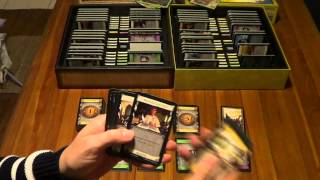
- Very high replayability due to randomized kingdom card sets derived each game.
- Solo variant can be played with base Dominion or expanded with Prosperity.
- Core mechanics are straightforward (deck-building, buying, VP scoring) which suits both new and experienced players.
- Some cards are interactive (e.g., Vault) and influence decisions and deck dynamics.
- Clear, apples-to-apples comparison when playing solo against a fixed-difficulty dummy.
- Solo play relies on a non-intelligent dummy strategy, which may underrepresent the strategic depth of a real 2-player match.
- Setup can be lengthy: selecting 10 Kingdom cards and organizing piles for a new game is more involved than a casual session.
- Certain kingdom combinations can feel skewed depending on the random draw, potentially influencing the perceived balance.
- Expansion content (Prosperity) is optional for the variant; base set alone remains viable but less variety.
- deck-building economy and engine-building through treasure and victory point cards, with evolving deck against an automated opponent.
- A casual tabletop session demonstrating a solo variant of Dominion using the base game plus Prosperity, with a fixed dummy opponent.
- instructional demonstration with step-by-step setup, explanation of rules, and live playthrough.
Mechanics (from transcript analysis)
- buying and treasure — Players convert treasure into purchases to acquire new action/treasure/VP cards from a shared kingdom card supply.
- deck-building — Players acquire cards to build their personal deck, improving abilities and options each turn.
- kingdom card variability — Each game uses a different set of 10 Kingdom cards chosen from the pool, increasing variability and replayability.
- solo/dummy opponent framework — A simplified solo variant where a dummy opponent is used to simulate competition, with a predefined strategy for the AI-like player.
- Victory point scoring — Victory points are earned via VP cards and end-game scoring conditions, shaping long-term strategy.
Video topics + discussion points
Quotes (from this video)
- this is kind of a a variant that I've just created myself that um that allows me to play solo
- Dominion is a deck building game for two to four players
- there's tons of replayability
- this deck is just to allow you to randomly select um 10 10 different types of Kingdom card
- the dummy player has non-intelligent treasure strategy
- we're going to buy Vault so this goes in my discard pile as does my hand
- we're going to concentrate on buying just victory points and we're going to stop buying treasure
- by the most expensive card you can can afford
References (from this video)
- core gameplay is exceptionally strong
- high replayability through card combinations and expansion options
- learning curve for new players
- complexities can scale with expansions
- engine-building via deck construction and card acquisitions
- Medieval/fantasy kingdom-building through deck-building
- mechanics-driven with emergent strategy
Mechanics (from transcript analysis)
- deck-building — players acquire cards to improve their own decks
- variable setup — Kingdom cards are drafted from a shared pool, creating different game states each session
Video topics + discussion points
Quotes (from this video)
- board games are not pizza you should not order a box up its content
- board games are art they should be savored and appreciated and shared with friends
- variability and replayability are the same thing they're not
- core gameplay is the key
- you can play forever and ever
References (from this video)

- Pioneer deck-building with legible path to mastery
- High replayability and modularity
Mechanics (from transcript analysis)
Video topics + discussion points
Quotes (from this video)
- "Fantastic game. Not going anywhere."
- "Oracle of Deli? I do like Oracle of Deli. It is one that I probably should get rid of."
- "Viticulture still safe. Rouge never going anywhere. Love this game."
- "Convert the cave farmers. I probably should get rid of it. It's so good though. It's really, really good."
- "Feast for Odin"
- "Glass Road versus Black Forest where I said I'm going to keep both."
- "I think I'm going to keep Black Forest for the gameplay that that gives. This is a new choice. I'm making these choices up on the fly."
- "Dominion is amazing. I absolutely adore Dominion. I think it's one of the best deck builders out there."
- "Lord of the Rings, Fellowship. This is totally safe. I love the experience that this gives me."
- "Sentinels of the Multiverse. That's another one where I like it a lot. I don't play it as much as I'd like to. It's a really satisfying game."
References (from this video)
- innovative idea with lasting influence
- endless content/expansions provide replayability
- fun core gameplay dynamic
- aesthetics feel bland
- rules not highly intuitive for new players
- setup and teardown can be tedious
- deck-building, engine-building
- fantasy kingdom-building
- analytical, design-focused
- Agricola
- Ticket to Ride
- Witness
Mechanics (from transcript analysis)
- deck-building — players construct a personal deck by acquiring cards from a shared pool, building engine interactions over the course of the game
- engine-building — combining cards to create increasingly powerful chains of actions and resources
Video topics + discussion points
Quotes (from this video)
- if there was a formula for creating a board game that sells it might look a little bit like this in this video
- the two things combined are going to generate a successful product
- idea well essentially we're talking about the core concept of your game, the hook
References (from this video)
- high replay value with many expansions
- easy to learn and deeply addictive once you get it
- expansion creep can overwhelm new players
- card-driven growth and combination
- deck-building with engine-building focus
- abstract strategic progression
Mechanics (from transcript analysis)
- deck-building — players acquire and curate a personal deck of cards to generate actions and resources.
- engine building — cards synergize to create more powerful combos over the game.
Video topics + discussion points
Quotes (from this video)
- Settlers of Catan ... it's really, it's the game that got us into the hobby
- it's a great family game night game you look angry with your family because you gotta do some trading
- Alhambra is a great game we go back to it again again because it is fun
- you need to have Mick because he loves to research the rules
- it's awesome must have
- it's a drafting card drafting game where you card draft to build your civilization
- Dominion is a true card drafting game
- Carcassonne is great put it in your collection
- Century spice road it's a true gateway is for beginners and it's so much fun
- it's called crank it is a card drafting game with a board game attached to it
References (from this video)

- pioneer of modern deck-building, highly replayable
- replay value with expansions
- can feel repetitive if not exploring expansions
- deck-building with variable setup
- medieval/fantasy kingdom building
- fast, modular, modular-card-driven
- Small World
Mechanics (from transcript analysis)
- deck-building — players construct their own decks from a common pool
- variable setup — the card pool changes each game, altering strategy
Video topics + discussion points
Quotes (from this video)
- it's just such a unique mechanic right throwing dice at a Target going through a dungeon together
- that g that game has one of the best table presence of uh of games you have you know it's one people just look at and like wow that looks really fun
- I love Feast for Odin and it's one that I think about a lot for its tight worker-placement, yet sandboxy feel
- Earth Reborn... it’s ahead of its time in that it was this big over the with like Miniatures
- eight hours per game time commitment
- the mechanics of it are solid; the wall mechanic and the way factions feel different is really fun
- the military side of it was brutal, especially in two-player
- the switch to cooperative really vaulted Mage Knight into our top games
- the best blend of mechanisms tied in with the theme
- card drafting vaulted into the mainstream after Seven Wonders
- there's so much content for campaigns; you can play forever with a great group
- it's so satisfying to get those cards and build this engine
- rolling dice and it feels so overwhelming and hard, but in a good way
- Dominion—you can randomize the set of the cards; it's the purity of deck-building
References (from this video)
- Clever self-balancing through deck clogging
- Creates tough strategic choices about when to buy points
- Leaders are naturally disadvantaged as they gain points
- Victory point clogging is sometimes viewed as a detriment in modern deck building games
- Building a domain through accumulation
- Kingdom building with cards
- Deck building strategy
Mechanics (from transcript analysis)
- Victory Point Deck Clogging — As players gain victory point cards, they clog their deck with cards that provide no benefit except victory points, creating a natural catch-up mechanism where leaders suffer deck efficiency loss
Video topics + discussion points
Quotes (from this video)
- Balance, perfect balance, I think is kind of boring in games.
- I like games that have a card that might feel better than a different card either circumstantially or always.
- As long as you have a fair shot at getting that card over just a random draw, that's the key.
- Self-balancing mechanisms make sure that games remain balanced while you play.
- Games that use the players to selfbalance it, especially if there's a lot of direct interaction in the game.
- If you pull one lever up, something else is going to go down.
- There's a way that the game kind of gives you an interesting choice and a little way of catching up if you are falling behind.
References (from this video)

- simple, fast, and fun
- huge card variety creates deep strategic options
- rulebook is clear and engaging
- replayability is high due to variable card sets
- accessible to players with Magic: The Gathering experience
- some cards are weak or ignored in many setups
- early emphasis on victory-point cards can clog the deck if not balanced
- box/packaging can mislead newcomers about the game's scope
- deck-building economy and domination by building a powerful deck of victory-point cards
- Competitive deck-building in a shared market card world; loosely medieval/fantasy flavor
- procedural, emergent gameplay with open-ended strategies
Mechanics (from transcript analysis)
- action cards and chaining — Playing action cards to gain effects, draw, or affect opponents.
- Attack and defense — Attack cards like Witch or Militia pressure other players; Moat offers defense.
- buying phase — Players collect money to acquire new action/treasure cards from a central supply.
- deck-building — Players acquire cards to add to their discarded deck, shaping future draws.
- End-game condition — Game ends when three card stacks are depleted or provinces run out; points tallied from Victory cards.
- trashing — Certain cards allow you to trash cards to gain better ones, thinning your deck.
Video topics + discussion points
Quotes (from this video)
- Dominion is a card game and not to be mistaken for a board game
- it's simple fast fun
- there are so many cards and types to choose from
- it's a great game
- the rulebook is amazing
- the artwork is nice
- I'm gonna give it a 9 on 10, 9.5 for me, I loved it
- it's one of those games that can be played over and over again and it changes every time
References (from this video)
- high replayability through varied markets
- clean, elegant core loop
- rules can be opaque to beginners
- some expansions can overwhelm new players
- deck-building and evolving markets
- Historical/Economic empire-building flavor
- emergent, modular play
- Ticket to Ride
- Scythe
Mechanics (from transcript analysis)
- Card-driven engine / market dynamics — Cards grant different actions and influence all players through shared supply.
- deck-building — Players curate a personal deck of actions to optimize turns and purchases.
Video topics + discussion points
Quotes (from this video)
- the race is long and in the end it's only against yourself
- comparison is the thief of Joy
- flow state not float state
- there's no substitute for reps
- start simple
- habits over goals
- the MVP approach can streamline your design process
References (from this video)

- pioneered the deck-building genre
- high flexibility and replayability
- lacks a fixed meta; can feel repetitive
- Card engine building
- Abstract deck-building
- Thunderstone
- A Few Acres of Snow
Mechanics (from transcript analysis)
- deck-building — construct a personal deck from a shared pool
- set collection / engine — acquire cards that interact to create engine and points
Video topics + discussion points
Quotes (from this video)
- Acropolis is light, but thinky and very approachable for a wide group.
- The best thing about this Barcelona is the action selection system.
- Spellbook is a beautifully themed engine builder with a lot going on under the hood.
- Ticket to Ride Europe remains a timeless gateway game with a clean map and straightforward drafting.
References (from this video)

- pioneered deck-building as a genre
- highly replayable with many expansions
- overexposure in early hobby; many players have played it a lot
- teaching can be lengthy for newcomers
- developing a personal deck and engine
- fantasy deck-building world
- card-driven engine building with changing kingdoms
- A Game of Thrones: The Card Game (deck approach)
- A worthwhile alternative deck-builders
Mechanics (from transcript analysis)
- deck_building — players construct their own decks from a shared pool
- set_collection — gaining action cards that synergize with strategies
Video topics + discussion points
Quotes (from this video)
- the box is worn, it is beaten, and yet it is still holding strong
- you've got to have four people and you have to play it with people that you're going to be able to play with again
- the tension of those things... I love the stress and the bet of 'is this the right move?'
- it's the granddaddy of the genre
- Race for the Galaxy sits the top of the list
References (from this video)

- deck-building engine-building
- medieval market-building
- procedural, card-driven progression
- Paleo
- Magic: the Gathering
Mechanics (from transcript analysis)
- deck-building — acquire cards to build a stronger deck
- set collection / engine-building — composing a personal engine to maximize points
Video topics + discussion points
Quotes (from this video)
- we're going to bask in the world's negativity today
- the world's negativity cuz that's really what we need more of
- we want to be a beacon of negativity in this world
- the special cards are pictorially meaningless
- randomness disguising itself as difficulty
- it's an evil game
- sandbox experience
- I feel like a boy that has cheated on the test because that was one of the comments
- three faces on the cover
- three big faces one of them is wearing a cowboy hat
- this game is clearly inferior
- the rule book was great but everything else was weak
References (from this video)
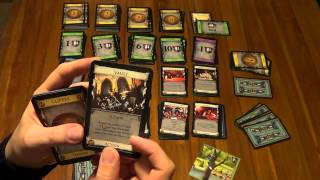
- Engaging core loop of buying and upgrading your deck
- High variability through kingdom card setup and combos
- Supports emergent strategies and player creativity
- Shuffling interrupts flow on larger tables
- Early-game draws can feel underpowered depending on kingdom setup
- Can be lengthy with multiple players and heavy deck cycling
- Economic engine through card buys, deck thinning, and VP accumulation
- Medieval-inspired kingdom-building with modular markets and evolving decks
- Educational, live-play demonstration with hands-on card interactions
Mechanics (from transcript analysis)
- Action-phase sequencing — Play actions to chain effects before buying, enabling multi-card combos.
- Buy phase / coin spending — Players convert treasure to purchases, optimizing purchases from a shared market.
- deck-building — Players acquire new cards to add to their discard pile, shaping future draws.
- Shuffling / deck management — When the deck is exhausted, discard pile is shuffled to form a new draw deck.
- Trash and gain effects — Certain cards allow you to trash cards for direct benefits or VP potential.
- Victory point tracking — End-game triggers when victory condition cards run out or points are tallied.
Video topics + discussion points
Quotes (from this video)
- the good thing about keeping your deck slim I find is you can keep high value cards coming out all the time
- the ultimate aim is to be the one with the most victory points at the end of the game
- you really need to figure out your strategy first
- a slim deck helps you hit your key cards more consistently
- Forge lets you trash cards for a precise-cost replacement—that's a powerful swing
References (from this video)

- Foundation of deck-building genre
- High replayability
- Can feel repetitive over long campaigns
- Deck-building engine building
- Fantasy/trade-theory market
- Abstract economic progression
- Aeon's End
- Thunderstone
Mechanics (from transcript analysis)
- card drafting — Selecting from a limited set of cards shapes your engine.
- deck-building — Buy cards to add to your deck and draw them later for points and power.
- Victory point accumulation — End of game scoring decides winner.
Video topics + discussion points
Quotes (from this video)
- Dominion is the greatest deck building game of all time.
- It's a chess with dice.
- It's a horse betting simulator for the whole family.
- The biggest draw of Massive Darkness is that each hero is hugely asymmetric.
- In Space Base, you have your own fleet of ships that are flying into space to generate cash.
References (from this video)

- Narrative arc in new expansion
- Shadow cards
- 16th expansion in series
Mechanics (from transcript analysis)
- Deck building — 300 cards, 25 new Kingdom piles, Shadow cards
Video topics + discussion points
Quotes (from this video)
- Praise be Phil Walker Harding
- Are you not entertained?
- OG deck builders are my jam
References (from this video)

- defined the deck-building genre
- set the standard that others improved upon
- great for learning deck-building mechanics
- good box version with multiple games included
- card holders can spill if box is tipped
- fantasy
- competitive_strategy
- later deck-builders that improved on the formula
Mechanics (from transcript analysis)
Video topics + discussion points
Quotes (from this video)
- Dominion set the standard and then it was great because then everybody came came around they stood on the on Dominion shoulders and they improved deck-building
- the epitome of like what is an action game you don't watch those movies where you're like I just want to sit back turn off my brain just have a good time that's what this is
- very zen right it's very zen
- it seems a little silly but it's the best kind of silly
- the more people the better this game feels
- people will agree to like not explore that last space or not do that last thing that's gonna trigger the end of the game just to keep going
- if you go in here as just like run-and-gun Batman rolled dice and just punching faces you're gonna get crushed
References (from this video)

- Quick gameplay
- High replayability
- Strategic depth
- Online implementation is smooth
- Can be complex for new players
- Attack cards can feel unfair
- Deck-building strategy
- Medieval kingdom-building
- Competitive resource management
- Magic: The Gathering
- Hearthstone
Mechanics (from transcript analysis)
- card drafting — Players choose cards to add to their deck from a central supply
- Deck building — Players start with a basic deck and acquire more powerful cards throughout the game
- Resource management — Managing treasure cards to buy better cards and victory points
Video topics + discussion points
Quotes (from this video)
- I'm uncomfortably competitive and comfortable for me and uncomfortable for the people I play with
- You can't shop for victory without money
References (from this video)
- clean, teachable engine-building
- high replayability via expansions
- expansions can overwhelm new players
- deck-building and optimization
- fantasy/medieval kingdom-building
- mechanics-driven with thematic flavor
- Race for the Galaxy
- Amun-Re
Mechanics (from transcript analysis)
- Card Synergy — combining cards creates powerful engine combos
- deck-building — acquire cards to improve your deck and engine
- modular expansions — extensive set of expansions to alter gameplay
Video topics + discussion points
Quotes (from this video)
- Prelude expansion came out for this—game changer in expansions for me.
- The vineyards expansion expands the board so all of a sudden you don't just focus on the board as much—you go over to your little vineyard.
- This is one of those games that we went through all the effort to get every expansion and organize it, and we still pull it out.
References (from this video)
- Groundbreaking deck-builder
- Deep strategy
- Replayability
- Card interactions can overwhelm new players
- Deck-building
- Medieval/early modern economy
- Abstract
- Dominion: Intrigue
- Star Realms
Mechanics (from transcript analysis)
- deck-building — Acquire new cards to build a stronger deck.
- hand management — Optimize plays with a growing hand.
Video topics + discussion points
Quotes (from this video)
- You gotta touch it
- The journey is long and we're going to but it's rewarding
- Gateway into something else
- We put in the work to learn these games
- Rules-first approach, how-to-play videos, reviews, and playthroughs
- Calico is a gorgeous, tactile gateway game
References (from this video)

- Fast turns for experienced players
- Strong foundational deck-building mechanic
- Can be confusing for first-time players due to speed and minimal teaching
- Low direct player interaction in early plays
- Doppel so Clever
Mechanics (from transcript analysis)
- deck-building — Players construct a personal deck during play to gain actions and abilities.
- hand-management — Players manage and optimize their hands to maximize efficiency each turn.
Video topics + discussion points
Quotes (from this video)
- two lists of six fantastic two-player games
- it's super quick it's super easy and i love it
- let us know whose list is better
- this is like a video game feel to a board game
References (from this video)
- Pioneering deck-building genre
- Not deeply discussed in the transcript
- Deck-building engine building
- Medieval/fantasy kingdom-building
- Abstract engine-building with thematic flavor
Mechanics (from transcript analysis)
- deck-building — Acquire cards to improve your deck and engine
- hand management — Strategic draw and play of cards
Video topics + discussion points
Quotes (from this video)
- it's a cooperative game
- you have the choice to betray somebody
- pull everything out of the box and it's good to go
- there is already a story deck but you would add things into it based upon your actions
- we are making a prototype next time
- fantastic not the master but fantastic
References (from this video)

- pioneered modern deck-building
- highly expandable with many expansions
- robust digital implementations
- art from early editions is dated
- engine-building with evolving card sets
- kingdom-based deck-building
- mechanics-first with thematic flavor
- Star Realms
- Ascension
- Shards of Infinity
Mechanics (from transcript analysis)
- deck-building — start with a small deck and improve by buying cards
- randomized kingdom — each game uses a different set of cards, driving variety
Video topics + discussion points
Quotes (from this video)
- This is literally a game about abstract weirdo art.
- Dominion was the first deck building game that said we should.
- Tons of props to Dominion for being so original.
References (from this video)
- highly replayable with many expansion options
- simple core mechanic with deep strategic potential
- oversaturation of deck-building clones over time
- resource management and card-based economy
- deck-building in a medieval-ish realm
- abstract, engine-building with evolving permutations
- Ticket to Ride
- Ticket to Ride expansions
Mechanics (from transcript analysis)
- deck-building — players build their decks from a common pool of cards
- Expansion-driven variability — numerous card combinations create new strategies with each set
Video topics + discussion points
Quotes (from this video)
- design a game that lasts and that reveals new secrets after hundreds of plays
- start with the vanilla, make it fun, then expand
- simplicity is sophistication
- design for both the first game and the hundredth game
- create a community around the game to keep it alive
References (from this video)

- Pioneered the deck-building genre
- Highly replayable
- Can be repetitive without expansions
- Balance debate across sets
- Resource manipulation and engine-building
- Deck-building strategy in a card game cosmos
- Abstract strategic progression
- Cascadia
- Ticket to Ride
Mechanics (from transcript analysis)
- bag_building — Combo-driven engine creation via card combos.
- deck_building — Players construct a personal deck during the game.
Video topics + discussion points
Quotes (from this video)
- This is a Splender Killer.
- Ticket to Ride destroyed Katon.
- All the covers are changing.
References (from this video)
- Pioneering and influential in the deck-building genre
- Accessible core rules with endless expansions
- Older design can feel clunky to new players
- Balance depends on cards drawn and available in the supply
- Deck-building as the core engine of growth and expansion.
- Medieval/fantasy city-building universe through card-driven actions.
- Abstract yet iconic deck-operating system with engine-building potential
- Ascension
Mechanics (from transcript analysis)
- deck-building — Players start with a small deck and improve it by buying cards.
- set_collection_and_action_chain — Cards unlock new actions and chains, creating strategies.
Video topics + discussion points
Quotes (from this video)
- it's a deck building action selection game where you're trying to be the spirit who first accomplishes a certain objective
- Star Realm's is purely a deck builder there's nothing else there
- Legendary is a game system which kind of comes from a game called Ascension
- Legacy you have to build like a dam before the river overflows
- amazing production
- it's one of the friendliest games here
- it's a deck building game, it is a push your luck deck building game so it's quite unique
- Dominion—it's purely deck-building and it showed the world what deck-building is
- you get tons of new cards in this game
- the whole game is based on the universe and it’s all about that
References (from this video)
- easy to learn but hard to master
- foundational for modern deck-building games
- can feel repetitive if players overuse similar strategies
- deck-building, engine-building
- deck-building engine in a persistent market
- strategic, procedural progression
- Thunderstone
Mechanics (from transcript analysis)
- deck-building — players acquire new cards to construct powerful decks
- engine-building — combo cards create increasingly efficient turns
- hand_management — play cards to gain actions and money from a growing deck
Video topics + discussion points
Quotes (from this video)
- all the interactions between players are positive
- this list is designed around people just getting into the Hobby
- easy to learn and once some people know the game you can mix them up
- Forbidden Island teaches the basics of cooperative gaming and can be used as a launching point to other games in the Forbidden series
- the Resistance is probably the best of them
- Seven Wonders scales incredibly well from three to seven players
- One worker mechanic is an awful lot of fun
- Memoir 44 is the most accessible of them mostly because it feels like playing with toy soldiers
- Small World looks really dinky and inviting but it's a mercenary and brutal game
References (from this video)

- pioneering deck-building genre
- high replayability with many expansions
- big box can be unwieldy; organization matters
- rule learning can be dense for newcomers
- deck-building engine-building
- fantasy kingdom-building
- evolving strategy through card sets
- other deck-building games
Mechanics (from transcript analysis)
- deck-building / engine-building — players build efficient decks to acquire chains of actions and purchasing power.
Video topics + discussion points
Quotes (from this video)
- Pandemic base game is absolutely amazing; it's one of my top 10 favorite games of all time.
- Dominion ... it's the big box and it's organized by sets; the grand Puba of deck-building.
- Ticket to Ride is a solid gateway game; a must-have for building a collection.
- Steampunk Rally Fusion is amazeballs ... it's that good ... board game coffee seal of approval ten times over.
- This is not an expansion; this is the Cure—the dice game of Pandemic.
- Pandemic Legacy Season 1 — one of my top ten favorite games.
References (from this video)

- Standalone in a single box with no chase to collect
- Deep engine-building and mix-and-match card interactions
- Can become long at higher player counts
- Expansion card variability can affect balance
- Deck-building, engine-building
- Abstract medieval/fantasy engine-building world
- Mechanics-first, modular progression
- Ascension
- Living Card Games
- Magic: The Gathering
Mechanics (from transcript analysis)
- deck-building — Players construct their own deck during the game from a common supply.
- engine-building — Acquiring cards to create efficient chains that generate more buys and points over the game.
Video topics + discussion points
Quotes (from this video)
- we're here to hang out and talk about an academic survey about war games and the kind of data that he's hoping to collect
- the data collection is staying open all the way through July 1st
- the market has definitely changed the composition of the game audience
- the bigger papers won't show up until early to mid 2025
- people wrote paragraphs, like High School essays on this
- please go complete the survey
References (from this video)

- innovative deck-building concept
- replayability through variable card pools
- often labeled as multiplayer solitaire
- attack cards can slow opponents down
- engine-building and resource management
- deck-building from a shared market
- table-ruled, experimental engine development
Mechanics (from transcript analysis)
- deck-building — Acquire cards to build your own deck and engine.
- shared market interaction — Actions by one player affect what others can do.
Video topics + discussion points
Quotes (from this video)
- the interaction essentially comes from sitting around a table and working on this puzzle together and then comparing your relative skill
- it's interesting to see where Cooperative games are going now
- these are the true solo games you could play by yourself with no problems at all
References (from this video)

- Ubiquitous and popular game
- Foundational deck-building game
- Long-term search interest
- Deck building
- Fantasy kingdom
Mechanics (from transcript analysis)
- Deck building — Primary mechanic of the game
Video topics + discussion points
Quotes (from this video)
- I used to call this a shelf of shame that was a pretty common thing to call it back in the day and I don't never really liked that term because I don't feel shame that I haven't got to these games
- this is mostly work like this is just a backload of things I probably should get to
- people will still be looking for it
- it doesn't matter if the game is like 20 years old people will still be looking for it
- I've painted this one and I spent a lot of time doing it
- there's no point putting them on the channel I think both of them have been out of print for like a decade
- one of the worst kickstarters by one of the worst studios in board gaming history
- Golden Bell Studios did everything wrong you could possibly think of
- purely toxic company run by incredibly terrible people
- it would be kind of a joke that I'd be able to do a three minute video of feudum
- this game has a tutorial video online that's like 40 minutes long
- The Rose explanation video feels like a parody but it's actually how the game is played
- nothing personally to me puts me off playing a game that then sitting down unboxing it and having a craft assignment
- stop making me spend hours assembling your damn games
- this is an uncontrollable mess right now
- I'm a full-time dad and I'm really doing this in the evenings
- I have a finite space and also it just puts pressure and stress on me having a whole bunch of crap there that I know I'm not going to get to
- I'm going to do a big cull
- I will be published by this company but that doesn't mean I'm going to be slavishly devoted to every single game they put out
- I am a sucker for cute animal games like I really am
References (from this video)
- High replayability and emergent strategies
- Elegant, approachable engine-building with simple core rules
- Strong community ecosystem and ongoing expansions
- Steep learning curve for newcomers
- Can feel solitary without cooperative or competitive interactions with others
- Endgame length and table dynamics can vary significantly
- deck-building empire creation with continuous engine development
- Fantasy/medieval kingdom-building in a modular, evolving deck-building world
- mechanical, abstract
- takanoko
- Super Dungeon Explore
- Bomberman-inspired adaptations
Mechanics (from transcript analysis)
- deck-building — Players acquire cards from a central supply to add to their deck, enabling stronger actions and purchases over time.
- hand_management — Each turn starts with drawing a hand and using coins to acquire new cards, shaping future draws.
- variable_end_condition — The game ends when certain supply piles are emptied or Province pile is depleted, leading to strategic pacing.
Video topics + discussion points
Quotes (from this video)
- Prototype early sometimes phrased as fail faster; the frequent advice to prototype early is sound
- put physical components in front of us and let's take this thing for a spin
- game ideation is a joyful process
- Don't base your game on popular properties from film or TV
- Prototype early, play test extensively
- The key is to keep iterating and honing your game until it's ready for the world
References (from this video)

- Pure representation of the deck-building mechanic without extraneous baggage
- Highly replayable with variable kingdom cards
- Clear focus that informs later deck-building games
- Thematically forgettable
- Can be unforgiving to new players due to evolving engine complexity
- Deck-building as core mechanic
- Deck-building engine in a generic fantasy/merchant theme
- Mechanics-first with minimal thematic narrative
- modern deck-building games
- deck builders with added themes or extra mechanics
Mechanics (from transcript analysis)
- deck-building — Players add cards to their decks from a common supply to improve their engine over the game.
- engine-building — Permanent improvement of personal deck through combinations of kingdom cards.
- hand management — Each turn you decide how to play your cards to optimize your engine and scoring.
Video topics + discussion points
Quotes (from this video)
- Code Names did something that sounds impossible. It made a party game that's actually legitimately good.
- Dune eroded everything around it to pure theme. It succeeded through the devotion to its fiction and the corresponding chaos that comes from that.
- Diplomacy is all about perfect information and imperfect trust.
References (from this video)
- Very smooth turns and historically influential
- Notable catch-up mechanism that keeps games competitive
- Base game feels basic relative to modern deck-builders
- Expansions improve depth but the core is dated
- currency conversion into points via card buying
- early deck-building era
- basic, back-to-basics deck-building
- Magic: The Gathering
- High Society
Mechanics (from transcript analysis)
- Catch-up mechanics — Spent money translates into future card draws, balancing power.
- deck-building — Acquire cards to improve your deck and points.
- Turn efficiency — Turns are fast and fluid, enabling quick play sessions.
Video topics + discussion points
Quotes (from this video)
- this is a jeweling game
- self-contained box so that you're not paying paying to win this style game
- these type of games aren't generally for me
- the rules are quite fiddly
- extremely simple rule set
- one of the best styles of games like this that I've seen
- instantly fell in love with it
References (from this video)
- original classic deck building game
- foundational game for the genre
- easy to teach
- accessible to non-gamers
- second edition available with improvements
- good for introducing people to modern gaming
- many expansions can be overwhelming
- original release can feel dated
- medieval kingdom building
- resource accumulation
- other deck building games
Mechanics (from transcript analysis)
Video topics + discussion points
Quotes (from this video)
- Gen Con is back baby
- y'all we recorded an entire episode 301... and then we go into the process of sending the files to each other and it's only happened what maybe one other time Tony in 300 episodes where we didn't have the recorded file
- please do not wear a backpack that's juts out about 16 to 24 inches from your back
- when you land on one of those letters your opponents will draw a card
- nobody feels out of the game or you don't have a chance
- this game a seller game for me is that it's no fun if there's no way to win the game
- so I'm wondering if the convention center if they would move it to the field
- we went by there every day there was one or two gentlemen there that we just almost became friends with
- games of the con I loved this game
- I've played over three four thousand games on the iPad
- go back to the roots that maybe started this whole deck building system
- as tyrants of the underdark first time I played that game I thought wow this is a really brilliantly well done
References (from this video)
- Created the deck building genre
- Simple to teach
- Very quick to play
- Multiple expansions available
- Elegant core mechanism
- empire_building
- Thunderstone
- Copycat
- Paperback
Mechanics (from transcript analysis)
Video topics + discussion points
Quotes (from this video)
- board games are diverse but card games really could feature anything
- players are all doing this simultaneously and so you want to be the player that stays in the longest
- if you turn over to many matching cards then you end up with nothing
- auction games are are well served by the sort of card game mechanisms
- play very quickly for three to six players
- an excellent excellent game
- take that card games or I think the most combative sort of card games
- totally silly extremely random but essentially we're playing cards to attack other players
- still one of my favorite games
- each card is a floor on a building
- there's a whole genre of what we call take that card games
- you could place bombs or or murderers into these buildings or the police can then take away a murderer
- Seven Wonders was the sort of figurehead for the cloud drafting games
- sushi go has been an enormous hit
- now the figurehead for the genre is probably sushi go
- deck building was created really by the game of Dominion
- there's something delightful about the simplicity of a game like Dominion
- you can teach to people really easily and play very very quickly
- a form of set collection again
- classic tableau builder would be something like San Juan
- this is a fantastic card game
- buying cards laying them out in front of us and they're going to keep generating us money
- this really is one of my favorite genres
- anybody can play these games and not everybody can play them well
- I love speed games I think it's a fantastic category of card games
- trick-taking games very very straightforward in their basic format
- the basic mechanism can be turned into all these different games
- all tweak it slightly in different ways
- my top ten card game mechanisms
- hopefully I've given you a broad picture of the world of card games