Set thousands of years in the future, Dune the board game is based on the Frank Herbert novels about an arid planet at the heart of the human space empire's political machinations.
Designed by the creators at Eon of Cosmic Encounter fame, some contend that the game can best be described as Cosmic Encounter set within the Dune universe, but the two games bear little in common in the actual mechanisms or goals; they're just both set in space. Like Cosmic Encounter, it is a game that generates player interaction through negotiation and bluffing.
Players each take the role of one of the factions attempting to control Dune. Each faction has special powers that overlook certain rules in the game. Each turn players move about the map attempting to pick up valuable spice while dealing with giant sandworms, deadly storms, and other players' military forces. A delicate political balance is formed amongst the factions to prevent any one side from becoming too strong. When a challenge is made in a territory, combat takes the form of hidden bids with additional treachery cards to further the uncertainty.
The game concludes when one faction (or two allied factions) is able to control a certain number of strongholds on the planet.
Note that the Descartes edition of Dune includes the Duel Expansion and Spice Harvest Expansion, the Landsraad variant from Avalon Hill's General magazine, and additional character disks not provided by AH.

- rich thematic depth and crunch
- strong replayability with different factions
- spectacular production and components
- rules and complexity can be intimidating
- factional politics, betrayal, and warfare
- Arrakis with spice economy
- crunchy, conflict-heavy
- Cosmic Encounter
- Twilight Imperium
Mechanics (from transcript analysis)
- Area control and conflict — factions vie for control across key territories
- hidden information and bid-based power — player powers disrupt rules and alliances
Video topics + discussion points
Quotes (from this video)
- one of the cutest games i've ever seen
- it's a great time for a movie nerd to cross those streams and get into board games
- the thing infection outpost 31 or everything epic's awesome big trouble in little china aren't on here
- the back in time is also one of the hardest games i've ever played
- this is a license to print money but a hell of a game
- it's not just the art style which is super evocative and cool
References (from this video)
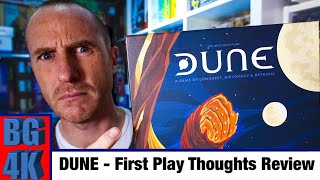
- Strong thematic integration with the Dune universe
- Deep faction interaction and balance across editions
- High potential for strategic depth with proper playgroups
- High rule complexity and many exceptions
- Steep learning curve requiring multiple sessions to master
- Old production quality compared to modern games
- control of strategic territories and spice resource shaping power
- Arrakis (the desert planet), spice economy, imperial politics
- epic sci-fi diplomacy with faction-specific abilities
- Cosmic Encounter
- Starfarers of Catan
Mechanics (from transcript analysis)
- alliances_and_abilities — factions have alliance-specific abilities influencing strategy.
- area_control — participants vie for control of strongholds to win the game.
- bidding_and_treachery — treachery cards and auctions influence power dynamics; bluffing and counter-play.
- combat_and_casualties — battles resolve with spice adjustments and leader losses.
- resource_management — spice as a central resource used for bidding, revival, and combat improvements.
- shipping_and_supply — troop movement through space and supply management.
- storm_movement — a storm moves across the board affecting territories and combat options.
Video topics + discussion points
Quotes (from this video)
- The special abilities tie into the theming of the Dune universe really, really well.
- The factions interact with each other in a way that feels balanced and integrated over editions.
- This game rewards multiple plays and a dedicated playgroup to fully appreciate its complexity.
References (from this video)

- recognized as a strong IP-based title
- noted for ongoing relevance and appeal
Mechanics (from transcript analysis)
Video topics + discussion points
Quotes (from this video)
- I think this is a fantastic look.
- it's a fantastic collection almost I want it.
- I still don't have eclipse.
References (from this video)
- theme and mechanics are inseparably interwoven
- emergent narrative through rules and decisions
- high complexity for new players
- Power struggles, betrayal, and alliance management
- Dune universe; spice economy and political intrigue
- Epic, world-integrated narrative
- Rex Final Days of an Empire
Mechanics (from transcript analysis)
- asymmetrical factions — factions have unique abilities and strategies
- economy of spice — control and trade spice to influence power and resources
- plot-driven interactions — narrative elements influence decisions and leverage
Video topics + discussion points
Quotes (from this video)
- The theme is fundamentally pasted on to the gameplay loop.
- the mechanisms flow from a theme in a very natural way.
- the theme and the mechanics are so tightly interwoven that if you try to reimagine this game with a different narrative, it just wouldn't create the same emotional resonance.
- You're not just moving pieces on a board. You're enacting the power struggles, the betrayals, the alliances of Herbert's universe.
- Great theming isn't about fancy art or impressive miniatures. It's about creating an experience where every card played, every token moved, and every decision feels like a natural extension of the world you've temporarily inhabited.
- The best themes don't just look good, they make you forget that you're playing a game at all.
References (from this video)

- Iconic IP with deep strategic potential
Mechanics (from transcript analysis)
Video topics + discussion points
Quotes (from this video)
- "Fantastic game. Not going anywhere."
- "Oracle of Deli? I do like Oracle of Deli. It is one that I probably should get rid of."
- "Viticulture still safe. Rouge never going anywhere. Love this game."
- "Convert the cave farmers. I probably should get rid of it. It's so good though. It's really, really good."
- "Feast for Odin"
- "Glass Road versus Black Forest where I said I'm going to keep both."
- "I think I'm going to keep Black Forest for the gameplay that that gives. This is a new choice. I'm making these choices up on the fly."
- "Dominion is amazing. I absolutely adore Dominion. I think it's one of the best deck builders out there."
- "Lord of the Rings, Fellowship. This is totally safe. I love the experience that this gives me."
- "Sentinels of the Multiverse. That's another one where I like it a lot. I don't play it as much as I'd like to. It's a really satisfying game."
References (from this video)

- political intrigue, resource management, and conquest
- Futuristic desert planet Arrakis; power struggles over spice wealth
- epic strategy with hidden hand management
Mechanics (from transcript analysis)
- area-control / negotiation — Players vie for control of territories and influence through alliances and tactical moves.
- multi-resource economy — Players manage spice, influence, and other resources to advance their position.
Video topics + discussion points
Quotes (from this video)
- RTFC: read your cards. read the card. it's your own fault if you don't read your card.
- it's not my fault you missed the combo.
- I hate losing. I hate losing to Jeff more than anything and I hate losing games that I love.
- let it go.
- I love competition; there's certain people that I don't mind losing to, but with others I want to crush them.
- I am a control freak; I hate it when people try and help me set up a game.
- read your effing cards read the
- we bend the rules primarily in a co-op game and mainly at the end
References (from this video)

- No surprise on top 3 list
- Awesome two-player version
- Amazing game overall
- Political conflict
- Dune universe
- Strategic gameplay
Mechanics (from transcript analysis)
- Area Control — Control territories
- Card Driven — Play cards for points or events
- Intrigue — Political intrigue mechanics
Video topics + discussion points
Quotes (from this video)
- if ever somebody says that he has the top 10 games of all time never trust them it's in their opinion
- if i could give a game 11 out of 10 clank legacy would be it
- this is the reason why i fell in love with board games in general
- it's my favorite solo game for sure the more i play it the more i want to play it
- to be honest right now probably next year it will be different maybe tomorrow it will be different
- the unknowing like what's gonna happen what's his agenda it's just an amazing experience
- if you like deck building then i think you definitely like clank legacy like a lot
References (from this video)

- Strong license appeal
- IP resonance and potential for expansion
- Active discussion about expansions
- Longer play sessions
- Learning curve for newcomers
- political intrigue, desert world
- Dune universe
- grand strategy, epic
- Imperium
- Dune Dynasty
Mechanics (from transcript analysis)
- Area Control — control of territories and spice economy
- asymmetric factions — different win conditions and abilities per faction
Video topics + discussion points
Quotes (from this video)
- it's the bomb of gilead that we all required
- the minis are rad
- paul grogan did awesome great job
- i can't reveal too much
- kitchen sink this thing
References (from this video)

- Deep thematic embodiment of competing moral frameworks
- Rich, politically flavored storytelling
- Very complex rules and long playtime
- Negotiation can lead to analysis paralysis
- Political intrigue and factional power struggles.
- Futuristic feudal desert planet Arrakis with rival houses.
- Asymmetric, faction-driven strategies with strong thematic flavor.
Mechanics (from transcript analysis)
- area control / conquest — Control key territories and resources to gain victory.
- asymmetric player powers — Each house possesses unique abilities and win conditions.
- Diplomacy / negotiation — Alliances and betrayals shape the game state.
Video topics + discussion points
Quotes (from this video)
- Spirit Island creates a perfect laboratory where we can see the core principle in action.
- Goodness is a tangible feature of this world.
- When you make a move in Spirit Island, you can point to a real tangible outcome.
- The game of go is the perfect game for this idea.
- Aji is really fascinating for me.
- In Dixit, the storyteller gives a clue based on one of their cards.
- They're having an emotional reaction to the art.
- The town's folk team to win, the town must vote to execute the storyteller.
- colossal 20 lb box of adventure Gloom Haven.
- The scenario book dictates reality. It tells you the objective of your quest, and that objective is good simply because the book has proclaimed it to be so.
- Now, let's use a custombuilt script with the experimental roles to demonstrate and error theory.
References (from this video)
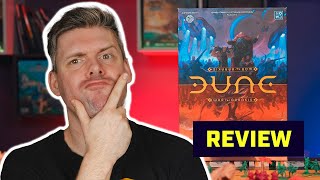
- Strong thematic integration with the Dune IP
- Smooth asymmetric design that is easy to grasp across factions
- High replayability due to variable events and asymmetry
- Impressive component quality and table presence
- High price point
- Long playtime (often 2–4 hours)
- Inserts and storage can be cumbersome
- Two-player teams can reduce communication incentives if players are not coordinated
- Politics, warfare, and resource control through spice
- Arrakis, a desert planet with sandworms and spice
- Mechanics-driven storytelling with asymmetric factions and event-driven dynamics
- War of the Ring
- Star Wars: Rebellion
- The Lord of the Rings: War of the Ring
Mechanics (from transcript analysis)
- Asymmetric powers — Factions (e.g., Fremen, Atreides, Harkonnen) have unique powers and different resource rhythms.
- dice placement — Players roll a pool of dice each round and place them on matching symbols on their board to perform actions or play cards.
- Event and objective cards — Two decks of event/round cards drive unpredictable twists and scoring conditions.
- Spice management — Spice tokens fuel actions and victory-relevant decisions, with dedicated phases for certain factions.
- Variable victory objectives — Victory points come from multiple possible objectives revealed via cards, encouraging blocking and adaptation.
Video topics + discussion points
Quotes (from this video)
- the best selling point for this game is the theme
- this desert power sounds freaking awesome and it is freaking awesome
- asymmetric actions on arcus is what this AAA game means
- the insert is horrible
- two versus two is great
- the flow is smooth and the theme is strong
- it's a spice mechanism here and harvesting is great
- the action dialogue and card interactions create a surprising amount of drama
- it's not just about dice; it's thematically cohesive and visually striking
References (from this video)
- strong thematic integration that rewards strategic planning
- rich diplomacy and depth for repeat play
- epic scale appeals to experienced gamers
- high complexity can be daunting for newcomers
- long playtime and heavy components
- facets of the design can be brittle if players rush diplomacy
- political intrigue, resource control, factional maneuvering
- Arrakis, desert planet with spice as the central resource
- epic, high-stakes power struggle
- Shadows over Camelot
- Space Cadets
Mechanics (from transcript analysis)
- asymmetric factions — factions with distinct powers and win conditions create asymmetric strategy
- diplomacy and betrayal — alliances, back-channel deals, shifting loyalties shape the game
- long, multi-stage planning — extended setup and intricate interactions demand patience and long-term vision
Video topics + discussion points
Quotes (from this video)
- the peak end Theory which is that you basically average the peak discomfort that you felt at any point and the ending value of the discomfort that you felt when it ended
- loss aversion gives you a lot of tools to emotionally manipulate the player
- play the game you're given not the game you want to play
- games are integral to The Human Experience
- it's a craft you can learn; it's not just math and numbers
References (from this video)

- Powerful thematic commitment that drives all mechanics
- Social balance and reads of others' intentions create depth
- Dune's ambition feels distinct and daring
- Very heavy and long; not accessible to casual players
- Themes and complexity can be a barrier to entry
- Noble houses, politics, and deception
- Frank Herbert's Dune universe
- Thematic, asymmetrical design anchored to fiction
- other heavy negotiation/area-control games
- thematic strategy games with strong social dynamics
Mechanics (from transcript analysis)
- Asymmetric powers — Several factions with unique strengths and endgame goals.
- auction/market pressure — Market-like card interactions influence power dynamics.
- negotiation and social deduction — Alliances and betrayals shape the flow; social balance matters.
Video topics + discussion points
Quotes (from this video)
- Code Names did something that sounds impossible. It made a party game that's actually legitimately good.
- Dune eroded everything around it to pure theme. It succeeded through the devotion to its fiction and the corresponding chaos that comes from that.
- Diplomacy is all about perfect information and imperfect trust.
References (from this video)
- epic scale and thematic ambition
- unparalleled sense of political intrigue in a strategy game
- long play times; heavy learning curve
- requires experienced players for best experience
- long, strategic combat and politics
- sand-swept interstellar political intrigue
- grand strategy, epic intrigue
Mechanics (from transcript analysis)
- multi-faction political combat — Vote-based laws and strategic positioning shape the board.
- resource-driven conquest — Complex resource management drives long-term planning and alliances.
Video topics + discussion points
Quotes (from this video)
- one of the biggest things you know as being a good game designer you want to give players interesting choices
- Gamers or people in general they want to feel rich they want to feel powerful they want to feel smart
- there's value in playing terrible games
- you can create a system that can be re-themed to different things to make more money
- it's like watching film... you break it down to see how they do it
- this is a monumental feat of game design
References (from this video)

- rich theme
- deep strategic potential
- apparent complexity
- longer playtime
- political intrigue, resource control, and factional warfare
- Dune universe, desert planet Arrakis
- epic, grand strategy
- Star Trek Catan
- Forbidden Stars
Mechanics (from transcript analysis)
- area-control/resource management — players vie for control over key territories and resources.
- asymmetric faction play — different factions have distinct abilities and win conditions.
Video topics + discussion points
Quotes (from this video)
- this is the going analog quiz show
- do you have a license for that so it's all about different licensed games
- name one katan based on a licensed property
- you know your history i was recently at the museum of play in rochester new york
- and that's the going analog quiz show everybody now you can stop watching and go play a game
References (from this video)

- strong thematic integration
- deep strategic potential
- a favorite among aficionados of deck builders
- complex and lengthy
- learning curve may be steep for newcomers
- faction-driven strategy in a cutthroat ecosystem
- Desert planet politics and resource management
- grim, thematic, strategic
Mechanics (from transcript analysis)
- deck-building — Card-driven actions shape the strategy and power dynamics
- economic warfare / negotiation — Control of markets and alliances influences scoring
Video topics + discussion points
Quotes (from this video)
- the most anticipated game of 2022 for two players two one
- please like, subscribe and see you next time on the next video
- it's cute and perfect for a family game to get introduced somebody
References (from this video)

- Iconic theme and deep political play
- strong six-player balance when fully set
- combat mechanics may feel dated to some
- requires a group committed to a long session
- asymmetric factions and grand strategic maneuvering
- Dune universe with factional politics and spice economy
- slow-burn, negotiation-driven with shifting allegiances
Mechanics (from transcript analysis)
- asymmetric factions — distinct factions with unique abilities and win conditions
- negotiation and alliance-building — deals shape the board state and victories
Video topics + discussion points
Quotes (from this video)
- the trading element really comes into its own
- there's something undeniably majestic about the game
- six is the magic number for it
- it's a hell of a lot easier to get six people together that it is to get eight
References (from this video)
- Dune: Imperium
Mechanics (from transcript analysis)
Video topics + discussion points
Quotes (from this video)
- this is like the pinnacle of board gaming awards that we know of
- paleo is really really punishing
- chaos pure chaos
- not a game for first-timers
- decrypto is so good