Eternal Decks is a co-operative game in which players try to complete the stage objectives before any one player cannot take an action. Players start the game with five cards in their deck, but will quickly look to acquire more cards from the various Eternals (characters within the game) who each have their own unique eight-card deck. On your turn, you must perform one action:
Play a card (on the field, on the river, or by using an ability)
Generate a jewel
Give a card to a teammate
There are restrictions when playing a card. All three rows in the field cannot have cards of the same color or same number next to each other. Additional restrictions are applied to a row based on the stage you are playing. Jewels are used to negate the negative effects brought on by the Eternals.
The game has six stages, and the various stages will have you collect points, survive a ghost town, navigate a labyrinth, defeat a boss, and more to win the game!

- Large, meatier take on limited-communication co-ops
- Depth and variety across scenarios
- Elegant escalation of complexity while remaining accessible
- story-driven, scenario-based puzzle
- cooperative scenario engine; limited communication
- large scenarios with modular cards and deck-building elements
Mechanics (from transcript analysis)
- card passing to avoid dead hands — Passing cards to teammates to prevent stalling.
- limited communication — Players must cooperate with restricted information flow.
- scenario-based stages — Six different scenarios with unique rules and cards.
- tableau/deck progression — Unlocks and evolves the deck with new cards and abilities.
Video topics + discussion points
Quotes (from this video)
- Ink. Now, this game is a lot nicer than Azul, I would say.
- The second side is a little bit more thinky, a little bit more bite to it.
- This game is absolutely fantastic.
- If you're looking for a two-player game that has a little bit of everything, Gatsby's it.
- This is the first game of this type that I know of ... takes that concept and just adds a lot of things around it.
- This is a lifestyle game where like I didn't have any baseball cards when I played this.
References (from this video)

- Cooperative structure with evolving difficulty as lines are completed
- Three distinct rule sets per line add variety and challenge
- Complexities may be intimidating for casual players
- Editor’s note: not all players have definitive playthroughs yet
- Cooperative engine-building with line-based progression
- Cooperative card-driven world with multiple lines of play
- Tension-filled, team-focused progression
Mechanics (from transcript analysis)
- Deck-building / card play — Play cards to advance lines, upgrade or trigger effects.
- Descending play order — Some lines require playing from a larger number down to smaller numbers.
- Line-based progression — Three lines each impose different rules and constraints.
Video topics + discussion points
Quotes (from this video)
- Let's talk about the hottest and most popular board games out there right now.
- these character powers are insane.
- after four races of rolling dice and using your abilities, you'll check who's going to be the winner.
- Zenith is a line battler.
- Eternal Decks, which is a cooperative board game all about playing out cards.
- the theme is through and through true to the true material real.
- The hottest board game out there right now is The Old King's Crown.
- You reveal those cards, but then all of the players can manipulate cards, chaos ensues.
References (from this video)
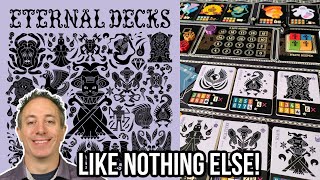
- high replayability across multiple stages and difficulties
- clean, cohesive design where mechanics reinforce each other
- strong limited communication and cooperative tension
- beautiful production values and components
- wide strategic depth without becoming fiddly
- setup and teardown can be lengthy due to multiple decks and piles
- mythic eternal beings with curse mechanics and jewel-driven resolution
- cooperative fantasy setting where players unlock Eternals by playing cards to a shared field while managing curses and jewels.
- stage-based progression with evolving curses and unlockable Eternals
- Beasts
- Take Time
- The Crew
Mechanics (from transcript analysis)
- cooperative card placement on a shared grid — Players place one card per turn into rows with color and number restrictions; rows have progression rules that can make certain moves invalid.
- curse and jewel system — Eternals introduce curses that hinder a player; jewels can be activated to resolve curses via meeting certain card criteria.
- deck expansion and hand management — Completing rows grants new Eternal decks to players, gradually expanding hand content and strategic options.
- limited communication — Players cannot disclose exact cards or hand contents but can use discs to indicate where they want to play and discuss strategy at a board level.
- river and rare card timing — A river mechanic where cards contribute to activating jewels; filling the river yields rare, wild cards that also function as a timer.
- stage-based goals and scoring — Stages provide different goals with stars as victory markers; unlocking permanents and jewels contributes to scoring.
Video topics + discussion points
Quotes (from this video)
- the mat is amazing and as you can see, doesn't crease or have any folds in it
- this game looks great
- it's kind of like a cooperative, heavier red seven feeling
- the tenseness in this game is huge and I love it
- it's truly a cooperative game and the limited communication works
- there's nothing quite like this game
- it's a masterpiece in design
- everything here is just really cool
- there's a ton of content here
References (from this video)

- highly engaging cooperative experience
- hidden information creates tension and teamwork
- availability may vary outside Japan
- limited communication
- cooperative puzzle
Mechanics (from transcript analysis)
- cooperative puzzle — players transparently coordinate without direct communication
Video topics + discussion points
Quotes (from this video)
- it's yatsi with monsters fighting
- open it up, play right away
- this is one game that I will sort of put any wager on
- Just One is a guaranteed winner
- Star Wars and Memoir 44 together
References (from this video)

- Cooperative play encourages teamwork
- Accessible entry for co-op players
- Compact components for easy setup
- Possible variability in difficulty due to card draw
- Limited solo-play appeal (if any)
- Cooperative card-driven adventure
- Unknown
- Collaborative storytelling through shared objectives
Mechanics (from transcript analysis)
- Card-driven actions — Players use action cards to perform tasks and advance goals in the cooperative framework.
- cooperative play — Players work together to overcome game challenges rather than competing against each other.
Video topics + discussion points
Quotes (from this video)
- There's no solving it.
- It's a waiting game.
- We love her. She's great and she's going to grow out of this.
- Please let us know what you've been playing and what games you're looking forward to that are releasing this year.
References (from this video)

- Gorgeous, striking production and component quality
- Deep, puzzle-like planning with scalable difficulty
- Adds variety through multiple modules and curses
- Can be punishing with curses; requires planning to mitigate
- Some players may find the rule interaction dense
- eternals, curses, and a battle of wits
- Three-row board with cosmic/archetypal eternals and curses
- Cooperative puzzle with limited communication and modular content
- Lost Ruins of Varnac
Mechanics (from transcript analysis)
- collaborative card play — Players place cards into three rows with rules about color, number, and row behavior.
- curse mechanic — Eternals impose curses that constrain play and require gems or countermeasures.
- endgame deck management — Running out of cards ends the game unless players manage resources to continue.
- scenario/modules — Different modules or scenarios alter difficulty and objectives.
Video topics + discussion points
Quotes (from this video)
- it's really about exploring around
- this is a cooperative game, you and all your teammates crash landing onto a planet
- it's really about enjoying the kind of stories that emerge as you explore these different parts of the world
- Flip 7 is a really simple push your luck game, round after round
- The Old King's Crown... it's the hottest game right now. People are playing this a bunch
- Lost Ruins of Varnac, which is also from CGE in that you're trying to find a way to keep that round going
- It's war on steroids. Like, there's a million things you can do to augment what you have played
- it's just silly fun
References (from this video)
- Fresh design with cooperative depth
Mechanics (from transcript analysis)
- deck-building — cooperative deck-building with a crew-based theme
Video topics + discussion points
Quotes (from this video)
- I think everything has a story.
- I'm 100% a writer. I have a creative writing degree.
- This is a fun adventure and it's fun to do.
- Board games have almost unlimited scope to be unintentionally funny.
- Everybody's Wrong About Dune Brackets Imperium.
- The Fate of the Fellowship is really exciting.
- I'm jazzed to talk about these things.
References (from this video)

- Gorgeous cards
- Fun cooperative play
- gorgeous card art, cooperative puzzle
- Cooperative deck-building
- collaborative, aesthetic
Mechanics (from transcript analysis)
- cooperative play — Low communication, team-driven card play
Video topics + discussion points
Quotes (from this video)
- I had so much anxiety about making this change for months and months, arguably years if you watch the last update, but people really took to it.
- You mean Getting Games? That just that really sealed the deal.
- It's just a fun thing to consider.
- I'm really looking forward to it as opposed to putting these things off and like stressing about them.
- recording my opinions episodes live as well as other vlogs. I did a 2024 favorites video talking about all my favorite games from last year.
References (from this video)

- Outstanding card game
- One of the best card games of recent years
- Limited communication co-op handled very well
- Gorgeous production
- Compelling game system
- Clever card play system
- Several different ways to play within box
- Card game
- Cooperative card game
Mechanics (from transcript analysis)
- Card play system — Very clever card play system driving gameplay
- Deck building — Deck building elements within the game
- hand management — Essential hand management mechanics
- Limited communication cooperative — Cooperative gameplay with limited communication
- Variable objectives — Multiple ways to play with different stages that change objectives
Video topics + discussion points
Quotes (from this video)
- The real Chris time is the friends we made along the way
- If you've played a lot of Arnak and you want to spice it up a little bit, this is a really good one
- This is just a fantastic version of this game
- It's a great formula. It's not a good execution
- It does almost nothing wrong, but it just doesn't do enough right
- This is such an outstanding card game
- One of my favorite dungeon crawls, period
- Star Wars is one of my favorite games
References (from this video)
- Highly innovative constrained-communication design
- Rich, replayable scenarios
- Accessibility depends on players' tolerance for non-verbal coordination
- mystery-adventure with six distinct stages
- cooperative card-game with limited communication
- structured, scenario-driven storytelling
- Beasts
- Take Time
Mechanics (from transcript analysis)
- Cooperative play with limited communication — players cannot openly share all information
- deck management — avoid running out of cards while supporting team goals
- stages / scenarios — different rules and variants across six stages
Video topics + discussion points
Quotes (from this video)
- it's basically like Where's Waldo the board game
- this is Mindbug, which is I've been touting for the last few years
- The twist is you're playing cards very simply
- Here's the best reprint: Wolf Street
References (from this video)
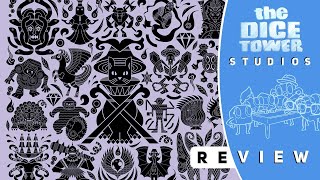
- Lavish, striking production with vivid art, strong table presence, and high-quality components
- Deep variety and depth in a relatively simple core system, enabling multiple play styles
- Unique Eternal system that creates meaningful choices and ongoing tension with curses and unlocks
- Effective handling of limited communication, providing clarity on what can be discussed while maintaining mystery
- Excellent replayability and scope; stages offer different objectives and escalating complexity
- Very large table footprint, requiring substantial space for setup and play area
- Setup and teardown can be tedious due to stage-specific components and tokens
- For some players, limited communication can feel restrictive or lead to meta-gaming without careful group discipline
- Eternals, curses, jewels, and anchored deck interactions drive the cooperative challenge; players manage limited information to advance a shared goal
- A multi-stage, mythic-cooperative tableau where players manipulate cards to fulfill stage-specific win conditions across different environments (Nature Star, Labyrinth, Ghost Town, Cave, Mountain, etc.)
- explanatory, stage-by-stage explanation with emergent storytelling through card play and eternal selection
Mechanics (from transcript analysis)
- cooperative_win_conditions — The team wins by achieving four stars across stages (and by completing other stage-specific objectives) while avoiding loss conditions.
- curse_and_jewels — Certain Eternals impose curses that block actions until jewels are generated by playing into the river, adding a resource-management layer.
- deck_building — Eternals are unlocked by completing rows; each Eternal adds new cards and a potential curse, reshaping future draws and strategies.
- hand_management — Each player starts with a small personal deck (five cards) and must manage the cards to meet field/river placement rules, drawing to refill to three cards after plays.
- limited_communication — Players may share general information (cards played, strategic intent) but cannot disclose exact contents of their hands; communication is guided by tokens and rules.
- randomization_and_replayability — Different stages (Nature Star, Labyrinth, Ghost Town, Cave, Mountain, etc.) and Eternal combinations create varied setups and long-tail replayability.
- tile/board_placement — Cards are placed in field rows, river, and other zones with placement rules (descending/ascending order in specific areas; color and value adjacency restrictions in fields).
Video topics + discussion points
Quotes (from this video)
- The production is lavish and beautiful. I absolutely love the look of this game.
- The Eternals system is brilliant because you need these eternals to continue in the game, but they come with a curse.
- I think it is one of the best card games I've played in the last several years.
- The core system is simple yet deep, and the depth grows with the Eternal deck and stage variations.
- Limited communication is handled very well in this game; it doesn't leave a lot of gray areas.