In Fishing, you try to catch as many tricks as possible over eight rounds, with each card you catch being worth 1 point. You then use your caught cards for the next round — and if you didn't catch enough tricks to fill your hand, you'll draw fresh cards from the ocean stack, which will introduce new cards for you fishers to fight over.
In more detail, at the start of each round, you have 8-13 cards in hand, depending on the player count and the round. In the first round, the cards go from 1-10 in four colors. Standard trick-taking rules apply, with players needing to follow the color led and the highest card of the led suit winning the trick.
New cards come into play from the ocean stack in waves, with higher-value cards in the four colors, a green trump suit from 1-16, 0 cards that let you snag a card from the trick, and special-powered buoy cards that can always be played into a trick regardless of what you have in hand. With buoys, you can steal the lead or determine which color must lead the next trick, force players to pass cards or lose points; you can even steal all other cards in a trick, ideally netting yourself huge fish for use next round.
At the end of each round, score 1 point for each card you caught. Whoever lands the most points after eight rounds wins.

- Innovative mechanic combining trick-taking with deck building
- Interesting decision space regarding whether to win or lose tricks
- Excellent mechanical execution
- Fascinating interplay between current and future hands
- Uninspired box design
- Uninspired game name
- Game length may be slightly long
- Game may work better at certain player counts
- Fishing as a pastime
- Ocean/Water-based fishing environment
- Abstract with fishing components
- Niku Dice
- The Crew
Mechanics (from transcript analysis)
- Bonus Cards — Special cards with effects like stealing tricks or gaining lead position
- Deck building — Cards won in previous rounds are shuffled into a deck to form future hands
- multi-round scoring — Points from tricks determine hand quality for subsequent rounds
- Trick-taking — Players play cards to win tricks, with standard trick-taking rules
Video topics + discussion points
Quotes (from this video)
- You're listening to the Broken Meeple show, a podcast that speaks passionately about board games for the benefit of those who play them
- This is probably one of the most interesting and possibly one of my favorite trick-taking games I've played now
- My eyes lit up you know and it's kind of like the first time I saw that typewriter mechanic for civilization of New Dawn
- People crying that this is like a nearly Flawless game are seriously downplaying the luck problem in this
- This is the Pinnacle of Bland
- There is no excitement in this game, this game just doesn't generate an emotional response
- It generates a lot of fun banter, a lot of cool thinking
References (from this video)

- dynamic, escalating tricks feel strategic and fun
- chaotic but engaging with evolving hands
- may be chaotic and luck-influenced for some groups
- fishing and competition
- trick-taking with evolving hands
- competitive, tactical
Mechanics (from transcript analysis)
- deck-building / hand evolution — tricks upgrade your hand and influence future rounds
- trick-taking with evolving hands — wins in tricks become future-hand cards with power-ups
Video topics + discussion points
Quotes (from this video)
- it's like a summer camp where I get to play lots of games
- this is one of the coolest things about this game
- the turns are so Snappy; you're always ready to go
- it's a bigger game where you are building out and visiting villages in the Black Forest
- two things that I love in games: dice placement and engine building
- the art is fascinating; some people really did not like the art and some people really did
References (from this video)
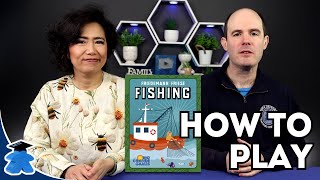
- Clear, step-by-step explanation for setup and play that mirrors actual gameplay
- Ocean deck progression adds meaningful depth and long-term strategic tension
- Eight-round structure provides a natural learning curve with escalating complexity
- Varied card types (zeros, boys, trumps) introduce rich decision points
- Visual overlays and host narration help demystify rules for new players
- Relatable, friendly hosts (Stella and Tarant) maintain engagement while teaching
- The overall rule set is fairly dense for players completely new to trick-taking games
- Ocean deck interactions can feel unfamiliar and may require multiple viewings to fully digest
- Effective strategy hinges on accurate hand/deck tracking; beginners may struggle with memory and management
- Some edge-case rules (e.g., zero-card steals and ellipses) require careful attention to avoid confusion
- The tutorial assumes some baseline knowledge of terms like lead, follow, and trump
- Fishing, deck progression, and card collection drive the strategy as players reshape their decks across eight rounds.
- An ocean-themed trick-taking world where fish cards are the currency of points and rounds determine which cards remain powerful.
- Tutorial-style, classroom-like guidance with concrete examples and overlays to track round state and hand size.
Mechanics (from transcript analysis)
- Card management between nets and boats — At round boundaries, cards move from net to boat and from boat to the next round's starting deck, requiring players to manage what they’ve captured and what remains accessible.
- Card types and ellipses-boys — Boy cards with ellipses create follow-up effects; some boys enable leading the next trick, others dictate who wins or how the trick resolves after play.
- Deck growth via ocean deck — After each round, fish cards collected become part of the player's net. The remaining cards come from the ocean stack, introducing stronger cards over time.
- End-of-round resolution with special cards — Zero and priority cards resolve in a defined order; the winner of the trick can be impacted by these effects, shifting points and control.
- round-based progression — Eight rounds, with round size and hand requirements increasing. The round card dictates how many cards players will hold in that phase.
- Set-collection / scoring by cards in net — Each card in a player's net scores a point. End-of-round scoring tallies these points, and the accumulation drives the overall winner.
- Trick-taking — Players lead a card; others must follow lead suit if able. The highest card of the lead suit wins unless overridden by trumps or special cards.
- Trump mechanic — The ocean deck introduces a green trump suit. If a trump is played and can be followed, players must follow or trump according to standard rules; trumps win over non-trumps.
- Zero and special cards — Zero cards and special 'boy' cards alter trick dynamics: stealing, leading, or breaking standard follow rules, adding strategic depth.
Video topics + discussion points
Quotes (from this video)
- Take the game card corresponding to your player count.
- Shuffle everything that's left and deal the entire deck out into the player's starting hands.
- The ocean deck introduces a fifth suit, which is the green trump suit, beginning at one and potentially going as high as 16.
- Zero cards follow the standard rules of following suit.
- You'll find stronger cards in all of the basic suits. The base suits go to 10, but the ocean deck will quickly give you cards from 11 all the way up as high as 18 if you get through the entire ocean deck.
- The trick is over once everyone has played one card into the trick, and the winner is the player who played the highest numbered card matching the lead suit or, if a trump was played, the highest trump.
References (from this video)
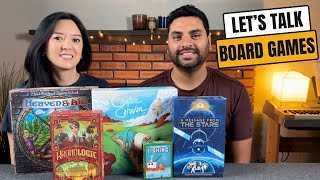
- Unique deck progression
- Interesting card mechanics
- Multiple scoring opportunities
- Can run long
- Potentially repetitive
- Best at higher player counts
- Trick-taking card game
- Ocean/fishing
- Progressive deck building
- Skull King
Mechanics (from transcript analysis)
- Trick-taking — Players win tricks that become their new draw pile
Video topics + discussion points
Quotes (from this video)
- We both really enjoy deduction games
- Sometimes you just want to play a lighter game
- It's so rare to play a game like this
References (from this video)

- Unique trick-taking game mechanic
- Interesting balance between drawing from ocean stack and winning tricks
- Cards are both points and tools
- Fishing
- Fishing
- Puzzle-like
Mechanics (from transcript analysis)
- hand management — Cards you win become points but also hand limit mechanics
- Ocean Stack — Draw additional cards from ocean stack instead of hand limit, better cards deeper in stack
- Trick-taking — Win tricks to score points
Video topics + discussion points
Quotes (from this video)
- I believe that this game is the perfect board game (about Fromage)
- There's so many different strategies that you can do in this game (about Arcs)
- I freaking love civilization theme games (about Cilu)
- I love games when they're like the whole purpose is to stop you from doing what you're trying to do (about Ironwood)
- There's something beautiful and magical and cozy about this game (about Harmonies)
- I cannot get enough of this game (about River of Gold)
References (from this video)

- distinctive twist on the traditional trick-taker format
- the deck-upgrade mechanic gives a satisfying catch-up dynamic
- compact and accessible for fans of the genre
- rules can be dense for non-trick-takers
- may not appeal to players seeking light, purely casual plays
- trick-taking with deck-building twists
- underwater/sea-life world with sea creatures
- clever, compact strategy within a trick-taking frame
- trick-taking games in general
Mechanics (from transcript analysis)
- deck construction across rounds — you can replace or add cards from a new stack, shaping your hand across rounds
- Trick-taking — standard tricks-based scoring with a persistent, evolving deck
Video topics + discussion points
Quotes (from this video)
- The resource wheel is very clever. So, this looks really neat.
- The town is a shared board and it's worker placement. But if someone wants to take your space, they can and they bump you into a space called the park which just raises your energy.
- Don't Skip Leg Day … came in a protein shaker bottle, which you could not use to make a real protein shaker.
- The packaging is part of the product experience; it should invite you to pick up and touch.
- If I’m gifting a game, I want to give something that feels special, not just another box on the shelf.
- Beasts’ art and card design are so memorable that people stop to look at the cards even before learning to play.
References (from this video)

- innovative pull on trick-taking
- tight balance and pacing when played well
- deep strategic moments amid accessible rules
- balance is nuanced and can be tricky to juggle
- tug-of-war between tricks and deck growth
- trick-taking with a fishing/collection theme
- tactical, tension-filled decisions with evolving deck quality
- Fuji Flush
- Flip Seven
Mechanics (from transcript analysis)
- Ability cards — special cards let you take the best card from a trick or gain other bonuses.
- draw limits and fishing deck — rounds increase hand size; when you can't fill, you draw from a communal deck.
- score pile draws — the tricks you win are added to a pile that becomes your draw pile later.
- Trick-taking — win tricks to build a scoring pile and influence end-game draws.
Video topics + discussion points
Quotes (from this video)
- I freaking loved it
- it's a big civilization game
- I absolutely love this game
- production is amazing
- I would definitely recommend that you check this out
- this is a deck-building style game