A demented telepath has invaded your mind with intentions of releasing an ancient evil you locked away in your psyche long ago. Visit your most potent reminiscences and utilize their abilities to reorient your mind to your advantage. Channel enough power from surrounding manifestations to permanently trap the intruder within an illusory prison while evading any mental threats capable of stopping you.
Galdor's Grip is a solo fantasy card game played entirely in your hands. Cycle through the deck, utilizing player actions and card abilities to strategically manipulate the order and orientation of the cards. Complete scoring objectives to earn enough points (⭐) required to win the game, while avoiding any situations that result in a loss.
—description from the designer

- Surprisingly deep for a very light rule set
- Extremely portable and in-hand friendly; no table needed
- Clean, well-structured rule book
- Minimal fiddly mechanics due to two-state cards
- Full deck visibility enables strategic planning and foresight
- AI-generated art used in some iterations; graphic design is not standout
- One card requires a truly random placement, which is ambiguous in implementation
- Rule book in prototype form may be improved in the published version
- Some players may want more polished print-and-play assets
- Dark fantasy environment featuring figments and relic-like stones; scoring via binding stones and star markers.
- In-hand, portable deck exploration with real-time deck manipulation and threat management.
- Emergent, puzzle-driven progression driven by on-reveal effects and deck order decisions.
- Palm Island
Mechanics (from transcript analysis)
- Binding stones and value adjacency — Four binding stones interact with adjacent cards of the same value to boost end-game scoring.
- Deck movement and rotation — After revealing, players move a number of cards from the top to the bottom and may rotate a card to change its value.
- end-game scoring variety — Stars on cards score, with additional bonuses from card adjacency and set-specific effects (e.g., Beast Sanctum).
- Expansions and deck construction — The game supports expansions that introduce deck-construction and parameterized deck-tuning.
- Global deck visibility — You can look through the entire deck at any time, removing some of the usual hidden-information tension found in in-hand games.
- On-bottom effects — Some cards gain effects when they are moved to the bottom of the deck and may alter possibilities for future draws.
- Reveal-deck exploration — Players reveal cards from the top of their deck; certain cards trigger on-reveal effects.
- Second-from-top option — If available, you can choose to use the value of the second-from-top card instead of the top card.
- Survival and danger from figments — Reveal figments; their on-reveal effects escalate: first reveal does nothing, second rotates, third leads to loss.
- Top-card sequencing and rearrangement — When moving cards to the bottom, players may rearrange the moved cards or insert the top card elsewhere in the stack.
- Two-state cards — Cards have only two states (face up and face down) with straightforward interaction, keeping physical fiddliness low.
Video topics + discussion points
Quotes (from this video)
- this game has a very very light rule set
- it's a very very simple rule set
- surprising amount of depth here
- this makes it a great portable game
- the rule book is really well done
- I don't really have anything negative to say about the game
- a worthy addition to the pantheon of in-hand games
- I'm looking forward to seeing what the published version of this will look like
- a nitpick
- you can look through the whole deck at any point
- the least fiddly one
- the rule book is out of order
References (from this video)
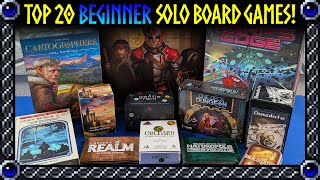
- an in-hand game with minimal setup
- great example of print-and-play accessibility
- requires some DIY effort to assemble or print
- handed-deck manipulation and deck customization
- print-and-play and in-hand game concept
- minimal and approachable
Mechanics (from transcript analysis)
- in-hand play — game remains in hand as you rotate and arrange components
- print-and-play — physical sheets in hand-driven format with DIY assembly tips
Video topics + discussion points
Quotes (from this video)
- Desolate is still my number one.
- This is a solo only game. No multiplayer with solo mode.
- There’s no better choice than Mike Lambo's solitary war game books.
- Jump Drive is a tableau building in its purest form.
- Cartographers, one of the best games in the verb and write genre.
References (from this video)
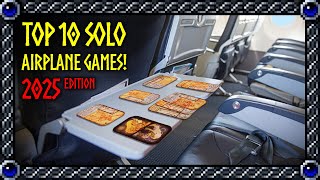
- free download option
- delivers a tight puzzle in-hand
- expands with expansions
- space for cards rotates can be cramped
- learning curve for first-timers
- small, abstract fantasy
- deliberate reveal and rotation of cards
- puzzle-driven and minimalist
- Maiden's Quest
- Palm Island
Mechanics (from transcript analysis)
- card reveal and rotation — cards change state (face down/up/rotated) to progress
- progression with figments — avoid disruptive tokens while revealing cards
Video topics + discussion points
Quotes (from this video)
- Just a fantastic little game
- it's just so simple
- portable and the length is just right
- I printed a letter sized paper
- Behold Rome takes the crown