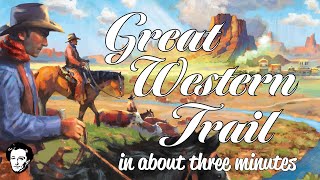
America in the 19th century: You are a rancher and repeatedly herd your cattle from Texas to Kansas City, where you send them off by train. This earns you money and victory points. Needless to say, each time you arrive in Kansas City, you want to have your most valuable cattle in tow. However, the "Great Western Trail" not only requires that you keep your herd in good shape, but also that you wisely use the various buildings along the trail. Also, it might be a good idea to hire capable staff: cowboys to improve your herd, craftsmen to build your very own buildings, or engineers for the important railroad line.
If you cleverly manage your herd and navigate the opportunities and pitfalls of Great Western Trail, you surely will gain the most victory points and win the game.
—description from the publisher

- Engaging endgame phase with multiple options for scoring and blocking opponents
- Deck-building integrates well with board progression and engine-building
- Cowboy and engineer roles provide meaningful, recurring bonuses
- High variability through back-side building tiles increases replayability
- Strong hand management and discard mechanics that allow strategic planning
- High cost and slow process to place and upgrade buildings, leading to a stagnating board
- Craftsman path is slow and often underwhelming compared to Cowboys/Engineers due to opportunity cost
- Limited interaction—opponent buildings mostly hinder rather than enable, reducing dynamism
- Long playtime, especially at 4 players; still feels lengthy at 2-3 players
- Card-draw luck can swing outcomes; stall mechanics can swing last-steps near Kansas City
- Overall decision density can be low; many turns feel obvious and not very 'thinky'
- westward expansion, cattle driving, and deck-building-driven engine
- American frontier, 19th-century cattle ranching on the trail to Kansas City
- progress-driven journey on a linear trail with variable board elements
- Eclipse
- Terra Mystica
Mechanics (from transcript analysis)
- building placement and upgrading — place buildings on the board with costs and upgrade them to more powerful variants
- deck-building — players acquire and manage a hand of cow, engineer, and craftsman cards to improve actions and earnings
- hand management and disk removal to unlock bonuses — remove disks to unlock bonuses and upgrade positions in Kansas City
- hazard and token management — hazard tokens interfere with movement and require expenditure to remove or bypass
- market and hiring costs — cow market and job market pricing determine costs for acquiring cows and hiring workers
- Objective cards and scoring — draw and complete objectives; some provide end-game points, with penalties for unmet ones
- route-tracking / movement along trail — train tokens move along a map with hazards and rewards; distance affects tolls
- toll / transfer fees — end-of-turn transfer costs based on distance to a target token
- Worker-placement-like actions — hire workers (cowboys, engineers, craftsman) to perform actions via the job market and train movement
Video topics + discussion points
Quotes (from this video)
- I really like pretty much every aspect to this part of the game where you are firstly putting out new tokens onto the board and you have decisions to make they're three different spots allow you to pick one of the two different tokens and put it out
- the big incentive to get these craftsmen out onto your board
- the trail fills up and it's just not interesting unless you adapt
- hand management like deciding what cows to keep in your hand is usually really obvious
- card draw luck can swingy, especially near Kansas City
References (from this video)

- Tight engine-building and strategic depth
- Elegant combination of mechanics
- Rule complexity may be non-trivial
Mechanics (from transcript analysis)
- deck-building — Construct a deck of action cards to shape decisions.
- worker placement — Send workers to perform tasks along the trail.
Video topics + discussion points
Quotes (from this video)
- you are on pace to lead our leaderboards
- you've got 15 out of 20 points which is huge
- this will be the final episode so i win right
- the reigning champion of the going analog quiz show
- i love these descriptions these are so good
References (from this video)

- tight pacing and engaging engine-building
- strong interaction via shared track and neighboring actions
- high replayability with variable builds and tracks
- can feel sprawling and long
- not ideal for very casual players
- economic engine-building along a modular rail/trail system
- Old West cattle drive with stops along the trail
- tension between speed and efficiency as you optimize your hand and actions
- Gaia Project
- Terraforming Mars
Mechanics (from transcript analysis)
- Deck-building and hand management — your hand evolves as you progress toward Kansas City
- path optimization and action selection — three potential moves each turn; balancing speed vs. value
- tile-based action economy with variable buildings — randomized common buildings create varied strategies each game
Video topics + discussion points
Quotes (from this video)
- Age of Innovation feels like it delivers the pinnacle experience of that kind of whole system.
- Twilight Struggle is a borderline masterpiece.
- The arc of Twilight Struggle is so exciting; tension grows across the board.
- This is Mage Knight Ultimate Edition—changing it to cooperative mode is incredible; I’d never go back.
- Eldritch Horror highs are the top board game experiences I’ve had.
- Agricola is the best board game we have ever played and it has stayed at the top for years.
References (from this video)

- don't like it
- new version won't convert
- western
- railroads
Mechanics (from transcript analysis)
Video topics + discussion points
Quotes (from this video)
- hey everyone who just kind of made it in time i'm not going to say it was a shall we say the easiest time to get here
- come on seriously i need to get on with a stream in a minute
- what is going on at fantasy fly at the moment they're just not bringing out any major good games
- every time they try to do a spin-off game that isn't a card game they tend to fail
- root's okay but i think the fact that you've got to have a balanced group of players who know what they're doing to play it i think it's just too much
- i just i'm okay with rue but i would never seek it out
References (from this video)

- Rich engine-building with tactile components
- Satisfying decision space
- Can be long and heavy for new players
- Railroad expansion and cattle management
- American West frontier and cattle trade
- Euro-style economic engine-building
Mechanics (from transcript analysis)
- action selection — Choose actions on your turn to advance your cattle operation.
- Deck/hand management — Use and discard cards to improve actions and scores.
- route optimization — Plan routes to move cattle and complete tasks efficiently.
Video topics + discussion points
Quotes (from this video)
- I'm absolutely pumped and I'm going to get every question 100% correct there will be no guessing I will definitely know all the answers exactly.
- we'll see how good your semic Curren board game knowledge is all right we'll see so let's go to the first picture and name this game.
- I have to check this out I'm so interested.
- these were all deck builders and so very nice.
References (from this video)

- Made the top 10 over Through the Ages
- Cattle driving
- American Old West
- Economic rondel
- Through the Ages
Mechanics (from transcript analysis)
Video topics + discussion points
Quotes (from this video)
- Board Game Geeks top 100 sometimes feels like random people voting random stuff
- This is the way by two random people from Latvia
- Your mind feels like a fog after playing Spirit Island
- Frodo really doesn't want to destroy ring at the end he's like nah I'll go home
- It's a fine game it's super boring it just the same thing over and over
- Wrongfully not in the top 20 yet
References (from this video)

Mechanics (from transcript analysis)
- Engine-building / route optimization — moving workers along a route network to build wagons and fulfill orders
Video topics + discussion points
Quotes (from this video)
- we picked it up for absolute peanuts
- it's actually really good for adults as well
- the rule book is utter utter awful
- this is a complete game we hate this game
References (from this video)
- strong theme and depth
- fits into a marathon Great Western Trail experience
- long play time
- AP risk for some players
- deck-building, route planning, and cattle management
- American West, cattle drives and trains
- thematic Euro with strong interactivity
- Great Western Trail
Mechanics (from transcript analysis)
- deck-building — cards used to take actions and trigger engine-building
- engine-building — building a hand that improves actions over the game
- Worker placement / action selection — select actions via a board with expanding options
Video topics + discussion points
Quotes (from this video)
- this is definitely a simplified version of the fuller game, and it is a version of the game that plays a lot quicker.
- I would probably rather carve out an extra hour and play the full game.
- I liked it. I think it was an interesting drafting game. It plays super fast, y'all. 15-20 minutes.
- The graphic design is amazing.
- I'm excited for Race to Berlin.
References (from this video)

- Clear, tense decisions around pace vs. hand quality
- Compact decision space without being overwhelming
- End-game scoring can feel finicky for newcomers
- pace and efficiency in delivering cattle to Kansas City
- Late 19th-century American West, cattle ranching and railroad expansion
- strategic puzzle with careful engine development
Mechanics (from transcript analysis)
- Engine building and scoring — Develop actions to improve future turns and maximize end-game points
- Route/path optimization — Balance pace along the cattle delivery path toward Kansas City
- Worker placement / action drafting — Choose from a limited set of buildings/actions each turn, shaping early rhythm
Video topics + discussion points
Quotes (from this video)
- the moment there you are just deciding the path you're gonna go and you just have all this amazing stuff in front of you
- it's such a fun part of terraforming Mars
- this pacing of your hurting your cattle all the way through the path to Kansas City
- the order of actions is critical and you have to plan ahead
- it's the type of game that makes your brain mush in a good way
- it's a really accessible Cooperative game that I can play with just about anybody
References (from this video)

- well-regarded classic in the designer-family
- strong strategic depth
- can be heavy for casual players
- economic strategy and engine-building
- old-west cattle-herding and logistics
- n/a
Mechanics (from transcript analysis)
- route optimization / hand management — players optimize routes and manage a hand of cow cards to fulfill orders
Video topics + discussion points
Quotes (from this video)
- representation is really really important you know like this is speaking from experience growing up as a people of color
- we are curious to know what your experience was like with spiel digital and online conventions
- calico, i really enjoyed learning and playing calico
- we would like to know what your thoughts are on Patreon and what you would like to see
- this month you'll probably see beyond the sun and at least on two Fridays we're going to be live streaming
References (from this video)

- very quick, snappy turns
- satisfying engine ramp with tangible progress
- reliable, enjoyable table presence
- some AP potential in dense player counts
- theme may not appeal to everyone
- economic engine-building with rondel action economy
- The American West; cattle herding and railway logistics
- conditioned by efficient turns and a sense of progress toward Kansas City
Mechanics (from transcript analysis)
- hand management — Discard or keep cards to generate money and actions for the current round.
- round-the-table rondel — Turns are compact; decisions cascade toward the next player with quick pacing.
- set-up to scale — Player count affects timing but remains smooth due to streamlined turns.
Video topics + discussion points
Quotes (from this video)
- Time melts away and goes by quickly when you're invested in the game.
- The turns are snappy, and the game feels quicker than you expect.
- This is Slay the Spire, a roguelite where if you die, you then have to go back to the beginning.
- The board is modular, so each setup is different and keeps the players engaged.
- Concordia isn’t a long game, but it is not a short game either; with five players it stretches to a couple of hours.
- Time does not exist when you're playing Twilight Imperium Fourth Edition.
References (from this video)

- Brass Birmingham
Mechanics (from transcript analysis)
Video topics + discussion points
Quotes (from this video)
- five action cards and you slide the rest of them down
- the puzzle of how to maximize your actions is so rewarding
- the simultaneous play fantastic
- the fast-paced, epic feel of Through the Ages
- the ultimate Lord of the Rings board game
- the money that you're paying and you build and collect in Millennium Blades
- the definitive racing game in Heat: Pedal to the Metal
- this is Arkham Horror: The Card Game—living card game experience
References (from this video)
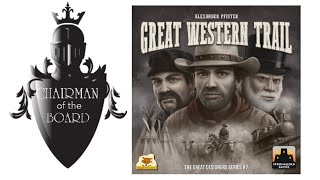
- Easy to teach and approachable despite deep systems
- Intuitive core mechanism with substantial strategic depth
- Strong balance between different strategic routes (engineer vs cowboy vs mixed)
- Excellent replayability through variable setups and end-game bonuses
- High-quality components and thematic cohesion
- Long playtime, especially at 3–4 players
- Interaction is moderate to limited, outside of market competition and passing fees
- Not as thematically immersive as somePfister titles like Maracaibo
- The pacing can slow as the board fills with buildings, elongating turns
- Cattle trading, railroad expansion, and frontier logistics
- Old American West
- economic/strategic simulation with route optimization
- Maracaibo
- Mombasa
Mechanics (from transcript analysis)
- Building deployment and tile-based engine — Place buildings to gain ongoing benefits and to unlock powerful combos; upgrading the engine improves movement or actions.
- Deck/hand management and set collection — Cattle cards of different types are collected; diversity increases scoring potential and some abilities depend on hand composition.
- Economic management and penalties — Money flows, passing costs, and fees adjust risk-reward as you progress along the track.
- End-game objective cards and tees — Objective cards provide instant bonuses or end-game scoring as you meet or fail their conditions.
- Market and crew acquisition — Acquire cowboys, builders, and engineers to unlock new actions and upgrade capabilities.
- track-based movement — Players move along a central trail, visiting stops and triggering actions on each stop and adjacent facilities.
- Worker/agent placement on main track and auxiliary actions — On a turn, players place agents to access main actions or use auxiliary actions on their personal boards.
Video topics + discussion points
Quotes (from this video)
- i'm really impressed about how actually easy this game is to teach
- it's actually surprisingly intuitive
- it's a mid weight to heavyweight euro game and usually those kind of games come with a lot of exceptions
- there's quite a few different routes you can go down
- rock solid game
References (from this video)
- New Zealand edition adds breadth and options
- Open, multi-path strategy with good tension
- Longer play time; pacing can stretch
- Railways, ranching, and expansion
- American West cattle barons
- Strategic, Euro
- New Zealand edition
- Race to the North expansion
Mechanics (from transcript analysis)
- deck-building — Use your deck to perform actions and chain effects.
- Route/building network — Deliver goods along a map with expanding routes
- Worker placement / action selection — Choose actions by placing/activating workers
Video topics + discussion points
Quotes (from this video)
- it's only a game
- New Zealand is definitely my factor
- I would give it a six out of ten
- Horse steak was surprisingly nice
References (from this video)
- Dynamic map with changing layout
- Engaging engine-building
- Solid flow for a heavy euro
- Long playtime
- Complex iconography
- Stock handling and route optimization
- Cowboys guiding cattle to a port
- Western-themed economic management
- Castles of Burgundy
- Terraforming Mars
Mechanics (from transcript analysis)
- Deck-building / hand-management — Use cards to enable different actions and combos.
- Worker/cow path optimization — Move workers and cattle across a changing map to optimize actions.
Video topics + discussion points
Quotes (from this video)
- this is work replacement at its finest it's simplest it is satisfying and it is a euro
- it's a town full of dragons
- by far the heaviest
- the best Euro game there is I'll tell you what the best is number five Great Western Trail
- Earth is also a card drafting but you're getting a lot of cards
- Eclipse is a space game... this is its Euro cousin
- Juniper Imperial it's a hybrid game
References (from this video)

- building an efficient cattle-trading empire via routes and buildings
- American West, cattle driving and settlement
- engine-driven strategy with modular decision-space
Mechanics (from transcript analysis)
- hand management / deck-building — managing a hand of cowhand cards to optimize play
- set collection / route optimization — collect cattle and optimize routes to maximize points and income
- worker placement — take actions by placing workers on the board to progress on routes, buildings, and markets
Video topics + discussion points
Quotes (from this video)
- we're going to bask in the world's negativity today
- the world's negativity cuz that's really what we need more of
- we want to be a beacon of negativity in this world
- the special cards are pictorially meaningless
- randomness disguising itself as difficulty
- it's an evil game
- sandbox experience
- I feel like a boy that has cheated on the test because that was one of the comments
- three faces on the cover
- three big faces one of them is wearing a cowboy hat
- this game is clearly inferior
- the rule book was great but everything else was weak
References (from this video)
- Terraforming Mars
Mechanics (from transcript analysis)
Video topics + discussion points
Quotes (from this video)
- it's just like I say if you wanted me to write these it's a case of how often do I see it versus how much it annoys me when I see it
- it's only a game take care just have fun
- we'll have this done in about an hour and a half tops
- stop the whiner and Mona deserves at a free spot
- it's not a life-or-death decision and move on
- just pick one and go with it live with the consequences of your actions
- this is the not paying attention thing but the aftermath of not paying attention during the rules explanation
- it's like shut up like I don't need to know all this
- it's childish it's just plain simple childish
- it's only a game
References (from this video)
- deep strategic layering
- strong interplay with expansions (Railways of the North mentioned)
- can be heavy and long for some groups
- railways, cattle trading, and route optimization
- American West cattle driving era
- economy-driven strategy
- Rococo
- Wavelength
Mechanics (from transcript analysis)
- Route Building — plan and execute efficient cattle drives and train routes
- set collection / engine-building — acquire resources to improve future turns
Video topics + discussion points
Quotes (from this video)
- it's kind of fun right
- it's kind of structured
- we're gonna be playing them in order of release so we're gonna be starting with video this first release and all the way up until on Mars
- we'll probably do it again in the future with a whole new list of games
References (from this video)

- deep strategic planning
- robust engine-building feel
- beautiful production and theme integration
- steep learning curve
- some players may find it heavy
- logistics, strategy, and route optimization
- American West, cattle herding and rail expansion
- system-driven, thematic engine with historical flavor
- Cascadia
- Other Pfister titles
Mechanics (from transcript analysis)
- deck-building — build a personal deck of actions to optimize routes and tasks
- worker placement — send workers to actions along the trail and at hubs
Video topics + discussion points
Quotes (from this video)
- "this is a very welcoming and very friendly community"
- "no bs and no tolerance when it comes to toxicity"
- "you should actually say to you welcome back because you were on season one episode two"
- "we really want to create and what we strive to do is create a welcoming inclusive space for everybody"
- "it's a very welcoming awesome group"
References (from this video)
- tight mechanics
- clear engine growth
- steep rule learning for new players
- cowherding and train logistics
- American cattle frontier
- serious, strategic
Mechanics (from transcript analysis)
- bag-building — draw and manage a hand of cattle cards to deliver
- route-building — optimize routes to move cattle and workers
Video topics + discussion points
Quotes (from this video)
- it's only a game
- it's the real juicy bit
- the only way for this channel to evolve is to test new things
- top 10 two-player games collaboration on Feb 6th
References (from this video)

- deep strategic planning
- great production quality
- rules heavy and learning curve is steep
- logistics and optimization to deliver cattle
- American West cattle drives
- system-driven with thematic flavor
- Ora et Labora
- Cascadia
Mechanics (from transcript analysis)
- deck-building / action selection — build a deck of actions to optimize moves and deliveries.
- tile/board route planning — route cattle and workers through cities.
Video topics + discussion points
Quotes (from this video)
- i love this game i love this game it's number 20
- we just bought our own copy of this i'm so excited to play this at two with jamie
- sleeping gods has invoked so much of the things i love about not only board games but video games
- it's endlessly fun to pull things out of the bag
- i'm very excited to try out each one
References (from this video)

- solid core system with depth
- engaging compared to direct predecessors in the same lineage
- missed pacing elements present in the original great Western Trail
- country-area control introduced in the related iteration didn’t land as compellingly
- westward expansion with deck-building underpinnings
- American West, cattle and ranching logistics
- engine-building and routing with procedural pacing
Mechanics (from transcript analysis)
- area control / routing — manage routes and city interactions to maximize efficiency and scoring potential
- deck-building — build a hand of actions to optimize what you do on each round, affecting pacing and planning before taking turns
- tile drafting — draft action tiles or board elements to shape your estate and scoring opportunities
Video topics + discussion points
Quotes (from this video)
- I think Great Western Trail is the game for me, but this one could be the one I want to own.
- this is a game that a lot of people hail as a modern classic.
- the decision space in Whistle Mountain is an ocean.
- the deduction mechanics are cool, but it can drag.
- Spirit Island is the board game for people who don’t typically like cooperative games.
- the ending of Viticulture can feel abrupt in a race-to-20 structure.
References (from this video)

- Strategic depth with multiple viable paths
Mechanics (from transcript analysis)
- hand management/worker placement — Multiple paths to victory involving cow management and train routing
Video topics + discussion points
Quotes (from this video)
- I love that our patreon members vote on videos we should make.
- Arc Nova is so freaking good; I have been playing a ton of Arc Nova.
- Sea Salt and Paper is fantastic; it is travel-friendly and easy to pull out.
- Boop is fantastic; we play it non-stop and don't even talk during the game.
References (from this video)
- strong mix of mechanics and decision points
- board evolves with player actions
- interconnected systems create meaningful choices
- rich eurogame puzzle feel for experienced players
- score tracking can be heavy for new players
- steep learning curve and limited catch-up mechanics
- transport, logistics, and cow herding
- American West frontier trade and rail expansion
- procedural, evolving board with player-driven design
- Brass: Birmingham
- Viscounts of the West Kingdom
Mechanics (from transcript analysis)
- Building placement — place buildings on your board and upgrade them over time
- Deck building — start with a basic cow deck; improve by adding/buying better cows
- delivery/route planning — plan deliveries via a moving train and routes for bonuses
- set collection — collect cow types and workers to trigger actions
- toll/market economics — tolls on routes and building effects drive cost management
- Worker management — hire and assign workers to take actions and unlock bonuses
Video topics + discussion points
Quotes (from this video)
- the American West is one of my least favorite themes for a game but Great Western Trail overcomes that by offering up an exceptional mix of mechanics and great decision points
- the best thing about this game is how the board evolves through play, the players really shaped the experience
- not enough buildings and you'll have less options
References (from this video)

- Deep strategic decisions
- Multiple viable paths with El Paso variant option
- Steep learning curve for new players
- Teaching can be lengthy
- Cattle herding, railroad expansion
- American West, 19th century
- Systems-driven historical simulation
- El Paso
- Pirates of America
Mechanics (from transcript analysis)
- hand management — Optimally sequence cards to optimize actions and profits
- Rondel / action selection — Sequential actions from a loop of choices to advance cattle, trains, and loading
- Worker Placement / Route Building — Manage routes and infrastructure to maximize efficiency
Video topics + discussion points
Quotes (from this video)
- Gizmos is my favorite uncomplicated game.
- I want to understand why stuff works and how to pull levers in a game.
- I don't play to win. I'm playing to explore.
- Grow bold or die, my friends.
- There are so many games out there.
References (from this video)

- Engaging cow-card engine with multiple paths to victory
- Dynamic map evolution through upgrades
- Allows multiple viable strategies
- Can be lengthy and heavy for new players
- Steep learning curve for some groups
- cattle farming, logistics, and route optimization
- American West with cattle driving and rail expansion
- deck-building with track progression
- Scythe
- Brass Birmingham
- Concordia
Mechanics (from transcript analysis)
- Action routing — use card-driven actions to move along the trail and develop infrastructure
- deck-building — build a deck of cow cards and use them to perform actions
- engine-building — upgrade buildings and manage the cattle on the rail network
- set collection — collect cows and upgrade to maximize scoring
Video topics + discussion points
Quotes (from this video)
- they're easily the most dominant form of proper board games in the hobby
- we've covered some fantastic heavier euros and past lists like Alchemists Wingspan and Robertson Crusoe so just for the sake of an all-new list we're putting those as honorable mentions
- this is a collection starter and here are the 10 best euro games for experienced gamers
References (from this video)
- Engaging route planning with tight tension
- Accessible entry into heavier euro/strategy hybrids
- Longer play time
- Requires careful planning to maximize turns
- industry, logistics, and strategic route management
- American frontier, cattle herding era
- historical, logistical puzzle
- Cuba Libre
- Undaunted Normandy
Mechanics (from transcript analysis)
- deck-building / engine building — Discarded cards influence future actions and efficiencies
- worker placement / route optimization — Send workers along a trail to generate resources and fulfill orders
Video topics + discussion points
Quotes (from this video)
- coin games have asymmetric factions that blow my mind
- it's a great entry point to heavier coin games
- these games are fascinating and worth learning
- the playbooks are great and walk you through a turn
- i enjoyed Verdun 1916 and i’m excited to play more World War I games
References (from this video)
- constant sense of forward momentum
- narrative flow and track guiding choices
- can be long for new players
- some rules density
- cargo routing, cattle management, and expansion
- American West cattle industry
- elegant euro-mechanic fusion with thematic flavor
- Caverna
- Tzolk'in
Mechanics (from transcript analysis)
- City-cash-out and scoring via stops — Optimize routes to maximize end-game payout.
- Deck-building with rondel-like track — Move a cow-shipper on a looped track to perform actions.
- Hand economy and hand-drafting — Engine-building through card management and card redraws.
Video topics + discussion points
Quotes (from this video)
- Be excellent to each other.
- Sidereal Confluence is grand. It is so grand it will not be contained by such trivialities as a table.
References (from this video)
- Thematic coherence and flavor are consistently strong across mechanisms, with a vivid sense of frontier commerce and the challenges of moving cattle through a growing rail network that mirrors historical expansion.
- The action economy rewards thoughtful planning and provides meaningful choices each turn, creating a robust sense of agency as players weave together deck management, route selection, and worker deployment.
- End game dynamics and progression unfold in a satisfying manner. The combination of reducing discs on the personal display and unlocking new abilities offers a tangible sense of growth and strategic depth as the game progresses.
- Map based location tiles and the auxiliary actions inject variety into each session, encouraging players to adapt to evolving board states and to pursue complementary strategies that enhance engine effectiveness.
- The cattle card engine links short term actions to long term scoring in a coherent loop, reinforcing the importance of timing, resource management, and strategic planning from early rounds onward.
- The rule set and interlocking systems can be a barrier for new players. The density of mechanics requires a thorough rules read and a few practice plays to reach a comfortable confident level.
- End-game triggering and scoring can feel opaque without careful tracking. In practice, players may need to keep close tabs on markers, disc counts, and the status of the job marker to avoid misjudging when to push for the finish.
- While the tension exists, some players perceive the interaction with opponents as indirect. This can lead to quieter sessions where direct competitive pressure is less frequent, potentially reducing engagement for players seeking constant head to head drama.
- Graphic density and board clutter can cause initial confusion. Visual cues matter, and without careful player orientation, there can be moments of hesitation while identifying which tile or action is relevant.
- The game sits on the heavier side of the mid to heavy spectrum, which may limit its accessibility for casual players or those with a preference for lighter, quicker play experiences.
- The cost and footprint of components can be a consideration. Storage and setup time contribute to longer gameplay sessions, which can be a hurdle for players with limited time or space.
- Trade and logistics drive the narrative as players move cattle, hire workers, and build a mobile economic engine along a shifting map that simulates frontier expansion.
- The game is set in the American West during the 19th century, a period of cattle ranching, land expansion, and the rise of a railroad network that connects distant markets.
- A procedural strategy experience where the feeling of building an efficient cattle empire emerges through planning, timing, and optimizing actions across a sprawling board.
Mechanics (from transcript analysis)
- Card drafting and deck management (cattle cards) — Cattle cards function as the primary engine, representing the herd that players carry toward the market. These cards are acquired, added to a personal deck, and then leveraged for scoring, end game benefits, and strategic synergies with other actions. Deck management becomes a balancing act between immediate gains from high value cattle and the longer term payoff of constructing a powerful, well-tuned herd. Players must consider card variety, timing of draws, and how specific cattle cards interact with location tiles, workers, and the train engine. The firing of these cards into the play area creates an engine that can be accelerated or starved depending on how well the player sequences acquisitions and plays.
- Cattle hand management and revenue collection — When players reach Kansas City, they submit cattle cards from their hand to gain money and victory points. This mechanic tightly binds hand management to scoring efficiency. Choosing when to cash in cattle cards, which cattle cards to prioritize, and how to balance cash flow with scoring potential is central to optimizing performance. The hand to market mapping requires players to forecast the composition of their herd and to plan how to maximize points during the cashing phase, all while contending with other players who influence market dynamics through their own actions.
- Economic engine balancing and scoring architecture — The game weaves together money, victory points, and the unlocking of abilities into a cohesive economic engine. Players must balance short term gains with long term payoff, ensuring that cash flow supports a sustainable engine that scales with the herd and with end game opportunities. The scoring architecture rewards thoughtful pacing, precise timing of profitable plays, and the strategic alignment of cattle card acquisitions with market and location opportunities. Mastery involves tuning the tempo so that income, points, and abilities converge at the optimal moment to maximize final standings.
- End-game scoring progression and ability unlocks — Beyond basic scoring, the game rewards players with the ability to unlock new capabilities by removing discs from their personal display. This progression creates a longitudinal arc that rewards sustained engine development across the game. Players can leverage unlocked abilities to improve throughput, increase efficiency, and create new synergies with cattle cards and location tiles. The dynamic of temporary scoring and permanent gains through ability unlocks adds a layer of strategic planning that stretches across the entire play session.
- End-game trigger via job marker — The game includes a defined end condition that is activated when the job marker moves out of a designated area on the map. This creates a clear turning point in the game and invites players to consider both the pursuit of points and the sequencing required to ensure a favorable final scoring window. Once the trigger occurs, players complete their current round and then tally points. This mechanic encourages players to weigh the benefits of pursuing immediate points against the risk of letting the game end sooner than desired, adding strategic depth to end game planning.
- Hazards and adversarial interaction — Hazard tiles and Outlaws inject a risk dimension into the route planning and action economy. They introduce the possibility of penalty or setback for path choices, forcing players to consider defensive versus offensive tactics and to adjust their plans in response to the actions of opponents. The threat of penalties keeps players attentive to the evolving board state and prevents any single strategy from becoming overly dominant for the duration of a session. This interaction contributes to tension and a sense of competition without direct take-that impulses in every encounter.
- Location tiles and auxiliary actions — Locations across the map and their associated tiles offer a diverse array of auxiliary actions and benefits. These optional actions expand strategic options beyond the core movement and cattle trading. Players can leverage location effects to accelerate their engine, draw additional cattle cards, or gain bonus resources. The presence of multiple interaction points encourages players to consider board control, map geography, and the timing of when to execute location based actions. The variety of tiles keeps decisions fresh across rounds and supports multiple viable strategic paths.
- Replayability and setup variability — Each session can unfold with different cattle card distributions, map layouts, and combinations of location tiles, contributing to high replayability. The variability means that players cannot rely on a single memorized path; instead they must adapt to the offered tableau and adjust their engine to exploit the best opportunities available in a given game. This mechanic supports long term engagement and invites players to explore alternate strategies in subsequent plays, ensuring the game remains interesting and challenging over time.
- Route movement on a map with road networks — Movement is anchored to a road network that spans the map from ranches through various locales toward Kansas City. Players must plan routes that optimize distance, cost, and time, all while contending with risk tiles such as Outlaws and Hazard tiles that increase movement costs. The road network acts as a living constraint; it can be influenced by chosen paths, the positions of other players, and the placement of markers. This mechanic emphasizes spatial reasoning and risk assessment, encouraging players to balance speed with safety and to foresee how each route choice will shape both short term actions and long term score opportunities. The tension between advancing quickly and avoiding costly detours is a core driver of pacing in the game.
- Train engine progression — Advancing the train engine serves as a core accelerator for the player's engine. The engine provides actionable benefits, enabling faster movement, additional actions, or improved efficiency in processing cattle cards. Managing the train engine ties directly into pacing and tempo: investing in engine progression can pay off later in the game by creating a smoother throughput of cattle to Kansas City, but it costs resources and time in earlier rounds. The mechanic links movement and resource generation, becoming a central faucet through which a player can amplify their scoring potential when timed correctly with end game triggers.
- Worker placement / action economy — Great Western Trail builds a dense action economy on a core placement mechanic. Players recruit and assign workers to a growing set of tasks, including advancing trains, mining cattle cards, drawing resources, or activating a location tile. The timing of when to place workers and which action to take creates tension, as many actions compete for limited worker slots and must be weighed against the need to position for future rounds. The mechanic rewards foresight and sequencing, forcing players to balance immediate gains with long term engine development. The multi layer interaction between the central board and each player personal board creates decision points that ripple across turns, inviting players to consider not only their own needs but also the potential reactions of opponents as they observe shifts in available actions.
Video topics + discussion points
Quotes (from this video)
- America's Far West navigating a heavy route economy to deliver cattle to Kansas City reveals a deep thematic alignment with historical expansion and supply chain thinking.
- The sense of ongoing progression through the train track and new cattle cards provides a satisfying sense of engine-building as momentum builds over time.
- End-game tension emerges when the job marker slides toward completion, inviting players to weigh aggression against careful resource management.
- The final tally rewards not just raw points but efficiency, timing, and the ability to unlock powerful abilities as the herd grows.
References (from this video)

- Pfister demonstrates Euro-density with thematic flavor
- Strong point-salad of decisions and long-term planning
- Visual design supports readable, tactile decisions
- Some players find the pace a bit controlling due to long decision trees
- Ranching, hiring workers, route planning
- Old West cattle drives across the American frontier
- Euro-style, engine-building
Mechanics (from transcript analysis)
- deck-building/hand management — Players build a hand that powers actions and movements along the trail.
- engine-building via cards — As you play, you gain tools and routes that chain into scoring opportunities.
- worker-placement-like action selection — Take actions to hire workers, move cattle, and improve your rail network.
Video topics + discussion points
Quotes (from this video)
- Race for the Galaxy is a fantastic card game
- it's a real pain in the ass to learn/teach because it's got a rather bamboozling icon system
- it's a really rewarding game made even better with a couple of the expansions
- I love Puerto Rico I love the feel of it and it's just a classic game
- Captain Flip is such a simple promise
- Carnival zombie is a rip roaring rolicking romp
- this game is basically chaos in a box
- it's a deck building racer
- Royals is effectively a que pushing game
References (from this video)

- Fluffy cute cows in the game
- Movement-based gameplay
- Heavy strategic game
- Excellent production quality
- Takes a very long time to play (3+ hours)
- Heavy and complex
- Cattle driving and trading
- Western frontier
- Western Legends
Mechanics (from transcript analysis)
- Card Play — Match cattle for transportation
- Movement — Load trains and move product
Video topics + discussion points
Quotes (from this video)
- These go to 11 - just like in Spinal Tap
- I literally started this video by saying everything will be cute and animal related, and the first one is murder war counts
- You're basically Bilbo Baggins trying to steal Smaug's treasures
- The only reason this game is on your list is because you always win
- It's like clue but cooler and more dynamic
- I love space... love space theme games... any space related games I'm in love with
- I have Disney tattoos all over my arms
- 1v1 all day, give me that
- It is uncanny how lucky Jamie is
- Mansions of Madness is so good like I love it
- Jaws of the Lion was a great compromise where Gloomhaven is super heavy
References (from this video)

- Popular with many gamers
- Luke hates this game
- Deck building feels pointless
- Confusing mechanic about selling cows
- Arbitrary deck building restrictions
- Doesn't make thematic sense
- Incredibly overrated
- Luke is in the minority
- Western United States
- Cattle Ranching
- 19th Century America
- Brass: Birmingham
- Great Western Trail: Argentina
- Great Western Trail: New Zealand
Mechanics (from transcript analysis)
Video topics + discussion points
Quotes (from this video)
- I'm one of these people that just likes to play the game for fun I'll try to win and if I don't win then whatever doesn't matter
- as soon as you start putting cash prizes ranking statistics and things like that into board gaming I find that some people take it a little bit too far and you lose that sense of fun
- I don't even like the ranking system on board game arena frankly
- I give reviews top tens and my honest opinions regardless of the consequences
- it's still only a game so remember to have fun that's the main thing
- I certainly wouldn't be very good if I played it in the tournament
- Love 10 out of 10 game
- I hate this game I hate it I hate it
- it's one of those ones where I'm in the minority
- this is a speed run through the world series of board games main games
References (from this video)
- Unique gameplay mechanics
- Strong thematic integration
- Interesting deck management
- Multiple strategic paths
- Complex rules initially
- Luck of card draw
- Cattle Trading and Trail Navigation
- American West, Cattle Herding Trail
- Historical Simulation
Mechanics (from transcript analysis)
- Deck building — Players cycle through cattle cards and try to create optimal hands
- Movement — Players move along a trail, managing movement costs and actions
- worker placement — Players place workers to unlock abilities and take actions
Video topics + discussion points
Quotes (from this video)
- It works really well with the theme
- You want to trash those Jersey cards
References (from this video)

- Scales well from 1 to 5 players, especially at 2, 3, and 4
- Excellent solo mode
- More movement at higher player counts compensates for more buildings
- Game pace doesn't slow down despite being longer at higher player counts
- Works particularly well at 2 players
- Game is longer with more players, though pace is mitigated
- Running cattle to trading posts and delivering to various cities
- American Old West, cattle ranching across the United States
- Thematic economic simulation
Mechanics (from transcript analysis)
- Building Management — More buildings appear on board at higher player counts
- Delivery System — Delivering cattle to various parts of the United States like New York, San Francisco
- Movement Scaling — Players get more movement at higher player counts to compensate for more buildings on board
- solo mode — Includes solo gameplay option
- Worker Placement / Route Building — Moving cattle up to Kansas City, turning in hands of cattle for points
Video topics + discussion points
Quotes (from this video)
- Let's be honest board game publishers be lying sometimes
- Most people would consider most games to not play really well at all of those player counts
- That's something you can contribute to the site. We recommend you do that
- I think the world is too small and so we got to fight over that land
- The AI on this is super easy to run and they are really competitive and difficult to beat frankly
- I forgot how much I really, really enjoy this game
- Something I want to see more of in the future
- It's one of those games where you are all building up this kind of like modern eco city
- The gameplay is just really, really elegant
- We really have... they're really really outstanding games
References (from this video)
- Clear strategic paths: Cowboy, Engineer, Builder
- Setup-dependent decisions that add depth
- Interaction via tolls and blocking adds tension
- Strong endgame scoring via certificates and station masters
- Practical, actionable tips that are reusable
- Steep learning curve for new players
- Can become analysis-paralysis with too many options
- Complex building rules may be challenging for casual players
- Logistics, route optimization, and competition for efficiency
- American West cattle ranching and railroad expansion
- Engine-building and strategic planning in a Western frontier setting
Mechanics (from transcript analysis)
- Building placement — Placing private and neutral buildings to accelerate engine or hinder others
- deck-building / reshuffle — Drawing and reshuffling to cycle through a hand
- endgame scoring via certificates — Permanent certificates and endgame bonuses
- engineer / train progression — Advancing the train track toward endgame with engineers and station masters
- hand management — Managing a growing hand of cattle cards and upgrades
- set collection / cattle delivery — Collect cattle to deliver along the trail for points
- toll and blocking — Toll buildings to collect money and slow opponents
- worker placement — Hiring cows, engineers, builders to take actions
Video topics + discussion points
Quotes (from this video)
- this game ain't no point salad it's a big juicy steak and it's well done
- don't compete with the other players over one of these main strategies there's not enough to go around
- anytime you buy cows try to make it right before you're going to need to reshuffle your deck
- the Builder will help you do that
- you'll always at least want to drop your toll building on the board
References (from this video)

Mechanics (from transcript analysis)
Video topics + discussion points
Quotes (from this video)
- Gloomhaven will not be removed from number one on BGG it's just not possible.
- Frost Haven tweaks a few things but the stuff that it adds is so much more involved and in depth.
- Arc Nova is meteoric rise in the top lists; it's everywhere now.
- Mage Knight is my number one favorite game of all time.
- Spirit Island is my number one cooperative game of all time.
References (from this video)

- tight engine with meaningful choices
- strong thematic flavor
- heavy rules for newcomers
- potential for analysis paralysis
- transport, rail expansion, cattle drives
- 19th-century American cattle industry
- deep euro engine-building
Mechanics (from transcript analysis)
- deck-building — cards drive actions and potential end-game scoring.
- worker placement — agents and cattle handlers are placed to maximize production.
Video topics + discussion points
Quotes (from this video)
- i don't like blue haven
- you can play that game like for a long time because there's so much content in it
- it's a really quick filler that maybe i mean we'll let me showcase one day
- we are starting the alexander fister series
- i think it's a great game
- tequeno obelisk of the sun
- it's a dice selection game that's drafting dice drafting
- we currently do not have a patreon we probably won't open one
- please go ahead and do so if you would like to do a more private intro feel free to email us
- thank you so much for following along and supporting our channel
References (from this video)
- Deep, multi-layer strategic decisions through vehicles of movement, market actions, and card engine.
- Clear endgame structure with a strong scoring emphasis via deliveries and objectives.
- Multiple paths to gain VP, including disc placement and station interactions.
- Complex rules and long learning curve for new players.
- Long play time (2-3 hours per session) for some player counts.
- trade, logistics, and frontier expansion
- American Far West, cattle ranching and railroad expansion
- historical-economic simulation with resource management
Mechanics (from transcript analysis)
- Endgame scoring and bonuses — Deliver cattle to cities, activate objectives, and score using discs and market tokens.
- engine building and routing — Move a train-like engine along a track; platform interactions; gain points and tokens.
- hand management and deck-building — Draft cattle and objective cards; manage hand size and draw/discard to hand limit.
- market drafting and set collection — Create and utilize a cattle market; gain cards with VP values or star-cards for players.
- tile- and area-control interactions — Place and remove discs and tokens across board spaces to unlock bonuses and scoring.
- worker placement — Hire workers and place them on market and track to trigger actions.
Video topics + discussion points
Quotes (from this video)
- the Great Western Trail is a very popular game
- the game end is triggered when the job market token moves out of the job market area
- the player with the most points wins the game
- you deliver your cattle to any city that has a number equal or lower than your income total
- three victory points for every pair of Hazard tokens they have
- four points for every worker placed in the last two columns of their tracks
- the Cowboys the more the choices with this action you can perform this Market action
References (from this video)

- infinitely playable with multiple paths to success
- strong hand management and engine-building blend
- variety of strategies and expansions
- hand management and route optimization on a rondelle
- American West cattle drive
- classic Euro with Western motif
- Terraforming Mars
- Great Western Trail El Paso
Mechanics (from transcript analysis)
- deck-building / discard economy — gaining better cards as you progress and remove weaker discs
- hand management — managing cattle cards with different values for deliveries
- rondelle movement and engine-building — move along a track to generate actions and upgrades
Video topics + discussion points
Quotes (from this video)
- Flavor text is absolutely on point because these cards that you're collecting are just kind of colors.
- I melted my brain. It was just like way too heavy for me.
- Star Wars in a box. This is Star Wars in a box.
- I absolutely love the original Clank.
- This is a cooperative programming game where you need to do one of them… it’s so much fun.
- I love the networks.
- I really like tiling games in general. I like citybuilding games and Quadropolis adds that really extra interesting unique uh tile selection mechanism.
- Feast for Odin is a game where you are Norwegians. It is just so darn good.
References (from this video)

- Tightly designed tactical landscape with satisfying pacing.
- Engaging push-your-luck elements balanced by solid engine-building.
- Some players find the sandboxy feel less focused.
- Can be heavy for newcomers but flows with experience.
- logistics, route optimization, and cattle economy
- American West cattle drive and commerce
- Terraforming Mars
- A Feast for Odin
Mechanics (from transcript analysis)
- deck-building with tempo — hand management and engine-building through card choices.
- pacing and routing — decisions about where to go and when to push to maximize points.
- scoring track and milestones — milestones and track-based scoring drive tension.
Video topics + discussion points
Quotes (from this video)
- this is the Pinnacle experience of what I love in this
- the rule book is terrible but it is a dense rule book
- we love to give away board games
References (from this video)
- deep engine-building
- refined core loop across variants (New Zealand, Argentina)
- can be long and heavy for some groups
- table presence and downtime
- railroad expansion, cattle economy
- 19th-century American West
- engine-building with thematic flavor
- New Zealand
- Argentina
- Classic Great Western Trail
Mechanics (from transcript analysis)
- engine building — Improve your engine through card drafting and action optimization.
- round track / rondelle — Movement along a track influences available actions and pacing.
- worker placement — Place workers to perform actions and advance along the trail.
Video topics + discussion points
Quotes (from this video)
- This is 2026. Let's lean into conversations that go off the rail.
- I'm a simple man. I want a flock of sheep.
- This isn't going to be long. It's always longer than I think it's going to be.
- Root is coming back full force.
- Stay bundled. If it's cold outside, strip down. if it's warm outside and in either case, get some people to sit down around the table, play a couple extra games, have a shot of whiskey if you're of age and choose to drink, and remember to do the important thing. Get out and play some games.
References (from this video)

- Second edition art is vivid and engaging; strong color usage
- Old first edition cover is less appealing
Mechanics (from transcript analysis)
Video topics + discussion points
Quotes (from this video)
- It's iconic. It is at least eye-catching; it's a classic.
- The box should tell us what we're doing in the game and how we're going to feel.
- This is top-notch stuff.
- I actually just ordered my copy, so this is obviously working for me.
- The cover sells the game, it screams what you're going to do.
References (from this video)

Mechanics (from transcript analysis)
Video topics + discussion points
Quotes (from this video)
- one of the most kick-ass trophies I think I've ever seen built in the world.
- The real winners are all of us because lying to us.
- Mortal enemies, lifetime friends.
References (from this video)

- Logistics and route optimization
- American west / cattle herding
- Ark Nova
- Gaia Project
Mechanics (from transcript analysis)
- route planning / hand management — players plan cattle routes and manage actions to maximize score
Video topics + discussion points
Quotes (from this video)
- Speaking of Terraforming Mars, there's going to be several live games where we're just playing them for your entertainment.
- The best thing about the World Series is the family atmosphere.
- It's the trailer before the trailer.
- You never know. Ticket to Ride on Saturday, you can find out maybe Ticket to Ride is back in 2025.
- I guarantee you you'll have the greatest experience on earth when you come.
- Dune Imperium has changed to Dune Uprising, which is a pretty substantial change in many ways.
References (from this video)
- tight decisions
- great pacing
- some players may find it mean on the table
- Economic engine-building and logistics
- Old West cattle driving and ranching
- Ark Nova
- Terraforming Mars
Mechanics (from transcript analysis)
- Worker placement with route optimization — Directing cattle drives along a supply chain to maximize points.
Video topics + discussion points
Quotes (from this video)
- we're gonna rank them and we're also gonna suggest a game that you could add to that collection
- If you become our patreon and send us a selfie or better yet posted in our Discord Channel which is another perk that you get access to you will always be featured in our videos
- this shelf is a quality over quantity eclipse is pretty popular here