In Habitats, each player builds a big wildlife park without cages or fences. The animals in your park need their natural habitats: grassland, bush, rocks or lakes. The zebra needs a big area of grass and some water adjacent, for example, while a bat needs rocks and bush and water, a hart needs bush and grass, and a crocodile needs mainly water. There is a snake, baboon, bee, elephant, otter, lizard, turtle, eagle, meerkat, scorpio, hog, catfish, rhino, etc., each with its own landscape requirements — 68 different animals in total.
Each player starts their individual park with an entrance tile, and they are each represented in the marketplace of animal tiles by a ceramic figure (or a wooden ranger meeple in some editions). On a turn, a player takes the tile to their left, right or front; moves their figure to the space just vacated; then draws a tile to place where their figure started the turn.
When adding an animal tile in your park, you add its main landscape — the base space for the animal — to your park, too. While placing this new animal, its own piece of landscape can help to fulfill the requirements of your other animals' requirements, e.g., the water on a hippo tile fulfilling the adjacent otter's need for water. Thus, fulfilling every animal's desire for land becomes a more and more difficult task with each tile you add.
Aside from expanding your park with different landscape types, flora and animals, you can improve its profitability by building extra entrance roads, trek spots, and watchtowers.
Habitats lasts three seasons, with each season giving each player 6-9 new tiles for their parks. Whoever has best met the goal of the season receives bonus points, with a smaller number of points for second and third place. At the end of the game, each player scores for each tile in their park based on whether that tile's requirements are satisfied. Whoever scores the most points wins!
NOTE: BoardGameTables edition contains both XL Expansion and Double Expansion and is entirely replacing the previous editions.
- Fast, tile-drafting tile-placement loop
- Short playtime (roughly 10-20 minutes)
- Beautiful animal tiles and variety
- Clear scoring reminders with tokens
- Strong solo mode
- Wooden animal meeples can be hard to distinguish; tokens are easier to manage
- Some tile interactions create barriers that limit options
- Turn-tracking during 25 turns can be easy to lose track of
- Animal conservation and habitat-building with an emphasis on adjacency and synergy
- A wildlife reserve where players place animal tiles to create interconnected habitats
- abstract theme with thematic flavor conveyed through animal tiles
Mechanics (from transcript analysis)
- end-of-game scoring tokens — Use check-mark tokens to track completed scoring conditions and end-game scoring.
- market drafting — Choose tiles from a market area as your jeep moves around the board.
- pattern/adjacency scoring — Gain points by satisfying tile-specific adjacency requirements on each tile.
- space management/barriers — Some tiles create barriers or block other placements, influencing strategy.
- tile placement — Place habitat tiles to meet adjacency requirements and create interconnected habitats.
Video topics + discussion points
Quotes (from this video)
- habitats. A really fun little tile laying game with a twist.
- This is a quick sort of game. Probably takes around 10 to 20 minutes most of the time.
- So that again is habitats which I am really enjoying solo just fantastic.
References (from this video)
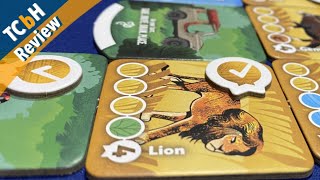
- Extremely approachable and fast to teach, yet with meaningful decisions on every turn.
- The jeep-driven drafting adds a tactile, positional layer whose consequences unfold over multiple turns.
- Tile interactions and adjacency rules create satisfying, emergent tension without heavy downtime.
- Theme and components are visually appealing, contributing to an inviting play experience.
- Solo mode is only passable, lacking the depth of multiplayer play.
- Premium meeples look great but serve little functional purpose, which some players may view as vanity components.
- Large premium components can feel bulky and somewhat hinder portability.
- ecology, habitat creation, management, and tourism
- Wildlife park-building in a grid-based wilderness area
- abstract, with strategic tension and drafting interactions
Mechanics (from transcript analysis)
- Cosmetic premium components — Premium meeples exist as an opulent visual enhancement; they are largely decorative and do not alter core gameplay.
- End-of-round and yearly scoring — Scores accumulate after each round, with year-based objectives randomized from a pool, shaping strategic emphasis across rounds.
- Gates and tourism scoring — Gates close off sections; tourism and flora-related tiles provide points, linking spatial control to end-game scores.
- Jeep drafting and positioning — Players drive jeeps to adjacent tiles (not behind them), orienting away from vacated spaces. This creates a proximity-based drafting mechanic with future consequences.
- Tile drafting from a market — Players draw new habitat tiles each turn from a market, with the number and variety of choices dynamically tied to round and player count.
- Tile placement and adjacency scoring — Placed tiles form habitats; animals score points when adjacent to compatible habitats, driving spacing and clustering decisions.
- Variable objectives via gold tiles — A diverse set of objectives is laid out at the start, offering different routes to victory and replayability.
- Year track and pacing — A year track communicates round progression and informs scoring cadence; it helps players gauge tempo and plan outcomes.
Video topics + discussion points
Quotes (from this video)
- easy to learn, smooth to play, absolutely inviting with a beautiful naturalist theme
- it's a game that flies by fast but each turn is full of meaningful decisions that have big ramifications for yourself and indirect consequences for other players
- the premium upgrade of unique meeples to put on your tiles is gloriously adorable they serve no functional purpose outside of maybe replacing the conditions completed badges that you place as you go
- this revision and update of habitats is another lavishly produced super accessible but deliciously clever abstract game in the bg tables lineup
- incredibly easy to learn but weaves enough tension throughout to keep you invested and is charming enough to make you care
- are very very cool but also ridiculously extra and kind of undermine the portability and speed of the game
References (from this video)

- Nature/eco-habitat stewardship
- Tile-grid based habitat building
Mechanics (from transcript analysis)
- set collection — collect tile sets to score
- tile placement — place tiles to form habitats
- worker placement — move workers on a grid to select tiles
Video topics + discussion points
Quotes (from this video)
- I have made the decision to stop making my reviews now.
- I do not enjoy making reviews honestly my worst emotional moments with John gates games in general happens when I am staring at the camera trying to do these reviews.
- I started making these videos because I was bored and I have a lot to say about board games.
- I want this to continue to be a part time sort of endeavor like you know a significant portion of my hours going into it but not like 40 hours a week.
- I would definitely recommend giving that one a listen.
- Watching playthroughs is a better way in my opinion to show people how the game works.