The bees have discovered economics. The queens believe that if they sell honey to the bears, badgers, and woodland creatures, they will find peace and prosperity. Spring has arrived and it's time to build the hive, find nectar, make honey, and, for the first time ever, set up shop.
Honey Buzz is a worker bee placement game where players expand a personal beehive by drafting various honeycomb tiles that grant actions that are triggered throughout the game. Each tile represents a different action. Whenever a tile is laid so that it completes a certain pattern, a ring of actions is triggered in whatever order the player chooses. A tile drafted on turn one could be triggered up to three times at any point during the game. It all depends on how the player places their beeples (bee+meeple) and builds their hive. After all, in the honey business, efficiency is queen.
As you continually expand your hive, you'll forage for nectar and pollen, make honey, sell different varieties at the bear market, host honey tastings, and attend to the queen and her court. There's only so much nectar to go around, and finding it won't be easy. Players will have to scout out the nectar field and pay attention to other players searches to try to deduce the location of the nectar they need for themselves.

- really good game
- good aesthetics
- great art
- bee-themed
- production-based
Mechanics (from transcript analysis)
Video topics + discussion points
Quotes (from this video)
- hey everyone who just kind of made it in time i'm not going to say it was a shall we say the easiest time to get here
- come on seriously i need to get on with a stream in a minute
- what is going on at fantasy fly at the moment they're just not bringing out any major good games
- every time they try to do a spin-off game that isn't a card game they tend to fail
- root's okay but i think the fact that you've got to have a balanced group of players who know what they're doing to play it i think it's just too much
- i just i'm okay with rue but i would never seek it out
References (from this video)
- Satisfying late-game payoff when honey hexes line up
- Rich interaction between hex-based placements and resources
- High variability and planning depth
- Difficult to master powers for newcomers
- Can be punishing if early turns misfire
- foraging and honey production
- Bee-themed production and honey hex tile system
- puzzle/optimization driven
- Atlantis Rising
- Dragon Academy
Mechanics (from transcript analysis)
- Activation chaining — Chain activations to maximize scoring and resource generation.
- area/space placement synergy — Place on spaces to trigger multiple resource bonuses.
- Resource management — Balance pumpkins, coins, hearts, and other resources to activate spaces.
- set completion / hex activation — Complete honey hexes and activate honey-related spaces for rewards.
Video topics + discussion points
Quotes (from this video)
- Honey Buzz is always a difficult realm to complete, but it's really satisfying when you pull it off.
- Space Base, very friendly realm.
- It's a really satisfying game. It takes a little while to get started, but once you start getting resources from it, they can churn out quite a few resources.
- I really like the hidden victory points icon on the new champions hoodie. Pretty sneaky.
- This is a challenging round right here.
References (from this video)
- Engaging hex-based tile placement with edge matching
- Clear, tutorial-friendly flow that explains mechanics progressively
- Zero memory variant simplifies setup and tracking while preserving strategic depth
- Rich foraging decisions with visual pattern matching in the hive
- Rule density can be intimidating for unfamiliar players
- Memory elements (even in the zero memory variant) require careful attention during play
- Early setup and tile availability can influence perceived pacing
- Resource management, tile-placement strategy, and hive development
- A beehive building contest in a nectar-driven economy, with hexagonal tile placement and resource flow to produce honey
- Procedural, tile-driven progression with optional memory variant
Mechanics (from transcript analysis)
- Forage action variants — In the zero memory variant, forage tiles are face-up and a forage token can be moved orthogonally for free; further moves cost coins.
- Market and order system — Sell honey/pollen at the market or fulfill orders for coin rewards and future actions.
- Nectar and honey production — Forage to obtain nectar tiles, match shapes in your hive, and convert nectar into honey tokens.
- Queen Contest and scoring tracks — End-game scoring via queen contest cards, with special race-style coin rewards for nectar variety and completed orders.
- tile placement — Hex tiles must be placed so that no black or white lines touch; placement creates or fills cells with actions.
- Worker bee generation and recall — Earn worker bees by activating certain actions; recall all bees to re-enter play and gain a scouting opportunity.
Video topics + discussion points
Quotes (from this video)
- What's going on in honey buzz is each player is building out a honey bee hive every single turn
- the way tile placement works is you are never allowed to have any of the black lines or the white lines touching any other tiles
- forage for nectar action works in the regular game is we could choose any one of these tiles
- we are using the zero memory variant
- the nectar field looks pretty different in the zero memory variant
References (from this video)
- Adorable components with bee themed meeples
- Charming artwork and design
- Engaging even when losing badly
- Bees/Honey
- Whimsical
Mechanics (from transcript analysis)
- Worker placement or resource management — Managing bee-themed resources and activities
Video topics + discussion points
Quotes (from this video)
- This is a definitive list based on inarguable data - Board Game Geek lists 5000 games as having been released in 2020
- I haven't actually played forgotten waters but I did look at a lot of Instagram photos of it - 10 out of 10
- I just moved one piece on the board and I just knew it - about learning Barbary Wars history through The Shores of Tripoli
- Meeples but they're bees, so they call them peeples
- I really like this game called Tell Stones, you've probably never heard of it
- Board games are made out of cardboard, it's actually hard for your digestive system to handle cardboard
References (from this video)

- Amazing game
- So cute
- Squishy honey components
- Excellent worker placement
- Great beeples
- They played it incorrectly first, made it much harder
- Worker bee management
- Beehive - honey business
- Cute and lighthearted
Mechanics (from transcript analysis)
- component quality — Squishy honey resource components
- Resource management — Managing honey resources and business
- worker placement — Placing bee workers on action spaces
Video topics + discussion points
Quotes (from this video)
- Azul is just a classic classic game
- I will always want to play this game it's a staple
- Racing is my favorite game mechanic
- I love watching everything kind of like waterfall off of each other
- Castles of Burgundy is incredible I love Castle's birdie
- I love this game so basically like the world is dying
- The best part about Black Angel the little robot guys
- Bet on yourself always always I don't even care if I lose the game believe in yourself
- Dice Throne is an incredible 1v1 battle Yahtzee game
- Wingspan I am almost always in a game of Wingspan on BGA
- This game is beautifully designed it just feels good when you play it
- I can't win and I am getting freaking sick of it
- It's always a great time when it hits the table
- Paint the Roses is a Cooperative deduction game
- I've fallen back in love with it
- Some of the best gaming experiences I've had is playing that game
- I really really love Flamme Rouge it is an excellent game
- I will fall in love with this game it's got the recipe for it to be like a top 10 game
References (from this video)

- beautiful components
- strong family-friendly vibes
- rule mistakes were noted but easy to correct
- resource management and worker placement with tile elements
- bee-themed village building
- light, family-friendly
- Carcassonne
- Lords of Waterdeep (surface similarities)
Mechanics (from transcript analysis)
- tile placement — tiles are placed to shape honey production and scoring opportunities
- worker placement — place workers to gather resources and activate actions
Video topics + discussion points
Quotes (from this video)
- It's kind of like The Mind but better.
- it's a very, very good two-player game
- we are so competitive that we need to be able to turn it off
- I loved it so much I spilled my water all over the table
- we've met some of our best friends this year
References (from this video)

- Adorable production quality
- Great squishy bee components
- Theme works perfectly with mechanics
- Plays better when rules understood correctly
- Can be played wrong initially
- Not as complex as other worker placement games
Mechanics (from transcript analysis)
Video topics + discussion points
Quotes (from this video)
- Jeff and I rank with our hearts and not with our brains
- our list is if you don't like it Move Along
- we play as many games as we do in a year which is literally hundreds thousand
- our rankings are extremely fluid
- there's so many good freaking games out there
- oron hits The Sweet Spot of combo
- this Oracle Delia Oracle Del like what is this game
- if you love puzzles and sudoku or whatever you're probably gonna love it
- don't poo poo on tapestry it's freaking good
- three ring circus is going to continue to increase for me
References (from this video)
- Clear setup and rule explanations provided in a step-by-step manner.
- Illustrates core mechanisms such as tile placement, bee workers, and market trading using concrete examples.
- Supports both standard and advanced setup, with adaptive components for 2-4 players.
- Describes end-game scoring and contest cards, giving a complete sense of victory conditions.
- Explains many rules in long form which could be overwhelming for absolute beginners.
- Audience requires attention to several board states and stacking variations; potential complexity.
- Bees managing nectar, pollen, and honey trading to maximize victory points
- Bee hive marketplace in a competitive environment
- educational and instructional
Mechanics (from transcript analysis)
- card-driven objectives — green/veteran cards provide starting goals and awards depending on rank
- End-game scoring contests — scoring based on nectar clusters, lines, and completed orders; tiered prizes
- Market/price logic — honey and pollen are sold in a market with shifting price markers
- Resource management — collect nectar, pollen and coins to produce honey and fulfill orders
- tile placement — players place hex tiles to form their hive and trigger actions
- worker placement — bee workers are sent to different board areas to gain tiles, nectar or pollen
Video topics + discussion points
Quotes (from this video)
- the game is about bees understanding economics
- The Hive that is awarded the most victory points
- that was this very nice puzzle game honey buzz
- the game is now ready to start
References (from this video)

- beautiful production
- strong theme and components
- component wear risk noted in haul
- beekeeping/bee economy
Mechanics (from transcript analysis)
- worker bee/resource management — resource collection with bee-themed actions
Video topics + discussion points
Quotes (from this video)
- this is being put to the top of the list it is anyways
- if somebody asked what my favorite game of the con was it was going to be this
- this is my new favorite game
- this is the best moment of my life basically
- they probably gave it to the right people because i'm gonna pump the heck out of this game
- we got to demo a new game that's coming out in January from Plaid Hat Games called Familiar Tales
References (from this video)
- beautiful production and art
- two different routes to score the game
- solo mode offers scalability
- replayability through swapping end goals
Mechanics (from transcript analysis)
- End-game / variable scoring — In-game goals and end-game scoring that can be swapped for replayability.
- worker placement — Players place workers to gather resources and fulfill bee-related goals.
Video topics + discussion points
Quotes (from this video)
- In times of stress the best thing we can do for each other is to listen with our ears and our hearts and to be assured that our questions are just as important as our answers
- The board game space is supposed to be a safe space
- we remove that cognitive bias
- the table is a great way where we can all be on equal footing
References (from this video)
- Engaging and interactive tension created by action sequencing and hive management
- Transparent information with no hidden nastiness and clear visual cues for planning
- Beautiful artwork and cohesive thematic presentation that enhances the feel of a beekeeping economy
- Not a gateway game; rules can be dense for newcomers and may require a couple of plays to grok
- Memory variant tiles can slow early games and demand good memory or note taking
- Two player balance and experience were not deeply tested in the discussed run, so mileage may vary
- Beekeeping and pollination economy with a playful emphasis on nectar, honey, and orders from animal patrons
- Forest meadow bee habitat where bees gather nectar, produce honey, and interact with forest creatures and markets
- Lighthearted, whimsical, tongue in cheek due to personable animal characters and a warm art direction
- Viticulture
Mechanics (from transcript analysis)
- action_triggering — When a hive cell is filled, you activate all actions around that cell in a sequence of your choosing
- market_and_orders — Deliver nectar and honey to a market by fulfilling orders from adorable forest patrons to gain points
- memory_variant — An alternate side of the nectar tiles can be flipped face down, introducing a memory element for future turns
- tile_laying — Draft and lay hexagonal tiles to expand your hive and simultaneously activate adjacent actions across the hive and board
- worker_placement — Place beeples to take tiles; you must place more workers than the last player in a location to claim that tile
Video topics + discussion points
Quotes (from this video)
- i hated when anyone did anything because everything they did was something that i could have done but didn't
- the bees make the honey
- there are no secrets among players beyond whatever they are cooking up in their noggin
- there is no real random element to honeybuzz
- there are no lame actions only lame players
- the memory side can add a little bit of mystery
References (from this video)
- exceptionally strong production values; the board art, component quality, and overall aesthetic deliver a premium feel that enhances immersion
- rulebook is exceptionally well organized with clear diagrams, setup steps, and a thorough advanced/solo section; linen finish adds tactile appeal
- easy to teach and quick to pick up for both new and experienced gamers, fitting well into a light economic game category
- two variants (basic and advanced) provide approachable learning with optional memory/bluff elements for experienced players seeking depth
- compact player interaction relies on market dynamics rather than direct aggression, promoting a friendly, competitive atmosphere while staying accessible
- replayability can feel somewhat linear; strategies tend to converge around market timing and tile management rather than divergent paths
- advanced variant introduces a memory element that some players perceive as unnecessary randomness and potential rule-friction
- solo mode exists but often lacks the engaging pacing compared to 2–3 player sessions, making longevity a potential concern for some
- no asymmetrical player powers or distinct factions; all players access a similar suite of actions which can reduce perceived variety
- drone meeples and space-blocking can lead to frustrating turns at times, potentially slowing down the rhythm in tighter play
- bee economy, nectar collection, honey production, and market-based competition
- Forest woodland market where bees manage a hive and interact with bears and other woodland creatures
- abstract, whimsical world-building with a light, thematic veneer rather than a hard simulation
- Raccoon Tycoon
- Atlantis Rising
- Merchants of the Silk Road
Mechanics (from transcript analysis)
- creation_of_empty_cells_with_banners — placing tiles to form empty cells triggers banner icons that grant immediate and/or recurring abilities when activated
- economic_market_and_price_pressure — foraging and production influence market prices; players decide when to sell honey or pollen to maximize monetary value
- order_cards_and_end_game_scoring — order cards add scoring opportunities; end-game triggers occur when key piles drain or prices reach a low threshold
- set_collection_and_resource_management — gather nectar and pollen tokens which are used to produce honey and fulfill market orders or trading needs
- tile_lane_and_worker_placement — players deploy worker bees to spaces around a central hive board to gather tiles and resources, building the hive outward from a core pattern
Video topics + discussion points
Quotes (from this video)
- Honey Buzz is a really fun game and what it gets right it gets right so well.
- It is one of the most beautiful games I have seen in recent years.
- The rule book is linen finished; it looks beautiful.
- It's a light game therefore it needs to not take too long.
References (from this video)
- Cute art and approachable family weight
- Strong engine-building feel from tile interactions
- Tight interaction through shared action spaces
- Not a pure first-game experience for absolute beginners
- Some action sequences can feel dense initially
- Bees, honey, market and pollination economy
- Beekeeping and honey production in a stylized forest/bee-hive setting
- mechanics-driven with light thematic flavor
- Dune Imperium
- Lost Ruins of Arnak
- Viticulture
Mechanics (from transcript analysis)
- engine-building — Cascading effects as more actions are taken and locations upgraded.
- tile placement — Place tiles to unlock new actions and engine effects.
- worker placement — Place worker actions to collect resources and trigger effects.
Video topics + discussion points
Quotes (from this video)
- super fun, super cute
- pure work replacement and that's almost it
- the game is so good it reminded me how good this game is
- it's just so small, perfect for family weight
References (from this video)

- animal-themed, attractive components
- appealing mix of worker placement and drafting
- worker placement with drafting flavor
- forest/hive environment
- theme-forward light-strategy
Mechanics (from transcript analysis)
- unknown — not described in transcript
Video topics + discussion points
Quotes (from this video)
- This is a luxury item like this is not a necessary item at all for you to be a board gamer
- Dexter is the happiest camper
- This is something that we like to discuss once a year just for full disclosure for a community
- we are going to finish the second half of season two of Pandemic Legacy
- If you are interested the link is always in all of our video descriptions
References (from this video)
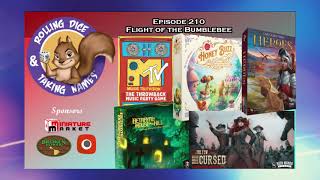
- gorgeous production and art quality
- deep tile-placement and honeycomb drafting
- strong interaction around market and nectar production
- icons and nectar types can be color- and shape-dense for new players
- font size on rulebooks can be small for some players
- Pattern building, tile placement, and honey production
- Forest hive-building with bees producing honey
- Economic/hive management with honey market dynamics
- Blockbuster
- Cartographers Heroes
Mechanics (from transcript analysis)
- market/production scoring — produce and sell nectar at the market and complete orders
- pattern-building — orient tiles to form nectar patterns for different nectars
- tile placement — place hex cells to draft a honeycomb layout
- worker/resource management — manage pollen, nectar, and honey to fulfill orders
Video topics + discussion points
Quotes (from this video)
References (from this video)
- Adorable theme and art
- Super fun gameplay
- Fall Flavors expansion revitalized interest
- Excellent word game art
- Expansion adds meaningful modules
- Gets criticism from some hobbyists
- People underestimate the game
- business
- worker bees
- honey production
Mechanics (from transcript analysis)
Video topics + discussion points
Quotes (from this video)
- I do think it's a masterpiece of a board game
- We have played villainous so much so much that we now see all of the flaws within it
- The more I play tapestry The More I Love It
- You can play Shakespeare versus a T-Rex and there's something hilarious about that
- I very much enjoy it and I think it's going to sit right where it needs to be
- Every time I play it I get so angry at it because there is an element of luck but it's a masterpiece
- It's probably the best produced board game I've ever seen
References (from this video)
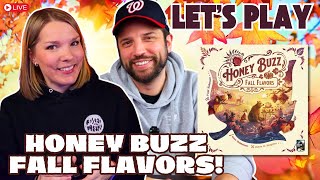
- High component quality with upgraded tokens and boards
- Great variability from multiple expansions
- Beautiful table presence and thematic flavor
- Rules overhead due to multiple expansions
- Potential complexity for new players
- Beekeeping, harvest festivals, and competition for nectar and fruit
- Bee hive foraging and nectar trading across seasonal expansions
- Competitive engine-building with seasonal twists
- Severance
- Yellow Jackets
Mechanics (from transcript analysis)
- Foraging — Move bees to forage tiles to collect nectar or fruit and trigger fan actions
- Market and Orders — Sell honey or fruit to market and complete orders for points
- Produce and Tokens — Produce nectar and fruit tokens to complete orders and activate actions
- Retirement/Decree/Toast — Endgame scoring via retirement sections and decree actions
- Worker Bee Placement — Place bees into action spaces to gain tiles and trigger surrounding effects
Video topics + discussion points
Quotes (from this video)
- this game was sent to us from Elf Creek games however I did back the kickstarter so I'm using my our copy
- I love when everything is upgraded
- Honey Buzz fall flavors AKA business bees in the fall time
- I crushed you like a grape
References (from this video)
- Stunning art
- Deep puzzle and strategic depth
- Rich theme
- Can be heavy for casual players
- Honey production and hive management
- Beehive and nectar gathering
- nature-inspired, lush design
Mechanics (from transcript analysis)
- Resource management — manage honey and nectar for scoring
- tile laying — place tiles to expand honeycomb and access nectar types
- worker placement — place workers to collect resources and build your hive
Video topics + discussion points
Quotes (from this video)
- we hear ofpg voices our goal is to make this world a better place one board gamer at a time
- being playful has power it is infectious unifying and gratifying
- humanity is a co-op we are co-opting together to make this world a better place
- treat people the way you want to be treated