An eternal conflict for the land of Ironwood is raging between two factions: the stalwart and hard-working Ironclad, settlers of the iron mountains; and the ferocious Woodwalkers, swift and deadly shadows of the forests. Both factions struggle for the ultimate control over the land for its greatest treasure: the Larimor Crystals, a mysterious substance holding immense energy within. It can be found both inside the colossal mountains and scattered across the dense forests.
The Ironclad extract the essence of the crystals and process their energy to fuel their machines and mechanical inventions. If they succeed, their giant forges will swarm the land with endless armies, and establish ultimate dominance over Ironwood.
The Woodwalkers use the crystals’ raw magical power to discover and retrieve three ancient totems from secret ritual sites, hidden in the mountains. Once retrieved, the combined power of these totems will summon the Guardian, the ancient protector of the woods, to wipe out the Ironclad once and for all.
One way or another, the eternal conflict is finally coming to an end.
Ironwood is a rules-light, highly asymmetric, card-driven tactical game for 1-2 players. Each round, you and your opponent alternate playing a total of 3 of your faction-specific cards for their action effects. These effects include positioning your warbands, initiating combat, extracting crystals, bestowing temporary passive effects, and many more. When combat occurs, you will use the same cards for their combat values instead, in a simultaneous bid to gain combat bonuses, inflict and fend off casualties, and augment the Dominance value of your warbands to win the combat.
The two factions are completely asymmetric in their play styles, decks, victory conditions - even in which parts of the map they can access.
As the Commander of the Ironclad, your primary goal is to lay down the foundations of your forges in the outer mountains, and once you have collected enough crystals, build forges on the foundations. As the Chieftain of the Woodwalkers, your mission is to locate your people’s ancient totems through Vision cards, clear the path to them by defeating Ironclad warbands, and finally securing them in the outer forests, beyond the Ironclads’ reach. Once you have retrieved the third totem as the Chieftain, or built the third Forge as the Commander, you immediately win the game.
Ironwood also features a low-upkeep solo mode against the Ironclad or the Woodwalkers. Although both solo opponents work on the same main principles, each of them bears its faction’s unique aspects and features.
—description from the publisher

- tight two-player duel experience
- engaging theme
- may require player balance adjustments
- dueling head-to-head strategy
- woodland fantasy setting
- fantasy adventure
Mechanics (from transcript analysis)
- Two-player duel — Direct competition between two players with asymmetric options.
Video topics + discussion points
Quotes (from this video)
- it's a boat we created this event just to get people together
- the schedule is in flux
- please join us even if you can only join us for like 15 minutes
- if you share pictures and we highly encourage you to
References (from this video)
- Unique asymmetric gameplay
- Distinct faction objectives
- Strategic card-based mechanics
- Faction warfare and resource control
- Mountains and Forests
- Asymmetric conflict
Mechanics (from transcript analysis)
- card-driven — Players use exclusive set of special cards to move, battle, and defend
Video topics + discussion points
Quotes (from this video)
- In this asymmetric battle, each faction uses their own means to achieve Victory
References (from this video)
- Beautiful production and aesthetic
- Strong two-player asymmetry that really sings
- Tightly realized head-to-head tension with clear goals
- Limited to two players; may not scale to larger groups
- Root
Mechanics (from transcript analysis)
- asymmetric two-player design — Each side has different objectives and abilities that create a cat-and-mouse dynamic.
- Card-driven combat — Combat and battles are driven by cards that shape actions and outcomes.
- two-player head-to-head with mutual but divergent goals — Players pursue related yet distinct objectives that interlock but do not perfectly align.
Video topics + discussion points
Quotes (from this video)
- "this is the completely biased unadulterated Jack's personal top 10 list of 2024"
- "it's a wonderful year to be a gamer with the partner gamer in your life"
- "Leviathan Wilds is a midweight game that doesn't take a lot to get to the table"
- "Harvest is a game that got me into gaming in the first place"
- "this year has been bonkers... I'll remember forever"
References (from this video)
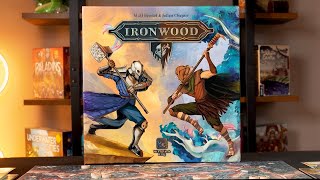
- Asymmetrical gameplay
- Strong thematic experience
- Interesting card mechanics
- Quick gameplay
- Strategic depth
- Limited unique action cards
- Forced combat elements
- Environmental struggle
- Conflict between industrial and forest forces
- Asymmetrical conflict
- Kemet
- Undaunted
Mechanics (from transcript analysis)
- asymmetrical gameplay — Different objectives and playstyles for Ironclad and Woodwalkers
- Card-driven actions — Multi-purpose cards used for actions or battle
Video topics + discussion points
Quotes (from this video)
- I want to be overwhelmed when I play games
- Theme is really important and the theme comes out in this game
- Every turn feels a little agonizing
References (from this video)
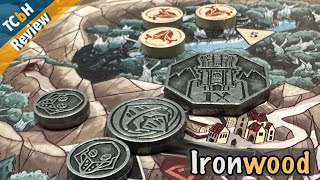
- stunning, tightly designed components
- beautiful production with etched metal and stamped wood
- asymmetry that creates meaningful choices
- tight, focused two-player experience with stable learning curve
- solo mode fully developed with additional community app support
- narrow, but not weak, overall goal structure
- potentially repetitive despite strong asymmetry
- limited dynamic victory conditions; could vary setup for more variety
- asymmetric battle, resource control, and base-building with mystical totems
- Misty forest environment with two rival clans—the Ironclad and the Wood Walkers—struggling for dominance
- competitive, strategic conflict with elegant, rule-light micro-decisions
- Seven Wonders Duel
- Patchwork
Mechanics (from transcript analysis)
- area_control — contesting territories to gain advantage and finish by constructing three foundries or securing three totems
- asymmetric_rules — two factions have distinct goals and mechanics that provide different pathways to victory
- combat_bid — combat resolution via bidding cards face-down, then revealing and comparing hits/blocks and dominance
- Construction — build Foundries or reveal and secure totems to win the game
- deck-building — players use a hand of cards, with basic or unique cards drawn from their deck to drive actions
- Movement — two factions move differently (Ironclad in warbands on mountains; Wood Walkers split movement among units around mountains)
- resource_management — gather crystals and use them to fuel card effects, recruit units, or build structures
Video topics + discussion points
Quotes (from this video)
- Ironwood is a gobsmackingly beautiful, tightly designed two-player game.
- damn that's cool.
- it's smart, it's snappy, it's cunning, it's aggressive without feeling punishing.
- the joy of Ironwood is in the limited rule sets where the implications are the real reward.
References (from this video)

- Tight two-player competition
- Clean combat mechanics
- Potential learning curve for newcomers
- Medieval conflict with hidden objectives
- Unknown
- Unknown
- Scythe
- Root
Mechanics (from transcript analysis)
- Hidden objectives, area control — Two players compete with secret goals and territorial control.
- Resource management — Managing mountains resources to build armies.
Video topics + discussion points
Quotes (from this video)
- Magnificent the best of the year of 2024 for us yeah
- I have weird taste in board games
- it's a fantastic Co-op game with a little tactical combat
- the best part of the game is character development
References (from this video)
- potential for strong two-player play
- decent solo options mentioned
- many mindclash releases recently; fatigue risk
- high setup and cost concerns for similar titles
- Tactical, asymmetric card-driven skirmish
- Two-player focus with potential solo mode
- Compact, two-player-focused
- Astra
Mechanics (from transcript analysis)
- asymmetric card-driven combat — two factions with unique cards and combat rules
Video topics + discussion points
Quotes (from this video)
- it's not easy to stand out so I guess we have to look for small gems like Alice's Garden
- open gaming is still pretty good there
- food is incredibly expensive at this place it is diabolical
- I'll be wearing one every day so I think I'm ordering seven of them
- this is a very busy board a lot of Art and pictures and symbols and that everywhere
References (from this video)

- Interesting card play system
- Dual-use card mechanic with tension
- Two factions play differently
- Good combat system
- Thematic faction mechanics
- Two-player only limits table appeal
- Overplayed genre
- Standard objectives without excitement
- One faction feels easier to use
- environmental conflict
- woodland vs industrial
- faction warfare
- nature vs civilization
- Kemet
Mechanics (from transcript analysis)
Video topics + discussion points
Quotes (from this video)
- I just acquire a couple of games that I was interested in a couple of review copies here and there
- the Expo was still good fun but they do need to work on utilizing the space and getting those costs down
- a game that I kind of have a hit and miss relationship with you know some of it I like
- I immediately decided it was the first one I was going to gun for on the Friday
- when it gets released later in the year at Essen I believe oh man do I want this game fast
- Shut Up And Take My Money
- it's kind of on the levels of something like lost ruines of arac for me
References (from this video)

- tight head-to-head duel
- interesting two-player tug mechanics
- not what the creator’s heavier Mind Clash titles feel like
- disappointed relative to brand expectations
- mining for ironwood vs forest denizens
- forest/mining conflict in a two-player duel
- abstract confrontation
- Voidfall
- Tracarion
- Anacrony
Mechanics (from transcript analysis)
- Card-driven actions — actions are driven by cards in play
- two-player tug-of-war — players push/pull on resource tracks to gain advantage
Video topics + discussion points
Quotes (from this video)
- The Crew does it better
- This is an abstract game in its heart
- I rage quit
- Goblins Hate Christmas sponsorship
References (from this video)

- Great two-player asymmetrical design
Mechanics (from transcript analysis)
- two-player asymmetrical — Each player controls a distinct faction with unique abilities.
Video topics + discussion points
Quotes (from this video)
- we had around 10,000 live views so people kind of dropping in and dropping out
- 1,282 challenge entries that's wild
- this is where we started to fall off of our schedule
- I will be staying up the full 24 hours again because it's just the best way to do it
- it's a food day
References (from this video)
- Strong asymmetry provides divergent strategic paths with meaningful choices
- Clear teach phase and rule exposition embedded in the playthrough
- Tense, thematic combat system that rewards careful planning and timing
- High complexity and potential learning curve for new players
- Long play sessions may challenge casual audiences
- Some components (like the drill) can be fragile or highly situational
- Asymmetric warfare with divergent victory conditions: Ironclad seeks forge-based dominance; Woodwalker seeks to summon the guardian via totems.
- A fantasy realm featuring mountains and forests called Ironwood, where two factions contend over LaMore crystals.
- Tactical, card-driven, with explicit teaching and evolving board state (drill, forges, totems, and the guardian).
Mechanics (from transcript analysis)
- asymmetric faction play — Two factions (Ironclad and Woodwalker) have distinct win conditions and capabilities, shaping strategy and pacing.
- Card-driven actions — Each turn you play a card from your hand (base or special) and resolve effects from top to bottom in order.
- Combat system with wagering cards — Battles are resolved by attacker and defender wagering a card; damage, shields, and a dominance metric decide outcomes.
- Drill and forge mechanics — The Ironclad drill collects crystals moving along a track; forges are built on mountains to increase power and victory progress.
- Resource management — Crystals (LaMore) are earned, stored, spent, and refined; they fuel moves, builds, and abilities.
- Terrain-restricted movement — Woodwalkers move through forests; Ironclads move through mountains, with movement limited to adjacent spaces.
- Totems and vision cards — Woodwalkers discover and carry totems via Vision cards; totems grant immediate bonuses but fade after rounds.
Video topics + discussion points
Quotes (from this video)
- asymmetric hard- driven game for up to two players
- we're going to be taking on the roles of two different asymmetric Waring factions in Ironwood
- the Ironclad player will have five of these Forge tokens
- the woodwalker faction wins by summoning the guardian of the forest
- crystals are super important
- crystals to power their machines
- two-player game of Ironwood
- we're going to start with a teacher the game and then we'll go straight into our two-player playthrough
References (from this video)
- Unique asymmetric gameplay
- Solo mode available
- Strategic card management
- Asymmetrical war between Ironclad Settlers and Woodwalkers
- Iron Mountains and Forests
- Conflict over Larimore crystals and territorial control
Mechanics (from transcript analysis)
- Area Control — Factions compete to control mountains and forests
- Asymmetric gameplay — Each faction has unique win conditions and card sets
- Card-driven actions — Players use special cards to move, attack, and trigger effects
Video topics + discussion points
Quotes (from this video)
- Each player uses an exclusive set of special cards these enable the player to move initiate battles or defend against their opponent
References (from this video)

- Beautiful production
- Heavy strategy gameplay
- Crunchy mechanics
- Mean gameplay where blocking opponent is key
- Can be played solo
- Two-player experience matches Root at 2 players better than Root itself
- Faction Conflict
- Fantasy Woodlands
- Head-to-Head Strategy
- Root
Mechanics (from transcript analysis)
- Area Control — Compete to complete faction-specific goals
- Asymmetrical Design — Two different factions with unique goals (Woods folk vs Iron folk)
- Combat — Fighting mechanics to block opponents
- Deck building — Own deck of cards influencing actions
Video topics + discussion points
Quotes (from this video)
- I believe that this game is the perfect board game (about Fromage)
- There's so many different strategies that you can do in this game (about Arcs)
- I freaking love civilization theme games (about Cilu)
- I love games when they're like the whole purpose is to stop you from doing what you're trying to do (about Ironwood)
- There's something beautiful and magical and cozy about this game (about Harmonies)
- I cannot get enough of this game (about River of Gold)
References (from this video)

- clear fall ambiance
- strong indoor-habitat vibe
- two-player constraint may limit groups
- wood heat and autumn interior life
- Cozy fall indoors by a warm, iron fireplace
- pragmatic, interior-cozy banter
- Halloween
- Nacho Pile
Mechanics (from transcript analysis)
- Two-player optimization — competitive two-player pacing with simple tactical choices
Video topics + discussion points
Quotes (from this video)
- Flick of Faith is one of our most played board games.
- Nova means new. Era means era. So this fall is a Nova era.
- Hidden Movement. I hide in the shadows.
- Nachos feel like a fall.
- Rhino Hero because you're falling.
References (from this video)

- Strong two-player experience; considered staying for now
Mechanics (from transcript analysis)
- two-player engine-building — Root-like in feel with strategic depth and two-player focus.
Video topics + discussion points
Quotes (from this video)
- I will not be going through campaign games in this.
- I want to be more cutthroat than I ever have before.
- Quad Heroes is going. I hate it. I hate it so much.
- Monumental. If Monumental is still here in a year and hasn't been played, if next year's Purge, if I haven't played Monumental, it's going to go.
- Last Light can go. I'm not thinking off the shelf.
References (from this video)

- neat asymmetry and thematic fit
- physical components and setup praised
- combat-centric feel may be heavy for some players
- industrial/fortress building and drilling
- iron faction war with strongholds
- asymmetric conflict with mechanical flavor
- Nottingham
- A Gest of Rubbin
Mechanics (from transcript analysis)
- asymmetric factions — different goals and abilities per faction
- drill/terrain progression — move a drill through mountains to establish strongholds
- hand-management and action selection — three starting cards plus optional additions; actions grant more options
Video topics + discussion points
Quotes (from this video)
- it's really simple partyish game for two it's fun whenever anybody would suggest playing it I would play it
- the game is actually really simple you have this pyramid of cards and all you do on your turn is either pick one card take it in your possessions or you can destroy the card and get money for it
- there's overwhelming amount of choices because the exact placement of the card will mean the actions on it are stronger
- I really want to play it at least a couple more times to figure out it's staying but I really liked it I like the narrative I feel like the theme really fits the game
References (from this video)
- tight, fast two-player interaction with clear asymmetry
- high production quality and thematic flavor
- good replayability through asymmetric objectives and card techs
- engaging combat resolution with dominance dynamics
- steep learning curve for new players
- rules can be dense and take time to parse during first playthrough
- wood vs iron, forging, totems, forest expeditions
- Forest conflict between Wood Walkers and Ironclad faction
- asymmetric dueling with independent win conditions
- Root
Mechanics (from transcript analysis)
- area movement and terrain — multi-space map with restricted forest entry; war bands move between areas
- asymmetric player roles — each side has distinct objectives and abilities
- combat resolution — simultaneous reveal; units have damage, defense, dominance, and retreat rules
- Resource management — crystals as currency to upgrade foundations and forge tokens
- timers and card-driven timers — timers appear on cards and markers are removed as rounds progress
- token movement and supply management — control of totems, forging, and the foundation/forge economy influence movement and scoring
Video topics + discussion points
Quotes (from this video)
- I love this game
- it's a two-player rout
- this is an engine optimization puzzle
- production is insane
- this is the exact kind of engine-building puzzle I love
- two-player route; root is not as good in this space
- Calico is harder; Knitting Circle is more welcoming
- this is adorable and incredibly tight
References (from this video)
Mechanics (from transcript analysis)
Video topics + discussion points
Quotes (from this video)
- it's been a Bonkers year in general
- we are going to do kind of like a bit of a bigger wrap up
- Jamie is an incredibly talented human being in multiple facets
- we've found a studio space
- I'm tired we're just so tired I'm tired all the time
- please say hi
- we might miss a video or two because of travel
- this is the best outcome I think long term
- we're transitioning a little bit into this becoming you know a bigger part of Jam's professional career
- Jamie will stress her mental and physical health out to put a video out