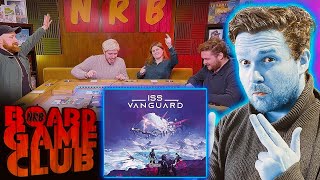
ISS Vanguard is a 1-4 player co-operative campaign Board Game. It will bring players right into epic Sci-Fi adventure, as they will play as 4 sections (security, recon, science, engineering) onboard the first human ship with the potential to reach outer space. The campaign will introduce the unique story written by Krzysztof Piskorski (Tainted Grail) full of hard player choices, twists and branching storylines. The game comes with over 100 different Crew members, each with unique characteristics.
A game session takes you through a Ship Management phase (using a large binder with printed sleeves) in which you choose your destination for your ship then research technologies, produce equipment, recruit crewmembers and resolve situations, and then commence a Planetary Exploration phase. During said Planetary Exploration phase you will proceed with a daring landing procedure with your Lander, explore the planet for information or resources, fighting back a barrage of threats as well as a running timer of supplies depletion before you have to run back to the Lander to lift off back to ISS Vanguard. What follows is the remainder of the Ship Management phase, which takes you through unloading discoveries and resources from the Lander, healing or memorialising crewmembers and taking apart the game board and recording changes to the planet on which you've just conducted your Planetary Exploration on, preserving its status for when you will want or need to return to it.
The Ship Management phase works allows players to make strategic decisions as to their resources and a way forward in the unknown galaxy chasing the mystery encoded in human's DNA. The Planetary Exploration draws the focus to the tactical, as players decide on cards, dice, crewmembers and equipment to bring to fulfill dice checks on the planet's Places of Interest. The players also decide which of the variety of specialised Landers they want to use and how to outfit their Lander for the perilous descent into the chosen planet's atmosphere (or lack thereof). Throughout the game, the narrative system relies on a web of structured and linked Mission Logs, often snippets of journal entries or dialogue, to provide gameplay choices and storyline information as well as keep track of progress throughout the universe.

- high production value
- immersive voice narration
- epic scope
- heavy rules and setup
- quite dense
- mystery and survival in a distant future
- space exploration aboard a spacecraft
- story-forward with voice narration and book-like progression
Mechanics (from transcript analysis)
- dice checks and story outcomes — dice-based resolution influences the narrative path
- Narrative-driven progression — open a space-book and follow story beats
- ship management and exploration phases — two-part cycle: managing ship systems and exploring space
Video topics + discussion points
Quotes (from this video)
- it's epic there's a lot of cards the island can get really big
- the crew is the tiny thing I talked about cuz it's not epic it's not like big but it is crew is a simple trick-taking game
- Welcome To The Moon is flip and write game basically
- this is my number one but I completely get why it's number five
- it's a cooperative game where all of you jump into a fight and try to defeat the big baddy
- the story part where you just meet different people make choices that really matter and make you go into completely different directions
- Sleeping Gods is definitely the definition of an epic campaign game
References (from this video)
- expansive sci-fi narrative
- branching technology and campaign options
- complex for beginners
- potential accessibility barriers
- crew-based storytelling and crew management
- space exploration with a narrative-driven campaign
- branching, tech-tree-driven progression
- Gloomhaven
- Frosthaven
- Kingdom Death
- Root
Mechanics (from transcript analysis)
- cooperative exploration — players collaborate to explore a space setting with tech choices
- Tech tree progression — technological upgrades shape future play
Video topics + discussion points
Quotes (from this video)
- board game content channels on YouTube are very wide and shallow
- we're narrowing that down and identifying five categories of videos
- the next year for the channel is really about building back relationships with the community
- I want to bring our channel down to probably about five identifiable series
- defund Kickstarter is an idea we talked about
- we're not going to trade Shabbat for conventions
References (from this video)

- Ambitious, epic space adventure with deep ship management
- Extensive content and replay potential due to many locations, missions, and research paths
- App integration delivers strong voice acting and handles much of the bookkeeping
- Solid solo mode and campaign structure that invites long-term play
- Interactive ship and crew progression that scales with play time
- Very long play time and heavy bookkeeping can be daunting
- Requires a committed group with time to invest for meaningful payoff
- Complex learning curve due to multiple interconnected systems
- Space exploration, crew management, survival, and discovery across a rich, evolving storyline.
- A long-duration space exploration mission aboard a starship, exploring planets and managing crew and resources, with modular ship systems and a campaign-driven narrative.
- Episodic, logbook/app-driven narrative with many story entries and mission-based progression.
- Unsettled
- Oathsworn
Mechanics (from transcript analysis)
- Card management / deck progression — A large deck of section cards governs actions and boosts; cards move along a track as they are used and sometimes get flipped or discarded, creating a tangible progression of options.
- Crew management and recruitment — Crew members are recruited or advanced via in-game mechanisms (e.g., ranks, sleeves, and section bonuses), expanding capabilities for future actions.
- dice-based checks — Challenges and encounters are resolved with a pool of dice whose faces include symbols, useful icons, and wilds; results determine success, partial progress, or failure.
- Event and wound tracking — Encountered events and wounds add ongoing effects to crews and ships; wound cards accumulate and influence future checks and outcomes.
- Lander customization and missions — Lander units are loaded with mods, supplies, and equipment up to capacity; landing tests and modular upgrades affect success on planetary site actions.
- Production and construction phase — The Production Complex enables placing cards to build modules; cards advance and are manipulated to unlock new capabilities and increase ship power.
- Research and development — The Research Lab lets players develop new techs by spending discoveries; multiple projects can be researched by matching symbols and flipping cards for effects.
- Resource economy (energy, tokens, and power) — Energy and command tokens power ship actions, with facilities enabling conversion or enhancement of resources to progress on objectives.
Video topics + discussion points
Quotes (from this video)
- ISS Vanguard is ambitious and something special, a truly epic space adventure and ship management game the likes of which I've been wanting to play for about 30 years
- There are buckets of content to work with here so many locations to explore, things to research and develop, and a story that has me hooked and wanting to find out more
- I'm nowhere near finishing the game, but I am enjoying building up my crew and exploring strange new worlds
- The best thing about this game is the app—it's got great voice acting in it and it does a lot of the bookkeeping for you
- 60 hours play time is no exaggeration; based on the time I've played it and how far along I am, it's an understatement
- You have to love bookkeeping, as half the game is spent doing it
References (from this video)

Mechanics (from transcript analysis)
Video topics + discussion points
Quotes (from this video)
- Two recommendations per category — a curveball for Jeff since he didn't know I was pulling out two classic picks.
- Draftasaurus and Catapult Kingdom are great for kids because eight-and-a-bit-year-olds can engage with simple rules and bright components.
- We want other people to love games, so you're going to get them games for Christmas whether they want them or not.
References (from this video)
- Immersive campaign setup and live playthrough
- Interactive learning through tutorial steps
- Dynamic narrative with discoveries and POIs
- Rule complexity and lengthy tutorial
- On-camera reading and discussion can slow pacing
- Potential confusion with many tokens and cards
- Interstellar exploration, mystery of an alien builders, survival in a long campaign.
- Aboard the ISS Vanguard exploring a Dyson Sphere called Eye of the Void in deep space.
- Narrative-driven with log entries, discoveries, and campaign progression.
- Kingdom Death: Monster
- Trespass Odyssey
Mechanics (from transcript analysis)
- Crew ranking and ship management — Rank up crew members and perform ship management actions to upgrade capabilities.
- Dice checks and dice management — Players roll dice to resolve actions, with injury dice and Vanguard symbols affecting outcomes.
- Mission/Log cards (logs, POIs, and discoveries) — Narrative and task progression through log entries and POIs.
- Resource management and rest — Manage supplies and dice, rest actions recover dice.
- Time track and global conditions — Time-based effects and global condition cards influence travel and operations.
Video topics + discussion points
Quotes (from this video)
- this is totally how we play board games
- we should read Rule books uh we're gonna figure things out as we go along
- we're going to purchase a monitor that basically goes directly underneath this camera to be great so we should be able to look front and center
References (from this video)

- engaging solo potential
- immersive campaign
- costly
- complex setup
- narrative-driven exploration and crew management
- Space exploration/cooperative campaign
- branching missions with evolving threats
- Oathsworn
- Regicide
Mechanics (from transcript analysis)
- campaign with narrative choices — Narrative consequences affect future play and options
- cooperative strategy — Crew-based missions requiring coordinated planning
- Variable player powers — Each character brings unique abilities
Video topics + discussion points
Quotes (from this video)
- solo board gaming isn't really that weird
- it's a very smart and Savvy thing to do if you are infectious
- these six I would highly recommend as a great entry point to solo gaming
- it's fun to set up the game and go racing
- you can set up all parts and play all factions by yourself to understand a game
References (from this video)
- Immersive narrative through app logs and the ship log integration
- Outstanding tutorial system that guides setup and play
- Beautiful component aesthetic and presentation reinforcing the sci-fi feel
- Huge potential for varied campaigns and rich content
- Strong solo and two-player play options
- Robust ship/crew progression and research pathways
- Massive rulebook and lifelong learning curve
- Punishing dice luck and landing procedures that can feel arbitrary
- Early campaign restricts doing all facilities due to token mechanics
- Very long setup and ongoing rule maintenance; not casual to return to after a break
- High time commitment may deter non-hardcore hobbyists
- Sci-fi exploration, crew management, narrative-driven campaign
- Deep space aboard a starship; crew explores, discovers, upgrades, and engages with planets
- Voice-acted logs via an app and integrated logbooks for story delivery
- Swan
- Tainted Grail
Mechanics (from transcript analysis)
- Dice mitigation and symbol objectives — Planet missions rely on rolling dice and using mitigation cards and crew abilities to achieve required symbols
- Drift/energy constraint system — Energy tokens limit planetary exploration; running out can cause morale loss and adrift states
- Landing procedure and planet exploration risk — Landing involves a dice-driven procedure with potential hard consequences; mitigation exists but is limited
- Logbook/app narrative integration — Logs can be read from a proper journal or via an in-app voice-acted log system to drive immersion
- Production queues and facility management — Production and facility activation use queues and command tokens to advance capabilities
- Ship/crew progression and research — Campaign progression upgrades tech level, morale, crew, and equipment; research projects unlock new capabilities
- Two-phase gameplay structure (admin/strategy vs. planet exploration) — HQ planning and campaign management vs. dice-driven planet missions; akin to X-COM two-phase flow
Video topics + discussion points
Quotes (from this video)
- ISS Vanguard is essentially a big sci-fi epic immersive game
- this has the best or one of the best tutorial systems I've ever seen
- it's not really a casual put it aside come back to it later Style game
- this is not a light game this is not an easy game
- I think overall it's getting an 8 out of 10
- it's basically that in a nutshell... it's like X-COM
- the app listening to The Voice logs without you in the background it's wonderfully immersive
References (from this video)

- great narrative experience
- engaging mechanics
- appealing to Star Trek/Mass Effect fans
- story pulls player in
- serious time commitment required
- spaceship exploration narrative
- space exploration
- narrative_exploration
- Star Trek
- Mass Effect
Mechanics (from transcript analysis)
- deck management — ship book and technology research
- narrative — story-driven game
- solo playable — designed for solo play
Video topics + discussion points
Quotes (from this video)
- this is my list the video says the top 100 board games of all time but it really is just my top 100 board games of all time
- three minute board games is an independent channel we dont take money from publishers and we do not do any form of paid content
- Mosaic has the ambitious goal of being a civilization game that can be played in two to three hours and it very much succeeds at this goal
- a game that does not need to be played with a traitor because the inherent selfish goals in this game created enough internal conflict
- I love space racing games and space corp is the game that is most racy as far as space racers go
- the term I use instead of gateway game is foundation game
- Sentinels could easily be a forever game the kind of game you just play over and over and over and over again endlessly
- Modern Art is a simple and brilliant and beautiful game and easily the best pure auction game Ive ever played
- Black Orchestra models some very clever things about how conspiracy is run
- when I asked the question hey what game should I play with my non-gamer friend who's interested in gaming but hasn't done much gaming I almost always answer Sentient Golem Edition
- Arkham Horror is the game that really made board gaming my number one hobby
- there are a few things more fun and rewarding in board gaming than organizing a fight in the arena
- Twilight Struggle is one of the best head-to-head games out there
- Santorini is the definition of an elegant design
- Arkham Horror the card game absolutely should be for you it's a hundred percent for me and it is my number one game of 2023
References (from this video)
- rich, thematic campaign with vivid in-play decisions
- live-stream friendly with dynamic interactions and emergent storytelling
- flexible crew roles and personal story arcs add depth and replayability
- rule familiarity is demanding; early sessions have a steep learning curve
- live-recording can exaggerate confusion around complex rules
- session length can be lengthy for an entire planet expedition
- searching ruins, gathering leads, building up a crew, upgrading a ship
- Sci-fi planetary exploration aboard a campaign-focused starship
- campaign-driven exploration with evolving objectives and ship management
- Great Western Trail Argentina
- Unsettled
Mechanics (from transcript analysis)
- Assistance and collaboration — Crew members in the same sector can assist a check, often altering the pool and results; sequencing matters for bonuses
- Dice pool and dice checks — Roll colored dice (blue/green/red/vanguard variants), modify results via crew abilities and items, resolve outcomes
- Discovery tokens and leads — Gaining discoveries and alien tech leads; leads combine with unique discoveries to unlock further capabilities
- Resource management — Supplies, energy, and command tokens circulate; managing these resources gates movement, actions, and ship upgrades
- Time/Log tracks and planetary logs — Time tracks advance via events; planetary logs determine how far exploration progresses and what events trigger
- two-phase gameplay — Planetary exploration phase plus ship management phase; actions shift between board exploration and ship upgrades
Video topics + discussion points
Quotes (from this video)
- I'm so incredibly excited I want to get you a log book here
- this is the new crew here we're hitting Miss
- I love this game, it's amazing
- the art is amazing
- Unsettled vibes but with more structure and story
References (from this video)
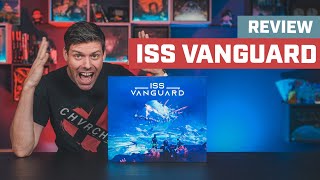
- Epic, expansive campaign with vast scope
- High production value and art direction
- Strong app integration and narrative pacing
- Distinct factions with thematic variety
- Immersive storytelling that unfolds like a TV series
- Dice resolution can feel basic for a game of this scale
- Very long play sessions and heavy commitment
- Bookkeeping and procedural reading can be solitary and dense
- Steep learning curve and heavy setup
- Space opera, exploration, mystery/diagnosis through logs
- Space exploration with star systems, planets, and an overarching mystery left by builders
- episodic, logbook-driven storytelling with app-assisted narration
- Sleeping Gods
- Unsettled
- XCOM (video game)
Mechanics (from transcript analysis)
- campaign-driven narrative — Long-form campaign (40–60+ hours) with evolving story and potential character casualties
- Crew progression and upgrades — Selecting crew, improving their abilities, and upgrading dice/tools
- Dice-driven actions — Most actions resolve through dice rolls with icon matching and rerolls
- Logbook/app integration — Story progression via a physical logbook and companion app for narrative and events
- Planet/system exploration — Moving between star systems and performing searches and actions on planets
- Ship phase — Crew management, upgrades, and ship upgrading activities between exploration phases
Video topics + discussion points
Quotes (from this video)
- the app makes it quicker and simpler
- the production value is through the roof
- it's the best looking game I've seen for a while
- the ship book and the app
- it's a huge campaign game
- the story is huge
References (from this video)

- Stunning production and art direction
- Epic scale with abundant content
- Immersive space exploration feel
- Very heavy; steep learning curve
- Potentially long play sessions
- Space exploration with complex ship systems
- Exploration and management aboard a starship
- Campaign-driven, system-forward experience with a grand scale
- Nemesis
- The Princess of the Stars (fictional reference for scale)
Mechanics (from transcript analysis)
- Campaign progression with modular content — Expanding scenarios and events as the campaign unfolds
- Cooperative play with heavy system-management — Players coordinate to manage ship systems and crew tasks
- deck-building / resource management — Cards and resources drive ship operations and exploration
Video topics + discussion points
Quotes (from this video)
- it's the best game ever
- this game is a nut job
- the art is amazing the storytelling is amazing
- Nemesis is fan Fantastic so it's it's semi-cooperative I guess it depends
- it's the best alien game I've ever played that's not the alien license
- Photosynthesis is a beautiful game
- the core box is amazing
- it's so heavy but it's worth it
- awaken Realms sponsor this they’re so awesome
References (from this video)

- Massive scope and content
- Rich space-opera vibe
- Complex and lengthy setup
- Higher learning curve
- Epic space adventure with crew management
- Space Odyssey with ship management and planetary exploration
- Two-part structure: ship management + planetary exploration
- Gloomhaven
- Descent: Journeys in the Dark
Mechanics (from transcript analysis)
- dice-driven exploration — Planet encounters drive events and outcomes.
- Ship management / crew progression — Upgrade ships, train crew, and manage resources to complete objectives.
Video topics + discussion points
Quotes (from this video)
- this game encapsulates everything that is great about Euro games or Resource Management games
- Self-made Legend
- Moon Rakers welcome to space we have a special mission for you but unfortunately you might not be able to do it alone
- this is not a huge collection yet it covers the whole range anybody could go to this collection and find something to play here
- Gloomhaven box is enormous
References (from this video)
- Strong modular insert ecosystem for card management
- Engaging sci-fi theme with solvable challenges
- Complex rules for new players
- Setup can be lengthy without inserts
- Cooperative exploration and resource management
- Sci-fi exploration and ship-based base operations
- Scenario-driven with evolving missions
- Arkham Horror
- Aeon Trespass Odyssey
- Nemesis
Mechanics (from transcript analysis)
- Crew and equipment management — Assign crew to stations and manage gear
- Deck-driven actions — Actions determined by card play and timing
- Modular board with ship sections — Modules reorganize as you explore
Video topics + discussion points
Quotes (from this video)
- Glitter is terrible
- The instructions are incredible, way better than Ikea
- If it strikes your fancy, check it out
- Stay on target
References (from this video)

- Potential for deep campaign storytelling
- High production value associated with Awaken Realms
- High complexity and weight
- Long playtime may deter casual players
- Epic space exploration with a long-term campaign
- Space exploration and corporate governance within a sci-fi setting
- Epic, campaign-driven narrative
- Kingdom Rush
Mechanics (from transcript analysis)
- Campaign progression — Long-form campaign with evolving stories across missions
- cooperative play — Players work together to complete missions against the game
- Modular/variable board — Exploration of a modular game board that changes per mission
- resource/hand management — Players manage resources and personnel to advance scenarios
Video topics + discussion points
Quotes (from this video)
- I deeply believe in community and giving to people because they often give back and create value.
- Steam is the standard for digital distribution; we want GameFound to be the Steam of board games.
- In a five-year horizon, I’d love to see a system where a creator can just create a great game and the platform handles production, logistics, and taxes.
References (from this video)

- Highly anticipated
- Awaken Realm quality
- Space
- Science fiction
Mechanics (from transcript analysis)
Video topics + discussion points
Quotes (from this video)
- moments during board games that formulate memories that you'll never forget
- there's just something for everyone
- it's all about the people
- the board gaming space has allowed me to just have so many incredible fun moments that i'll never forget
- it chose us via christy
- we're gonna have it at jeff's parents basement everybody's coming
- agricola sucks and everybody else seems to love it
- arnak is severely overrated
- i don't think gloomhaven should be number one on the list anymore
- humans are not good at rating things
- my nine is different than your nine
References (from this video)

- immersive space exploration vibe
- dense setting and theme
- rules-heavy
- not as tight as some space-sim peers
- Interstellar exploration and resource management
- Space exploration with ship-upgrade and mission structure
- Story-light exploration with modular missions
- Earth Abundance
Mechanics (from transcript analysis)
- campaign-like progression — ship upgrades and crew management across missions
- exploration — map exploration and planetary missions
Video topics + discussion points
Quotes (from this video)
- "Silverwood Grove... absolute trash"
- "I would actually give it a one out of 10"
- "Campaign games... I'm done with campaigns"
- "It's not going to be quick"
References (from this video)
- Deep strategic depth and emergent storytelling
- Rich gear system with meaningful upgrades
- Readable ship book provides interesting choices
- Discovery cards and abilities create meaningful optimization
- Punishing consequences and heavy learning curve
- Early morale management can be tough
- Risk of rushing exploration leading to suboptimal outcomes
- Crew survival, exploration, and discovery with resource management
- Aboard a starship during a deep space exploration mission
- Emergent, consequence-driven storytelling
Mechanics (from transcript analysis)
- area exploration and discovery — Explore landings, gather discoveries, and trigger events and escalations
- deck-building / card economy — Build a personalized deck of cards to improve actions and probability outcomes
- dice-drafting and dice manipulation — Roll and assign dice to actions to resolve events and progress on the ship
- Resource management — Manage morale, discoveries, gear, and ship resources to survive
- tech tree / upgrade path — Technology and production upgrades unlock future exploration options
Video topics + discussion points
Quotes (from this video)
- don't rush
- there are things in this game that punish you for the sake of discovery
- ISS Vanguard is a game that does not apologize for killing your characters
References (from this video)
- Rich, emergent storytelling through logbook-style logs and mission graphs
- Strong co-op feel with multiple crew roles and synergies
- High component quality and tactile gameplay (cards, tokens, whiteboard-like play area in the stream)
- Variety and replay potential through numerous discoveries, missions, and planetary events
- Dynamic planet encounters that shift the board and available options mid-game
- Rules clarity can be ambiguous in live play; players frequently reference the rulebook for edge cases
- Complex setup and numerous components may create downtime and learning curve for new players
- Some interactions (like travel modification via suits or items) require careful parsing and can slow the flow
- Space exploration, planetary survey, alien life, discovery-driven storytelling
- Interstellar expedition in a distant future; crew explores alien worlds and encounters hostile environments
- logbook-driven episodic narrative with mission logs, events, and discoveries
- Halo (video game)
- Deep Rock Galactic (video game)
- Aliens (film) as thematic reference
Mechanics (from transcript analysis)
- Cooperative action planning — Players coordinate character abilities and equipment to advance on planetary exploration goals.
- Dice pool management — Crew members roll dice, expend dyes, and manage a shared pool to fulfill checks and actions.
- Discovery and mission cards — Players draw and resolve unique discoveries and mission objectives that drive the campaign and scoring.
- Hazard and danger dice — Danger dice introduce risk and potential injuries, requiring strategic resource management.
- Live specimen and alien tech tokens — Acquiring and using specimens/leads to progress, upgrade capabilities, and unlock rewards.
- Logbook and ever-evolving planet rules — Planet cards and logbook entries modify rules and provide narrative developments between rounds.
- Planetary exploration on a modular map — Sector-based movement with planet cards, terrain hazards, and event cards driving exploration forward.
Video topics + discussion points
Quotes (from this video)
- that's the whole deal of the game right I love it I love it so much
- I love this game
- this is amazing to have you here
- the unknown is what's going on
References (from this video)
- rich, immersive campaign with a strong narrative backbone
- cooperative play that rewards planning and player interaction
- app-driven storytelling enhances immersion and pacing
- varied locations and factions (Aragon, Danao, Akaro, etc.) create emergent drama
- dramatic moments and humor add personality to long play sessions
- very heavy rules and setup; not ideal for casual play or time-pressured sessions
- lengthy play sessions can tax players and require significant commitment
- component complexity and tracking (time tracks, injuries, energy, markers) can be challenging
- cooperation under pressure, exploration, diplomacy, and planetary-scale intrigue
- Interstellar exploration aboard a Titan-sized colony ship; interactions with Aragon, Danau, and other alien factions as a mystery unfolds
- campaign-driven, app-assisted with logbooks and mission text
- Nemesis
- Nemesis Lockdown
Mechanics (from transcript analysis)
- app-assisted narrative and logbook — Story unfolds through an app and physical logbook entries; progress unlocks events and logs like log numbers
- character abilities and charges — Crew members have unique abilities and charges to manipulate dice results or draw/discard cards
- cooperative crew actions — Four players share a shipboard mission: coordinating dice checks, resource management (supplies), and crew abilities to achieve goals
- dice checks and danger die — Actions resolve with a pool of dice; danger die introduces risk and potential injuries
- mission cards and optional missions — Players draw and resolve mission cards (e.g., log 1070s, 10-54s) that guide exploration and potential side objectives
- time tracks and event progression — Time tracks advance with certain events; delaying or accelerating progression affects outcomes
Video topics + discussion points
Quotes (from this video)
- ISS Vanguard is a chunky boy
- it's designed by Christoph piscorski Pavel zamborski and Andre betkovitz
- we're all actors here
- we need the views
- we have eyes on three of their Titans making their way west each with a small City on its back
References (from this video)

- fantastic story depth and thematic feel
- very high production values and components
- ample content for space-theme fans and campaign lovers
- heavy commitment with long play sessions
- steep learning curve for new players
- Exploration, discovery, and crew-driven space missions
- Space exploration and a narrative-driven campaign aboard a starship
- Campaign-driven, story-rich arc with evolving missions
Mechanics (from transcript analysis)
- Cooperative campaign — Players work together across a narrative-driven campaign with missions that progress the story.
- deck-building — Crew and action cards are drafted/used to trigger abilities and advance objectives.
- exploration — Modular or evolving map elements and event markers drive exploration and encounter resolution.
Video topics + discussion points
Quotes (from this video)
- the story is fantastic
- production wall used through the roof
- tons to do if you're a sucker for Space theme
- it's a huge campaign game
- it's the only game you can't really get right now because it was just on Kickstarter
- my favorite solo game hands down this year
- it's a two-player card game
- the odds are always in your favor
- it's a drafting game
- every action does that
References (from this video)

- strong narrative momentum
- great for cable of campaign-driven play
- heavy to learn
- can be lengthy in sessions
- mystery, diplomacy, and tactical challenges
- Space exploration and branching campaign aboard a starship
- interwoven narrative with evolving campaigns
- Tainted Grail
- Through the Ages
Mechanics (from transcript analysis)
- campaign-driven narrative — story unfolds as you progress through missions
- card-driven / action timing — selects actions with probabilistic planning
Video topics + discussion points
Quotes (from this video)
- I want to show you how the game plays and not to sell you the game.
- I’m one of the more genuine content creators.
- Mage Knight is the best game ever.
- Gaia Project beats Age of Innovation for me.
- I don’t like the idea of being a used car salesman.
- Star Trek: Captain’s Chair is an exciting licensed approach with lots of thematic promise.
References (from this video)

- Depth and richness for dedicated hobbyists
- Very high rule overhead
- Long learning curve
- Expensive and space-consuming
- Cooperative campaign-style exploration
- Space exploration / sci‑fi
- Long-form, rule-heavy experience
- Awaken Realms campaigns
- Moon Breakers (concept)
Mechanics (from transcript analysis)
Video topics + discussion points
Quotes (from this video)
- less big box games MH and more small box and quicker play
- I think you're going to see more and more of the Lord of the Rings IP
- cozy gaming and solo gaming resurgence
- better UX and UI in board games
- digital implementations... it's awesome I don't care
- there's going to be more re-implementations and deluxified versions
- there are too many conventions now; not enough attendance
- frogs are the next trend