Kinfire Council is a competitive game of strategy and politics for 2-6 players. As a member of the Council, you've been charged with rebuilding the great city of Din'Lux and defending it from the dangers of the Starless Nights.
Take turns sending your workers to collect resources, upgrade buildings, and construct new Kinfire lighthouses in the surrounding area, while the Cult of Altan interferes with your plans and undermines your authority. You'll vote on important city policies, arrest cultists, and dispatch your Seeker to thwart threats looming over the final bastion of civilization, the great city of Din'Lux.
While you vie for power among yourselves, you also track the Cult's progress. If they win the game, then the Cult Conspirator ends up being the victor. Will you be a benevolent leader, working together with your fellow Council members, or will your plans take a more sinister turn?
-description from publisher
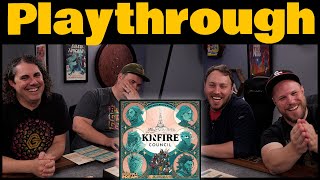
- Rich, chaotic player interaction and theme
- Engaging lighthouse mechanic with tiered scoring
- Strong personalities and banter from players
- Dynamic docket and voting adds tension
- Rules are complex and narrative-heavy for newcomers
- Late-game swings depend on threat deck randomness
- Can become chaotic with multiple guests and shifting plans
- city-building under cultist pressure with political decree voting
- The city of Denlux after the Starless Night, rebuilding the city and lighthouse amid cult threats
- fantasy, dark fantasy with cultic intrigue
- Nightfall
Mechanics (from transcript analysis)
- Arrest and guard actions — Arresting cultists yields rewards; guards provide enhanced arrest and action options.
- Cult threat and threat board — Cultists are drawn, block locations, and add threats that score points; activation can trigger large swings.
- Decree voting — Decrees appear at sunrise; players vote with influence to pass laws and shape round progression.
- Endgame and hidden threats — Threats and cult activity culminate over five rounds with potential hidden cards affecting scoring.
- Errands and city needs — Errands deliver resources or address needs; meeting needs or delivering to lighthouses scores points.
- Lighthouse construction — Three-tier lighthouse with floors scoring points; progress determines scoring per round.
- Seeker abilities — Seekers grant outside-city options and special bonuses, modifying standard actions.
- worker placement — Players place workers and seekers on city spaces to gain resources, perform actions, and meet city needs.
Video topics + discussion points
Quotes (from this video)
- Give him money. Give him money. Please give him money.
- Crowd sourced things. I crowd sourced my turn.
- The cult is a major potential threat if you feel things may be going well for the cult.
- Points are points.
- There are three sections of the lighthouse with varying costs.
References (from this video)
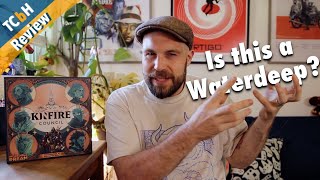
- Innovative worker placement mechanics
- Unique worker upgrade system
- Engaging semi-cooperative elements
- Balanced complexity
- Thematically rich gameplay
- Slightly misaligned game board tiers
- City administration and defense against dark forces
- Fantasy city under threat
- Administrative management in a fantasy world
- Lords of Water Deep
- Builders of Balders's Gate
Mechanics (from transcript analysis)
- Resource management — Collecting and converting resources like food, stone, and cultist tokens
- Voting — Players can vote on laws and global effects
- worker placement — Players place workers to take actions, collect resources, and manage city
Video topics + discussion points
Quotes (from this video)
- It just feels great to have a game come along in a genre that you love... that just gives you unbridled joy.
- These are all highly contentious and very impactful parts of the game that are so smartly integrated
References (from this video)
- strong thematic lift when moving to fully cooperative mode
- dense, crisis-driven design with multiple playstyles
- box art and aesthetic may deter some players
- some complexity in balancing modes
- semi-cooperative worker placement with deception
- fantasy city under cultural/cult threat; political maneuvering
- political, crisis-driven with mounting pressure
- Lords of Waterdeep
- Pandemic
Mechanics (from transcript analysis)
- cooperative vs competitive modes — expands to a fully cooperative experience with solo/expansion options
- pressure-driven crisis management — city needs and cult threats push players toward collaboration
- semi-cooperative worker placement — players contend for influence while collaborating against shared threats
Video topics + discussion points
Quotes (from this video)
- 2025 was a banner year for gaming.
- pure uncut, unadulterated top 10 games of 2025.
- El Paso... production absolutely sucks and yet is still a really good game.
- Origin Story is a riff on trick-taking and tableau building.
- Kinfire Council is not just adaptation; it rethinks genre boundaries.
- It's not Pandemic. It's so smart. It's climactic.
References (from this video)

- extremely rich choice space and copious upgrades
- engaging interaction via multiple pathways
- visually overwhelming; requires perseverance to learn
- cult disruption and urban rebuilding with heavy worker placement
- Rebuilding a city under threat from a cult
- epic and orchestral with many upgrade paths
- Kinfire Council (expansion)
Mechanics (from transcript analysis)
- Dual action selections per site — each site offers two different ways to take actions
- Negotiation and combat through actions — arrest cultists, build for tax relief, etc.
- Worker placement with upgradable workers — 20 spots, each upgradeable; workers gain new abilities
Video topics + discussion points
Quotes (from this video)
- This is the kind of game you play when you want to feel smart.
- Everything feels like a good decision.
- The card play in this game is absolutely stellar.
- A lot of little things come together to feel cohesive and satisfying.
- You reap what you sew, you know, you need to be strategic and methodical about it.
References (from this video)
- fits into established Kinfire universe, cohesive mechanics
- interesting asymmetry and characterful play
- some players might prefer Delve/Chronicles variants
- medieval/kingdom politics with a toolkit of actions
- fantasy political/negotiation with council members
- thematic, character-driven
- Kinfire Delve
- Kinfire Chronicles
Mechanics (from transcript analysis)
- turn/round management — managing days and resources to optimize actions and scoring.
- worker placement with council members — each member has a unique ability; you place to gain discounts/resources.
Video topics + discussion points
Quotes (from this video)
- This one's very quick. It's very quick to play and to teach.
- There are player interactions, but it doesn't feel mean.
- The narrative is so well written. The actual boss battling part is gripping.
- Above and Below Haunted gave it a little more oomph. Ghosts add consequence.
- It feels like a video game in board game form; very smooth and substantial.
References (from this video)
- Interesting traderesque mechanic
- Compelling decision space
- Feels overwhelming on first play
Mechanics (from transcript analysis)
- Cult Commitment — Player decides whether to commit to a cult
Video topics + discussion points
Quotes (from this video)
- You can be really really a talented, smart, clever designer and be bad at making things that are fun.
- The fun is the game.
References (from this video)
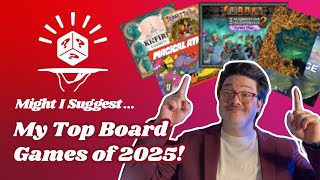
- tight tension between city needs and threats
- great at various player counts
- complex to teach at higher player counts
- democratic council management with threats
- city governance under siege by internal cults and external threats
- asymmetric worker placement with customizable crews
Mechanics (from transcript analysis)
- asymmetric crew customization — train workers with different skills to tailor each character's role
- worker placement — assign workers to actions and manage limited resources
Video topics + discussion points
Quotes (from this video)
- The Emerald Flame was an amazing experience.
- I love a good cooperative game, but I also love a good competition every once in a while.
- This game has just the right amount of moving parts… to really benefit people that can think a few turns ahead.
- Vantage is like Breath of the Wild, but in board game form.
References (from this video)

- ambitious hybrid design blending multiple mechanics
- strong thematic cohesion with city-building and defense
- semi-co-op element can complicate scoring and player interaction
- variable weight with player count
- semi-cooperative defense against 'baddies' with urban planning
- city-building within a fantasy/urban setting
- hybrid, thematic integration of many mechanics
Mechanics (from transcript analysis)
- engine/resource management — Train and upgrade workers to unlock more actions; board flow evolves with player count.
- semi-cooperative mechanic — Presence of external threats (the 'baddies') creates pressure, with possible shared consequences.
- worker placement — Large map with multiple action slots; players build, vote on agendas, and manage resources.
Video topics + discussion points
Quotes (from this video)
- this is our top 10 board games of 2025
- it's a trick-taking style game where you predict exactly how many tricks you will win
- the Mindbugs can take control of that creature twice during the game
- it's a semi co-op element in Kidfire Council
- it's a cat-and-mouse hidden movement game
- it's an efficiency engine through and through that has a nice nature-based theme
- this is based off of the Pandemic system
- Speak Easy is by far the heaviest
References (from this video)

- Deep, varied decision space with differing starting problems
- Lots of customization and interaction via cults and upgrades
- Can feel procedural and multi-step to learn
- Rulebook parsing complexity can deter newcomers
- Strategic layer-cake of building, upgrading, and cult disruption
- A rebuilt city under the influence of a mysterious cult
- Complex, with multiple paths and faction-driven play
- Dwellings of Elderv
- Ironwood
Mechanics (from transcript analysis)
- cult_mechanic — The cult interferes and can block spots or offer interactions
- multi-layered_worker_placement — Sending workers to upgraded buildings and managing multiple tracks
- upgradable_buildings — Buildings upgrade and provide varied bonuses
Video topics + discussion points
Quotes (from this video)
- it's one hell of a looker. This is a this is a really good looking game.
- I don't like this game.
- Playtime's important. It's sort of like when you watch those comedies and horror movies from like the 90s and early 2000s, they all clocked in under 90 minutes.
- This game does have a beautiful board but the mechanics aren't as deep as the art.
- If you're not the biggest Euro fan, you're not going to like Forestry.
References (from this video)

- Rich, cohesive world-building across multiple Kinfire games
- Striking visual presentation and production quality
- Engaging balance of competitive tension and cooperative defense against a larger threat
- Rules can be heavy and challenging to teach in a single session
- Best experience is with some familiarity with Kinfire lore and its previous titles
- political strategy within a city under existential threat; collaboration and competition amid a shared crisis
- Denlux, Kinfire universe city, with layered districts and a looming darkness represented by starless nights and the Kinfire Tower
- lore-rich world-building that ties to Chronicles/Delve; world bible-driven storytelling
- Kinfire Chronicles
- Delve
- Chronicles
- Title Blades
- Nibiri
Mechanics (from transcript analysis)
- AI/ opposition via cultist dynamics — An autonomous cult element creates additional tension and competing objectives.
- Area influence / engine-like development — Construct lighthouses and expand the city’s protective aura, shaping scoring and strategy.
- Lore-driven progression across an IP — Narrative threads and Easter eggs connect this game to the wider Kinfire universe.
- worker placement — Counselors are placed to gather resources, influence districts, and manage city needs.
Video topics + discussion points
Quotes (from this video)
- This isn't just someone had a game mechanic idea and just like applied a theme to it.
- Everything is felt like we had this world and now how do we build a game around everything that's happening.
- It's not beige.
- This is just cool to do and we have other plans for building out this universe.
- I don't think anyone's actually asked me about this before, but we approached Kinfire very differently than maybe other indie games.
- The art design and the forward-thinking world-building behind Kinfire feel rich and intentional.