In Loot, players send out their pirates to attack and defend trading ships in order to get the most gold coins. The game box contains 78 cards consisting of trading ships, pirate ships, captains, and an admiral. Players send out a trading ship on a voyage in which it must survive a round of attacks from other player's pirate ships. You defend your traders with your own pirates and collect the spoils of your attacks elsewhere. The game ends once the draw deck is depleted and one player is out of cards. The player with the most gold coins wins.
Description for the Heidelberger release:
Essen release, 2002. In the nice small black box, with embossed lettering. This game has 25 Trade ships worth different amounts of gold (from 2 to 8), 48 Pirate ships, 12 each in 4 colors. The Pirate ships are worth 1-4 skulls (the player with the most skulls played on a trade ship captures it if the lead is kept for one full pass around the table). There are 4 Pirate Captains (1 of each color) to help win the battles and 1 Admiral to help defend the trade ships. The game is playable with 2-5 players individually. With partners it can be played with up to 6 or 8.

- Good tile-laying mechanic
- Nice mix of personal player board and competitive placement
- Quick gameplay (45 minutes or less)
- Cool theme and art
- Competitive interaction without being unnecessarily mean
- Can be cutthroat depending on player group
- Randomization of tiles can make some objectives difficult or impossible
- Some luck elements in tile distribution
- Viking exploration and resource collection
- Islands where Vikings land to raid and trade
- Tile-laying exploration
- Rebirth (Cania game)
Mechanics (from transcript analysis)
- player interaction — Competitive placement and resource blocking on main board
- set collection — Connecting locations or surrounding them to collect towers or castles
- Tile-laying — Building out from the shore to collect resources
- worker placement — Competing for location control
Video topics + discussion points
Quotes (from this video)
- Multiplayer blackjack in two words.
- It's infectious fun and almost everybody enjoys it.
- They just have to be mean sometimes to get what you want.
- It's a really cool idea in a fairly standard game.
- I really think Endeavor is amazing.
- You so want to do so much and you cannot do everything each turn.
- I could play Flip Seven with my entire family from age 7 to 87.
- The reverse scoring is fantastic and brilliant.
- I love the whole theme. I love the exploration. I love going deeper.
- If you bring this to the US, give it a new name.
- It's not approachable for casual family gaming.
- The jury preferences have changed - they're not easy to predict.
References (from this video)

- Spatial expansion feels intuitive and tactical
- Older design; may skew toward mid-weight players
- Resource gathering with spatial goals
- Spatial worker placement where placement expands future options
- Strategic, spatially aware planning
Mechanics (from transcript analysis)
- Spatial worker placement — Workers placed adjacent to existing workers open more options.
Video topics + discussion points
Quotes (from this video)
- Actions always succeed in Vantage; the challenge is how much time, morale, and health you lose along the way.
- the limited information of I can see something that you can't see and how that encourages communication and cooperation.
- one player is playing a card and that card has instructions that the other player must follow or you lose.
- if you roll seven bells on your turn, you just instantly win.
References (from this video)

- Strong production quality and art
- Flexible play modes add replayability
- Rules can be a bit dense on first play
- Theme and mechanics feel loosely integrated for some players
- multi-mode trick-taking/speculation with bidding-like elements
- mythic treasure-hunting with Viking-tinged aesthetic
- abstract with thematic flavor
- Bottle Imp
Mechanics (from transcript analysis)
- Hidden-value card interaction — Different card types interact with price dynamics to score points
- multi-mode play — Includes free-for-all, team play, and two-bottle modes for varied play
- Trick-taking with an innovative price element — A central price track (bottle-like) sets a price; players may bid under the price to win tricks
Video topics + discussion points
Quotes (from this video)
- it's a very strange game
- it's also really cool if you're watching this on YouTube
- the look as we said was really great
- this game might be my favorite Red Raven game to date
- simultaneous turns the dice placement and the races for scoring
- the rules are pretty intuitive
References (from this video)
- deep end-game scoring strategy
- engaging resource management
- scoring can be complex and lengthy to tally
- resource gathering, building construction for victory points
- Viking era, fjords, and shipbuilding
- medium-weight Euro with thematic storytelling
- Santorini
- Ky Mala
Mechanics (from transcript analysis)
- pickup_delivery — Deliver resources via ships and build sites on map
- set-collection_and_multipliers — Count matched resources for end-game scoring multipliers
- tile/resource_drafting — Draft Vikings, tiles to place, and load resources on ships
Video topics + discussion points
Quotes (from this video)
- This episode is jam-packed.
- I love the chess nature of Santorini, you know, the strategic.
- The episode was pretty strong, the production values are excellent.
References (from this video)

- Strategic but accessible
- Always feels in control
- Satisfying tile placement
- Resource gathering and territory control
- Viking settlement
Mechanics (from transcript analysis)
- tile placement and resource management — Place Vikings to gather resources and build structures
Video topics + discussion points
Quotes (from this video)
- With vast numbers of games releasing each year, it's surprising that there are very few negotiation games being produced
- I do enjoy revisiting games I've enjoyed in the past with new additions and altered rule sets
References (from this video)
- Haven't played any of the Dice Masters
- Dice building
- Marvel universe
Mechanics (from transcript analysis)
- dice building
Video topics + discussion points
Quotes (from this video)
- We love trick taking games
- This game is so much freaking fun
- I adore GMT games, they are becoming one of my favorite game publishers
- If you remember Vast Crystal Caverns is in my top five games of all time
- We bloody love it
- We can't stop playing
- It's a blimp game not a train game
- That's just work
- I don't think I want to play it
- I'll get it eventually
References (from this video)
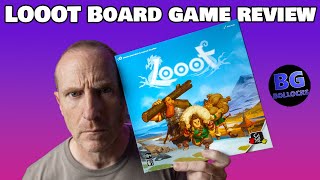
- Wide array of options on both main and personal boards
- End-game scoring remains uncertain until the final tally
- Excellent price-to-content value (~20 pounds for a substantial box)
- Engages players with placement timing and strategic planning
- Non-aggressive but meaningful interaction despite abstract theme
- Theme feels detached from the Viking setting
- Adjacency rules can fiercely constrain early layout decisions
- Late game can feel stale with limited viable moves
- Can overindex on abstract mechanics rather than a strong narrative
- Chaining requirement can be frustrating and slows pacing
- Territory control and resource management with Viking theming
- Viking-era board game where players deploy Viking tokens to occupy spaces and build structures on a modular board
- Abstracted theme framed by Viking imagery; mechanics-driven rather than strongly narrative
- Carcassonne
Mechanics (from transcript analysis)
- action variety — Actions are categorized as mandatory, conditional, or optional, guiding how players use their Vikings
- adjacency and chaining — Certain captures require adjacent pieces or chaining two watchtowers together
- building capture — Capturing houses, watchtowers, and castles by meeting adjacency/line requirements grants bonuses
- long ship mechanic — Proximity of resources to a long ship yields benefits on the linked tile
- Resource gathering — Placing on resource spaces yields corresponding resources; some placements grant extra resources
- resource/structure toggles — Each player has three Shields that can be flipped for a one-time bonus
- Scoring and endgame — Final scoring multiplies points from houses, towers, castles, gold, wood, etc., with penalties for unfilled long ships
- special placement rule — Perks allow placing a Viking on a space already occupied by another Viking under specific conditions
- tile placement — Players arrange tiles on their personal boards to form the layout and determine available actions
- worker placement — Each turn a Viking is placed on the board to claim resources or build structures
Video topics + discussion points
Quotes (from this video)
- it's absolutely [ __ ] mental how they can cram so much into a box and fog it for so little
- Loot is fine it's a pretty decent game it doesn't really break any new ground and can be frustrating due to the mandatory chaining of your Viking pieces together
- it's well worth the price of Entry at 20 quid it could be great but it's lacking something that I can't quite put my finger on
- carcassonne now being sold for like 35 quid you could pick this up for 20 quid then it's no-brainer
- Never really know who's got the biggest dick until the end of the game
References (from this video)

- easy to teach and quick to play
- strong tension and timing decisions
- surprises when pirate cards come into play
- balanced risk between attacking and drawing
- groups can have lively competition with easy setup
- can become cutthroat in tighter player counts
- depends on others’ choices, which may feel punishing in short sessions
- Gold capture by timing attacks and defenses
- Pirate era trading and ship battles; merchants vs pirates on the table
- Competitive, bluffing/attacking with pirates to seize merchant ships
- Yahtzee
Mechanics (from transcript analysis)
- hand management — Players draw, play merchant ships, or attack with pirate ships to win merchant ships
- set collection/area control — Winning merchant ships with gold on them by out-timing opponents, collecting loot
- simultaneous/interactive bidding-like timing — Timing when to place a merchant ship for grab by others, inviting counterattacks
- special pirate cards — Four special pirate cards trump other ships when played
Video topics + discussion points
Quotes (from this video)
- it's a game about knowing when to pick your battles
- there's a real balance you need to strike between knowing when to attack a merchant ship because you think you've got the cards to win it and when to just spend your turn drawing up more cards
- it's a simple dice game that's reminiscent of older games
- easy to teach to your parents or grandparents
- truffle shuffle is such a simple engaging game
- Duck has the feel of classic card games like Rummy because you're picking up cards and trying to create sets
- it's actually better to duck out but it's a bigger risk because you don't know what cards other players have
- everything on one card has the appeal of bingo where you're all playing at the same time
References (from this video)
- Clever game design
- Quick gameplay
- Allows player interaction
- Unique puzzle-like experience
- Viking conquest
- Viking raids
- Competitive raiding
Mechanics (from transcript analysis)
- Area Control — Players block opponents and capture resources
Video topics + discussion points
Quotes (from this video)
- I spent an entire year preparing for this video to make this list
- I think this has been a pretty good year
References (from this video)

- Engaging dual-board interaction
- visual appeal
- Not revisited frequently
- score optimization via tableau
- Viking-themed dual-board puzzle
- strategic, interdependent
Mechanics (from transcript analysis)
- Dual-board placement / tableau building — Interact with a communal board and build on personal board
Video topics + discussion points
Quotes (from this video)
- I had so much anxiety about making this change for months and months, arguably years if you watch the last update, but people really took to it.
- You mean Getting Games? That just that really sealed the deal.
- It's just a fun thing to consider.
- I'm really looking forward to it as opposed to putting these things off and like stressing about them.
- recording my opinions episodes live as well as other vlogs. I did a 2024 favorites video talking about all my favorite games from last year.
References (from this video)
- highly interactive and antagonistic
- tactical and satisfying when you score
- can feel unforgiving when opponents block you
- tile drafting with blocking and competition
- medieval town-building
- accessible, competitive, social
Mechanics (from transcript analysis)
- meeple adjacency scoring — tiles score when placed adjacent to meeples—yours or others.
- tile placement with blocking — place tiles to build your town and block others from optimal spots.
Video topics + discussion points
Quotes (from this video)
- Starting off with the two-player game, Agent Avenue.
- It's a boatload of fun and it's another game which I've just brought out and it just never misses.
- This is another two-player abstract game that I can't stop playing and that's Zenith.
- Rival Cities takes Tug of War to another level.
- The production on Shackleton Base is through the roof.
- Ponzi scheme is one of the most stressful games you'll ever play and it's brilliant.
References (from this video)
- Engaging, accessible core rules
- Asymmetry creates varied strategies
- Tactically tense due to token values and space management
- Enjoyable theme of recycling Vikings
- Can be mean due to blocking and snatching spaces
- Tower/castle stack rules require mental overhead
- Tile availability can feel random
- Board state can be unforgiving on first plays
- Viking exploration and resource recycling
- Islands with Viking clans, ecological twist: Vikings recycle material to build structures
- abstracted euro-style puzzle
- Looney Quest
- Lord of the Rings: The Two Towers
Mechanics (from transcript analysis)
- asymmetrical boards/starting buildings — Each player starts with different buildings and bonuses
- resource collection — Tokens from board provide resources used to build buildings and gain points
- set collection/collection upgrades — Tokens and enhancements modify values and end-game scoring
- simultaneous decision and timing — End of turn choices and tokens that modify values require planning ahead
- tile placement — Place Vikings adjacent to longboats to collect tokens and build buildings
Video topics + discussion points
Quotes (from this video)
- We are PC Vikings. We are recycle Vikings.
- This game can be extremely mean and not because someone is playing against you.
- the little card times two makes you get double the resources but only one of the four resources, not the buildings.
References (from this video)

- Simple to learn
- Depth of strategy
- Flexible play styles
- Quick gameplay (under 30 minutes)
- Optional player interaction
- Variety in each playthrough
- Element of luck in tile drawing
- Potential for unbalanced boat tile draws
- Viking conquest and resource gathering
- Viking raids on mainland
- Competitive resource acquisition
Mechanics (from transcript analysis)
- Area Control — Players place Vikings to capture buildings and resources
- contract fulfillment — Complete boat contracts by surrounding specific structures
- tile placement — Players place pillaged tiles on personal board
Video topics + discussion points
Quotes (from this video)
- Light doesn't necessarily mean shallow or too simple
- The important part of making a light game is to provide players with as many choices as possible without giving them too much rules overhead