You and your opponents represent powerful developers in a burgeoning Nevada city. You will earn money and prestige by building the biggest and most profitable casinos on "The Strip," the town's backbone of dust and sin. You start with nothing but parking lots and dreams, but from there you build, sprawl, reorganize and gamble your way to victory. Score the most points investing in the most profitable development companies and putting the best bosses in control of the richest casinos. Put your dollars on the line . . . it's time to roll!
The game board is broken into 6 different areas, each consisting of a number of empty 'lots'. Players build lots by paying money and placing a die of the value matching the one shown on the lot's space onto the lot, along with a casino tile of one of 7 colors. Adjoining lots of the same color are considered a single casino. The casino's boss is the player whose die value is higher than any other in the casino. On each players turn, players turn over a new card representing a new lot they get. The card also is one of the casino colors. Any built casinos of the matching color will score both money and points. Money is earned for each lot in the casino, where each lot may be owned by a different player. Points go only to the casino's owner. Players can expand their casinos; try to take over casinos owned by other players; make deals to trade lots, casinos and money; or gamble in opponents' casinos to make more money. Ultimately, though, only points matter, and that means making yourself boss of the biggest casinos.
Lords of Vegas contains:
Snazzy game board
4 turn summaries
55 cards
40 chips in 4 colors
48 dice in 4 colors
4 poker chips
Lots of money
45 casino blocks
Rules

- Thematic cohesion with a clear, competitive arc
- Theme may be niche for some players
- gambling tycoon in a neon city
- Vegas casino empire with political economics
- business strategy with competitive tension
Mechanics (from transcript analysis)
- Auction / negotiation — Players bid and negotiate to expand their casino presence and earn victory points.
Video topics + discussion points
Quotes (from this video)
- Las Vegas is probably my top one, and it's just everyone's involved.
- New York Slice is one that I really like—the I split you choose thing; it's just simple rules but I really dig that.
- Skull and Cockroach Poker are two really great bluffing games.
- This is like my sweet spot—these are the games that I love to introduce to new people.
- I love board games because they allow me to have incredible social experiences with friends.
- The biggest barrier to board games being huge is just that so many people won't play them.
References (from this video)

- Dynamic deals and interaction
- High replay value with negotiation
- Can hinge on player negotiation pace
- deal-making, negotiation, and empire building
- Las Vegas casino empire
- cutthroat and chaotic
- N/A
Mechanics (from transcript analysis)
- area_control — Compete to own the most valuable casino networks.
- negotiation — Players haggle deals to build and enhance casinos.
Video topics + discussion points
Quotes (from this video)
- tabletop simulator is a bit of software
- it's a taste of the future when we all have androids in our homes rolling our dice for us
- the beauty of encouraging every player to be selfish is that it creates suspicion
- it's like Kim Kardashian it plays 2 to 4 players in one
- this mod for clank is a thing of beauty
- Isle of Skye is the mashed-potato of board games it looks bland it sounds bland but it's secretly amazing
- the script speeds up the admin of the game just click n turn and it will draw roll and place the infection dice for you
References (from this video)
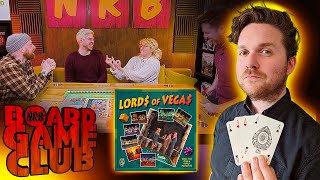
- High player interaction and direct competition
- Tension between building, gambling, and attempting takeovers
- Theming is strong and gameplay decisions feel meaningful
- Heavy luck factor from dice and card draws
- Rule bookkeeping can be fiddly during late game turns
- Strategic depth can be uneven depending on player dynamics
- casino capitalism, negotiation, and luck-driven payouts
- Las Vegas casino development and takeover culture
- playful banter with competitive interaction; lighthearted, thematic storytelling
- Chinatown
Mechanics (from transcript analysis)
- Area control / ownership — Players claim undeveloped lots, build casinos, and expand control via colored casino tiles.
- Card-driven payouts — Casino cards rotate payouts and determine which color pays out, influencing strategy each round.
- Payouts by color and highest die — When a casino pays, players receive money and points based on dice in that color; the highest die controls payout of points.
- Remodeling / re-rolling — Players can remodel casinos (changing colors) or reroll dice to improve odds, at a cost.
- Sprawl / expansion costs — Expanding into new spaces often costs more, incentivizing diversification or consolidation.
Video topics + discussion points
Quotes (from this video)
- gambling in each other's houses
- the winner is simply the person with the most points however in case of a tie the most money will win
- everyone's a threat at all times
- this is Lords of Vegas
References (from this video)
- memorable, thematic negotiation experience
- fun, social interaction around strategy
- can be long and heavy for some groups
- negotiation and strategic placement
- casino empire-building in Las Vegas
- scenario-driven, memorable experiences
- Lords of Waterdeep
- Sid Meier's Civilization: The Board Game
Mechanics (from transcript analysis)
- Negotiation and bidding — Players negotiate deals to build casinos and gain influence.
Video topics + discussion points
Quotes (from this video)
- King's Dilemma is a beast.
- I would never get rid of that one, that is perfect.
- There is a real appeal to negotiation games; they're so interactive and social.
- This is absolutely one of my favorite party games.
- Two Rooms and a Boom is completely unique.
- New Angeles is such a cool example of negotiation in a modern setting.
References (from this video)
- Tight negotiation with memorable moments
- Can run long and be heavy on player interaction
- Negotiation, bluffing, market manipulation
- Vegas casino development and concession warfare
- Competitive business drama
Mechanics (from transcript analysis)
- Area control / economy — Placement and expansion to gain points.
- negotiation / trading — Players barter and bet on casino locations.
Video topics + discussion points
Quotes (from this video)
- Don't keep games around unnecessarily because soon 5 years turn to 10 years turns to 20 years.
- The space on the shelves has been replaced by something new and exciting.
- Think of all the hundreds you've saved in insulation.
- Just focus on 100, 200 that you think are amazing rather than like being overwhelmed with indecision.
References (from this video)

- The Las Vegas theme is immersive and enhances the tension of negotiation, luck, and strategic placement.
- Dynamic actions (build, sprawl, remodel, reorganize, gamble) create meaningful, cascading decisions and dramatic shifts.
- Up expansion adds depth and scalability (more players, higher stakes) with minimal added complexity.
- Trading and negotiation feel natural and can decisively shape the board state and winner.
- Tactile components (chips, color tiles) reinforce ownership and readability on the board.
- Card draws and dice outcomes introduce a significant luck component that can swing the lead unexpectedly.
- Component weight and setup can be cumbersome; the game is relatively heavy to transport and prepare.
- At higher player counts downtime can increase; pacing can slow during negotiation-heavy turns.
- Endgame can feel abrupt due to the game-end condition card being tucked in the deck, which may frustrate planners.
- Balance can tilt toward aggressive trading or expansion strategies, potentially marginalizing more conservative plays.
- building casinos, negotiating, and banking luck to win money and points
- Las Vegas Strip, casino development and competition
- analytical playthrough with live commentary and strategic explanations
- BioShock Infinite
- The Old World
- Food Fight
Mechanics (from transcript analysis)
- area control / influence — Players vie for control of casino blocks by placing dice tokens; controlling a casino yields victory points and payout advantages.
- Deck draw and payout phase — Each turn begins with drawing a card that influences payouts and strategic choices, followed by action resolution and scoring.
- Dice-based payouts and boss mechanics — Payouts depend on dice values within a casino; the highest die in a contiguous block determines the 'boss' and who scores points.
- Gambling — One-time per turn action to bet against another player using a dice-based payout chart with a house edge.
- Remodel — Swap all tiles in a casino to a different color, enabling adaptation to deck draws and strategic planning.
- Reorganize — Reroll all dice in a chosen casino at a cost, potentially changing ownership and payout values; limited to one per die per turn.
- Sprawl — Expand into adjacent spaces by paying double costs; expands footprint but risks displacement by other players.
- The Strip / game-end trigger — Certain cards pay out for casinos touching the Strip; a hidden game-end card adds tension and unpredictable endgame timing.
- Tile placement / building casinos — On each turn a player can pay to place casino tiles on vacant lots, forming contiguous networks to increase value.
Video topics + discussion points
Quotes (from this video)
- Lords of Vegas is an area control area influence style game with a lot of dice rolling and some trading and negotiation mixed in there.
- This game is a ton of fun and the theme fits perfectly with the luck-flavored mechanics.
- The up expansion adds an interesting dynamic to the game and fits well without adding much complexity.
- Reorganize is one of the most exciting actions in the game.
- Trading lots is a huge part of the strategy and negotiation is central to victory.
- You can shift control of casinos and flip the fate of the game in a single turn.
References (from this video)
- easy to grasp, quick play
- interactive with others' casinos
- rules can feel tight; expansions add complexity
- economic simulation
- Las Vegas casino development
- Array
Mechanics (from transcript analysis)
Video topics + discussion points
Quotes (from this video)
- it's our time of year again it is time for our top 100 games of all time
- we're going to give you our top 100 games of all time
- this game still holds up today but we still like playing with my kids
- it's a frantic crazy game
- Power Grid has a wonderful auction system
References (from this video)
- Trading and negotiation
- Casino management
Mechanics (from transcript analysis)
- Trading — Complex trading including casinos and future favors
Video topics + discussion points
Quotes (from this video)
- Sometimes there's just something about a game that you just can't explain
- We're essentially replacing Katan using science
- We wanted a way to suggest new games that we think do certain mechanics just a little bit better
References (from this video)
- strong negotiation emphasis
- poker-chip economy adds tactile feel
- loaded with player interaction and memory-making
- dated presentation / aesthetics
- could benefit from a prettier newer edition
- negotiation and casino development with rival players
- Las Vegas casino landscape
- competitve, business-simulation style
- Monopoly
Mechanics (from transcript analysis)
- auction/bidding — poker-chip economy replaces paper money; players bid for assets
- negotiation — players negotiate and bargain to acquire casinos and control the market
Video topics + discussion points
Quotes (from this video)
- great negotiation game about building casinos in Vegas
- it's an epic negotiation game
- cooperative with limited communication
- one of the only deck-building games that I really like
- cooperative storytelling with survival mechanics
References (from this video)
- A strong balance of length and chaotic flavor; a rare, compelling mix of longer game and chaos.
- The casino/takeover tension creates big moments and swingy but thematic play.
- The game embraces its Vegas theme and delivers on player agency and momentum shifts.
- Significant randomness from dice; luck can dominate.
- Not a quick filler; the longer playtime may deter some groups.
- Production quirks (see notes below) can detract from immersion.
- chaos, luck, and strategic casino development
- Las Vegas casino economy and expansion
- bold, high-variance, Vegas-inspired economic drama
- Chinatown
Mechanics (from transcript analysis)
- area_control_and_bidding — multiple players can stake in casinos; control is determined by the highest-pipped dice.
- dice_driven_economy — players place dice-driven casinos and generate income that converts to points.
- differing_rewards_by_plots — higher-valued dice on larger casinos yield more money on payout; low-value plots are cheaper but slower.
- gamble_on_yourself — even with bad luck, players can gamble to recover and pivot back into the game.
- hostile_takeovers — players can attempt to seize casinos by paying a total pip value price.
Video topics + discussion points
Quotes (from this video)
- the tile placement itself is very easy.
- you can only build the colored buildings that are on the edges or the extremities of those particular columns.
- some of the tiles that you can claim are way more powerful than others.
- I'd rather play Carcassonne over this one.
- it's a full-blown game where it's going to take an hour and a half or so to play
- the game really embraces the feeling of kind of Vegas
- I enjoyed it and I can certainly see why people love this one.
- it's a very cerebral game. ... the best player will win.
- Yes, it's pretty much purely random.
References (from this video)
- High interactivity and direct player competition
- Exciting payoff moments when payouts land
- Appealing to players who enjoy sharp, mean gameplay
- Pushes the boundaries of traditional euro design with heavy interaction
- Can feel punitive and punishing to less experienced players
- economic strategy with interaction and risk mitigation
- casino empire building in Las Vegas
- aggressive, competitive, market-driven
- Monopoly
Mechanics (from transcript analysis)
- dice-based payout with casino tiles — You own casinos and roll dice to determine payouts and actions each round.
- merging and hostile takeover — You can merge buildings or hijack others to influence market share.
Video topics + discussion points
Quotes (from this video)
- euro games if you want to know exactly what a euro game is and why they're important
- king domino is a super light family euro
- starting with your castle you're gonna build a kingdom one tile at a time
- it's easy to explain to granddad
- it's the best possible entry point to this style of gaming better than katan
- Ticket to Ride tops a lot of lists not just for family euro games but games to introduce people to board gaming in general
- there's no player elimination it's super difficult to tell who's winning till the very end and it sold millions for a reason
- for new gamers it's absolutely worth your time
References (from this video)

- Accessible, social negotiation-power game
- Engaging takeovers and hotel-building dynamic
- Look and feel evoke Vegas theme
- Negotiation can slow late-game
- Licensing/availability considerations may affect supply
- City-building, hotel takeovers, and casino economics
- Vegas casino boom era; corporate maneuvering
- Negotiation-driven, cutthroat capitalism with social interaction
- Chinatown
Mechanics (from transcript analysis)
- dice rolling and reshuffling — hotel dice determine outcomes and control
- negotiation and bargaining — players trade lots and make deals
- property acquisition and hotel upgrades — builds value and triggers scoring
- stakes through negotiations and potential roll-based reshuffles — players negotiate to optimize hotel control
Video topics + discussion points
Quotes (from this video)
- the cards can actually become the terrain, you're creating the battlefield as you play
- it's organic, not like rigid and sterile landscape
- Splendor starts with everyone just silent, then the game escalates into intense negotiation
- you can play cards to become the terrain so you're building the battlefield as you go
- you can kind of bluff and read each other with the command and colors system
- it's a pure and accessible civ-like experience that scales well with人数
- the negotiation and hotel-dynamics in Lords of Vegas create a very social table
- Age of Steam-level purity with Steam's maps adds a refreshing clarity
References (from this video)
- Free-form negotiation
- Luck and strategy balance
- Exciting casino takeovers
- Multiple strategic options
- Casino ownership and negotiation
- Las Vegas
- Competitive business management
Mechanics (from transcript analysis)
- Casino building — Players build and take over casinos
- negotiation — Trading and deal-making between players
Video topics + discussion points
Quotes (from this video)
- If I was on death row because I'd murdered an anthropomorphic animal and the guards asked me what my final request was, I'd ask them to let me out and then I'd go home and play these awesome games.