On an uninhabited island in uncharted seas, explorers have found traces of a great civilization. Now you will lead an expedition to explore the island, find lost artifacts, and face fearsome guardians, all in a quest to learn the island's secrets.
Lost Ruins of Arnak combines deck-building and worker placement in a game of exploration, resource management, and discovery. In addition to traditional deck-builder effects, cards can also be used to place workers, and new worker actions become available as players explore the island. Some of these actions require resources instead of workers, so building a solid resource base will be essential. You are limited to only one action per turn, so make your choice carefully... what action will benefit you most now? And what can you afford to do later... assuming someone else doesn't take the action first!?
Decks are small, and randomness in the game is heavily mitigated by the wealth of tactical decisions offered on the game board. With a variety of worker actions, artifacts, and equipment cards, the set-up for each game will be unique, encouraging players to explore new strategies to meet the challenge.
Discover the Lost Ruins of Arnak!
—description from the publisher

- excellent depth
- infinitely upgradeable components
- tremendous replayability
- great artwork
- asymmetric expansion content
- adventure
- exploration
Mechanics (from transcript analysis)
Video topics + discussion points
Quotes (from this video)
- This is my most played game of the year
- It is the perfect engine builder
- absolutely adore this game
- one that instantly I fell really hard for it
- would absolutely watch Oathsworn the HBO series
- the story and the setting is that rich
- for me the epitome of what a thematic game can be
- every click of the clock matters
References (from this video)

- tight engine
- solid thematic feel
- iconography can be dense for newcomers
- Adventure, exploration, artifact collection
- Ancient ruins exploration on an unknown island
- Exploration-driven narrative with research track
- Dominion
- Ark Nova
Mechanics (from transcript analysis)
- deck-building — build a deck to gain actions and synergy
- set collection — gather artifacts for scoring
- worker placement — place on action spaces to gain resources and progress
Video topics + discussion points
Quotes (from this video)
- these shelves are too cool to suggest anything
- i'm drooling and looking at games
- i really like the looks of it
- best looking arrangement shelf
- i want this collection as well
References (from this video)

- engaging exploration with solid synergy
- can feel tight on scaling for newcomers
- adventure with deck-building and worker placement
- ancient ruins exploration
- theme-forward, reasonably abstract
- Clank!
- Dune: Imperium
Mechanics (from transcript analysis)
- deck-building — build a deck to gain actions and resources
- worker placement — place workers to gather resources and progress
Video topics + discussion points
Quotes (from this video)
- we call him a beige gamer because the color of my skin
- it's basically monopoly with cows
- beige is fine I like beige
- Rising Sun is the behemoth of modern euros
References (from this video)

- Really good gameplay
- Innovative merge mechanic
- Excellent catch-up design
- Part of successful Eric Lang series
- Limited play experience for official seal
- Religious conflict and god warfare
- Egyptian mythology
- Area control with god merging
- Blood Rage
- Rising Sun
Mechanics (from transcript analysis)
- Area Control — Controlling Egyptian territories
- Catch-Up Mechanic — Behind players can catch up by merging
- god powers — Each player controls different gods
- Merge Mechanic — Last two players can merge into one god and win as team
Video topics + discussion points
Quotes (from this video)
- you can recruit monsters to your army that give you super powers
- it's a beautiful scary, it's a beautiful looking game
- this game is just a mini explosion, it's great
- gizmos is a lot of fun so we're giving this away our very first giveaway gizmos
- this little box the game when you see it it's not very pretty but it's so fun
- blood rage is a fantastic game
- massive Darkness two is freaking amazing
- the origami zombie side black plague is by far our favorite zombie side
- if you're gonna buy any zombie side game off the shelf Black Plague favorite one favorite one
- Cthulhu death may die is absolutely fabulous
- we can't stop playing this game
- zombie side Gear Up is getting another board game coffee seal of approval this game is so much fun
References (from this video)

- temples, ruins, exploration
- island exploration and dungeon-crawling vibe
- tabletop adventure
- Gloomhaven
- Mansions of Madness
Mechanics (from transcript analysis)
- deck-building — draw and play cards to gain actions
- worker placement — place workers to gain resources and progress
Video topics + discussion points
Quotes (from this video)
- it's a good one I like it a little bit better than Welcome to the Jungle or Welcome to the dungeon because of just like it's because the form factor in the box and the it's cute
- they're like dungeon delving games
- they are Coop games so well done
- the common bond for a bonus point is that they're all Coop games
References (from this video)
- adventure and archaeology
- island exploration and temple ruins
- tabletop exploration
- Gloomhaven
- Spirit Island
Mechanics (from transcript analysis)
- deck-building — build a deck to gain actions and resources
- worker placement — place researchers to gather items and progress
Video topics + discussion points
Quotes (from this video)
- it's a good one I like it a little bit better than Welcome to the Jungle or Welcome to the dungeon because of just like it's because the form factor in the box and the it's cute
- they're like dungeon delving games
- they are Coop games so well done
- the common bond for a bonus point is that they're all Coop games
References (from this video)

- evokes adventurous archeology vibes
- good thematic alignment with exploration and artifact hunting
- some players find it reliant on how cards appear rather than pure strategy
- adventure archeology and exploration
- island exploration with artifact discovery
- Indiana Jones-esque exploration with strategic planning
- Tales of the Arabian Nights (narrative flavor)
- Lords of Waterdeep (exploration/adventure feel)
Mechanics (from transcript analysis)
- deck-building with exploration consequences — draws populate your deck to enable actions and discoveries
- exploration/arcade-style discovery — explore islands, collect artifacts to advance exploration and victory
Video topics + discussion points
Quotes (from this video)
- the card play is just so uh different, it's so strategic; every move feels super important
- it's a longer game, but the cadence is really neat; you have to time everything to that cadence
- I love Obsession that game
- it's very mean, but in a fun, game-ifying way
References (from this video)
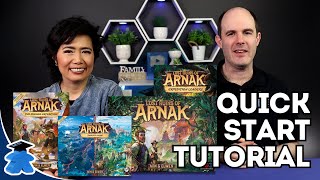
- Strong core loop combining deck-building with worker placement
- Temple progression offers clear strategic paths
- Expansion content adds variety without overhauling base rules
- Learning curve due to multiple actions and costs
- Setup can be intricate; some spaces blocked for fewer players (scaling nuance)
- Archaeology, exploration, temple ascent, relic collection
- Isolated island Arnac/Arnak where archaeologists explore sites and temples
- Competitive engine-building through deck-building and temple progression
Mechanics (from transcript analysis)
- deck-building — Players build a personal deck to gain actions and resources.
- Guardians and fear cards — Guardians protect sites; fear cards penalize players via negative points.
- Market/market-like purchasing — Buy items and artifacts from a market with evolving availability.
- Resource management — Manage coins, compasses, tablets, arrowheads, and jewels to pay costs.
- Temple progression — Research and upgrade temple pieces for points and rewards.
- worker placement — Archaeologists visit sites to gain benefits and progress the temple.
Video topics + discussion points
Quotes (from this video)
- Lost Ruins of Arnac is a deck building game.
- It's also a worker placement game.
- There are eight main actions: dig, discover, overcome, two types of buy, play, research, and pass.
- The game is played in five rounds.
- Expedition leaders, and this brings new item and artifact cards, new sights and guardians, new assistants, and new idols.
- There are two new temples with new types of rewards and rules.
- It also adds asymmetrical player boards and powers.
- The missing expedition is second, and it brings more of the same, new components, characters, and temples.
- Twisted Paths with new rules to change the entire game board.
References (from this video)

- thematic progression
- campaign flavor
- unclear in transcript details
- progression through ruins
- fantasy dungeon exploration with campaign feel
- campaign-esque
- Clank
Mechanics (from transcript analysis)
- deck-building — build a deck to interact with dungeon challenges
- tile drafting — draft dungeon tiles to shape exploration
Video topics + discussion points
Quotes (from this video)
- tile placement is definitely one of my favorite game mechanics
- i love push your luck games
- racing games are the closest board game you can get to a party game that's not a party game
- take that
- mean games are fun and in all transparency there are times where we are very angry at each other but usually afterwards we'll have a laugh about it
References (from this video)

- Seamless integration of deck-building with worker-placement
- Five-round structure provides a tight, replayable arc
- Strong thematic synergy that reinforces decisions around exploration and resource management
- Can feel dense for new players without guidance
- Scales differently depending on player count, requiring thoughtful setup
- Adventuring investigators seeking artifacts, balancing exploration with resource management
- Ancient ruins exploration on a remote island with a hidden civilization and broken relics
- Cooperative-leaning competitive engine where players advance on a research track while exploring ruins
- Expedition Leaders
Mechanics (from transcript analysis)
- deck_building — Players curate a deck of action cards to perform actions on their turns; the deck evolves as the game progresses.
- engine_building — The combination of deck-building and location actions creates a developing engine each round.
- worker_placement — Investigators are placed on locations to gain resources and unlock opportunities toward artifact discovery.
Video topics + discussion points
Quotes (from this video)
- trans people are people
- Each step forward to become the person we are makes it harder to go backwards
- trans women are women we will always stand up to this hate whenever and wherever it occurs
- we deserve to feel safe included and have the full rights to participate in the communities and cultures in which they live
- live and let live
- we're tired of paper money Monopoly money
References (from this video)
- deck building is well integrated
- good game overall
- deck building is a small part
Mechanics (from transcript analysis)
Video topics + discussion points
Quotes (from this video)
- Remember it's only a game
- I am very much one of these people that if you go after my family or friends there will be hell to pay
- Five out of ten is average, it's a game that I would still play if you put it on the table
- I do really like closed drafting in games
- I love the way that you plan for this sort of stuff
- Power Grid is the worst contender for this, auctions in this just refuse to freaking end
- I want to see it more - the typewriter mechanic
- Area control is just kind of meh
- It's just so many of these games are just like oh we need to make a quick buck
References (from this video)

- Solid hybrid of deck and engine
- Strong game flow
- Strategy can feel rigid for some players
- adventure discovery and research
- ancient ruins exploration with deck-building
- system-driven engine with theme flavor
Mechanics (from transcript analysis)
- deck-building and engine-building — buy cards to fuel engine growth and points
- worker placement — send helpers to temples and sites for actions
Video topics + discussion points
Quotes (from this video)
- we're here today again for another installment of who plays it better
- please subscribe we hope to see you again soon
References (from this video)
- Strong, dense decision-making within a relatively short playtime
- Engaging deck-building and card synergy
- Satisfying chain of actions and bonuses when you connect cards, artifacts, and rewards
- High production quality components
- Solid solo mode
- Interesting integration of movement and location exploration
- Guardians mechanics feel underdeveloped or underwhelming
- Tech tree appears long and potentially daunting early
- Not everything can be done in a single game; careful planning is essential
- Not wildly original; familiar design
- Exploration and archaeology, artifact collection, guardians
- Conveniently uninhabited island in uncharted seas, archaeological expedition to uncover ancient civilization
- Procedural, resource-gathering with tech progression
- Raiders of Scythia
- Museum
- Indiana Jones and the Raiders of the North Sea
Mechanics (from transcript analysis)
- combat_and_guardians — defeat guardians on locations to gain bonuses; guardians can be played and flipped, adding strategic considerations
- deck_building — start with basic cards; buy better ones; cards go to discard; artifacts have special use
- exploration_and_locations — spend exploration tokens and pay costs to discover locations, relics, and awards
- movement_cards — use movement cards to travel; air travel can be used for any travel type; some actions require movement cards
- relics_and_artifacts — claim relics for rewards; relics can be locked to gain bonuses at the cost of victory points
- resource_management — gain resources from board spots and use them for actions, purchases, and exploration
- tech_tree_and_book — advance on a tech track via resources; claim rewards; the book lets you place and upgrade assistants
- worker_placement — place workers on locations to gain benefits
Video topics + discussion points
Quotes (from this video)
- Lost Ruins of Arnak does a lot of things well but I think the key strength of the design is that you get 25 cards across 5 turns.
- and absolutely have to maximize how you use them
- so if you want a game that has a lot of decision making and a comparatively short time frame i'd consider picking it up
- the item and artifact decks contain a lot of fun cards and tricks you can play and figuring out how to gain the maximum benefit from these cards is absolutely key
- you simply cannot do everything in the game and on turn one that tech track looks awfully long
- the best thing about this game is when you chain together a bunch of crazy actions and bonuses
- however, i'm not a fan of the guardian's mechanics, it's a very easy fixed cost to defeat one
- and overall it's a very safe and familiar design mechanically and thematically so while it's a solid game it's not a revelation
- for similar gameplay try Raiders of Scythia
- and for a different take on archaeology try Museum
References (from this video)

- Engaging engine-building, solid pacing
- Rule-ridden for new players, setup time
- combo engine-building and deck-building
- ancient ruins exploration
- adventure-driven
- Lost Ruins of Arnak
- Dune: Imperium
Mechanics (from transcript analysis)
- deck-building — acquire cards to improve actions and cast engine combos
- worker placement + item collection — place on sites to gain resources and tokens
Video topics + discussion points
Quotes (from this video)
- Cartographers my favorite part is monsters
- you score a rhubarb pie out of all pies
- I learned something today thank you
References (from this video)
- tight integration of two core mechanisms
- engaging puzzle with clear goals
- some players may prefer more theme
- deck-building + worker placement with discovery cards
- exploration and archaeology on a mysterious island
- adventure puzzle
- Terraforming Mars
- Dune: Imperium
- Nevada City
Mechanics (from transcript analysis)
- deck-building — gain and play cards to enable actions and combos
- worker placement — send workers to explore, build, and gain artifacts
Video topics + discussion points
Quotes (from this video)
- it's a fight and we're fighting
- analysis paralysis is here to stay
- it's a brain burner
- it's not that heavy there's a lot to do
References (from this video)
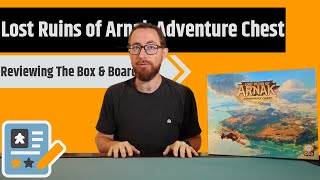
- strong thematic integration
- good balance between exploration and engine-building
- solid storage solution with adventure chest
- sleeved cards fit in the inserts
- inserts not premium compared to third-party options
- trays can feel bulky on table when not full
- storage requires careful organization to maximize space
- archaeology and exploration blending deck-building and discovery
- Ancient temple exploration on a fictional island
- adventure-driven, theme-forward
- Ticket to Ride
Mechanics (from transcript analysis)
- deck-building — Players acquire and play cards to generate actions and benefits.
- Engine-building / resource optimization — Coupling cards and actions to create an efficient scoring engine.
- worker placement — Players send workers to various sites to gather resources and take actions.
Video topics + discussion points
Quotes (from this video)
- The box and inserts are pretty decent.
- This is a nice upgrade for me.
- Primarily, it's giving you two entirely new boards that go hand in hand and operate in sync.
- It's not massively changing up the game.
References (from this video)
- Clever fusion of deck-building with worker/archaeologist placement
- Engaging exploration with meaningful guardian and temple progression
- Standalone five-round structure keeps games tight and punchy
- Online play requires custom/private mods; not publicly available by default
- Some exploration outcomes can feel random
- Archaeology, exploration, relic collection
- Isolated island with lost temples and relics
- Hybrid of deck-building and exploration with guardians
Mechanics (from transcript analysis)
- deck-building — Players build and utilize a personal deck to perform actions.
- Exploration and random rewards — Exploring spots reveals random resources and encounters via a card deck.
- guardian encounters — Guardians provide benefits if defeated, or penalties if left unresolved.
- Temple track / idols — Progress on the temple track and idols provide scoring and bonuses.
- Worker/archaeologist placement — Two archaeologists per game act as workers sent to locations with travel costs.
Video topics + discussion points
Quotes (from this video)
- I'm super impressed with this game and the emergent strategic experience every time you play.
- This is one of my favorite games that I've played this year.
- Vikings was cool; it's a neat game and I would not mind playing it again at some point.
- Whistle Mountain: I was loving the decisions I was making and it's polarizing—some friends hated it and some loved it.
- Beyond the Sun's emergent strategy is what keeps me coming back.
References (from this video)
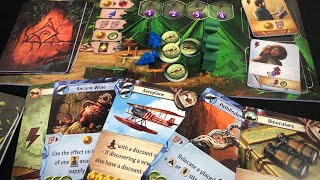
- Strong hybrid of deck-building and worker placement
- Engaging engine-building with meaningful decisions
- Tight resource management and pacing
- Beautiful art and components
- Solid solo playthrough and replay potential
- Great integration of deck-building with exploration and temple mechanics
- Rule density and potential for confusion in early plays
- Iconography can be dense and intimidating for new players
- Late-game setup and calculation can feel lengthy
- Production quality improvements expected in final version
- Archaeology, exploration, and engine-building within a temple-based quest
- Jungle temple exploration with archaeological digs and artifact acquisition
- clear, functional narration with minimal flavor text; emphasis on mechanics and strategy
Mechanics (from transcript analysis)
- deck-building — Players curate a personal deck of explorer cards to enable actions, gather resources, and trigger engine-based combos.
- Engine-building / tableau management — Combining cards, artifacts, and temple tiles to generate recurring actions and point-generating opportunities.
- Resource management and comboing — Balancing compasses, tablets, artifacts, and gold to enable increasingly powerful plays and scoring.
- worker placement — Researchers (workers) are sent to sites and temples to acquire resources, buy artifacts, or activate specific board effects.
Video topics + discussion points
Quotes (from this video)
- This is the final round.
- Compasses are everything because we can start grabbing points now.
- Wow the combo play is amazing oh look at this.
- It's a win with an asterisk but fun with an exclamation mark.
- Great job Mint and Elwen, super super job.
- I really enjoyed it.
- I hope you enjoyed the demo and I hope it's given you enough of an overview of how it plays solo to decide whether this game is for you.
References (from this video)
- Excellent worker placement
- Great deck building
- Expansion coming
- Limited worker resources create tension
- archaeology
- adventure
Mechanics (from transcript analysis)
Video topics + discussion points
Quotes (from this video)
References (from this video)
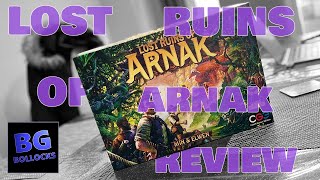
- cards and tiles have a dramatic link to the theme
- multiple pathways and permutations create high replayability
- beautiful artwork and components
- strong blend of euro mechanics (deck-building, worker placement, engine-building)
- expansion adds asymmetrical abilities for more diversity
- high sense of forward planning and strategic depth
- punch-out components are fragile and can rip during setup
- guardian tiles can be delicate and require replacements
- can be frustrating if plans are disrupted and may favor experienced players
- theme can feel abstract for some players
- end-game is largely resource-counters and point-scoring, which may be less thematic for some
- archeology/adventure
- Indiana Jones-style jungle temple exploration on an uninhabited island
- treasure-hunt adventure within a euro-style engine
- Acquire
Mechanics (from transcript analysis)
- deck-building — build a personal deck of cards to gain actions and engine improvements
- engine-building — optimize card sequences and actions to improve efficiency over the game
- range of site discovery and guardians — unlock sites by befriending guardians and revealing rewards
- resource management / set collection — collect resources (tablets, spearheads, rubies, compasses) and use them to pay costs and score points
- worker placement — send workers to sites to gather resources and perform tasks
Video topics + discussion points
Quotes (from this video)
- it's an absolute joy to have this one on the table it looks absolutely fantastic
- it's an absolute joy to have this one on the table
- this is an absolutely fantastic euro style game that blends the best elements of worker placement depth building and engine building into one gorgeous looking package
- it's addictive at the end of the day i'll just keep wanting to play this again and again
- if you like games that just keep giving you stuff all the time
- if you're more of a moving minis around a map rolling dice and all that sort of thing this isn't going to be a game that interests you because the theme isn't really that strong
- this game is for you if you like euro-style games
- it's an absolute joy to have this one on the table it looks absolutely fantastic and it's an absolute joy to have this one on the table
References (from this video)
- Smooth integration of deck-building and worker placement
- Well-paced arc that escalates into juicier turns
- Accessible to lighter players yet rewarding for experienced gamers
- Theme can feel somewhat generic
- Some players may find minor bookkeeping duties
- Exploration and archaeology
- Jungle island with ruins and temples
- Adventure/expedition
Mechanics (from transcript analysis)
- deck-building — Build a deck to generate actions and resources
- Set collection / engine building — Acquire artifacts and gear to score and unlock abilities
- worker placement — Place workers to gather resources and advance on tracks
Video topics + discussion points
Quotes (from this video)
- it's a very smooth game and very little complication
- it's a lovely example of catering to a wide and versatile audience
- it's a fantastic example of a bidding game and a racing game
- this game is one of the most tense games I've ever played
- I cannot praise this game enough it's amongst my favorite games of all time
References (from this video)

- Deep engine-building and multiple viable paths
- Beautiful components and thematic artwork
- Expansions extend depth and replayability
- Heavy for first-time players or newcomers
- Rules can be intimidating without a proper intro
- Adventure/settlement in ruins with temple track progression
- Exploration and discovery on an ancient island
- Adventure-tinged exploration with card-driven decisions
- Ark Nova
Mechanics (from transcript analysis)
- deck-building — Build a deck that helps you take optimal actions on both boards.
- Multi-use cards — Cards serve multiple functions, enabling varied strategies.
- Resource management — Balance resources to unlock new abilities and progress on the temple track.
- worker placement — Place workers to gather items and advance on tracks.
Video topics + discussion points
Quotes (from this video)
- International tabletop day is happening this weekend so I don't know if people celebrate it anymore.
- This is going to be a top 10 list for you, focusing on games for people who are new to the hobby.
- This is a stepping stone game that you can branch off to all other rolling rights or flip-and-write games that are out there.
- The Lost Ruins of Arnak is the heaviest game on this list, it might not be for everyone.
References (from this video)
- strong blend of worker placement and deck-building
- varied paths to victory through exploration and technology
- some players may find the setup and rule interactions dense
- can feel a bit tight at lower player counts
- adventure, archaeology, and excavation in lost temples
- ancient ruins and jungle exploration
- thematic exploration with a practical, game-y flavor
Mechanics (from transcript analysis)
- deck-building — build a personal deck to enable more efficient actions
- engine-building — combine cards and actions to create an efficient exploration engine
- worker placement — place workers to gain resources, card draw, and actions
Video topics + discussion points
Quotes (from this video)
- no expansion needed not for many
- the base game is cool to me
- expansions are great to have but you don't really need them
- aries expansion, that's a good one
- we love suburbia
- map pack one
References (from this video)
- Engaging blend of exploration and engine-building
- Multiple viable paths to victory
- Rule heavy for new players
- Teaching time can be long
- Adventure, exploration, temple ruins, expedition
- A lost temple island where archaeology and exploration meet
- Hybrid of exploration and engine-building
Mechanics (from transcript analysis)
- deck-building — Acquire action cards that drive your turn and unlock combos
- engine-building — Develop engines to gain efficiency and points over the game
- tile/board placement — Place tiles to harvest resources, gain discoveries, and advance sites
- Worker placement / action selection — Place workers to perform actions and move along a central action track
Video topics + discussion points
Quotes (from this video)
- Spirit Island's fantastic it is one of my favorite co-ops of all time
- it's not for everybody
- I love teaching games
- I just want a nice Speedy game
- The Crew is a great trick taking game
- Scythe is not a fun one to teach
- it's got the most stuff in it which also makes it the harder one to play with Noobs
- ironically the first game I ever played at a board game club that got me into the hobby was Seven Wonders with leaders included where I actually won the game
- it's a fantastic fun game
- I've played this game a lot
References (from this video)
- high production quality and strong art
- puzzle-like engine with satisfying combo possibilities
- lush theme integration with dungeon/temple exploration
- effective tactile components and modular play flow
- noted complexity and learning curve
- early game can feel fiddly while players learn rules
- some players may find early interaction limited and tempo slow
- Archaeology, exploration, artifact collection, temple mysteries
- Ancient ruins and jungled temples with expedition crews
- deck-building meets worker-placement with theme-driven exploration
- Honey Buzz
- Coimbra
- Lorenzo il Magnifico
- The Crew
Mechanics (from transcript analysis)
- deck-building with engine building — Players draft and manage a hand of explorer cards to gain resources, pursue objectives, and trigger combos.
- festival/village mechanics — At intervals, villages replenish and allow recruiting; festivals produce endgame scoring opportunities.
- set/collection mechanics with guardians and monsters — Explore sites guarded by monsters you must defeat using resources; monsters grant points and sometimes penalties.
- temple and statue/iconography — Advancement on temple tracks and building of statues provides ongoing bonuses and scoring options.
- worker placement with color-matching symbols — You place workers (colored) on board actions that require symbol matches; color/placement unlocks actions or upgrades.
Video topics + discussion points
Quotes (from this video)
- it's fog of war
- it's a heavy euro
- this game is all about combos, and by round five your turns feel incredibly punchy
- I love puzzly combo type games
- it's something you have to experience to truly grok
- the production quality is out the roof
- I would have been happy with four players; interaction really improves
- you can trigger three or four actions in one turn and weave them into a big combo
References (from this video)

- Great combination of strategic and tactical gameplay
- Landscape continuously changes
- Better with higher player counts
- Interesting resource scarcity mechanics
- Plays very differently at 2 players vs higher counts
- Exploration and discovery
- Archaeological expedition
- Adventure narrative
Mechanics (from transcript analysis)
- Deck building — Scarcity of cards drawn
- Tactical adaptation — Landscape changes every turn from player actions
- worker placement — Strategic placement of workers
Video topics + discussion points
Quotes (from this video)
- I play Qwirkle every morning - it's a perfect way to start my day
- The art is just beautiful and I'm really proud to own and show off to people when they come over
- The game is whatever you create it to be
- This game blew my mind
- It feels like you can do anything and because of that I was just blown away
- You can play a hundred different ways and you could probably still win
- This is not gonna get old - we may not play it a ton but when we do play it it's always a blast
References (from this video)

- rich thematic setting
- solid hybrid of deck-building and worker placement
- high replayability with exploration elements
- rules can be dense for newcomers
- adventure/fantasy archaeology with Indiana Jones vibe
- ancient ruins exploration with artifacts
- action-adventure themed
- Talisman (in vibe)
- Dune: Imperium (engine/worker hybrid family of games)
Mechanics (from transcript analysis)
- deck-building — draw from a personal deck to gain actions and resources
- engine-building — build a scoring engine through actions and artifacts
- worker-placement — place workers to gather items and uncover sites
Video topics + discussion points
Quotes (from this video)
- "we are giving board games to you in every episode"
- "donation pages to Sick Kids; money goes straight to hospitals"
- "have a happy holiday and good luck to all the entries"
References (from this video)
Mechanics (from transcript analysis)
Video topics + discussion points
Quotes (from this video)
- it's a lifestyle it's a lifestyle we've just committed
- we're all human
- stay positive don't let the travels of this country get you down
- we want everybody to be at the table contributing at that table
- this is a tall order
- we're counting down this is 20 and 21
References (from this video)

- Strong integration of two major mechanisms
- Engaging temple theme and puzzle-like decisions
- Can feel punishing if mismanaged early
- Some players prefer heavier engine builders
- Archaeology meets dungeon exploration
- A temple exploration site with deck-building and worker placement
- thematic but primarily mechanical
- Dune Imperium
- On Mars
- Viticulture
Mechanics (from transcript analysis)
- deck-building — Draw cards to drive actions and engine build
- Resource management — Balance assets to score and complete temple encounters
- worker placement — Place workers to explore, gather, and hire items
Video topics + discussion points
Quotes (from this video)
- super fun, super cute
- pure work replacement and that's almost it
- the game is so good it reminded me how good this game is
- it's just so small, perfect for family weight
References (from this video)

- Tight worker-placement puzzle with meaningful decisions.
- Strong asymmetrical options via expansions.
- Complex for new players; has analysis-paralysis moments.
- Adventure, exploration, and artifact acquisition with asymmetrical potential.
- A jungle-scrubbed exploration of ancient ruins with expeditions.
- Tense, forward-planning worker-placement and drafting synergy.
Mechanics (from transcript analysis)
- asymmetrical_power_expansions — Expeditions expansion adds asymmetrical abilities for more variety.
- deck_building_and_drafting — Decks fuel actions and enable combo turns.
- worker_placement — Two workers are allocated to board actions to optimize outcomes.
Video topics + discussion points
Quotes (from this video)
- it's such a classic and i would highly recommend it even if you're not into anime
- this game is what a push your luck game should be in my opinion
- i love this game i love the tension that it brings with such a simple concept
- semi-cooperative games and this one is a great example of the semi cooperative genre
- the mind is a super simple cooperative card game for two to four players where all you're trying to do is place your cards in ascending order
- between two castles is semi-cooperative because that means that it's really easy to teach new players
References (from this video)

- Cool worker placement
- Great theme and components
- Colorful and interesting
- Basically Indiana Jones
- Too short - not enough workers
- Exploring ruins and racing for discoveries
- Archaeological expedition
- Adventure exploration
Mechanics (from transcript analysis)
- Deck building — Build deck of cards
- racing — Race to get discoveries first
- Resource management — Manage resources for exploration
- worker placement — Place workers to take actions
Video topics + discussion points
Quotes (from this video)
- Once we discovered how to really play Azul we started playing 8 times
- If someone ask me to give a favorite I have to give you a list
- It all depends on if you're learning the game the right way
- Fossilis is truly underrated
- This is Phil Walker-Harding y'all you know one of the 3,000 games he made in like one day
- We want the whole family we want them all
References (from this video)

- Engaging exploration feel
- Expansions amplify depth and replayability
- Theme may not appeal to everyone
- Some players may find the base game a bit puzzle-heavy
- Exploration, deck-building, and worker-placement flavor
- Indie-adventure ruins exploration
- engaging puzzle-like progression
- Dune: Imperium
- Gloomhaven
Mechanics (from transcript analysis)
- deck-building — Card-driven actions and engine-building dynamics.
- worker placement — Offloading actions onto board spaces to gain resources and effects.
Video topics + discussion points
Quotes (from this video)
- This is Mind Management, the best hidden movement game I’ve played in a long time.
- The central mechanism of ruby on that around that mala… it’s simple but deliciously clever.
- This is Aridia. I love this game from the first playthrough.
- This is a game system that’s incredibly versatile and has staying power—Marvel United.
References (from this video)

- Engaging mix of deck-building and worker placement
- Snake-board variant is strong and enjoyable
- Long playtime
- Steeper learning curve for new players
- Exploration and archaeology
- Adventuring in jungle ruins with ancient artifacts
- Competitive, exploration-driven with an engine/combination focus
- ANNO 1800
- Terraforming Mars
- Nations
Mechanics (from transcript analysis)
- deck-building — Acquire and play cards to build an engine and gain actions
- engine-building — Combine card actions to create a powerful action engine
- worker placement — Place workers to gain resources and take actions
Video topics + discussion points
Quotes (from this video)
- the snake board is better overall
- my ad revenue has doubled since i added the advertisements into the middle of the videos
- i'm choosing to make this my full-time job
- 2021 will probably have more videos than any other year that i've done
- rules are still overwhelming but the writing is exciting
- i don't really want to flood people's subscription feeds with three or four videos at once
References (from this video)
- Adds a distinct spider temple side with altars and dark tablets for high-risk, high-reward play
- Introduces flavorful roles (e.g., journalist, Baroness) that diversify strategies
- Gold-side artifact activations provide stronger rewards and strategic choices
- Expansion integrates well with base game, offering meaningful progression and new decision points
- Thematic integration and atmosphere (sound effects, temple rituals) enhance immersion
- Dark tablet mechanics can impose meaningful negative points, creating tension and potential frustration
- Artifact costs and complexity can slow early game decisions for new players
- Overall complexity increases; new players may need time to grok the interactions
- Archaeology, exploration, artifact collection, and jungle myth
- Jungle exploration with lost temples and dig sites
- Adventure-driven quest with strategic engine-building
Mechanics (from transcript analysis)
- Artifact and item management — Items and artifacts can be bought, upgraded, or stored in hand; some effects trigger upon purchase.
- Dark tablets and altar mechanics — Altars powered by dark stone tablets introduce powerful effects at the cost of potential negative points; a risk-reward engine.
- Deck-building and hand management — Players draw and manage a hand of action cards, choosing between main actions and travel actions each round.
- End-game scoring and idol/artifact tracking — Scoring is driven by idols, artifacts, guardians overcome, and artifacts used; the dark tablet track interacts with scoring via penalties.
- Guardian encounters and combat costs — Guardians require discards, gems, fear, or other costs to overcome; failures contribute to negative scoring in some setups.
- resource management and conversion — Various tokens (compasses, arrowheads, boats, gems) are spent to travel, upgrade, and activate sites.
- Worker/engine movement along tracks — Archaeologists move along research and exploration tracks to reach sites and gain benefits.
Video topics + discussion points
Quotes (from this video)
- This is a cool ability because the gold sides are better.
- The power of dark tablets could be your path to victory.
- Burn it down, baby.
- The goat is goated.
- Artifacts are expensive, but man, are they good.
References (from this video)
- Easy to learn
- Fantastic theme
- Great tutorial available
- Accessible to new players
- archaeological exploration
- island archaeology
Mechanics (from transcript analysis)
- deck building worker placement — combination of deck building and worker placement
Video topics + discussion points
Quotes (from this video)
- Why are you so obsessed with me?
- I'm not the only one with opinions on board games out there
- It's a pirate's life for me
- You make sausage till you can make bikes and make your people happy
- Fun to lose games
- Everything you do is satisfying even if you don't win
- A pie snatching good time
- All of Stonemeier games in one game
References (from this video)
- deep strategic choices
- puzzle-like decisions
- heavy for beginners
- takes long to play
- Adventure, exploration and archaeology
- Isolated island ruins
- puzzle-like, crunchy
- Arnak
Mechanics (from transcript analysis)
- deck_building — multi-use cards with different actions
- set_collection — collect artifacts and resources
- worker_placement — two workers to allocate and plan
Video topics + discussion points
Quotes (from this video)
- the tower itself has a role other than just filtering out the cylinders
- The whole thing is a puzzle
- Earth is a good one to give for graduates
- I knew you would pick Arc Nova
- it's not gateway
- balance is hard for me
- the art is great
References (from this video)
- Detailed, adventurous vibe; inviting composition
- The artwork can overwhelm the title clarity
Mechanics (from transcript analysis)
Video topics + discussion points
Quotes (from this video)
- It's iconic. It is at least eye-catching; it's a classic.
- The box should tell us what we're doing in the game and how we're going to feel.
- This is top-notch stuff.
- I actually just ordered my copy, so this is obviously working for me.
- The cover sells the game, it screams what you're going to do.
References (from this video)

- well-integrated mechanics with smooth progression
- top-notch development and pacing
- great table presence and theme alignment
- some players find the engine heavy or sometimes fiddly
- setup can be a bit involved for new players
- adventure, exploration, and engine-building
- Exploration into an island ruins with artifact discovery
- Indiana Jones-inspired exploration with a compact arc
- Istanbul
- Dune Imperium
- Ark Nova
Mechanics (from transcript analysis)
- engine-building / deck-building hybrid — collect artifacts and cards to improve future actions and efficiency
- set-collection / artifact synergy — artifacts interact to unlock stronger abilities and end-game scoring
- worker placement — players place workers to gain resources, draw cards, and activate locations
Video topics + discussion points
Quotes (from this video)
- it's pure abstract two players
- it's so clever
- the rules are easy but then the more you play the better you get
- the setup for Fantasy Realms... there is no other setup than that
- the Marine World's expansion for Arc Nova is a nice touch
- the dice tracking in Rumble Nation is really clever
References (from this video)

Mechanics (from transcript analysis)
Video topics + discussion points
Quotes (from this video)
- one of the most kick-ass trophies I think I've ever seen built in the world.
- The real winners are all of us because lying to us.
- Mortal enemies, lifetime friends.
References (from this video)

- Beautiful board and strong thematic depth
- Dynamic exploration and engine-building potential
- Expansion-heavy; can feel unbalanced with certain setups
- Can be heavy for new players
- exploration, discovery, and resource management
- Exploration of ruins with two workers
- mythic fantasy with puzzle-like decisions
- Gaia Project
- Terraforming Mars
Mechanics (from transcript analysis)
- deck-building — Acquire cards that drive actions and contend with fear tokens.
- exploration / new locations — Exploring reveals new global actions that affect all players.
- worker placement — Two workers place to access actions and locations.
Video topics + discussion points
Quotes (from this video)
- "The pendulum die landed on a bullseye"
- "Underwater Cities is a game that has managed to carve out its own niche"
- "I ended up winning and it wasn't particularly close"
References (from this video)
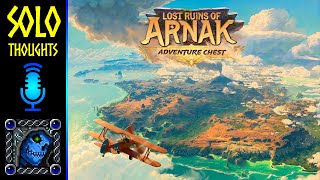
- Huge content and variety with expansions
- Accessible learning curve with expansions
- Gorgeous art and component quality
- Deep crunchy turns and strategic depth
- Excellent solo bot implementation
- Table hog / very large footprint
- Campaign mode requires substantial setup
- Dungeon/temple boards can be unwieldy
- Some leaders and temples are less engaging for some players
- Campaign setup involved separating many components
- Archaeology and exploration with a mix of worker placement and engine-building
- Temple ruins and jungle exploration on an island with archeological expedition
- Adventure-driven, exploration-focused
- Midara
- Gloomhaven
- Aon Trespass Odyssey
Mechanics (from transcript analysis)
- Asymmetric leaders — Leaders provide unique starting powers and asymmetries.
- deck-building — Acquire cards to improve your engine and gain abilities.
- Resource conversion — Convert resources into sites, items, and actions.
- Temple/Artifact placement — Place on sites to unlock powers.
- worker placement — Place workers on actions on multiple boards to gather resources and advance.
Video topics + discussion points
Quotes (from this video)
- So, the wealth of content and variety is just astronomical.
- the game is just plain fun.
- this is a high score chase
- this game is just so goddamn table hungry.
- plays so good solo.
- I was never bored for a second.
References (from this video)

- Arnak
Mechanics (from transcript analysis)
Video topics + discussion points
Quotes (from this video)
- this is like the pinnacle of board gaming awards that we know of
- paleo is really really punishing
- chaos pure chaos
- not a game for first-timers
- decrypto is so good
References (from this video)
- Improved solo mode with campaigns
- Asymmetric leaders add variety
- Solid integration of deck-building with exploration
- Can be heavy on setup and rules
- Box and components can be bulky
- deck-building/engine-building with exploration and discovery
- archaeological expedition with ruins exploration
- adventure-driven with scalable solo rules
Mechanics (from transcript analysis)
- campaigns / scenario-based progression — Campaign mode adds depth and replayability.
- deck-building with action selection — Build and use a deck to perform actions and explore.
- tile/leadership placement with asymmetric leaders — Leaders allow different play styles and asymmetry.
Video topics + discussion points
Quotes (from this video)
- Carpet bombing 25 solo games that you should be checking out if you're a solo player like me.
- This is the life. Ark Nova.
- Dripping with theme. You're a monster.
- Regardless of whether you're a sad loner like me who has to play games in this fashion, it's still only a game and it's still fun.
References (from this video)

- solid hybrid of mechanics
- engaging theme
- longer play sessions
- adventure/exploration
- island with ruins
Mechanics (from transcript analysis)
- deck-building — build a deck to take actions
- worker placement — place workers to gather resources and explore
Video topics + discussion points
Quotes (from this video)
- the apps really made it immersive in Mansions of Madness
- open drafting, set collection, take-that in Buried Treasure
- please play as many games as possible and listen to other podcasters
- truth is the state of being the case
References (from this video)

- Exciting puzzle-like gameplay
- Complex combo potential
- Efficient action management
- Indiana Jones-style adventure
- Jungle exploration
Mechanics (from transcript analysis)
- Action efficiency — Maximizing turns and combos
- Deck building — Combining item and artifact cards
Video topics + discussion points
Quotes (from this video)
- 2020 might have been a crappy year for all of us but there were some great board games that came out
- The older this guy gets the better his game designs become
References (from this video)

Mechanics (from transcript analysis)
Video topics + discussion points
Quotes (from this video)
- Deep down it's because it brings out all the qualities that makes you feel like a kid again
- Life with cats is so much better
References (from this video)
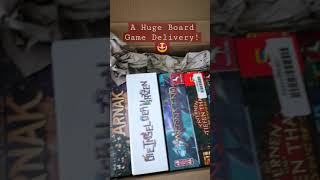
- strong synergy between deck and actions
- tight engine-building loop
- polished components and theme
- learning curve for new players
- potential downtime with multiple players
- adventure, archaeology, exploration
- island archaeology and exploration
- thematic engine-building with exploration twists
Mechanics (from transcript analysis)
- deck-building — players curate a deck that enhances actions and provides tools
- engine-building — combining cards and artifacts creates stronger engines for points
- exploration — search sites on the board for rewards
- worker placement — players assign workers to actions on the board to gather resources and explore
Video topics + discussion points
Quotes (from this video)
- this is supposed to be a really good game
- i'm really excited to play that
- there was just an expansion on kickstarter
- i really would like to play the base game now
- that's going to be exciting
- let's see how all these games are alright see on the channel
References (from this video)

- Noted as a strong, innovative combination of deck-building and worker placement
- Solo mode available
- Exploration, resource management, expedition logic
- Exploring new land / ancient ruins
- Arnak
Mechanics (from transcript analysis)
- deck-building with worker placement — A hybrid of deck-building and worker placement mechanics
- exploration / terrain discovery — Discover and exploit terrain to gain resources
Video topics + discussion points
Quotes (from this video)
- "it's kind of a weird year for board game releases"
- "this is top five most anticipated essens digital releases"
- "we are going to discuss our top five"
- "there's 500 coming out this year"