"With great power, there must also come great responsibility."
–Stan Lee, Amazing Fantasy #15
Iron Man and Black Panther team up to stop Rhino from rampaging through the streets of New York. Captain Marvel and Spider-Man battle Ultron as he threatens global annihilation. Do you have what it takes to join the ranks of these legendary heroes and become a champion?
Jump into the Marvel Universe with Marvel Champions: The Card Game, a cooperative Living Card Game for one to four players!
Marvel Champions: The Card Game invites players to embody iconic heroes from the Marvel Universe as they battle to stop infamous villains from enacting their devious schemes. As a Living Card Game, Marvel Champions is supported with regular releases of new product, including new heroes and scenarios.
—description from the publisher
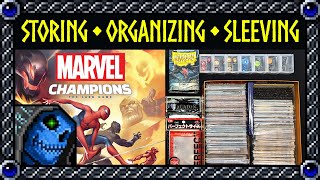
- Strong solo and two-handed play potential with ample replay value across expansions
- Iconic IP with a broad roster of heroes and villains to explore
- Acrylic token sets and thoughtful organization can improve gameplay flow
- Sleeving everything is expensive and bulky, potentially inflating storage needs
- Not all expansions or cards need sleeving; decision fatigue on what to sleeve
- Some card sizes are narrower, requiring specific sleeves for a snug fit
- Preconstructed decks can be frustrating to test against due to balance and scenario setup
- Cooperative superhero combat against villains and encoutered threats
- Modern-day Marvel Universe; Avengers team-based escapades
- Informational and instructional discussion focused on setup and storage
- Star Wars Destiny
- Arkham Horror
Mechanics (from transcript analysis)
- cooperative play — Players work together to defeat villains and complete scenarios rather than competing.
- Encounter deck / villain deck — A structured deck system introduces challenges, minions, and escalating threats during play.
- hand management / card play — Players draw and play hero cards to address threats, defeat villains, and complete objectives.
- Hero-specific cards — Each hero has unique cards that shape deck composition and strategic options.
- Preconstructed deck concepts — The host discusses using preconstructed hero decks as a setup option and its trade-offs.
- Resource costs / gameplay economy — Cards require resources or costs to be played, integrating planning and resource management.
- Turn order and status effects — Turns progress with various counters, effects, and condition tokens affecting play.
Video topics + discussion points
Quotes (from this video)
- Marvel Champions is one of my favorite solo games.
- Sleeving the entire thing is just a bit too much for me.
- I wish they would just sell these individually.
- Dragon Shield sleeves are sturdy and great for Marvel Champions.
References (from this video)
- Strong synergy among allies and leadership-focused cards (Sentry, Kamala Khan, Mockingbird) when integrated with leadership resources.
- High-damage combos like Thunder Clap and Drop Kick effectively clear multiple drones and minions.
- Sentry provides a solid early-game body with durable stats and meaningful on-entry effect.
- Persistent threats from drones and Vibranium Armor attachments create a difficult cleanup scenario later in the game.
- Side schemes and drone generation can overwhelm the table, especially for a two-player run with a lean deck.
- Higher difficulty Ultron (Expert) challenges the players' deck builds and cooperation; the run ends in a loss here.
- team-based defensive collaboration to thwart a villainous AI menace
- Earth-616 Marvel Universe; modern day superhero team-up against Ultron and his drones
- episodic live-play with improvisational banter and strategic commentary
- Traitor games (genre reference)
- Kang (villain arc reference)
Mechanics (from transcript analysis)
- Allies and events — Allies such as Sentry, Kamala Khan (Ms. Marvel), Mockingbird join the party; events like Drop Kick, Thunder Clap, and Big Hands drive turns.
- Attachments and persistent effects — Vibranium Armor and other attachments can persist on the villain, altering threat and requiring specific removals; tough counters add complexity.
- deck-building and resource management — Heroes use resources (punch, energy, etc.) to play event and ally cards; hand management is critical to maintain momentum.
- Drones and side effects — Drones spawn as side effects and minions; they contribute to threat and attack pressure, scaling with the main scheme and phase progression.
- Engagement and threat management — Main scheme advances per player; each player contributes to threat removal while drones and minions complicate the board.
- Hero abilities and form switching — Heroes possess unique abilities and can flip forms (e.g., Kamala Khan, Hulk) to access different card interactions and draw power.
- Stun, attack, and thwart — Heroes and allies engage in combat or thwart the villain's schemes; certain effects can stun the Ultron villain to reduce its aggression.
Video topics + discussion points
Quotes (from this video)
- we're back playing some more marvel champions tony and i
- miss marvel good uh tony is muted
- it's a little bit backwards of uh expectation i guess
- i really love rapid response but it's gonna rapidly go to my discard pile
- four damage to an enemy and i'm gonna choose ultron one two three four i will stun him
- hulk smash
- this is turning into a disaster
- thunderclap kills all the drones
- drones got out of hand
- side schemes hurt us a bunch
References (from this video)
- Very thematic and strongly tied to Marvel lore
- Good introductory entry into the living-card-game (LCG) space
- Easy to set up and playable in multiple player counts
- Strong solo viability and appealing co-op feel
- Campaign expansion potential adds long-term value
- Some card interactions can be daunting and slow rulewise
- Timing and rule checks can slow games down, especially for newcomers
- Showdowns can feel anticlimactic to some players
- cooperative superhero team-up with narrative-driven encounters
- Marvel Universe; heroes banding together to thwart Ultron across various missions
- episodic, campaign-like progression with evolving encounter and obligation cards
- Lord of the Rings: The Card Game
- Arkham Horror LCG
- X-Men: Mutant Insurrection
- Eons End
Mechanics (from transcript analysis)
- alter ego / hero duality — characters switch between alter ego and hero forms to access different actions and resources
- campaign-like expansion — positive reinforcement for longevity through expansions and ongoing campaigns
- cooperative play — all players work together to defeat a common foe rather than competing
- deck-building — players construct hero decks and access a pool of cards to customize their strategies
- villain phase / scheme decks — the villain advances their main plan via schemes; encounter cards trigger events for players
Video topics + discussion points
Quotes (from this video)
- it's very thematic
- it's a good intro into the genre
- easy to set up
- final rating is really good plus campaign expansion equals fantastic
- it's a co-op game
References (from this video)
- Cooperative play with strong thematic integration
- Dynamic Tony Stark/Iron Man storyline and other hero arcs
- Solid starter-deck approach that lowers upfront complexity
- High-value artwork and accessible rule presentation via starter components
- Significant difficulty at higher difficulties; can be punishing
- Insert design is not ideal with sleeves and future expansions in mind
- Price point and box footprint can be a barrier for some players
- Comparison to Legendary shows trade-offs in content density and variety
- Team-based superhero work, evolving threat, personal hero identities and alter egos
- Marvel Universe with rogues and heroes collaborating against a shared threat
- Scenario-driven arcs with main villain and side schemes, obligations, and nemeses
- Legendary: A Marvel Deck-Building Game
- DC Deck-Building Game
- Vs. System
- OverPower
Mechanics (from transcript analysis)
- cooperative play — Players work together to thwart the main villain's scheme, with shared encounter cards and threats
- deck-building — Players construct a deck (typically 40-50 cards) before play; starter decks exist for quick setup
- hand size and draw rules — At the end of turns, players may discard down and redraw to a maximum hand size; but the game uses unique draw/hand rules rather than strict deck-building restock
- hero vs. alter-ego dual states — Heroes flip between alter ego and hero forms, unlocking different abilities and strategic options; Iron Man Tony Stark progression as a notable example
- minions, villains, nemeses, and obligations — Villains appear with minions and obligations; nemesis cards and obligations create ongoing threats and story hooks
- resource management and exhaust mechanics — Cards require energy/resources to play; many actions exhaust cards to execute attacks or abilities
- threat scheme and encounter system — Main scheme advances via threat tokens; side schemes add complications and extra encounters
- upgrades, supports, and allies — Permanent and temporary cards that modify power, provide new actions, or defend the team
Video topics + discussion points
Quotes (from this video)
- Iron Man has almost 'he's like' this and that; upgrades and Pepper Potts chain reactions create a dramatic payoff.
- It's a living card game; everything you need to play is in this box.
- The theme and narrative integration make you feel like you're really playing as Marvel heroes.
- This is tough as nails, but it's the kind of challenge that makes winning feel sweet.
- You can't have Hulk and Iron Man starter decks at the same time because they share cards, but you can customize with starter decks.
References (from this video)

- Highly modular; many hero options and packs
- Solo play is strong and satisfying
- Pre-constructed hero decks make it approachable
- Some players may be apathetic to the theme
- Cost to collect all heroes/expansions can add up
- team-based superhero actions; engine-building
- Marvel Universe; hero-based battles
- episodic scenarios with evolving nemeses
- Lord of the Rings: The Card Game
- Arkham Horror: The Card Game
Mechanics (from transcript analysis)
- alter-ego/hero switching — Switch between alter-ego and hero states to manage resources and actions
- deck-building — Build a deck from hero cards and events; balance resources
- engine-building — Combine cards to create efficient action chains and combos
- hero-vs-nemesis — Progress through scenarios against a nemesis with modular encounters
Video topics + discussion points
Quotes (from this video)
- it's a better time than ever to get into this game because the packaging that they did for the core set eliminates the need of buying multiple core sets
- don't miss out on this if you've been thinking about buying this
- this trumps the Lord of the Rings on a couple aspects: it plays pure solo a lot better
- the modularity is it Beggars belief how modular this game is and the mix and matching and the different possibilities
- the brain burn in this game is real
- Mage Knight one of the most influential games that defines this solo board gaming Hobby
- for 30 dollars you're going to get a masterfully crafted experience
- the setup in big box Gloomhaven is depressing; this version streamlines it
References (from this video)
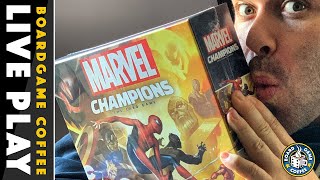
- live, energetic audience engagement and dynamic chat interaction
- in-game explanations of hero abilities and upgrades
- cooperative teamwork and back-and-forth planning
- promising strategic depth when rules are clear
- notable audio/video issues during the live stream (camera/audio switching)
- rule interactions and card text occasionally led to confusion and on-the-fly backtracking
- long runtime with a difficult, punishing difficulty curve
- some moments of live stream chaos (backtracking, misreads) detracted from flow
- cooperative superhero team-up with mission-driven narrative
- Marvel Universe; Avengers-style team-up attempting to stop Claw and his criminal enterprise
- episodic mission-based with alter-ego/hero flips and escalating schemes
- On Mars
- Escape Plan
Mechanics (from transcript analysis)
- Allies and upgrades — Heroes recruit allies (e.g., Nick Fury) and install upgrades/tech to improve capabilities; upgrades can increase hand size or defenses.
- Alter-ego / Hero form — Players flip between alter-ego and hero forms to access different abilities and resources; flips occur under specific constraints.
- Attack / Thwart / Defense actions — Players choose to attack enemies, thwart their schemes, or defend against villain/minion attacks; resource management drives action economy.
- Encounter deck / Minions / Masters of Evil — Revealing encounter cards can spawn minions or heroes’ treacheries; Master of Evil minions introduce additional threats and complex interactions.
- Threat / Main Scheme progression — Threat tokens accumulate on the main scheme; encounter cards and minions can add threat; if the main scheme reaches its limit, the players lose.
Video topics + discussion points
Quotes (from this video)
- this is our first playthrough
- we've never done this
- this is a very tough game
- we're saving the world
- we've never played against the Claw before
References (from this video)
- highly thematic
- accessible entry point for deck-builder fans
- deck-building may require prep and copy management for new players
- cooperative deck-building hero battler
- Marvel Universe; cinematic hero-villain duels
- collectible-varying hero decks with modular villain encounters
- Lord of the Rings LCG
- Arkham Horror LCG
Mechanics (from transcript analysis)
- cooperative play — players team up to defeat villains and meet threats
- deck-building — players build personalized hero decks
Video topics + discussion points
Quotes (from this video)
- pure cooperative where everybody wins or loses together
- we're in this together it's okay you know i'm not working against you
- macro level adventure
- this is the gloomhaven that should have been the first gloomhaven to come out now
References (from this video)
- secret identity mechanic is thematic and mechanically interesting
- cooperative teamwork is essential
- multiple hero options with customization
- challenging difficulty
- many expansions with new heroes and villains
- plays well solo or with team
- can feel like solving a math problem
- requires team discussion and planning
- Marvel_universe
- superheroes
- secret_identity
- hero_teams
Mechanics (from transcript analysis)
Video topics + discussion points
Quotes (from this video)
- Dominion set the standard and then it was great because then everybody came came around they stood on the on Dominion shoulders and they improved deck-building
- the epitome of like what is an action game you don't watch those movies where you're like I just want to sit back turn off my brain just have a good time that's what this is
- very zen right it's very zen
- it seems a little silly but it's the best kind of silly
- the more people the better this game feels
- people will agree to like not explore that last space or not do that last thing that's gonna trigger the end of the game just to keep going
- if you go in here as just like run-and-gun Batman rolled dice and just punching faces you're gonna get crushed
References (from this video)
- Strong IP integration with accessible co-op play
- Rich expansion potential and replayability
- Solid solo and multiplayer options
- Can be heavy for new players
- Some content requires multiple expansions to feel complete
- team-based heroic defense against villains
- Marvel Universe with iconic characters
- campaign/arc-based, modular
- Arkham Horror: The Card Game
- Star Wars: Destiny
Mechanics (from transcript analysis)
- cooperative_play — Players work together to defeat villains and their schemes.
- deck-building — Players construct hero decks from a card pool to tackle encounters.
- villain_encounter_system — Encounters introduce varying challenges and narrative twists per scenario.
Video topics + discussion points
Quotes (from this video)
- it's a beautiful and amazing game called cartographers
- 100 players playing cartographers
- Cash and Guns yes correct
- one man's trash is another man's treasure
- peasy lemon squeezy
References (from this video)
- cooperative card combat in a living card game framework
- Marvel superhero universe
Mechanics (from transcript analysis)
- cooperative play — team-based strategy where players collaborate to thwart villains and crises.
- deck-building / card drafting — players build battle-ready hero decks from fixed card pools.
- LCG structure (non-randomized packs) — players obtain fixed sets in boxes rather than randomized boosters.
Video topics + discussion points
Quotes (from this video)
- these are absolutely stunning and honestly if I get these four I'll probably end up getting all the rest of them but I can't feel too bad about that because it's supporting the hub of our community and recognizing some of the top artists in games of all time
- I wanted radical new ideas not oh let me tweak this and make a four from a three
- no so the question is you get that on your desk it has one of the questions do you make a piece of crap or do you try to make the best game you can because you know that those eight-year-olds may grow up to be gamers and then you know I mean someday you might meet them and be like I played that with a kid as a kid with my dad and I loved it tremendously
- thank you for coming on to the show and if you are interested in checking out that whole interview I'm going to have it on this channel later this week so stay tuned
- this is the hottest most anticipated games of the year is restoration games unmatched
- space cowboys has marvel splendor coming because of course they are
References (from this video)

- Accessible entry point
- Strong theme
- Expansion fatigue
- Repetitive mission design
- superhero collaboration
- Marvel Universe
- Arkham Horror: The Card Game
Mechanics (from transcript analysis)
- cooperative play — Hero teams tackle scenarios against villains.
- deck-building — Players upgrade their hero decks with expansions.
Video topics + discussion points
Quotes (from this video)
- Spirit Island is number one on the list.
- Mage Knight is the hardest but most rewarding on the table.
- Not a fan at all of Marvel IP so I wouldn't put Marvel Champions on the top 10.
- Dune Imperium is a lateral move; some people love it, others not so much.
- Final Girl is thematic and nostalgic—taps into VHS-era horror.
- Sleeping Gods feels like Breath of the Wild for board games.
- Warps Edge has the same appeal as deep space D6 — but lighter.
- The solo scene in board gaming is the best corner of hobby.
References (from this video)

- Easier deck building than Arkham Horror
- Quicker gameplay
- Streamlined mechanics
- Easy to set up
- Portable
- Fun action-oriented gameplay
- Less story than Arkham Horror
- Less immersive
- Simpler gameplay
- Superhero
- Marvel Universe
- Action
- Arkham Horror: The Card Game
Mechanics (from transcript analysis)
Video topics + discussion points
Quotes (from this video)
- which games do you enjoy the most solo so we can add and adjust these rankings if we agree
- the hype train is real here
- it's the best survival game that we have played
- if I could make a deal with God continue run off the field and switch places with Hadrian
- everything you do is choice between at least two different things
- I didn't think I'd like it as much solo as I did
- it's the easiest to play I think from all of these
- we're all about the story here
- you do feel like a researcher there
- all of these fantastic games that we love to play solo
References (from this video)
- Strong thematic feel aligning with classic comic books
- Modular and customizable encounters with villain cards
- Supports 1-4 players with scalable difficulty
- Flexible deck-building options and variety through hero/aspect cards
- Gameplay can be uninspiring or safe for some players
- Requires extensive deck construction to unlock depth; pre-built decks feel limited
- Base box may feel small; expansions recommended for more variety
- Comic-book heroism, teamwork against villains
- Modern-day Marvel Universe, team-based superhero battles
- Comic-book inspired, episodic villain schemes
- Arkham Horror LCG
- Sentinels of the Multiverse
Mechanics (from transcript analysis)
- attack vs thwart actions — Turn actions include attacking villains or thwarting to reduce threats
- cooperative play — Players cooperate to defeat a villain and thwart their schemes
- deck-building — 40–50 card decks combining hero-specific cards with aspect and generic cards
- hand management — Players manage energy and cards to pay costs and take actions
- identity flip and recovery — Hero identities can be flipped to activate different stats; recovery/state management
- scaling with players — Villains become tougher as the number of players increases
- Variable player powers — Each hero has unique abilities and cards; identity can flip to reveal different powers
- villain threat and scheme mechanic — Villains add threat to schemes; players attack or thwart to progress or degrade health
Video topics + discussion points
Quotes (from this video)
- best thing about this game is it leans into the classic comic book feel instead of the movies and tv shows
- not bad but not for me
- for a deeper story based game with a similar system try the arkham horror lcg
- try sentinels of the multiverse marvel champions
- the more players there are the tougher the villains get on your turn
- you can flip your identity card but you can only use powers if untapped
- redraw to your hand limit then the villain adds threat tokens to their schemes
References (from this video)
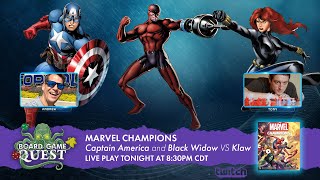
- dynamic encounter deck interactions with minions and treachery cards
- cooperative two-player synergy with distinct hero kits (Captain America and Black Widow)
- engaging strategic planning and turn sequencing
- clear demonstration of handling side schemes and minions in expert mode
- rule-rich and potentially confusing in a live stream
- early acceleration tokens and random minion draws can slow the game
- dependence on specific card draws can influence pacing and outcomes
- team-based cooperative hero action against a mastermind with minions and side schemes
- Marvel Universe, episodic encounters with heroes vs. villain and associated schemes
- episodic, scenario-driven play with evolving encounter decks
- Rhino encounter (expert mode)
- Green Goblin scenario
Mechanics (from transcript analysis)
- ally_deployment — play allies to assist with attack, defense, and thwarting
- attack — deal damage to enemies and the main villain via hero abilities and cards
- defense — block or soak damage using allies and capabilities to protect the team
- thwart — remove threat from schemes to advance the game state toward victory
Video topics + discussion points
Quotes (from this video)
- leroy jenkins let's go
- we randomly decided i was going to be first player
- we're in real good shape