Meadow is an engaging set collection game with over two hundred unique cards containing hand-painted watercolor illustrations. In the game, players take the role of explorers competing for the title of the most skilled nature observer. To win, they collect cards with the most valuable species, landscapes, and discoveries. Their journey is led by passion, a curiosity of the world, an inquiring mind, and a desire to discover the mysteries of nature. The competition continues at the bonfire where the players race to fulfill the goals of their adventures.
In this medium-weight board game for 1-4 players, you take turns placing path tokens on one of the two boards. Placing a token on the main board allows the player to get cards, but playing them requires meeting certain requirements. Playing a token on the bonfire board activates special actions (which helps to implement a chosen strategy) and gives the opportunity to achieve goals that provide additional points. Throughout the game, players collect cards in their meadow and surroundings area. At the end, the player with the most points on cards and on the bonfire board wins.
Meadow also includes envelopes with additional cards to open at specific moments...

- relaxing and visually appealing
- accessible entry point for families
- theme is minimal; some players crave stronger narrative
- nature/landscape with relaxing tile placement
- calm/ambient
- Kingdomino
- Calico
Mechanics (from transcript analysis)
- pattern-building — achieving harmonious board patterns yields points
- tile placement — placing meadow tiles to create pleasing patterns
Video topics + discussion points
Quotes (from this video)
- what is it that attracts you to a game
- it's the box
- it's the strategy
- it's the theme pulls me in
- no luck, it's all about the choices you make
- we're one big opg family
- ignorance is a choice
References (from this video)

- Calming, tranquil gameplay and beautiful components
- Theme-driven design that invites exploration
- Might be less exciting for players seeking high conflict
Mechanics (from transcript analysis)
- set collection / card drafting — collecting cards to form a meadow-building strategy
Video topics + discussion points
Quotes (from this video)
- it's a treasure trove of puzzling riches and i love it
- this box is the campaign that takes the form of a delightful comic
- a gorgeous game unlike any i've played this year or most other years
- it's an app-driven competitive storytelling game which just boggles my mind a little
- it's all about family
References (from this video)

- appealing aesthetics
- approachable strategy
- potentially light for advanced players
Mechanics (from transcript analysis)
Video topics + discussion points
Quotes (from this video)
- no one's made a game about that
- decorum is a co-op yes it is not too co-op
- we would shut the game down
References (from this video)
- Interesting card placement puzzle
- Multiple strategic options
- Thematic gameplay
- Nature observation
- Natural landscape
- Observational
Mechanics (from transcript analysis)
- Path Token Placement — Players place tokens to acquire cards and create their own meadow
Video topics + discussion points
Quotes (from this video)
- all three games coincidentally have to do with nature and being carefree
References (from this video)
- nature, growth, and exploration
- meadow/nature-inspired theme
- gentle, thematic experience
Mechanics (from transcript analysis)
- unknown — Not discussed in transcript.
Video topics + discussion points
Quotes (from this video)
- there's something intrinsically incredibly rewarding about winning a game with a faction no one thinks is any good
- i love games that understand that family friendly doesn't have to be boring and awful
- the fact that there's a game for everyone out there is pretty cool
- i love designing board games
References (from this video)

Mechanics (from transcript analysis)
Video topics + discussion points
Quotes (from this video)
- we are here today to do a video once again of our shelf of shame
- we are going to be focusing on our shelf of shame games to try and knock that number down
- we are going to commit to 20 games that we must play in September
- Power comes great responsibility
- that’s a big motivator
- please do
References (from this video)
- stunning artwork
- beautiful components
- engaging theme
- snake card may be disturbing/too realistic for some players
- habitat building and creature interactions
- Meadow ecosystem with wildlife: bugs, birds, and snakes
- tableau-building, strategic
- Quadropolis
Mechanics (from transcript analysis)
- hand management — manage and draft cards
- open drafting — choose from available options
- set collection — collect cards to trigger bonuses
- tile/meeple placement — place tokens on a grid to build your meadow
Video topics + discussion points
Quotes (from this video)
- it's a fun game
- we love y'all
- the artwork is gorgeous
- the colors are beautiful
- it's a thinky
- it's more thinking than the others
- don't wake the dragon
References (from this video)

- Accessible for family-friendly play
- Solid thematic cohesion with approachable mechanics
- May feel lighter for experienced euro enthusiasts
- Agrarian growth and community-building
- Pastoral/meadow-based landscape evolution
- Light-hearted, approachable family-weight euro
- Arc Nova
- Root
Mechanics (from transcript analysis)
- engine-building / tableau building — Players craft a growing meadow and collect elements to score.
Video topics + discussion points
Quotes (from this video)
- Summit it's a big one and it's competitive cooperative
- we loved earth and we did a preview for it and we can tell you now since without a preview we love that you love it
- Sea Change first one is called sea change
- what game do you most hope to play at dice tower west
- it's an investment in family
- we will spend money on what we want
- board games are an investment in family
- we're going to video a lot
- don't be afraid to go into board game stores
- beyond monopoly quit talking about monopoly, get beyond it
References (from this video)

- gorgeous artwork and presentation
- accessible gate-way entry with pleasant visuals
- meat of gameplay can feel forgettable or shallow to some players
- long playtime for a 4-player game can stretch beyond expectations
- ecology and habitat optimization
- nature, habitat building through card drafting
- light, aesthetically driven puzzle
Mechanics (from transcript analysis)
- grid-card drafting — select cards from a grid using arrows to create habitats
Video topics + discussion points
Quotes (from this video)
- I think Great Western Trail is the game for me, but this one could be the one I want to own.
- this is a game that a lot of people hail as a modern classic.
- the decision space in Whistle Mountain is an ocean.
- the deduction mechanics are cool, but it can drag.
- Spirit Island is the board game for people who don’t typically like cooperative games.
- the ending of Viticulture can feel abrupt in a race-to-20 structure.
References (from this video)
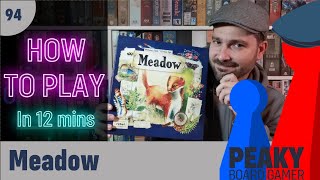
- Structured, rule-based approach that clearly delineates meadow versus surroundings mechanics
- Three-area interaction (meadow, surroundings, campfire) encourages multi-faceted decision-making
- Clear path-token and row-drafting system provides tactical depth while teaching the core loop
- Rules can be dense and the placement requirements may be challenging for newcomers
- The dual-zone setup (meadow vs surroundings) adds complexity that may require a slower onboarding
- Nature exploration, foraging, and ecosystem development through card placement
- Meadow environment and surrounding natural areas as players trek and gather resources
- Procedural, with emphasis on building a personal meadow and the adjacent surroundings via card placement decisions
Mechanics (from transcript analysis)
- board-row/column drafting — Each player selects a board row (west, middle, east) to gain all cards in that row, shaping future options.
- campfire actions — Campfire tokens provide options like drawing, placing, or swapping cards and activating bonuses.
- card types and placement rules — Vertical meadow cards versus horizontal surroundings cards with specific symbol requirements to place.
- deck refresh and board refill — At round transitions, cards are moved, decks are reshuffled layer by layer, and spaces are refilled for the next round.
- ground vs non-ground cards — Ground cards have distinct placement rules and symbols; non-ground cards have victory point values.
- path tokens and card draw — Path tokens on the main board guide which cards you may take; some tokens act as wilds (question mark).
- requirements symbols — Cards require visible symbols in the meadow area to be playable; some symbols are flexible via dash lines.
- round-based scoring — Gameplay unfolds over a fixed number of rounds; end-game scoring aggregates card VP and bonuses.
- sign token placement — Players place sign tokens on the board or the campfire to trigger actions and influence card acquisition.
- token economy and bonuses — Bonus tokens on benches grant victory points; tokens must be used in numerical order and capped per bench.
Video topics + discussion points
Quotes (from this video)
- the main goal of this game is to gain cards from the main board and add them in front of your play area
- the more the cards the more the victory points at the end of the game
- vertical cards are played in the meadow area while horizontal cards are played in the surroundings
- you must have all the depicted requirement symbols in your meadow and then place the card
- these cards also have requirements depicted in this area
- campfire board they have two options either place the token to an empty notch in the board and perform the action depicted
References (from this video)

- beautiful components
- streamlined gameplay
- some rule complexity
- Gardening and patterns
- Pastoral meadow gardening
- Light
- Planted
Mechanics (from transcript analysis)
- Pattern Building — place tiles to create patterns on your board
- set collection — gather patterns or cards to fulfill goals
Video topics + discussion points
Quotes (from this video)
- no mercy no mercy that's right
- we are going to talk about those games that we like to play as a couple
- it's a marathon not a sprint
- two people in the relationship love games and play together
- fight hard to keep those freedoms
- it's a great two-player for couples
- it's a chess-like game
- it's a pretty game
- it's easy to learn
References (from this video)
- Gorgeous artwork and scenery cards
- Strong nature theme and immersion
- Great solo and 2-3 player experience
- Expansion improves gameplay
- Table hog - takes up significant space
- Drags significantly with 4 players
- Expansion adds action but increases playtime
- Requires house rule for 4+ players
- Taking a stroll through nature, collecting scenic memories
- Countryside meadow and natural landscapes
- Pastoral card tableau
- Quadropolis
- Downstream
Mechanics (from transcript analysis)
- Card Tableau Overlap — Cards must overlap based on iconography
- Scenic Collecting — Collect animals, scenery, sightseeing, and souvenir cards
- tile selection — Use tiles to select cards from grid
Video topics + discussion points
Quotes (from this video)
- you just gotta play it to find out I can teach this in no time at all
- death by gorgeousness
- theming wise Wings man edges over Arc Nova to deserve the tap spot as the best nature game there is
- I'm invested I'm immersed I'm building my Zoo
- it just screams out a nature theme
- when it comes to their tasting games
- I want this game to not drag on to 90 minutes two hours to finish a four player game
References (from this video)
- pretty components
- forgettable; hype did not translate into lasting memory or engaging gameplay
- card-moving/area control
- mythic meadow; pastoral theme
- forgettable in practice
Mechanics (from transcript analysis)
Video topics + discussion points
Quotes (from this video)
- this exorcism for those games banishing them from my presence so they can move on to a better and hopefully more peaceful existence
- there's no point holding on to stacks and stacks of boxes of games you're just never gonna play again
- normalizing in the hobby
- not every game needs to cater to my very peculiar Wants and needs
- cathartic process of moving games on from my collection
References (from this video)

- cute/appealing theme
- short playtime suggests easy entry
- abstract strategy with light thematic framing
- riverine/abstract landscape with potential themes of flow and decision-making
- abstract/engine-building flavor
Mechanics (from transcript analysis)
- unknown — not described in transcript
Video topics + discussion points
Quotes (from this video)
- This is a luxury item like this is not a necessary item at all for you to be a board gamer
- Dexter is the happiest camper
- This is something that we like to discuss once a year just for full disclosure for a community
- we are going to finish the second half of season two of Pandemic Legacy
- If you are interested the link is always in all of our video descriptions
References (from this video)

- Exceptional artwork and thematic cohesion
- Deep, puzzle-forward gameplay that rewards thoughtful planning
- Accessible entry point with meaningful choices
- Strong thematic integration with expansion potential (otter expansion teased)
- Can become heavy in higher player counts due to card interdependencies
- Some may find the turn structure slightly slower to optimize
- nature, growth, and a subtle competitive drafting of terrain and fauna
- a lovingly illustrated meadow garden where players cultivate landscape and habitat for animals and flora
- cozy, charming, and puzzle-forward
Mechanics (from transcript analysis)
- campfire_actions — a central campfire board provides limited, shared actions that influence pacing and options.
- card_drafting_and_hate_draft — players compete for coveted cards, with draft order and timing impacting access to key resources.
- grid_card_placement — players place cards onto a grid to compose their meadow, with each placement shaping future options.
- secret_envelopes_and_thematic_touches — the box includes envelopes that unlock flavor content tied to themes like parks and holidays, adding playful surprise.
- set_collection_and_objectives — players chase bonus objectives via card combinations, encouraging strategic planning and adaptability.
Video topics + discussion points
Quotes (from this video)
- it's super super cute
- it's fun to build up your little mushroom too and then you get to knock them down
- the art in this game is maybe some of the best I've ever seen
- if you are a fan of Stardew Valley this is a no-brainer
- we've played it and lost at the very end
- this board game is based on the Stardew Valley video game
- it's very tactile
- I freaking love it
- this is a family style game
- it's a big box game
- easy to learn may be hard to master
- there's depth of strategy for sure
- there's so many different factions and characters
- the biggest downfall is the setup and tear down
- the otter expansion is coming
References (from this video)
- stunning artwork
- rich engine-building potential
- satisfying end-game scoring
- complex for new players
- interaction can be indirect
- resource management within a natural ecosystem
- ecology and artful nature tableau
- tableau-building with evolving symbols
- Cascadia
- Earth
- Tang Garden
Mechanics (from transcript analysis)
- board edge tension — Tucking actions open new campus-like spaces and activate abilities.
- flag-tuck resource management — Players tuck symbols (flags) to gain cards and engine resources.
- symbol-driven card acquisition — Symbols on cards enable acquiring other cards and building a tableau.
Video topics + discussion points
Quotes (from this video)
- Be kind to others who love the same things or want to explore those different things.
- Design games and refine games as much as possible; practice makes you better.
- There’s almost no downtime in Earth; you’re always doing something.
References (from this video)
- Lovely little game
- Replaced Quadropolis for Luke
- Beautiful card tableau game
- House rule effectively reduces game length
- Game runs too long at 3-4 players
- Can become a grind
- Expansion doesn't help with length
- Table management nightmare at 4 players
- Collecting cards to build a natural landscape
- Nature tableau building
- Card tableau grid selection
- Quadropolis
Mechanics (from transcript analysis)
- Action tiles — Tiles used to select cards from a grid
- Remove Tile Per Round — House rule to remove one action tile each round in 3+ player games
Video topics + discussion points
Quotes (from this video)
- no game is Flawless everything can be improved there is no such thing as a flawless game
- I don't like to say to other people like look I do it with a house rule you should use it no no no that's not the way I'm talking here
- it's this artificial way to try and introduce humor into a game that's not how you do humor
- everything can be improved
- these little tweaks make it better but that's a personal thing it's always subjective when it comes to house rules
- this is a house rule that basically is so good it needs to be in more games
- I don't get why it has to go in sequence
- the designer still did a lot of great stuff it's not like I'm saying Your Design sucks I'm just saying that I think your design is great because I love your game but maybe just this one little tweak
- padding out the content by ways of grinding is annoying
- I will actively take measures to try and convince the person teaching wingspan that it should be in the game
References (from this video)

Mechanics (from transcript analysis)
Video topics + discussion points
Quotes (from this video)
- Cascadia is a wonderful family tile-laying game that's cozy, puzzly, and endlessly replayable.
- This is just my personal ranking. Your list will almost certainly look different.
- A brilliant little solo game that I happily recommend.
References (from this video)
- Beautiful watercolor artwork
- Accessible gateway feel
- Gameplay felt standard/vanilla
- Seems propped up more by visuals than mechanics
- Expansion material notwithstanding, not clearly compelling
- Nature-inspired animal imagery in a gateway-style card game
- Tableau-building with watercolor wildlife art
- Light, visually driven gateway experience
Mechanics (from transcript analysis)
- card drafting — Players acquire cards to build a growing tableau with prerequisites for stronger cards.
- set collection / scoring evolution — Scores shift as prerequisites and card chains grow, creating evolving scoring opportunities.
- tableau building — As cards are played, the tableau evolves and dictates future card interactions.
Video topics + discussion points
Quotes (from this video)
- the twist on this game was that these are animals not only do they move in different ways when you landed on them on the board which means you could plan turns ahead
- Meadow is kind of this little Tableau building game as you're playing cards out in front of you
- no rules overhead in this one
- this was almost enough for me to keep this one around
- there was no real interesting decisions to be made and it became quite frustrating at times
- less is more
References (from this video)

- Engaging bag-building and tile drafting
- Pleasant theme with vibrant production
- Can be lengthy for larger player counts
- Abstract in parts; niche appeal
- bag-building and tableau-building
- nature tableau with animal habitats
- Quadruples
- Everdell (tableau/engine-building vibes)
Mechanics (from transcript analysis)
- bag-building and tile drafting — Draw resources to feed a tableau of animal habitats with scoring via a secondary track.
Video topics + discussion points
Quotes (from this video)
- The goodest of morning to you all. I'm Tom Vassel.
- Two body parts. Well, I handed an elbow to take pieces out of the pool.
- This is Duel for Cardia. Simultaneous selection, simultaneous reveal kind of game with that brilliant little fun mechanism.
- It's the top of the bottom. No, top of the bottom is what I said.
- The mind of a genius, I tell you.
References (from this video)
- A cohesive tie-in with the Meadow realm's mechanics
- Visually pleasing and thematic
- Can be a bit fiddly integrating with other realms
- symbol crossing, meadow bottom-to-top progression
- Meadow realm connected to the Biddy and Walter network
- puzzle/pattern matching
- Wingspan
- Vantage
Mechanics (from transcript analysis)
- multi-step scoring — Completes meadow top-to-bottom sequences to earn stars and resources.
- resource generation via symbols — Gains resources (hearts, coins) by marking specific meadow actions.
- symbol crossing across spaces — Cross off a symbol far away and reflect progress by aligning meadow cards top-to-bottom.
Video topics + discussion points
Quotes (from this video)
- Mitchell is the best. So glad you two started a weekly series.
- Grumpy cats mean fewer stars.
- High potential season 2. We haven't started watching it yet.
- Good luck in your scramble captain's choice.
References (from this video)
- family-friendly
- clear iconography
- replayable scenarios
- some players feel it is more solitaire; interaction varies by player count
- set collection via ingredients and recipes
- Meadow tableau-building, nature theme
- family-oriented
- City of the Big Shoulders
- The Crew
Mechanics (from transcript analysis)
- set collection / objectives — Fulfill customer orders by collecting ingredients to build layers.
- tableau building — Place tokens to build a tableau of cards with row/column choices.
- timed rounds — Rounds end with new customer arriving; scoring via VP tokens and goals.
Video topics + discussion points
Quotes (from this video)
- I think this may be my favorite of the three iron rail series games that we've played
- Meadow is designed by Clemens Kalicki
- the loop is basically being able to take the same actions again during your turn
- Dimension this game had a lot a lot more attention to it than what i was expecting
- not innovative in the sense of what you're doing of collecting sets and turning them in but i do think adding in the co-op aspect of it