Memoir '44 is a historical boardgame where players face-off in stylized battles of some of the most famous historic battles of World War II including Omaha Beach, Pegasus Bridge, Operation Cobra and the Ardennes.
Memoir '44 includes over 15 different battle scenarios and features a double-sided hex game board for both beach landings and countryside combat. Each scenario mimics the historical terrain, troop placements and objectives of each army. Commanders deploy troops through Command and Tactic cards, applying the unique skills of his units -- infantry, paratrooper, tank, artillery, and even resistance fighters -- to their greatest strength.
"By design, the game is not overly complex", says Memoir '44 designer, Richard Borg. "The game mechanics, although simple, still require strategic card play, timely dice rolling and an aggressive yet flexible battle plan to achieve victory." In addition to the large, double-sided gameboard, Memoir '44 includes 144 amazingly detailed army miniatures - including historically accurate infantry, tanks and artillery; 36 Obstacle pieces, 60 illustrated Command cards, 44 Special Terrain tiles, and 8 Custom Wooden dice.
Memoir '44 is designed for 2 players but easily accommodates team play. With Memoir '44 Overlord scenarios, players can use multiple boards and up to 8 players to conduct large scale operations, experiencing the challenges of troop coordination and military chain of command on a large scale battlefield. Average game length is between 30 and 60 minutes, encouraging match play where players can command first one side and then the other.
The Memoir '44 series consists of the base game and a number of expansions.
This game is based upon Richard Borg's Command and Colors system.
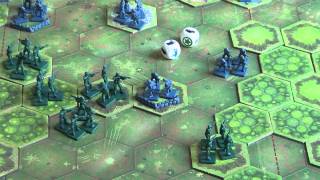
- Artillery rules provide punitive, but powerful, fire support that can shift balance
- Plateau/height interactions create interesting tactical decisions
- Rules are explained with practical clarifications that help new players
- Terrain/plateau interactions can be confusing for newcomers
- Retreat mechanics can force additional unit losses depending on board layout
- Complex LOS calculations with hills and plateaus can overwhelm casual players
- Historical tactical battles with card-driven commands
- World War II strategic warfare in 1944 France, Normandy-like scenario framing
- Live, instructional commentary focusing on rules interpretation and gameplay decisions
- Axis & Allies
- Memoir '44 variants or related historical skirmish games
Mechanics (from transcript analysis)
- Artillery rules — Artillery can ignore line-of-sight and terrain protection, delivering concentrated fire
- Combat dice and casualties — Roll dice to determine hits; infantry and armor have different outcomes; casualties retreat or are removed
- Command Cards — Cards used to order units, e.g., Recon Enforce, affecting how sections of your force are activated
- Line of sight — Terrain and height determine visibility; hills can block sight unless plateau effect applies
- Range — Determines how far an attacking unit can reach; infantry range three, etc.
- Retreat and block rules — If a retreat path is blocked by own units, you must lose a unit instead
- Terrain and hills — Hills provide cover and modify dice; plateau effect can negate some LOS restrictions if on same height
Video topics + discussion points
Quotes (from this video)
- line of sight is not blocked when units are at the same height and on the same Hill
- artillery have special ability they get to ignore all line-of-sight and all terrain protection
- plateau effect
- we'll see how the Allies respond
References (from this video)
Mechanics (from transcript analysis)
Video topics + discussion points
Quotes (from this video)
- did you know that the monopoly has a monopoly man has a name
- it's the yak game
- it's five thousand years is a long time
- jenga deride from the swahili word kajunga meaning to build
- ghostbusters
References (from this video)
- strong two-player experience that delivers tight, balanced play
- immersive WWII theme with accessible rules and clear tension in the decisions
- high replayability through multiple scenarios and varied terrain setups
- great sense of historical atmosphere without getting bogged down in minutiae
- beautiful components and a compact footprint for long play sessions when desired
- historic warfare with emphasis on tactical maneuvering and morale under pressure
- World War II operational battles across multiple theaters, framed around historical scenarios
- scenario-driven historical simulation that emphasizes feel of armchair command and real-world constraints
- Draper
Mechanics (from transcript analysis)
- Commands & Colors battle system — A grid/board-based tactical system where players issue orders and resolve combat using dice and unit strength, arranged in a modular hex-map format to represent varied terrains and battle conditions.
- scenario-based play — Predefined historical or hypothetical battle scenarios with specific setups, victory conditions, and varying levels of difficulty to teach players the ebb and flow of war strategy within a compact rules envelope.
- Sequential order and initiative structure — Turns and activations are governed by a structured command system, which creates tension between aggressive pushes and conservative defense, mirroring historical operational decision-making.
Video topics + discussion points
Quotes (from this video)
- this is the best two player game
- memoir 44 another really good two player game oh my gosh it's so good
References (from this video)
- accessible introduction to WWII wargaming
- clear rules and approachable playtime
- simplified to fit teaching purposes
- not a deep strategic sim
- tactical WWII engagements
- World War II, Western Front scenarios
- accessible hex-based tactical wargaming
Mechanics (from transcript analysis)
- command-style sequencing — players execute actions in turn-based order
- hex-grid tactical movement — tile/hex map-based tactical combat
- scenario-based play — pre-defined historical battles with fixed rules
Video topics + discussion points
Quotes (from this video)
- Wargaming is one of those Vickensteinian words that can just kind of be applied to anything.
- Root by Leader Games, Cole Worley's Design, which the first time I played it, it was strikingly close to one of the coin system games from GMT.
- There's nothing war gamers like more than arguing about what is or isn't a war game.
- Academia is in crisis in general these days and so I think maybe there's a little bit more flexibility in terms of developing ideas that come from outside academic culture coming directly from the designers or coming from amateur academics like myself.
- It's face to face if you can if you can manage it. You know, we all need this kind of community.
References (from this video)

- widely popular WWII two-player experience
- extensive expansions provide variety
- expansions can be expensive
- historical tactical warfare on hex maps
- World War II
- scenario-driven tabletop warfare
- Undaunted Normandy
Mechanics (from transcript analysis)
- card-driven movement and combat — cards dictate orders and actions across hex-based maps
- sector-based play — missions unfold across multiple map sectors
Video topics + discussion points
Quotes (from this video)
- it's absolutely stunning on the table
- I've always got this image of Samuel Jackson in my head for some reason
- something about this game opens up in your mind it's like a light bulb comes on
- one of the most simplest games you could possibly want to play for two players
- this game has been really really popular over the last couple of years
- it's basically a carbon copy reprint of a game called shot on titan
- it's absolutely fantastic for two players
- the greatest two-player ball game ever made
References (from this video)
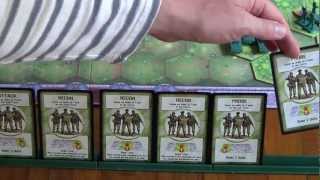
- Tactical depth through terrain and card-driven decisions
- Dynamic back-and-forth with artillery and infantry
- Clear moments of decisive leverage via command cards
- Artillery-centric engagements can lead to high casualty swings
- Rule density may challenge new players
- maneuver warfare with emphasis on artillery, infantry and armored units clashing on varied terrain
- World War II, Western Front, France (1941)
- live gameplay commentary with tactical decision making and moment-to-moment analysis
Mechanics (from transcript analysis)
- Command Cards — Special cards (e.g., Probe, Barrage) influence unit orders and combat outcomes.
- Dice combat resolution — Rolling battle dice to determine hits and casualties; outcomes can be modified by terrain and unit type.
- Line of sight — Engagements rely on line of sight between attacker and defender across the battlefield.
- Mobility/Movement — Units have movement allowances; strategic repositioning is used to threaten key areas.
- Terrain effects — Terrain such as hills and forests provide defensive or offensive modifiers; sandbags can impose dice penalties.
Video topics + discussion points
Quotes (from this video)
- this is going to allow me to order two units in the center
- move this infantry right back out of harm's way with two movement
- we have line of sight
- sandbags do kick in
- it's two dice for these tanks to attack these infantry here
- wow that's a grenade and an infantry these two guys are dead
- we removed the sandbags because they're leaving this spot
- we draw a new command card for the axis
- barrage
- ready
- that's not too bad
- one hit on one retreat so i lose one figure
- retreat back
- we're going to recover momentum again
References (from this video)

- easy to learn relative to other war games
- strong thematic immersion
- may feel scripted for some players
- component wear can matter on longer campaigns
- historical tactical warfare with simplified rules
- World War II battles across various theaters
- scenariobased narrative with scripted outcomes
- Battle Lore
- Descent
Mechanics (from transcript analysis)
- Command Cards — cards dictate orders and actions for units
- semi-cooperative/competitive scenario flow — scenarios guide setup and victory conditions
Video topics + discussion points
Quotes (from this video)
- we currently sit at 505 board games in our collection
- 162 games on this list
- honesty is key transparency sake
- we're gonna go through these very quickly
References (from this video)
- very accessible gateway into war games
- depth unfolds beyond initial play
- theme might be less appealing to some players
- toy soldiers and line-based ordering
- World War II battles
- historical but approachable
- Battle Cry
- Command & Colors: Battlefront
Mechanics (from transcript analysis)
- order system — cards/order actions drive unit activation and combat
- tabletop miniatures on a modular board — terrain and units provide tactile combat
Video topics + discussion points
Quotes (from this video)
- all the interactions between players are positive
- this list is designed around people just getting into the Hobby
- easy to learn and once some people know the game you can mix them up
- Forbidden Island teaches the basics of cooperative gaming and can be used as a launching point to other games in the Forbidden series
- the Resistance is probably the best of them
- Seven Wonders scales incredibly well from three to seven players
- One worker mechanic is an awful lot of fun
- Memoir 44 is the most accessible of them mostly because it feels like playing with toy soldiers
- Small World looks really dinky and inviting but it's a mercenary and brutal game
References (from this video)

- Lots of content expansions add breadth
- Accessible entry point to war gaming
- Setup can be fiddly with tiles and terrain
- WWII battlefield scenarios with card-driven orders
Mechanics (from transcript analysis)
- Card-driven orders — Play cards to issue orders to units and trigger actions.
- tabletop wargame routing — Miniatures and terrain pieces simulate battles on a modular board.
Video topics + discussion points
Quotes (from this video)
- Twilight Imperium Fourth Edition is an absolute Masterpiece
- Vindication offers some shocking replayability value
- Memoir 44 is probably my favorite war game of all time
- Station 4 is probably the greatest achievement in board game design in the last 10 years
- Monikers is absolutely hilarious
- The cycles edition is about to drop in January
References (from this video)
- Very simple rules, quick and accessible
- Polished user experience and intuitive play
- Not as epic as larger, more complex war games
- accessible WWII warfare with clear and fast play
- World War II, simplified tactical battles
- snappy, thematic experiences with quick resolution
- Vin Haron
Mechanics (from transcript analysis)
- Card-driven actions and events — Command cards determine actions and occasional events each turn.
- Tactical dice-based combat with modular scenarios — Scenarios provide varied setups and terrain that affect outcomes.
Video topics + discussion points
Quotes (from this video)
- historic War Games a hobby worth exploring definitely yes
- two months and five board games that I will play
- the first game we played... Sekigahara, the unification of Japan
- it's not a history game, but it's a fun narrative
- I'll definitely play it if you want it
References (from this video)
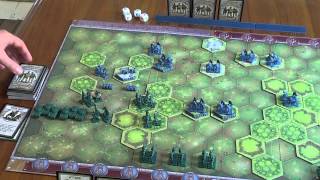
- Tight, card-driven decision-making that blends luck and planning
- Rich terrain interactions create meaningful trade-offs
- Clear two-player framework with accessible rules
- Dynamic combat where terrain and card timing matter
- Axis can feel disadvantaged when early command-card draw is limited
- Rule complexity can be daunting for absolute beginners
- Tends to be lengthier on larger maps or with many combats
- Small-unit tactics, command-and-control under fire
- World War II Europe, platoon-scale tactical engagements on hex-grid battle maps
- Historical/scenario-driven
Mechanics (from transcript analysis)
- Card-driven_commands — Movement and combat resolution determined by special order cards; manages tempo and initiative
- Combat_dice — Dice-based combat with modifiers from terrain and conditions
- Hex-grid_movement — Units move on hex tiles with terrain effects
- line_of_sight — Line of sight determines whether units can attack targets at range
- Orders_and_tokens — Tokens mark units that have been ordered and which sections are affected
- Sandbags_and_terrain_rules — Terrain like sandbags provide bonuses and can modify first-flag effects
- Terrain_effects — Forests, hills, barbwire, and sandbags modify dice and line of sight
- Victory_point_mechanics — Destroying units or occupying objectives grants victory points
Video topics + discussion points
Quotes (from this video)
- the axis players decided to use this move out card and this says issue an order to four infantry units
- Recon what it says is that at the end of your turn when you're drawing you actually draw two command cards and you get to choose one
- sandbags here will reduce by one battle dice but only if the unit has not already benefited from terrain
- remember they can get line of sight across this line but they don't have line of sight onto this unit here
- the advantage of moving this unit here last time means it's also in the center
References (from this video)
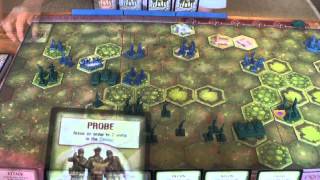
- Solid tactical depth with accessible rules
- Quick to pick up for families, yet offers meaningful strategic decisions
- Engaging back-and-forth from turn to turn with dramatic combat moments
- Dice luck can tilt outcomes and unit survivability
- Some sequences may feel repetitive or tempo-dependent
- Clarity of terrain and unit status can require careful attention during play
- combined arms maneuver, assault and defense, tactical objectives like capturing towns
- World War II tactical battles on a stylized board with hex grids and modular terrain
- live, play-by-play commentary during a turn-based skirmish
Mechanics (from transcript analysis)
- Command cards (order cards) — Cards grant orders to multiple units and trigger special effects, shaping turn structure
- dice-based combat resolution — Attacks resolve with dice that produce hits, misses, retreats, and armor losses
- Hex-based movement — Units move across a hex grid; distance and terrain influence options and outcomes
- Terrain effects — Forests, woods, and other terrain modify line of sight, dice results, and retreats
- Victory points and objective control — Players accrue victory points by destroying enemy units and capturing or holding key locations
Video topics + discussion points
Quotes (from this video)
- it's allies turn so that's um our
- I'm going to try some Rush tactics it seems a bit rash but it could be fun
- I'm going to move this infantry up to engage here
- and Rush this armor through the Gap in the heels here
- let's see if I can do that I think I'm going to play this probe
- Recon okay that was pretty good I've opened up the middle part here
- Direct from HQ this allows you to order four units of your choice
- left flank has been a bit decimated
- I've got to change tack a little bit
- I'm now up to four victory points just two more to go
References (from this video)
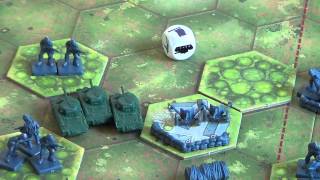
- Armor-dominant maneuvering creates dynamic, aggressive play
- Armor overrun adds a dramatic, high-risk/high-reward option
- Terrain and obstacle interactions (wire, hills, forests) increase tactical decision-making
- Clear map-based visualization supports strategic planning and sequencing
- Rule density can be intimidating for new players
- Some rule interactions (e.g., overrun timing and line-of-sight restrictions) require careful attention to avoid confusion
- Turn-by-turn bookkeeping can be meticulous in longer sequences
- Historically inspired tactical battles with miniature-scale maneuvers and command decisions
- World War II Western Front, infantry and armor engagements around villages, hills, and woods
- Scenario-driven, turn-by-turn battlefield narration with emphasis on placement, cover, and breakthrough
Mechanics (from transcript analysis)
- Armor overrun — A special rule allowing armored units that move into a contested hex to attack again in a close assault, potentially yielding a second combat phase under specific conditions.
- Barbed wire and obstacles — Wires act as defensive obstacles that slow or complicate advances; infantry can remove wires but cannot engage in battle effectively while on them.
- Close assault and retreat rules — Close combat can force retreats; units retreat to logical adjacent hexes, with terrain and line of sight influencing outcomes.
- Command card drawing (probe) — Gameplay flow includes drawing command cards to trigger orders and actions, influencing which units act and when.
- Dice-based combat — Combat resolution uses dice that differ by unit type and terrain; armor often rolls more dice in open terrain, but terrain (like forests) reduces effectiveness.
- Hex-based movement — Units move across a hex grid with movement limits (armor can advance up to three hexes; other unit types have their own limits) and can exploit open lines for offensive actions.
- Line of sight and terrain effects — Terrain such as hills and forests affect visibility and combat; hills can block line of sight, forests modify combat and positioning, and woods impose dice limitations for attacking armor.
Video topics + discussion points
Quotes (from this video)
- armor overrun combat what it says is on a successful close assault combat and an armored unit moves into the bated hex it can then battle again
- these are very mobile very aggressive
- armor gets minus two dice in attacking units in Forest
- any unit that lands on barb wire must stop
- I could do but I would only have one dice
References (from this video)
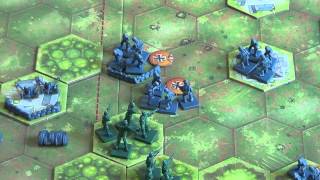
- Clean and elegant rule system for resolution
- Allows for tactical decision-making and strategy
- Good use of terrain mechanics to create meaningful choices
- Card-driven gameplay creates interesting strategic moments
- Engaging combat system with meaningful consequences
- Requires careful understanding of line of sight and range
- Multiple rules interactions can make turns complex
- Military warfare and tactical combat
- World War II historical conflicts
- Historical simulation of specific battles
Mechanics (from transcript analysis)
- Artillery bombardment — Card action that can order a single unit when the player has no artillery units available
- Card-driven commands — Players use command cards to order units in specific sections of the battlefield
- dice-based combat resolution — Battles are resolved using dice rolls with modifications based on unit type and terrain
- Hex-based movement — Units move across a hexagonal grid representing the battlefield
- Infantry assault — Specialized card allowing infantry units to move up to three hexes without battling or two hexes with battle capability
- Retreat mechanics — Units forced to retreat after taking hits must move to valid adjacent hexes
- Terrain effects — Different terrain types (forests, hills, villages, open ground) provide defensive bonuses and movement restrictions
Video topics + discussion points
Quotes (from this video)
- hi welcome back to the box of delights game channel we're playing memoir 44
- this artillery bombard is pretty useless to me and i want to do something to pull my commandos back out of the danger zone
- remember infantry assaults as you can move to and still battle
- the axis attack was quite bold and he's managed to push us back off these hills
- we've not taken many casualties
References (from this video)
- easy to teach and quick to learn
- strong historical flavor and thematic clarity
- effective introduction to serious war gaming concepts
- rules can feel dense for absolute beginners
- board space and setup can be lengthy for some scenarios
- Historical warfare simulation with approachable rules
- World War II, Western Front campaigns
- Historical scenario-driven representation of WWII battles
- Hybrid Threat Rising
Mechanics (from transcript analysis)
- accessible_rules — designed to be teachable and approachable for new players
- card_driven_orders — order cards determine actions and command structure
- dice_combat_resolution — combat outcomes resolved with dice and modifiers
- hex_based_grid — units move and engage on a hexagonal map
- leader_units — leaders provide advantages to adjacent units
- scenario_based_play — predefined historical scenarios with victory conditions
Video topics + discussion points
Quotes (from this video)
- it's not mutually exclusive it's a game designed by women for women
- you can play it in your living room if you want to
- we have a tutorial level
- the graphics are somehow really good
- we played this with about 350 people in the span of maybe like a year
- it's beginner level
- we need to simplify the game level by level while keeping the learning outcomes
- we can send you the printables
- it's a game designed to deliver learning outcomes in an engaging way
References (from this video)
- classic entry point to WWII tactical games
- teaches line-of-sight and unit statistics in a digestible way
- older production aesthetics may deter some
- possible sticker shock for new players (minis and components)
- coordinated infantry and armor maneuvers on a modular board
- World War II battles, broad theatre across multiple fronts
- accessible hex-based hex-and-miniatures feel with dice
- Memoir '44
Mechanics (from transcript analysis)
- command_and_colors — card-guided actions that activate specific units in sequences
- tile_and_unit_movement — movement of small miniatures and tokens with dice for combat resolution
Video topics + discussion points
Quotes (from this video)
- the number one game on BGG was Twilight Struggle
- 13 Days which is based on the Cuban Missile Crisis and it's like a trimmed down version of Twilight Struggle
- Memoir 44 is a classic one to get into
- Watergate… very easy to learn
References (from this video)

- military
- world_war_ii
- history
Mechanics (from transcript analysis)
Video topics + discussion points
Quotes (from this video)
- everybody game your abc's start with a and end with z
- arkham horror that's a fright
- b is for battle or there's monsters to fight
- cosmic encounter that's right
- fury of dracula he turns into mist she is gone
- shown clever you'll feel so smart
- hogwarts battle defend against the dark arts
- jabberwocky you can't play it alone
- in that runner they don't make it anymore
- on mars get a galactic high score
- paladins for the kingdom
- quellenberg proportions the best
- space space if you like your sci-fi
- viticulture watch those wine grapes get smashed
- welcome to build a neighborhood
References (from this video)

- well-known historical system; accessible introduction to war games
- family-friendly footprint for a war-game experience
- can be lengthy for casual players
- components heavy for casual storage
- military strategy and skirmish
- World War II battles; historical warfare
- accessible war-game with historical flavor
Mechanics (from transcript analysis)
- command & control — order tokens, movement, and combat on a modular map
Video topics + discussion points
Quotes (from this video)
- Black Sonata is a solo game so you know what you don't want to be bugged during your summertime activities
- you could play this game by yourself
- Five cucumbers is a trick taking game where you are trying they're pickles they're definitely pickles
- For Sale you are buying and selling properties just like you do in the summertime in real life
- The Witches Brew their potions in the forest
- Friday the game
- in Friday it's technically named after a person called Friday but every day for him is Friday
- it's not really summertime appropriate
- you are building out habitats… the land is pretty rad
- everything is in neon colors just like in the summer
- sand is a Freedman Freeze give this where you're like building sand castles
References (from this video)
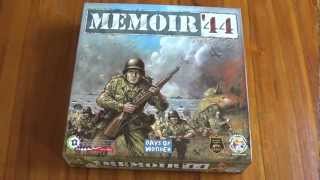
- High-quality components
- Excellent rulebook
- Deep tactical feel with accessible rules
- Flexible for two-player or team play
- Learning curve for new players
- Older game design may feel dated to some
- historical tactical combat through scenario-based play
- WWII Western Front, Pegasus Bridge and related Normandy scenarios
- scenario-driven, mission-based emphasis with accessible rules
Mechanics (from transcript analysis)
- Command Cards — Players use action/command cards to issue orders and activate units.
- dice-based combat resolution — Combat outcomes are resolved with dice, applying hits and retreats as appropriate.
- Hex/grid movement — Units move across a map with terrain modifiers and line-of-sight implications.
- Scenario-based goals — Each mission defines setup, objectives, and winning conditions.
- Two-player or team play — Supports competitive two-player games or two-on-two team play.
Video topics + discussion points
Quotes (from this video)
- Memoir '44 is from Days of Wonder
- It's real high quality the components are fabulous
- The rulebook is fabulous
- It's a game for two two players or you can play teams on each team
- It's quite an old game this one's been out for a while but I think it's time somebody did a walkthrough of the game
- hopefully this will fit into my channel quite neatly
- okay let's take a look inside
- there's plenty of stuff out there on Pegasus Bridge
- even if you've seen this game before you might enjoy this series
References (from this video)
- Incredibly easy to learn and accessible for a war-game audience
- Order system is simple and brilliant, reducing friction and miscommunication
- Scenarios end at the right time without endless mop-up
- Modular design encourages expansions and variants; core ideas are versatile
- Requires playing as Axis or Allies; some players may find this distasteful
- It remains a war game with historical sensitivity; expansions can become a rabbit hole
- Depth may be lighter than heavier wargames, potentially limiting long-term replay variety
- World War II tactical engagements presented in a light, accessible format
- Normandy, 1944 during World War II
- scenario-based campaigns with predefined victory conditions
- World of Tanks
- Ancients
- US Civil War board games
- Fantasy games that reuse the core ideas
Mechanics (from transcript analysis)
- Card-driven order system — Players use order cards to activate units and determine actions each turn
- Dice combat with symbols — Combat resolution uses dice where symbols determine hits, grenades, retreats, etc.
- Hex-based movement — Units move on a hex grid with terrain affecting movement and engagement
- Scenario-based objectives and hand management — Each scenario defines special rules and victory conditions; players manage hand size
- Terrain and cover effects — Terrain like hedgerows provides cover and modifies attack outcomes
- Turn flow and multi-section map — Board is conceptually three sections (left, center, right) influencing order and positioning
- Unit cohesion and multiple-model units — A unit comprises multiple models but acts as a single moving/attacking group
Video topics + discussion points
Quotes (from this video)
- Undisputed king of light war games
- The best thing about this game is the order system, it's simple and Brilliant
- Memoir 44 does something quite remarkable and that's be a war game that is not only incredibly easy to learn and accessible but also great as a war game
- Clausewitz for kids. gold medal game