Mistfall is a fully co-operative adventure game set in a fantasy world of mystery, eldritch powers and high adventure.
At the start of the game each player chooses a hero with a fixed deck of equipment and power cards, before embarking on a dangerous journey through a set of monster-ridden locations. Each hero also comes with a pool of advanced abilities that can be added to their basic deck during the game to customize and expand their powers. A variable board setup, randomized encounters and enemies, a simple but robust monster AI – all that makes for a game that is a varied and challenging experience both solitaire as well as with a group of up to three friends.
Gather up your resolve, check your gear and get ready to brave the unrelenting Mists. A world of perilous adventures awaits!
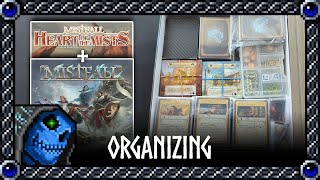
- efficient space usage and reuse of inserts
- cost-effective by reusing materials
- protects cards and components when stored properly
- potential risk of bending soft sleeves if not handled carefully
- requires time and effort to implement the storage solution
- adventure, exploration, cooperative deck-based gameplay
- Fantasy world involving Mistfall content, core box and expansions
- card-driven, cooperative adventure
- Heart of Mist
Mechanics (from transcript analysis)
- box inserts and organization — modifying inserts, reusing old inserts, using containers to optimize space, and preventing waste
- card management / sleeving — discussion of sleeving character decks and other cards, how sleeves affect storage and deck integrity
Video topics + discussion points
Quotes (from this video)
- everything fits back in there
- I took the insert unfolded it and added a bit of tape
- if you decide to use soft sleeves you have to use a hard box pressure relief
- there is a bit of extra room here that maybe you should be able to fit that
References (from this video)
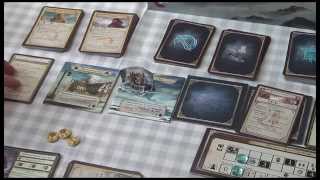
- Deep tactical layer with range, positioning, and shield management that rewards careful planning
- Tactile components (glass tokens, clear tracking) improve readability and immersion
- Robust player aids and explicit phase structure help players navigate complex rules
- Rewarding progression and meaningful upgrades via shop-like rewards and recovery options
- First-print typos noted; rule ambiguities (e.g., rounding in focus calculations) can slow down play
- Steep learning curve and setup time may deter new players from jumping in
- Encounter balance can feel punishing if players mismanage resources or underestimate the threat
- Adventure through dangerous locations against beastmen and rival foes, with a focus on tactical combat and progression
- Plane of Ice, Wildlands, and quest-driven exploration with perilous encounters
- Campaign-like episodic quests with encounter cards, location reveals, and progression tokens guiding future rounds
Mechanics (from transcript analysis)
- Deck-building / advancements — Players can discard resolve tokens during travel to buy advancements, shaping a personal deck that influences future actions and options.
- Enemy focus track and reinforcement — Enemies engage heroes based on a focus track, and the encounter includes a reinforcement mechanic if the level of threat rises.
- Location exploration and peril — Travel to a new location flips the location card, marks it with a wound, and triggers a perilous encounter with specific enemy types and setup rules.
- Range-based combat and shields — Attacks have a defined range; enemies have shields against physical or magical damage, requiring strategic target selection and card play to overcome shields.
- Reflexes, fast actions, and deck cycling — Fast actions can be repeated under rules, while reflexes provide situational responses; using cards moves them between zones (hand, hero area, discard) and influences future draws.
- Rest and restoration cycle — After encounters, players rest to heal and restore cards, with location modifiers providing additional recovery opportunities.
- Time track and enraged enemies — A time card can trigger enraged states for certain enemies, altering their behavior and threat level and pushing players toward resolution.
Video topics + discussion points
Quotes (from this video)
- This is so cool, isn't it? I love it. I love it.
- It's just easier to see, you know, what's happening on each of the tracks.
- This is kind of like a deck building element in the game.
- I love it. I love it. And we haven't looked at the extra ones yet.