In Mombasa, players acquire shares of chartered companies based in Mombasa, Cape Town, Saint-Louis, and Cairo and spread their trading posts throughout the African continent in order to earn the most money.
"As I expected, the East African Company's network of trading posts has spread far into the West. They were even able to expand into a couple of diamond mines. It seems reasonable to invest our recent yield here in Mombasa, rather than to continue our unrivalled commitment in Cape Town. After all, it can only be to our advantage to have other irons in the fire. And when the day of reckoning comes, it will show whether our hoarding of holdings and our intransigent eagerness are worth it..."
Mombasa is a tense Euro-style strategy game set in 19th century Africa in which players invest in four chartered companies. Using influence to help them expand across the continent improves the value of the players' shares in these companies. Players will also trade in bananas, coffee or cotton, work together with diamond merchants and ensure that the accounts are kept up to date. To make the most of this one will need to have the correct action cards (back) in hand at the same time, which needs excellent forward planning.
Mombasa features a unique, rotating-display hand-mechanism that drives game play: Players start with an identical hand, but acquire new and more powerful cards from the rotating display throughout the game. Each round players choose action cards from their hand, place them face down in the so-called action slot (beneath the player board), and then reveal them simultaneously to carry out the actions. At the end of the action phase, each card is moved to the so-called resting slot (above the player board). Cards in the resting slots are inactive and cannot be used until they are recovered - each round one can only return cards of one resting slot which is why it can make quite a difference in which action slots certain cards are placed.
The game ends after seven rounds, players add up their scores in different categories, and the player with the highest score (who has earned the most money) wins the game. With a variety of paths to victory and double-sided company boards, each game will be a new and different challenge.
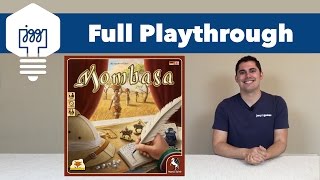
- Rich, multi-layered strategy with many synergistic paths
- Deep engine-building through tracks, stock, and resources
- Exciting race dynamics on key tracks (e.g., Mombasa, Cairo, Cape Town)
- Tactical use of expansion points and bonuses adds depth
- High complexity and bookkeeping can be fiddly
- Long playtime; risk of analysis paralysis for some players
- Some rule interactions feel dense and require careful tracking
- resource management, expansion, and corporate influence
- Africa, colonial era with four companies vying for influence
- live playthrough with on-the-fly teaching
Mechanics (from transcript analysis)
- Area control via tracks and stocks — Influence in four companies is tracked on per-company tracks; stocks and dividends are earned endgame.
- Bookkeeping and book cards — A bookkeeping track with books that require specific symbols (A/B/C) and can be upgraded with purchases.
- Deck-building and hand management — Players start with cards and build their hand over discard piles; card power and bonuses influence actions.
- Resource-driven progression and purchases — Resources (exploration, coffee, cotton, bananas) power track advancement and card purchases.
- Simultaneous action selection — Three cards are chosen face down by all players, then revealed and resolved in turn order.
- Worker-placement style bonuses — Bonus tokens are spent to gain persistent bonuses and unlock new spots on the map.
Video topics + discussion points
Quotes (from this video)
- this game plays two to four players
- tons of stuff going on here
- we'll be teaching as we go
- it's a big game of expansion chicken
- a perfect storm of being able to use all those bananas like crazy to get a ton of points
References (from this video)

- Innovative deck-building and hand management blend with stock mechanics
- Stock/expansion interaction creates direct impact on end-game scoring
- Engaging economic puzzle with a crisp cycle
- Some players may find the stock mechanic opaque at first
- End-game scoring can be punishing if you mismanage shares
- trade, investment, competition among rival firms
- 19th-century Africa, trading companies
- economic negotiation and market expansion
Mechanics (from transcript analysis)
- deck-building with hand management — players start with identical card sets and gradually acquire varied decks; round setup uses chosen cards to perform actions
- resting spots and card cycling — cards move to resting spots to be reused in subsequent rounds; cycling emphasizes resource planning
- stock and company expansion — players buy stock, expand and contract trading posts, and end-game scoring combines stock and company performance
Video topics + discussion points
Quotes (from this video)
- This is first class all aboard the R& Express.
- I love that rondelle with that aging worker.
- Two main reasons this game is on my list. First is just that dice drafting mechanism.
- The top and bottom action of the cards need to be weighed along with the region that they're in.
- The decisions ... every worker placement matters.
- This is my number one game of all time.
- The timer of the game ... end of era scoring is a key feature.
References (from this video)

- Robust engine-building and deep hand-management with multi-layered planning.
- High replayability due to modular, double-sided track boards and variable starting conditions.
- Tension around timing of bonus tiles and card playback creates rich strategic tug-of-war.
- Two-player mode yields a tight, highly interactive experience with meaningful decision points.
- Area-control elements feel dynamic and impactful, not just cosmetic.
- Strong thematic integration through map layout, tracks, and card costs that rewards careful synergies.
- Heavy game that can be challenging to learn and execute cleanly, especially for newcomers.
- Out of print and increasingly hard to find; potential accessibility and price barriers for new players.
- End-game scoring and bookkeeping can be intricate and demand careful record-keeping and math.
- Theme is controversial (colonial Africa) and some players may be uncomfortable with it, despite the designers’ stated intent and contextual notes.
- Economic expansion through resource management and stock-like scoring; includes shares and tracking wealth.
- Map of Africa during the colonial era, focusing on investment and development via trading posts.
- Abstract/strategic; theme referenced but not presented as a heavy narrative, with emphasis on mechanics and strategy.
- Isle of Skye
- Port Royal
- Carcassonne
Mechanics (from transcript analysis)
- Bookkeeping tiles and book progression — Book tiles require specific combinations of goods on action cards; completing tiles advances an ink jar on a bookkeeping track, contributing to end-game points.
- Card drafting / action programming — At the start of each round players select three cards from their hand and place them face down in action stacks; after all players reveal, actions resolve according to the cards played.
- End-game scoring by shares and region multipliers — End-game points are primarily earned by the number of shares a player has in a region multiplied by the face-up coin value for that region, plus other track bonuses.
- Market card buying with goods and money — Goods (bananas, coffee, cotton) and money are used to purchase market cards; goods costs are restricted by the sum of goods shown, and bananas can provide discounts.
- Trading posts placement / area control — Expansion actions place trading posts across a map with costs that depend on crossing lines; owning posts in regions interacts with end-round bonuses and income.
- Two-player asymmetry and first-player mechanics — Two-player setup includes asymmetric starting positions and a rotating first-player marker; some bonus spots have turn-order restrictions to keep balance.
- Variable bonuses and bonus tiles — Bonus tiles grant temporary abilities or permanent discounts; some bonuses are limited to one per round per player; they influence planning and timing.
- Variable player boards and tracks — Each player has tracks for four regions (Mombasa, Cape Town, Cairo, Saint Louis) plus two merit tracks (Diamond, Bookkeeping) that determine income, bonuses, and end-game scoring bonuses.
Video topics + discussion points
Quotes (from this video)
- it's a doozy
- this is a brain crunchy euro
- there's no luck in this game
- order of operation is really big in this game
- the rulebook says it's loosely based on the theme and recommends researching a book
References (from this video)

- deep strategic flow and deck-management
- interesting row/hand deployment mechanic
- heavy and long playtime may deter casual players
- trade, route planning, and resource management
- East Africa trading empire
- economic Euro-game
Mechanics (from transcript analysis)
- area control/influence — factions influence scoring and regional control
- deck-building — standard deck-building core with heavy hand/resource management
- hand management and rows — cards can be set into rows and influence actions; end-of-round discards reload hands
Video topics + discussion points
Quotes (from this video)
- this is a game that really impressed me
- the strategy in this one is a lot deeper than your standard deck building game
- this is an amazing fun game probably one of the big hits of last year for me
- you can really strategize and focus on what you want all through the use of building your different decks
- the engine building in this game is fantastic
- Concordia is one of the best games out there in my opinion
- Legends is legendary, Marvel deck-building game
References (from this video)
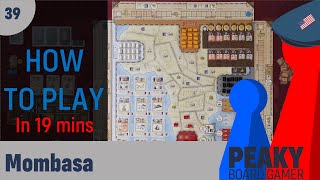
- the video provides a thorough, step-by-step setup and walkthrough of components and their purposes
- clear explanation of how action cards are drafted, revealed, and used in planning and general action phases
- detailed coverage of the multiple tracks (company, diamond, and bookkeeping) and how they interact for scoring
- demonstrates construction of the engine via trading posts and track progression, highlighting interaction between players
- explicit recommendation to play with four players, which aligns with the game’s strong multiplayer dynamics
- includes practical notes about the rulebook reference for powers that are not fully demonstrated in the tutorial
- the video cannot cover every rule nuance; viewers are reminded to consult the rulebook for full powers and edge cases
- the game's depth and complexity may be intimidating for new players or groups unfamiliar with Pfister's design style
- some setup steps are lengthy and could benefit from a visual recap or summarized checklist
- economic development, resource management, and strategic expansion through company tracks and shared infrastructure
- Africa during the era of early colonial trade, with four chartered companies expanding trading posts
- educational, rule-focused tutorial that walks through setup, core actions, and scoring mechanics with concrete examples
Mechanics (from transcript analysis)
- action card drafting and placement — players plan and select action cards each round, placing them face down in unlocked slots to shape upcoming turns; reveals during planning phase drive future choices
- bookkeeper and inkjar tracks — the bookkeeper track advances the inkjar along a dedicated path; advancing books unlocks actions and triggers additional effects, providing an ongoing engine lever
- diamond track and bonus systems — the diamond track offers extra moves and coins; bonuses from reaching or passing checkpoints add layers of strategic decision-making and potential power spikes
- engine-building via company tracks — advancing along multiple company tracks increases shares and unlocks bonuses, creating a multi-layered engine that rewards strategic tempo and path optimization
- goods management and market purchase — goods cards (coffee, bananas, cotton) provide points and currency for buying further cards from the market, fueling your engine while shaping end-game scoring
- round-based structure and end-game scoring — the game unfolds over seven rounds with a defined preparation and scoring ritual; final scoring ties are resolved by shared victory points for top scores
- trading post placement and map expansion — players place trading posts from home regions to expand influence; positioning interacts with track bonuses and company ownership, creating spatial strategy
Video topics + discussion points
Quotes (from this video)
- i strongly recommend you play this game with four players
- the wealthiest player will be the winner
- the game is played over seven rounds
- find the four cards depicting two arrows which are used only for the setup of the game
- there are four expansion cards depicting a number from 1 to 4 on the top right corner
- the final step of the action is spending the depicted bookkeeping points
References (from this video)

- Strong mid- to heavyweight feel
- Intelligent economic interplay
- Can be heavy for casual players
- Market manipulation and route planning
- Industrial empire development
- Strategic economic simulation
- Brass
- Great Western Trail
Mechanics (from transcript analysis)
- economic engine-building — Develop networks and optimize shipping routes to maximize profits
Video topics + discussion points
Quotes (from this video)
- Gizmos is my favorite uncomplicated game.
- I want to understand why stuff works and how to pull levers in a game.
- I don't play to win. I'm playing to explore.
- Grow bold or die, my friends.
- There are so many games out there.
References (from this video)

- brilliant card-column mechanic that dilutes powerful hands
- stock-market feel with multiple strategic angles
- heavy to teach for new players
- some feel the game can be lengthy
- investment and resource management with card-driven actions
- colonial Africa map with economic expansion
- strategic, calculating, asset-building
Mechanics (from transcript analysis)
- Card-driven action columns — cards are played into columns; as columns advance, they slide into discard piles and come back later
- Stock/track-like investment — investments in different regional tracks yield multipliers and growth
- worker/resource management — balance cards, tracks, and resources to maximize points
Video topics + discussion points
Quotes (from this video)
- there is this more injected element of player interaction
- it's a genius twist
- the market is completely driven by the players
- money is such a tight resource in this game
- the rules overhead is very low
- a timeless design
- you can bet your funds on other people being right
- loads of things to weigh up, a complete package of the game
References (from this video)

- rich thematic flavor
- deep strategic options
- can be heavy for new players
- weighty decision space may overwhelm casual players
- investment and route provisioning
- East African coastal trade
- economic strategy
Mechanics (from transcript analysis)
- card drafting — players draft cards to optimize routes and actions.
- stock/investment tension — players manage an investment-like track to score points.
Video topics + discussion points
Quotes (from this video)
- i don't like blue haven
- you can play that game like for a long time because there's so much content in it
- it's a really quick filler that maybe i mean we'll let me showcase one day
- we are starting the alexander fister series
- i think it's a great game
- tequeno obelisk of the sun
- it's a dice selection game that's drafting dice drafting
- we currently do not have a patreon we probably won't open one
- please go ahead and do so if you would like to do a more private intro feel free to email us
- thank you so much for following along and supporting our channel
References (from this video)

- Nice framing device with first-person perspective
- Decent color palette with reds and curtains
- Very dark overall appearance
- Doesn't convey game feel
- Controversial colonial theme
- Trade/colonization
- Africa
- Historical
- Sky Mines (re-implementation with moon mining theme)
Mechanics (from transcript analysis)
- Stock trading — Complex strategy game
Video topics + discussion points
Quotes (from this video)
- The box cover makes a promise to the customer
- Every box cover tells me what I'm going to be doing and how I'm going to be feeling
- This artist is one of the best board game artists working in the industry right now
- This is how you do it
- This cover is a mess
- Striking iconic design
- The box cover is not selling the game