Nature is a strategy game that stands on the shoulders of the award-winning blockbuster Evolution. It's been completely redesigned to be more streamlined, more forgiving, deeper, and very easily expandable. The innovation of Nature is a modular game system that allows players to create and explore a unique ecosystem each time they play.
Adapt to the Changing Environment
Grow the population of your species in a dynamic ecosystem where food is scarce and predators lurk. Give them traits like Tusked to help them find food, Fast to outrun predators, or Clawed to hunt other species.
Create a Unique Ecosystem Each Time You Play
Add the Jurassic module to introduce colossal dinosaurs, or the Arctic Tundra module to experience life on the edge of the habitable world. The Nature Big Box edition contains five simple modules that can be combined to make 24 different ecosystems.
-----------
Nature Digital
Download the free-to-try app for iOS, Android, or Steam.
https://www.naturedigitalgame.com/
The Future of Nature
NorthStar Studio will release the Nature Climate module and the Nature Disease module in 2026, and 1 - 2 small modules every year for the next decade. Let NorthStar know which module you'd be excited to see by taking the BGG poll:
https://boardgamegeek.com/blog/308/blogpost/166360/future-na...
—description from the publisher
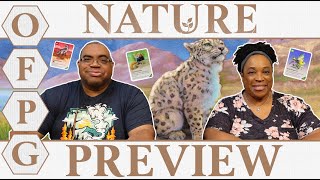
- Immersive, cohesive theme with vivid artwork
- Beautiful, high-quality components and wood tokens
- Modular system dramatically increases replayability and variety
- Rule set is accessible, with depth added through modules
- Learning curve around trait allocation and population balance
- As modules accumulate, setup and gameplay time can increase
- Base game's four-round structure may feel short without modules
- survival of the fittest through ecosystem-building; predator-prey dynamics; adaptation and growth of species
- biome-spanning ecosystems across Jurassic, rainforest, Arctic, tundra, and natural-disaster modules; each game configuration creates a distinct environment
- documentary-like immersion that frames play as natural selection and ecological competition
- Evolution
Mechanics (from transcript analysis)
- modular module system — players combine different modules to create unique configurations, expanding complexity and replayability
- phase-based rounds — each round has four phases: preparation, adapting, feeding, and cleanup, structuring strategic tempo
- population progression and recovery — when a population dies, it can come back in a later round with adjusted starting values, offering redemption and momentum
- predator-prey dynamics — species can become predators or be vulnerable to predators, influencing survival and growth
- resource management via tokens — plants and meat tokens represent food resources used to feed populations and drive scoring
- Trait cards — a limited set of trait cards modifies species abilities, enabling strategic customization
Video topics + discussion points
Quotes (from this video)
- this is nature it's really a very thematic game yes it is
- the circle of life right here
- it's almost like a documentary that you might see of how animals survive in nature
- the modules really adds a lot of things in here
- you can play this game in the base game but adding modules really changes the dynamic
References (from this video)
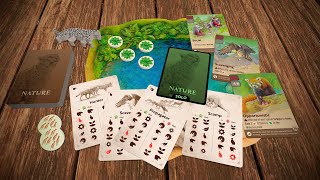
- Clear, teachable rules with a strong solo mode demonstration
- Good depth and strategic options that scale with modules
- AI opponent provides meaningful challenge and learning opportunity
- Prototype components and modular expansions hint at long-term growth and variation
- Component prototypes and unfinished art can feel rough in early videos
- Tabletop Simulator/physical setup differences may create a steeper learning curve
- Some rules interactions are intricate and require careful attention for new players
- Evolution, predator-prey dynamics, trait-based adaptation
- Biomes-based ecosystem where species evolve and compete for food across multiple environments
- Educational, demonstrational
Mechanics (from transcript analysis)
- AI opponent with adaptive traits — Ronnie uses AI cards and trait cues to simulate a believable opponent, adapting across rounds and revealing clues gradually.
- End-of-round scoring and round progression — Four rounds (base game); modules may extend rounds. Points scored for surviving populations and accumulated food.
- Module-driven variability — Expansion modules (Arctic tundra, Jurassic, rainforest, etc.) add new traits, AI cards, and dynamics, increasing replayability.
- population management — Population tokens represent organism count; populations must be fed or risk being sacrificed for points or growth later.
- Resource feeding from Watering Hole — Food is generated each turn and allocated to players' species based on size and cards in hand; feeding order can influence scoring.
- Trait-based evolution — Players add traits to their species to grow size, increase population, or shift behavior between forager and predator.
Video topics + discussion points
Quotes (from this video)
- this is a prototype of the big box including all five expansions
- Nature is a game for 1 to four
- four rounds in the basic game
- you can play absolutely stand alone with just the base game
- the AI card... Ronnie starts round one with two species
- the base game includes solo rules
References (from this video)

- Deep strategic depth with layered trait interactions
- Effective solo mode and AI variants with modules
- Shows clear improvement in bot behavior with the variant discussed
- Learning curve is nontrivial
- Without modules, base game can feel swingy or unpredictable
- survival, adaptation, predator-prey dynamics, and interspecies competition
- prehistoric ecosystem with herbivores and predators interacting around a watering hole; events unfold via cards that grant traits and alter feeding outcomes
- commentary-driven analysis and strategic playthrough narrative
- Jurassic module
- Flight module
- Nature (base game)
Mechanics (from transcript analysis)
- card discard for growth — players can discard cards to add population or to increase a species’ size, influencing future food gains and survivability.
- population management and extinction — size and population drive scoring and feeding; extinction and starvation can occur when balance tips unfavorably.
- predator-prey interaction with defense — defensive traits reduce a hunter’s ability to capture or eliminate a population, shaping target choices during hunts.
- trait cards and species customization — each species can be enhanced with up to three trait cards that modify defense, feeding efficiency, or other survival traits.
- waterhole feeding and depletion — food is gained by population size during hunts and via the watering hole; emptying the watering hole can trigger special effects (e.g., tusk, opportunistic feeding).
Video topics + discussion points
Quotes (from this video)
- Nature, number one, it's one of my favorite games of the year easily.
- I'm going to show you how that variant works first and then the second play will be flight.
- I like the challenge and the variant makes the bots more competitive.
- The best way to play this is to throw in a module.
References (from this video)
- Smooth and quick solo mode; responsive bot AI that handles modules well
- Modular system with varied modules (bird, Jurassic, tundra, rainforest) keeps play interesting
- Tense and engaging feeding phase; competition flavor is strong
- Deep hand management and strategic choices; lots of tactical decisions
- Strong replayability through module mixing and different play styles
- Luck of the draw from decks can affect outcomes and be frustrating
- Retail purchase requires base game plus modules separately (cost concern)
- Some players may dislike some randomness and mean-spirited moments where animals eat each other
- Solo bot effectiveness isn't perfect but still fun
- Evolution, natural selection, predator-prey dynamics, resource management
- An evolving ecosystem where competing species grow, feed, and survive in a shared environment.
- asymmetric, modular, competitive with optional solo mode
- Evolution
- Oceans (Northstar)
Mechanics (from transcript analysis)
- deck-building / card drafting — Players draw and play cards to evolve their species, upgrade traits, and manage population.
- feeding at a shared watering hole — Central resource pool where players add food and may steal from others; creates tense moments.
- hand management with hidden play — Five cards drawn per turn; cards played face down; adds surprises and strategic depth.
- hunting & predation — Players can hunt or eat other animals to gain sustenance and victory points.
- modular components and rules — Modules introduce new cards and rule variants; players can mix and match expansions.
- population/size growth and discard-for-resources — Discard cards to increase population or growth in size, shaping playable options.
- solo mode bot simulation — Automated opponents with priority cards and module interactions; plays cards to simulate competition.
Video topics + discussion points
Quotes (from this video)
- The fact that it works as well as it does, as smoothly as it does, and in such a challenging way as it does is really an impressive achievement.
- I adore these. So, first of all, each of the modules has their own new set of cards.
- Moving on to my number two point. This is another full pro. I love this game and that is the feeding phase in the competition for food.
- The hand management and card play... the choices, those tactical decisions are great.
- If you like tons of variety in your play, as long as you're willing to pay for the modules, I think there's a lot to explore here.
References (from this video)
Mechanics (from transcript analysis)
Video topics + discussion points
Quotes (from this video)
- Unstoppable is my number one of 2025.
- Is it as good as Exceed? Heck no. But it's good enough that we'll play it sometimes.
- The core card play is so good. The combos and cooperation are great.
- My son and I have really enjoyed the 1v1 mode in Yomi 2.
References (from this video)
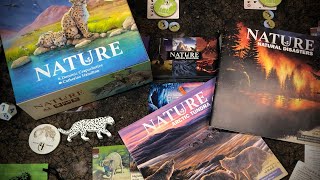
- Clear, instructional showcase of solo module interactions
- Strong emphasis on emergent strategies in a modular system
- Detailed treatment of the AI opponent and mood mechanics
- Visually rich discussion of upcoming climate expansion and its effects
- Rule-heavy for new players; complexity can be intimidating
- Some rules details are module-specific and could be easy to miss in a first playthrough
- Species adaptation and survival in a dynamically changing environment
- A modular ecosystem simulation where players manage wildlife populations across changing climates
- Abstract, emergent gameplay with emphasis on strategic evolution rather than fixed scenes
Mechanics (from transcript analysis)
- AI opponent (Ronnie) mood system — Ronnie's behavior is determined by mood left/right columns, affecting where/how its species acts; mood can shift due to events.
- end-of-round climate and cold effects — In tundra, cold level reduces populations unless protected by size and traits; end-of-round bonus for surviving species in Arctic Tundra.
- Feeding phase and resource management — Players feed hungry populations from a watering hole or supply; feeding order and limitations affect survival.
- hidden hunter traits — Some hunter traits are hidden; turning from forager to hunter without immediate reveal influences opponent interaction.
- Modular expansion integration — Base game combined with Natural Disasters and Arctic Tundra modules to alter rules, interactions, and objectives.
- resource draw and module-specific rules — Draw counts from plant and meat decks, with tundra-specific rules about discarding for population/size and feeding constraints.
- traits, size, population management — Species evolve by adding traits, increasing size, or increasing population, with trait slots and hunter transformations.
Video topics + discussion points
Quotes (from this video)
- Arctic tundra and natural disasters. Yes, I'm going to try and make things as harsh as I can for myself.
- This is what this game's all about. Particularly in solo and for species, there'll be emergent behaviors and you'll find combinations that we didn't find when we were play testing in how you put your game together.
- Ronnie is not a human player. Ronnie is a set of circumstances.
- This is a hidden hunter trait. This says when it's played, they turn from forager to hunter.
- If I see any red traits, they're liable to go hunting.
- This is a modular system.
References (from this video)
- Polished game design
- Modular gameplay
- 100% biodegradable
- Good packaging
- Core system feels too simple
- Potentially sterile gameplay
- Might not appeal to casual gamers
- Evolution and survival
- Animal ecosystem
- Species adaptation
- Oceans
Mechanics (from transcript analysis)
- card management — Players use cards to evolve animals, increase population, and add traits
- Modular gameplay — Five additional modules can be added to change game rules
- Resource management — Feeding and surviving at the watering hole
Video topics + discussion points
Quotes (from this video)
- I'd rather have one game I really like than dozens of ordinary games made from combining different modules each time.
References (from this video)
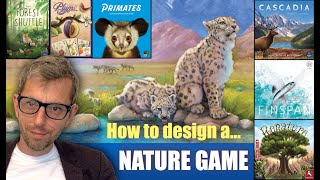
- Natural selection
- Multiple biomes and time periods
- Adaptive ecosystem simulation
Mechanics (from transcript analysis)
- modular design — Players can combine different modules to create unique gameplay experiences
Video topics + discussion points
Quotes (from this video)
- Wingspan showed us that board games don't need swords and sorcery to attract players
- Sometimes spending an hour arranging beautifully illustrated cards of birds, fish, or trees is more than enough
References (from this video)

Mechanics (from transcript analysis)
Video topics + discussion points
Quotes (from this video)
- Good morning everybody. Friends, look, we've got a special guest.
- Moon Colony Blood Bath has been my obsession lately
- I always need to learn a game in person. I just the way my brain works.
- this game was really really hard to get
- worker placement is probably my favorite mechanism in games
- I need a break from all the Stefan Feld games
- it's got that Euro feel to it. It is a Euro game
References (from this video)

- More accessible to new players than Evolution
- Modular system adds flexibility and replayability
- Maintains depth with synergistic modules
- Complexity can grow with many modules
- Many modules not yet explored
- Ecosystem balance and adaptation
- Ecosystems and natural habitats
- Modular, narrative-driven
- Evolution
Mechanics (from transcript analysis)
- Interactivity through modules and actions — Modules add actions and synergy to the ecosystem
- Modular system with modules — Base game plus modular expansions that modify ecosystem
- No snowballing; resources reset and rebound — Poor rounds don’t permanently cripple players; resources cycle back
Video topics + discussion points
Quotes (from this video)
- Nature is a reincarnation of Evolution.
- Nature is simpler than Evolution.
- This is really my grail game. It's the game that I've been kind of trying to figure out how to do for the last 15 years.
- Cooperative poker game.
- Very simple, elegant, simple, fun.
- You can mix and match modules which really changes things.
References (from this video)

- Clear core loop: grow/adapt species to survive and maximize food
- Modular system enables customization with multiple modules
- Rich trait interactions create strategic depth and player agency
- Asymmetric elements (predation vs foraging) add depth and tension
- Explicit discussion of prototype status and upcoming final components informs expectations
- Prototype components may change before final release
- Rule complexity can be intimidating for new players due to many trait interactions and hunting rules
- Management of multiple tokens (size, population, and food) can be fiddly for beginners
- Some details are only fully explained during the tutorial, requiring careful instruction for groups
- Evolutionary adaptation and survival through trait-driven gameplay
- Dynamic ecosystem where multiple species adapt to limited resources and stealthy predators over a four-round game
- Procedural/tutorial-style explanation with example-driven reasoning
Mechanics (from transcript analysis)
- Card-based trait system — Players draw traits from a nature deck and play them to a species to modify size, population, foraging, hunting, defense, and special abilities.
- end-of-round and end-of-game scoring — Food tokens collected in feeding are stored for end-game scoring; surviving species score extra points.
- Extinction and scoring cycle — If a species loses all population tokens or per-round dynamics reduce tokens, it can go extinct and be replaced next round; endgame scoring rewards food tokens and surviving species.
- Modular expansion — Base game supports up to four modules; modules modify mechanics and increase round count (up to five rounds with modules).
- Predation and hunting — Predatory trait enables eating other species; hunting requires sufficient hunt value to overcome target's defense value.
- Simultaneous reveal and feeding phase — Trait cards are revealed at the start of feeding; players take turns feeding to maximize tokens while respecting limits.
- Species growth and population management — Discarding trait cards allows growth of size or population; population tokens indicate feeding requirements per round.
- Watering Hole resource management — Food tokens appear at a shared Watering Hole; players feed herbivores to collect tokens, with limits based on tokens and hungry population tokens.
Video topics + discussion points
Quotes (from this video)
- the object of the game is to gain as much food as possible
- the base game is played over the course of four rounds
- this is a modular gaming system for one to four players in which you can tailor your gaming experience by incorporating up to four different modules
- players can choose to add one to four modules
- it's all about strategically finding those combinations of traits in order to adapt your species for survival
References (from this video)
- Clear, accessible core loop with meaningful decisions
- Flexible trait system that supports drafting and selective discarding
- Very quick setup and compact play for a big-box game
- Strong solo mode with a coherent AI system
- Modular expansion system adds variety and replay value
- Base game depth can feel limited without modules
- Modular expansions can be pricey and add significant box/file management
- Component budget is evident; some tokens are basic but functional
- Five to six player games can get chaotic; recommended quick-play variant
- Predator-prey dynamics, adaptation, ecological competition
- Evolutionary simulation of species across different environments with modular content
- procedural, system-driven progression with modular variability
- Evolution
- Oceans
Mechanics (from transcript analysis)
- Feeding phase / watering hole — A finite pool of food is allocated each round; predators hunt other players' species, herbivores/omnivores eat from the pool
- Hunter conversion — Turn a species into a hunter as a free action, enabling hunting without needing a dedicated card
- Modular content — Base game supports modules that alter rules, add cards, or change settings; modules are added in a configurable manner
- Population and size management — Each species has a size and a population; growth and extinction are core pacing mechanisms
- Trait cards — Trait cards are drafted and can be kept for future rounds or discarded to increase size or population
Video topics + discussion points
Quotes (from this video)
- Super easy. Barely an inconvenience.
- Nature is basically what you could probably call as evolution 3.0.
- This is the big box, you know, big box version.
- The core gameplay, is the core gameplay of the base set good enough? It's fine. Yes, I think it's a decent game, but it's not groundbreaking.
- I would give Nature a seven out of 10.
- Eight out of ten with the modules.
References (from this video)

- strong thematic integration with nature and evolution
- high variability due to modules
- strategic depth with punishing but rewarding decisions
- punishing and brain-burning for some
- complex setup with multiple modules to track
- nature, species, feeding, and predation
- ecology and evolution with modular expansions
- puzzle-like ecosystem management with evolutionary progression
- Oceans
- Evolution
Mechanics (from transcript analysis)
- card_drafting — draw and play trait cards to build species abilities
- feeding_phase — feed species to grow population and survive
- modular_modules — optional modules like Flight, Disasters, Jurassic alter gameplay
- set_collection — collect traits to create effective species combos
Video topics + discussion points
Quotes (from this video)
- the first Monster to reach 20 points is crowned the ultimate mylord
- you are crafting your ideal baseball team
- it's a puzzle, it plays pretty quickly
- I freaking loved it I really liked it
- the speed of it was so quick
- Nature is a modular style game
References (from this video)

- Multiple game mode options
- Concept of animal evolution
- Less dynamic than expected
- Limited trait variety
- Evolution
- Natural world
- Animal survival
- Evolution
- Oceans
Mechanics (from transcript analysis)
- Card-based evolution — Players create animals with traits
Video topics + discussion points
Quotes (from this video)
- When things are too perfectly balanced, then they become a lot less interesting
- I would like the chance to win a game at the start
References (from this video)
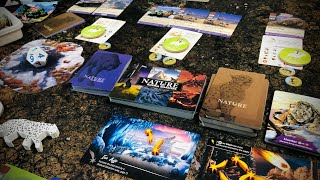
- High variability and replayability thanks to disaster modules (gigantic meteor, ice age, etc.)
- Strong thematic integration of hazards, cold protection, and predator-prey dynamics
- Engaging, puzzle-like decision-making under pressure with emergent strategies
- Notable potential for surprising strategic twists across rounds
- Feeding decisions can be brutally punishing and misaligned with expectations
- Reliance on card draws can lead to frustrating variability, especially in solo or skewed player counts
- Complex setup and rule interactions may deter new players
- Disasters can reset progress and amplify losses, creating heavy swing turns
- predator-prey interactions, survival, and adaptation under environmental stress
- Arctic ecosystem with round-based population dynamics and climatic hazards
- procedural emergent storytelling driven by card-driven events and disasters
Mechanics (from transcript analysis)
- Adaptation choices — During adapting, a player may increase population or size, with tundra rules influencing the option chosen.
- Card drafting/drawing — Players draw and manage cards representing species traits and actions; card flow shapes strategy each round.
- Fat tissue and storage — Fat tissue allows storing food to cushion future shortages; stationed storage can influence scoring and survival.
- Foraging and feeding — Feeding occurs from the watering hole or the supply; hungry populations must be fed, and misjudgments can cause casualties.
- Migratory predators and grazing — Migratory predators affect feeding outcomes; migratory grazing can alter foraging options and feeding priority.
- Natural disasters and climate modules — Disaster cards (meteors, ice ages) dramatically reshape population, food availability, and round outcomes.
- Population vs. size management — Species track population and size; upgrading either is costly and constrained by tundra rules.
- Predator dynamics — Hunters attack based on hunt value vs defense; some traits alter hunting opportunities or defenses.
- Resource scarcity and risk — Decisions under scarcity create meaningful risk-reward trade-offs, often flipping the game state dramatically.
- Scoring and round progression — Scores are tallied after rounds; disasters may occur post-scoring and alter final tallies.
- Trait and resource management — Traits and resources are acquired and discarded, shaping defensive and offensive capabilities over time.
Video topics + discussion points
Quotes (from this video)
- Gigantic meteor. It lasts has got five tokens. It's going to last for the rest of the game.
- Natural disasters can be cruel.
- This is one of my favorite combinations, which is why I wanted to show it to you.
- We got properly thrashed.
- There's lots to discover in this game. And yeah, every time you play, it plays very differently.
- Massive extinction event.
References (from this video)
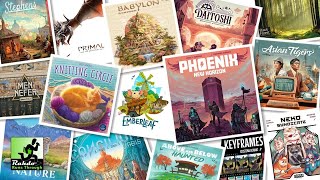
- Modular design with 5 modules and yearly expansions planned
- Best iteration of Evolution game series
- Species creation every round
- Friendly version with no progress loss from being eaten
- Replayability through different module combinations
- Still too cutthroat for some players
- No co-op mode available
- evolution
- species development
- adaptation
- Evolution series
Mechanics (from transcript analysis)
Video topics + discussion points
Quotes (from this video)
- life is too short to worry about games that don't work very well
- all of these games are really really cool in various ways
- Rich and deep and complex
- phenomenal
- no surprise that Designer artist Ryan Locket
References (from this video)

- Clear advantages and unique dynamics for flying species (migration, tokens, defense)
- Rich trait interactions (seed dispersal, camouflage, flocking) that create interesting strategic choices
- Modular expansion approach adds variety and replay value
- Increased complexity that may intimidate new players or require careful rule reference
- Some interactions depend on resource states (far away place, population tokens) that can be easy to overlook
- End-game scoring excludes flying species from the standard bonus, which can surprise players used to that rule convention
- Ecology, evolution, adaptation, and inter-species interaction
- Ecological world where players guide animal species to gather food and survive
- Educational, instructional
Mechanics (from transcript analysis)
- asymmetric trait assignment — Assign up to three traits to a species, with some traits restricted to flying species.
- deck-building / card drafting — Draw five cards from nature and flight decks in customizable combinations each turn.
- end-of-round scoring modifiers — Points and population effects are affected by nesting, nesting traits, and flocking.
- foraging and hunting — Species forage for plant or meat tokens and can hunt other species under rules of engagement.
- migrations and far away place — Fully fed flying species migrate to a far away place, affecting scoring and resources.
- nesting and nesting tokens — Nest tokens under flying species indicate flight status and migration readiness.
- token and dial resource tracking — Use size dials, population tokens, and nest tokens to manage species attributes and status.
Video topics + discussion points
Quotes (from this video)
- The flight module adds to the core game.
- There are a lot of advantages to being a flying species.
- But there is also a downside.
- This flocking trait can only be assigned to a flying species.
- Remember, this could have been meat or it could have been a plant token.
References (from this video)

Mechanics (from transcript analysis)
Video topics + discussion points
Quotes (from this video)
- it's been a Bonkers year in general
- we are going to do kind of like a bit of a bigger wrap up
- Jamie is an incredibly talented human being in multiple facets
- we've found a studio space
- I'm tired we're just so tired I'm tired all the time
- please say hi
- we might miss a video or two because of travel
- this is the best outcome I think long term
- we're transitioning a little bit into this becoming you know a bigger part of Jam's professional career
- Jamie will stress her mental and physical health out to put a video out
References (from this video)

- high thematic richness and storytelling flavor
- flexible modular system that scales with player group and appetite
- appeals to both evolution fans and core gamers seeking depth
- can become heavy with multiple modules
- complex onboarding for new players
- Nature, evolution, and ecological adaptation
- Dynamic ecosystems and natural selection across evolving species
- Evolutionary theming with modular expansions
- Evolution
Mechanics (from transcript analysis)
- modular expansions — Base game plus optional Jurassic, birds, rainforest, etc. modules
- Resource management — Feed and maintain population to maximize points
- set collection / population-based scoring — Score through population size and feeding outcomes
- trait drafting / evolution — Develop species with traits to eat, grow, and survive
Video topics + discussion points
Quotes (from this video)
- this is not a paid placement or anything like that we did get a free copy of it
- the big hook here is we roll a bunch of dice and the lower the number the more powerful your action
- it's a Euro but with more player interaction than not
- I want the big box right now because we're going to want everything
- Nature is evolution, but upgraded with modules and a bigger future plan
- Time Up is up there with telestrations as one of our favorite games of all time