When Elsa von Frühlingsfeld presented her invention to King Frederik Augustus II of Saxony, people thought it was trickery. She used the recently isolated element Uranium to heat up a jar of water and used the resulting steam to power an engine that kept the Uranium active via a process she called “atomization.” Her device, the Nucleum, ushered in a new era of energy and prosperity over the next decades. Saxony went from a minor regional power to the hub of European science and engineering. Now, a generation later, factories are still hungry for more power, demanding bigger and more Nucleums to be built, more Uranium imported from the nearby country of Bohemia, and railways and power lines built across the country to carry the tamed power of the atoms to Saxony’s great cities. Inventors, engineers, and industrialists flock to the Saxon court, vying to be the leader in this new industrial revolution.
Nucleum is a heavy euro board game in which players take role of industrialists trying to succeed during the economic and technological boom of 19th-century Saxony, fueled by the invention and spread of the Nucleum (a nuclear reactor).
Players earn victory points by developing their networks, building and powering urban buildings, securing contracts, and meeting milestones (randomized endgame goals). Each player also gets unique asymmetric technologies, giving them special powers when unlocked. Gameplay is continuous; players take turns one after another with no rounds or phases.
—description from the publisher
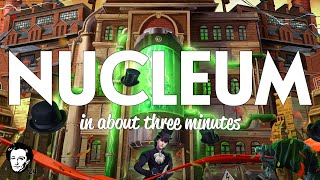
- clever action selection system
- unique Technologies raise the skill ceiling
- tailored for heavy Euro-style audiences
- bear to teach
- long setup time
- first games can be rough
- printing error on the player aid noted
- Power networks, resource management, industrial expansion
- Industrial Germany during a nuclear power expansion era
- Economic-engineering sandbox
- Brass
- Barrage
- Praga Caput Regni
- Power Grid
Mechanics (from transcript analysis)
- action_tiles — slot action tiles to take actions; tiles can be placed to enable dual actions on a turn
- contracts — contracts provide immediate bonuses and shape ongoing strategy
- develop — gain new action tiles; the first costs a certain coin amount, the second has an incremental high cost
- end_game_triggers — the game ends after certain endgame flags are placed; final scoring follows
- energize — power buildings using uranium or other energy sources to flip buildings and gain rewards
- industrialize — place mines or turbines in your network; mines yield uranium, turbines occupy reactor spots
- network_building — connected networks of buildings and rail links are central to scoring and action access
- reclaim_and_income — reclaim tiles to collect income up to a tile line and refresh scoring opportunities
- resource_and_power_management — manage uranium, coal, and other resources to power buildings and gain achievements
- scoring_and_achievements — achievement tokens and a scoring track influence end-game scoring
- tech_unlocking — unlock and resource-hunt technologies; symbols on tiles drive higher-level techs
- tracks_and_tile_placement — place tiles above the board as tracks; actions triggered by color matching where tiles are placed
- urbanize — place buildings in your network, paying the displayed cost; color-based placement considerations create trade-offs
- variable_player_powers — each player has unique technologies on a sideboard that affect gameplay
Video topics + discussion points
Quotes (from this video)
- The best thing about this game is the action selection system it's very clever
- it's a bear to teach and takes an age to set up
- unforgivable printing error on the player Aid here
- I've heard Nucleum described as a spiritual successor to brass and barrage
- The Action System really reminds me of Praga Caput Regni
References (from this video)
- interesting core idea of lighting up buildings and managing a grid
- tight, strategic deck management with meaningful choices
- strong thematic ambition and a bold visual/style that some players like
- aesthetics and component quality criticized (art, boards, and tokens)
- card system can feel restrictive and lead to blocking/slowdowns
- some players may find the game overly punishing and slow
- energy networks, urban development, competitive resource control
- futuristic/industrial city with a focus on lighting up buildings and managing power/flow
- strategic planning with intense player interaction and sabotage
- Brass
- Barrage
- Earthborn Rangers
Mechanics (from transcript analysis)
- competition/blocking — positions on the board can block or hinder opponents; no guaranteed escape from contention
- deck-building — cards upgrade or replace cards in your deck to improve actions and outcomes
- hand management — players curate a hand of action/benchmark cards to execute planned moves
- tile/board interaction — board sections and tiles represent buildings and corridors; players light up or power nodes
Video topics + discussion points
Quotes (from this video)
- it's an open world exploration and survival game
- the rule book's just poorly laid out
- Ticket to Ride Legacy is a legacy Ticket to Ride game
- it's probably an eight out of ten for me at the moment
- an event deck which does you know get added to and subtracted to as the games go on
- nucleum does the job 6,000 views
- this is mean and punishing Euro
- I hate it, I want it to burn in hell
References (from this video)
Mechanics (from transcript analysis)
Video topics + discussion points
Quotes (from this video)
- Void Fall is my number one game of 2023.
- I will be donating all ad revenue to charity; it’s a long-running commitment of mine.
- Kickstarter print runs can be problematic when issues are discovered after release.
References (from this video)

- Promising engine-building tension
- Two-player friendly play
- Specific mechanisms were not deeply explored in this session
- engine-building / strategic resource management
- Futuristic abstract logic (as discussed with other tech-forward titles)
- thematic yet abstract
Mechanics (from transcript analysis)
- deck-building / hand management — build and optimize your deck to fulfill goals
Video topics + discussion points
Quotes (from this video)
- "we're going to do quarterly Vlogs"
- "If you are in the US feel free to be part of the giveaway"
- "the Meep store is closing"
- "two copies of this game"
References (from this video)
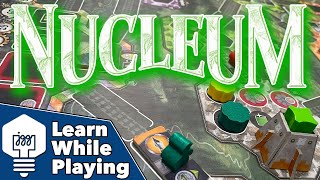
- Rich, multi-layered engine with networks and energizing mechanics
- Interesting asymmetry from experiments and varied tech options
- Clear endgame structure with milestone and government-building scoring as tension drivers
- Rule density and setup complexity may pose a learning curve
- Prototype components in the video may not reflect final production quality
- Optimal play requires careful network expansion and planning across multiple axes
- industrialization through nuclear power, energy networks
- 19th century Saxony
- Tutorial-driven, step-by-step rules explanation with a live playthrough
Mechanics (from transcript analysis)
- contracts / milestones / endgame triggers — Contracts and purple contracts provide immediate rewards and sometimes technologies; milestones govern scoring and endgame triggers.
- End-game scoring — Final scoring tallies energized buildings, milestone tokens, technologies, excess resources, and tracks; endgame triggers cap play.
- energizing — Energize actions transport resources to power plants and energized buildings, granting permanent bonuses and advancing endgame readiness.
- Resource management — Resources (coal, uranium/nucleum, and energy) are acquired, stored, transported, and spent to energize buildings and trigger effects.
- technology experiment trees — Each player has an experiment board with level-1/2/3 technologies that grant ongoing or one-time bonuses, shaping strategy and endgame potential.
- tile placement / leftmost slot — On a turn, players place an action tile into the leftmost open slot, enabling one or two actions and potential chain effects.
- track/rail network building — Players lay rail tiles to connect cities and form networks; completed rails enable energy and resource transfers and trigger bonuses.
- urbanzation/industrialization — Urbanization places urban buildings; industrialization places turbines and mines. Both actions expand the player’s network and capabilities.
Video topics + discussion points
Quotes (from this video)
- in this world nuclear technology has been invented long before
- the first energize action of the game
- then we'll flip this over and gain three achievement points
References (from this video)

- deep, brassy Euro feel
- strong potential for multiple strategies
- high table presence
- very heavy, suited for experienced groups
- rising complexity can hinder teaching
- energy networks and infrastructure
- Alternate history where nuclear power shapes geopolitics
- weighty, brass-inspired
Mechanics (from transcript analysis)
- engine-building with action tiles — placing action tiles to improve income and network capacity while maintaining tempo.
Video topics + discussion points
Quotes (from this video)
- blob party is one of those really interesting games where a single component really elevates the entire experience
- there's only nine rounds in this game you better figure out what you want to do
- Sea Salt and Paper... I love the form factor of the box it's so tiny
- Daybreak is a Cooperative uh game where players are leveraging current and future Technologies and policies to try to solve the problem of an ongoing and changing climate
- Thunder Road Vendetta ... racing game where you it's like you're just purposefully getting in each other's way basically
- it's a flip and right uh where the game has like these kind of it's like a network of transit systems
- my island is uh also sort of like a tile placing game where you're building out an island a deserted island
- Dune Imperium the deck-building plus worker placement game
- Nucleum is a real heavy game about an alternate reality where we discovered nuclear power way earlier
References (from this video)

- Rich, varied decision space with multiple viable paths to victory
- Brass-inspired core with a modern Euro twist that remains accessible
- Asymmetric technologies add replayability and personalization
- Engaging endgame with clear scoring through the achievement track and market interactions
- Tightly designed tile placement that encourages strategic planning without explosive cascades
- Longer playtime and learning curve, especially for first-time players
- Downtime can be noticeable at higher player counts
- Early misplays by new players can skew balance and pace
- Not a pure Brass experience; some players may prefer deeper direct interaction
- energy production and rail-based city expansion
- Industrial Europe energy economy and infrastructure development
- economic engine-building with indirect player interaction
- Brass: Lancashire
- Brass: Birmingham
- Barrage
Mechanics (from transcript analysis)
- asymmetric technologies — Each player has a unique tech/experiment card granting one-shot bonuses or ongoing benefits
- color-match activation on adjacent tiles — Actions activate only when placed tiles touch matching colors, requiring consideration of adjacency with other players' tiles
- contracts, markets, and end-game incentives — A market and randomized contracts create multiple mini-goals; end-game scoring is driven by achievement and market outcomes
- energy-based inhibition and flip of buildings — Coal and uranium flow to power plants to energize and flip buildings, with uranium powering nuclear reactors for higher output
- hand-building (domino-like action tiles) — Players curate a hand of two-sided action tiles and choose to place them on their personal board or the main board to activate actions
- income and reset via recharge and achievement track — Recharging returns tiles and increases income; achievement tokens populate a separate track that can grant end-game multipliers
- use of neutral rails and third-party networks — Players can utilize neutral rail lines and other players' networks to connect resources and energy, adding Brass-like interactivity
Video topics + discussion points
Quotes (from this video)
- I am absolutely in love with this game
- I want to play this game weekly forever
- this is a game with some combos but not an explosive cascade
- it's so mean and it is so wonderful
- I think this is a game I want to teach to a bunch of friends so that we all know it
References (from this video)
- Rich, thematic euro with deep network/energy mechanics
- Tight two-player play with meaningful decisions each turn
- Multiple viable strategies via different experiments and technologies
- Dynamic endgame via milestones and Kings Day scoring
- Rule complexity and dense vocabulary can slow onboarding
- Contracts can be extremely challenging to complete, especially early on
- Endgame tracking of multiple tracks and tokens can be intricate
- Nuclear energy, industry, power networks
- Alternate 19th-century Europe, industrial expansion
- Industrialist saga with asymmetric tech goals
Mechanics (from transcript analysis)
- action_tile_selection — Choose and resolve actions from tiles; tiles may provide two actions and can unlock contracts.
- endgame_scoring_and_milestones — Milestone tokens provide multipliers; endgame triggers, Kings Day scoring; contract fulfillment affects scoring.
- energizing_buildings — Flip energized buildings to scoring side by paying energy from power plants using coal/uranium and nucleum tokens.
- rail_networks_and_buildings — Place railways to form networks; buildings must be placed in a city within your network.
- uranium_and_mines — Gain uranium from mines; store on mines; uranium can be converted to workers; coal to energy etc.
Video topics + discussion points
Quotes (from this video)
- this game is a heavy Euro style action selection game for one to four players
- energizing is flipping the building over and scoring points for it at the end
- the endgame trigger has been met
- Kings Day scoring is a major swing at the end of the game
References (from this video)
- Innovative action-tile system with multi-use flexibility
- Solid solo mode that is easy to run
- Engaging level of interaction around wellways
- Swingy contract system that can swing the game
- Complex setup and table hog
- Colorblind accessibility issues and bland components
- industrial growth, energy production, network connectivity
- Map-based infrastructure and energy grid expansion with nuclear and coal power
- procedural strategy with endgame milestone scoring
- Brass
- Barrage
Mechanics (from transcript analysis)
- Area/Network Building — Players connect districts with railway links to expand networks.
- Endgame Scoring via Milestones — Achievement stars and milestone track drive scoring.
- Multi-use Action Tiles — Tiles can be used above the board or on the board for different actions.
- Resource management — Power buildings with coal and uranium; manage energy production.
- technology development — Technologies grant one-off bonuses and perpetual abilities.
Video topics + discussion points
Quotes (from this video)
- Nucleum is effectively a game where you are trying to power up buildings all over the map.
- The action tile system is the highlight of the game.
- Colorblind accessibility is a flaw that needs addressing.
References (from this video)
- More dynamic action selection than Pampero, with interactive map
- Energetic theme that translates into tighter, more intuitive systems
- Greater perceived clarity and focus than Pampero
- Less novelty in some mechanics compared to Pampero
- May still be a heavy Euro, but with a different emphasis
- Nuclear power generation, energy distribution, and industrial competition
- Nuclear energy production with railway-linked infrastructure and contracts
- strategic, market-driven, and systems-oriented
- Pampero
Mechanics (from transcript analysis)
- Dynamic action selection — Players choose actions in a way that drives map development and resource flow; decisions influence future options.
- Energy/infrastructure economy — Production and distribution of energy power contracts and objective-based scoring drive endgame strategy.
- Tile/board integration with railway network — Railway tiles connect facilities; map evolution affects strategy and scoring potential.
Video topics + discussion points
Quotes (from this video)
- Pampero is pushing boundaries, but it is also making it real hard to make itself known and understood.
- On the surface Pampero seems very trad: Build windmills to get energy, build electricity towers to deliver that energy, collect contracts to spend that energy, and get money -except the money you've just made, and are about to spend, is your victory points.
- This is where Pampero gets monstrously weird and unwieldy and unintuitve, but most importantly very interesting.
- The more I think about it, the more nothing makes sense.
- King-making! Broken! Give us another Euro that does everything like all the other ones do!
References (from this video)
- Interesting game design
- Difficult to teach
- Convoluted rules
- Economic/Industrial
- Brass Birmingham
- Barrage
- Power Grid
Mechanics (from transcript analysis)
Video topics + discussion points
Quotes (from this video)
- Board games should be being played and being handled by people
- Mywind is a game designed to drain you of your will to live
- Evil things waste your time
References (from this video)
- Linear scoring progression
- Forced strategy optimization
- Limited viable strategies
Mechanics (from transcript analysis)
Video topics + discussion points
Quotes (from this video)
- you're listening to the broken meeple show a podcast that speaks passionately about board games
- it's only a game
- I hate pretentiousness in games
- we got to be able to dislike some things you know I'm all about balance you can love something but you got to hate something as well
- I'm worried that they've gone too far
- definitely I think the most complicated game that they have put out ever I'm not joking
References (from this video)

- Innovative central mechanism
- Strong solo play potential
- Learning curve for new players
- Strategic network construction
- Science-fiction network-building through domino-like blocks
- Central mechanism showcased; heavy design
- Captain's Chair
- Imperium
Mechanics (from transcript analysis)
- Domino drafting / network building — Build a central network with domino-like tiles
- Resource management — Manage resources to optimize network growth
Video topics + discussion points
Quotes (from this video)
- Touring Machine is my most played game ever.
- I've played over 80 plays of this game.
- 100% recommend it on BGA.
- Mage Knight is my number one.
- Captain's Chair is a heavy deck-builder tableau hybrid.
- There are infinite puzzles to solve every day on BGA.
- I have a central magnificent idea for a game—the build Network out of dominoes.