Our intrepid author Paige Turner is back! In Paperback Adventures, you get to play as the protagonist in one of Paige's wild brainstorming sessions. Conquer a menagerie of pulp novel characters in this solo deckbuilding word game.
Just like in the original game Paperback — and the follow-up game Hardback — you will build your own deck of cards throughout the game, and those cards will have letters to help you spell words every turn. But in Paperback Adventures, instead of testing your wordsmithing wit against other players, you will use your words to defeat a series of AI enemies in "roguelike" fashion.
Paperback Adventures is a solo-focused game. It was designed from the ground up as a strategic, highly-replayable solo word game. There are also additional gameplay variants for cooperative play between two players. There are three playable characters that have different strengths and playstyles.
The core box is NOT A COMPLETE GAME! One Character Box required (Ex Machina, Damsel or Plothook)
- Word-building/adventure storytelling
Mechanics (from transcript analysis)
Video topics + discussion points
Quotes (from this video)
- Thunderbolt Apache Leader has sadly dropped to 199 on this list.
- John Company solo is great.
- Mr President is the biggest table hog—it's like one of the most ridiculous but like in an awesome way games I have ever seen.
- Paperback Adventures jumped up 560 spots this year.
- Pavlov's House changed the course of my videos and my gaming habits.
- Earth is going to rise up next year.
References (from this video)

- Unique blend of word-building and roguelike progression
- High accessibility for players who enjoy word games
- Strong solo and cooperative potential
- Rule clarity can be dense for first-timers
- Word-building pace may feel restrained for some players
- Word-based combat where spelling drives attacks
- Word-building roguelike with fantasy combat flavor
- Light, roguelike progression with evolving deck/abilities
- Slay the Spire
- Paperback (base game)
Mechanics (from transcript analysis)
- deck-splay and top-card trigger — Card orientation and top-card abilities drive actions
- permanent fatigue on top letter — Letters drawn have lasting impact by exhausting top letters
- word-building — Form words from cards to attack and gain effects
Video topics + discussion points
Quotes (from this video)
- this die instead of the just a normal looking die you've got swords and arrows
- it's cooperative so you you can't talk
- the production is beautiful
- the tutorial mission walks you through learning the game
- it's a beast to learn
- gosh Mage Knight is just so dang fun when you finally click
References (from this video)
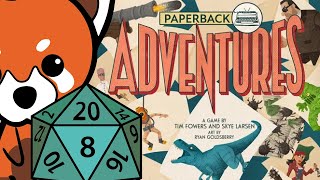
- Charming and whimsical theme with a lighthearted tone that keeps gameplay approachable.
- Rhythmic turn structure (prep, clash, cleanup) that provides a clear learning path and satisfying cadence.
- Word-building mechanic gives a tactile, satisfying sense of accomplishment when words click.
- Reward system and upgrade path create meaningful, visible progression between battles.
- The shop and reward options offer meaningful, varied strategic choices without becoming overwhelming.
- A noticeable learning curve due to many interacting parts (boons, hexes, energy, fatigue, and upgrades).
- Pacing can vary with card draws, potentially leading to dry turns if the hand lacks vowels or decisive letters.
- Flavor text and rule references may require a rulebook or tutorial for absolute clarity in a first play session.
- Word-building as combat, with a humorous romantic subplot centered on a damsel and a flamboyant suitor. Thematic tones mix lighthearted flirtation, wit, and tactical decision-making as you manage decks, resources, and upgrades.
- A whimsical bibliophile fantasy universe where letters, vowels, and words are literal tools of power. Battles unfold in a narrative-adjacent space that echoes a library or study, with bookish motifs, pun-laden character names, and stage-managed confrontations against word-themed antagonists.
- Playful and instructional, leveraging flavor text and character banter to keep the learning curve approachable. The narration mirrors a live demo, walking through prep, attack, and reward loops while commenting on strategic implications.
Mechanics (from transcript analysis)
- deck-building — Players assemble a word-oriented deck from consonants, vowels, and special cards; the deck evolves between battles through rewards, upgrades, and card removals.
- hand-management — Each turn you decide which letters to play, which to hold, and which items to activate, balancing offensive potential with future draw quality.
- phase-based combat — Battles unfold through prep, clash, and cleanup phases. Enemies have staged forms and varying effects; managing phase transitions is key to victory.
- resource-management — Three core resource streams—energy, hexes, and boons—plus crowns and fatigue—drive what you can do each turn and how you upgrade across battles.
- shop and upgrade system — Between battles, players can spend boons or crowns to acquire new cards, upgrade existing cards, or acquire items that impact future rounds.
- splay mechanics — The player can splay word cards to the left or right, influencing the distribution of attack, block, energy, and hex outputs for the turn.
- word-building — Words formed from the letters in hand determine attack strength and control effects; longer or strategically configured words unlock bonuses and trigger special abilities.
Video topics + discussion points
Quotes (from this video)
- like a little battle playthrough from paperback Adventures to give you a sense of how to play the game and how the rhythm of the game actually works
- in a full game you have to do six battles so there's three books that you go through and each book has a Lackey and a boss but we're just gonna do Lackey number one
- I've chosen instead of randomly choosing the pesky Suitor just because I think that he is funny
- this is my starting deck I've got my starting item which is Dashing boots
- the rhythm of the game actually works
- it's really cute and I hope that you go and have a great time
- I think this is really cute
- you chase him away before he can recover his frayed knapsack from the fainting couch
- I hope she causes him tremendous distress
- we're going to show you how to spin them here
- I think I'm going to upgrade the card chosen in the stuff above and draw two items
- heal six HP I can't heal above 20 but I'm going to take five and go all the way up because I think that's a smart plan
References (from this video)

- tight word-building with strategic depth
- variety through enemy abilities and card interactions
- longer word-building sessions may be tiring after a long day
- creative vocabulary crafting with evolving powers
- word-building roguelike in a card-driven format
- runner-style campaign with unique builds
- Slay the Spire (board game),
Mechanics (from transcript analysis)
- rogue-lite progression — per-run variations with customizable powers
- word-building / card drafting — build words to score and unlock effects
Video topics + discussion points
Quotes (from this video)
- "it's a sandbox of fun"
- "the rules are very, very simple"
- "playing the long game"
- "this is one of the best co-op games"
- "the setup time for the size of the box is one of the best ratios"
References (from this video)
- Tightly integrated theme and mechanics that reinforce the writing/deck-building motif
- Excellent pacing and escalating difficulty across six encounters per game
- Strong solo-game focus; rewarding and replayable with modifiers and different character packs
- Rich flavor in the way wordplay translates into combat and upgrades
- Solid progression and high variability via mcguffins and Boons
- Rulebook and production quality issues discussed in the video that can hinder initial setup
- Some players may find the two-player variants clunky or less intuitive compared to solo play
- writing, words, and storytelling as evolving combat and progression mechanics
- fantastical writing journey where players craft a trilogy through word-based combat and character progression
- meta, humorous, and affectionate about wordplay and deck-building
- Slay the Spire
- Marvel's Midnight Suns
Mechanics (from transcript analysis)
- deck-building — draw four cards per turn and build an array of symbols to influence attacks, defenses, and special abilities
- enemy variety and progression — enemies and bosses each have distinct actions; progression books escalate difficulty and complexity
- resources — manage Health, Energy, Hexes, and Boons to survive six sequential encounters, with no health resets between battles
- resources and risk — vowels and specific letter interactions create tactical choices and timing constraints
- top-card triggering and splaying — the position of letters (top vs bottom) determines which abilities trigger and how the word is formed
- Upgrades and items — mcguffins and items bought with energy modify deck and grant powerful effects; synergies with word length bonuses
- word-building — form a word from your drawn letters; top-card abilities trigger based on letter position within the word
Video topics + discussion points
Quotes (from this video)
- it's my favorite solo game it's my favorite deck builder it's one of the best games we have ever reviewed as a game I love it I recommend it I hug it I raise it in the air like a lion cub to bestow it on the populace
- I love paperback Adventures it's my favorite solo game it's one of the best games we have ever reviewed
- this is the best deck building and the best solo game that I have ever played
References (from this video)
- storytelling/card-based adventures
- unknown
- unknown
Mechanics (from transcript analysis)
Video topics + discussion points
Quotes (from this video)
- I love that game
- the day that I beat Ed in delicious but one point
- cabbages promo for fields of green has just been sitting here for probably a year
References (from this video)

- highly unique concept (words as a core mechanic)
- strong theme and components
- engaging solo mode with boss progression
- word-formation can be challenging for non-native speakers
- some players may prefer more traditional deck-builders
- word-building meets deck-building
- fantasy world with monsters and word-building battles
- story-driven dungeon-like progression through bosses
Mechanics (from transcript analysis)
- deck_building — you draft and play cards that form words to perform actions
- item usage and leveling — items augment capabilities and you level up to tackle foes
- word-based combat — the size and quality of words affect attack/defense options
Video topics + discussion points
Quotes (from this video)
- not a very complex game it's fairly quick with two players
- it's a very unique deck builder in that way
- mind bug is a jeweling game where one player plays against one
- I've been a fan of RuneScape my whole childhood
- great story, great voice narration and it can be played up to seven players
- it's a very important game even if it's not the best gameplay wise